
The story of how North and South Carolina came to be separate states is rooted in geography, governance, economic development, and cultural divergence. Though originally established as a single colony under British rule, the region gradually evolved into two distinct political entities. The split was not the result of war or sudden rebellion but rather a slow, practical response to logistical challenges and growing regional differences. Understanding this division requires examining colonial administration, settlement patterns, and shifting priorities over nearly a century.
Origins: The Carolina Colony Under British Rule
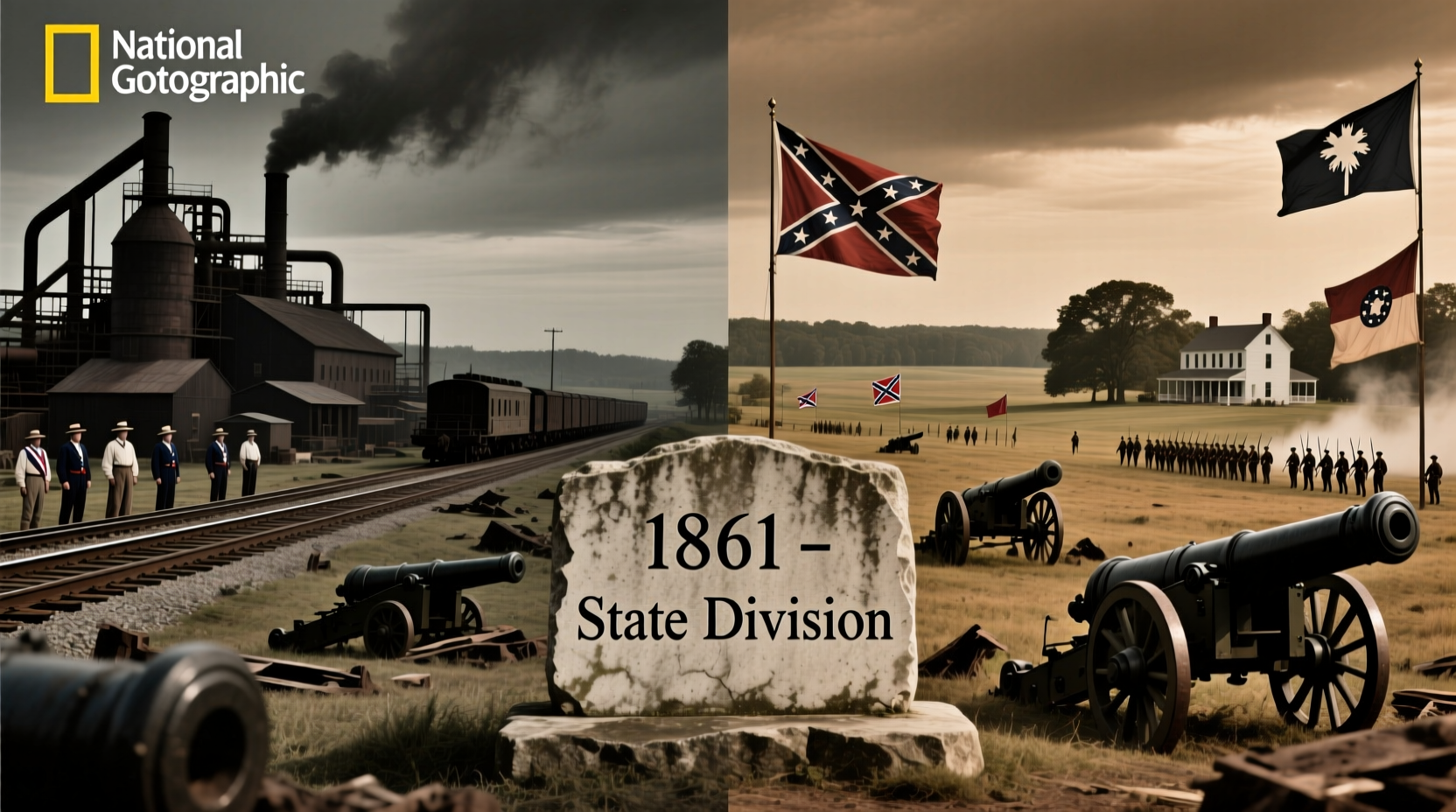
In 1663, King Charles II granted a charter to eight Lords Proprietors, granting them control over a vast stretch of land along the Atlantic coast named “Carolina” in his father’s honor—King Charles I. This territory extended from the southern border of Virginia to the northern tip of Spanish Florida. Initially, the colony was governed as a single entity with its capital eventually centered around Charleston (then Charles Town) in the south.
The early vision for Carolina was ambitious: a structured society based on the “Fundamental Constitutions,” a document drafted by philosopher John Locke. It proposed a feudal-like system with hereditary nobility and strict class divisions. However, this model clashed with the realities of frontier life and the independent spirit of settlers, many of whom arrived from diverse regions including England, Scotland, and West Africa.
Despite the unified charter, effective governance proved difficult. The northern settlements, centered around Albemarle Sound, were geographically isolated from the more prosperous and populated southern region. Poor roads, dense forests, and navigable rivers flowing eastward made communication and travel between the two areas extremely challenging.
Tip: When studying historical divisions, always consider geography first—physical distance often shapes political separation.Growing Regional Differences
Over time, stark contrasts emerged between the northern and southern sections of the colony, influencing their eventual split:
- Economic Focus: The southern region developed a plantation economy based on rice, indigo, and later cotton, relying heavily on enslaved African labor. In contrast, the north consisted largely of small farms and subsistence agriculture, with less reliance on large-scale slavery.
- Population Growth: Charleston became a major port city, attracting merchants, skilled artisans, and wealthier planters. The northern part remained sparsely populated, with settlers often migrating from Virginia.
- Political Influence: Southern elites dominated colonial government, leading to resentment among northerners who felt underrepresented and underserved.
- Cultural Identity: The south developed a cosmopolitan, hierarchical society influenced by Caribbean plantation culture. The north retained a more egalitarian, rural character.
These differences weren’t just ideological—they had tangible effects on taxation, defense, legal enforcement, and infrastructure investment. Northerners frequently complained about lack of representation and delayed justice due to the distance from Charleston.
Administrative Separation: A Timeline
The formal division of Carolina did not happen overnight. It unfolded through a series of administrative changes driven by necessity:
- 1691: The British Crown appoints a deputy governor for the northern district, acknowledging the need for localized leadership.
- 1710: The colony is officially divided into North Carolina and South Carolina for administrative purposes, though still under shared proprietary rule.
- 1719: South Carolina rebels against the Lords Proprietors, citing mismanagement and inadequate defense during conflicts like the Yamasee War. The Crown takes direct control of South Carolina.
- 1729: After years of instability and pressure from both regions, the British government buys out seven of the eight proprietors. North and South Carolina become separate royal colonies.
This transition marked the definitive end of a unified Carolina. Each colony now had its own governor, assembly, tax system, and legal framework. While they shared a name and origin, their paths diverged significantly in the decades that followed.
Key Factors That Cemented the Division
Several interrelated factors ensured that reunification never became a serious possibility:
| Factor | Impact on North Carolina | Impact on South Carolina |
|---|---|---|
| Economy | Small farms, tobacco, timber | Plantations, rice, indigo, slavery-based |
| Slavery | Smaller enslaved population; less central to economy | Enslaved people made up majority in some areas |
| Urban Development | Few towns; decentralized settlement | Charleston: major port, cultural hub |
| Defense Needs | Limited threats; fewer fortifications | Frequent conflicts with Spain and Native nations |
| Political Power | Desire for autonomy from Charleston | Elite control focused on maintaining status quo |
The economic reliance on slavery in the south created a social structure absent in the north. Meanwhile, North Carolina’s slower development fostered a reputation for being more democratic and resistant to centralized authority—a trait evident even during the American Revolution, when it was the first colony to authorize its delegates to vote for independence.
“Geography dictated isolation, but economics and power defined the split. North and South Carolina weren’t divided by choice alone—they were pulled apart by fundamentally different worlds.” — Dr. Lydia Monroe, Historian of Colonial America
Post-Division Evolution and Statehood
After becoming royal colonies in 1729, both North and South Carolina developed independently. When the American Revolution erupted, each sent its own delegates to the Continental Congress and ratified the U.S. Constitution separately—North Carolina in 1789, South Carolina in 1788.
During the Civil War, both states joined the Confederacy, but internal divisions persisted. In North Carolina, Unionist sentiment was strong in the western mountains, while South Carolina was the first state to secede and a leader in the push for disunion.
Even today, the legacy of their colonial separation remains visible. South Carolina emphasizes its Lowcountry heritage, historic plantations, and maritime culture. North Carolina highlights its Piedmont innovation, Research Triangle, and Appalachian traditions. Economically and politically, the states continue to pursue different trajectories.
Tip: Visit historic sites like Tryon Palace (NC) and Middleton Place (SC) to experience firsthand how each state preserves its unique colonial identity.FAQ
Were North and South Carolina ever legally one state?
Yes. From 1663 to 1729, they were legally one colony known as Carolina, initially under proprietary rule and later divided administratively before becoming separate royal colonies.
Why didn’t they reunite after independence?
By the time of the American Revolution, the two had been functioning as independent entities for over a century. Their economies, populations, and political institutions had grown too distinct to justify merging.
Did slavery play a role in the division?
Indirectly, yes. While not the initial cause, the deepening reliance on slavery in the south widened the cultural and economic gap between the regions, reinforcing the need for separate governance.
Conclusion: Two States, One Name, Separate Destinies
The division of North and South Carolina was not born of conflict, but of practicality. What began as a single colonial venture fragmented under the weight of distance, differing economies, and unequal representation. Over time, these structural issues gave rise to two unique societies, each shaped by its environment and choices.
Understanding this split offers insight into how geography and governance interact to shape history. It also reminds us that political boundaries often reflect deeper social realities. Today, visitors and residents alike can appreciate the rich, distinct identities of both Carolinas—each carrying forward a legacy forged not in opposition, but in divergence.
💬 Explore the past, understand the present. Dive deeper into local archives, share your family’s Carolina roots, or plan an educational trip tracing colonial history across both states.








