
It starts with a faint buzz near your ear, followed by a tiny pinch you barely notice—then, minutes later, an unbearable itch takes over. Mosquito bites are more than just a seasonal nuisance; they trigger a complex biological response that leaves most people scratching within minutes of being bitten. While some experience only mild irritation, others develop large, swollen welts that linger for days. Understanding the science behind the itch and knowing how to respond can make all the difference in comfort and recovery.
The Science Behind the Itch
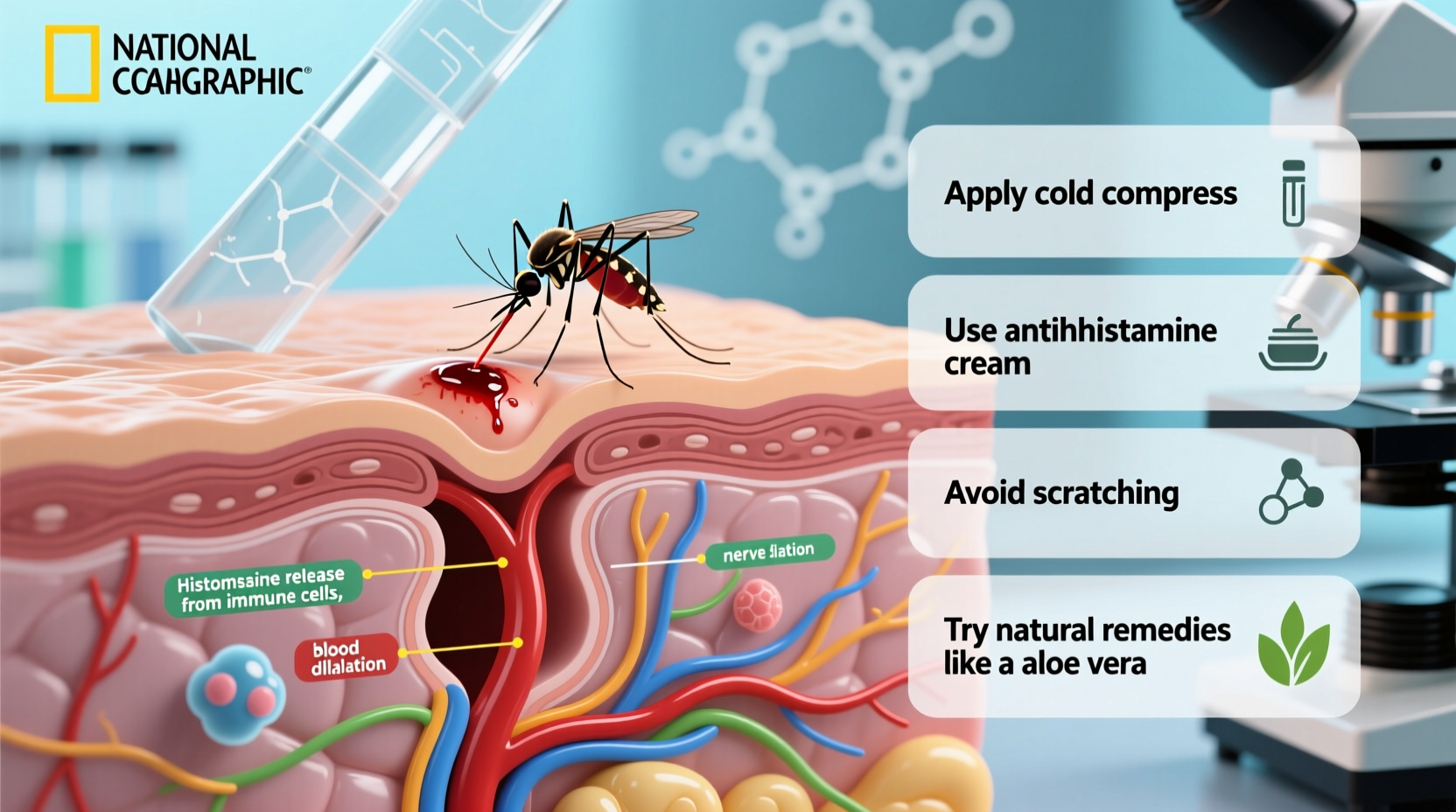
When a female mosquito lands on your skin, she isn’t simply puncturing it to drink blood—she’s injecting saliva into the wound. This saliva contains proteins that prevent your blood from clotting, allowing her to feed efficiently. However, your immune system doesn’t recognize these proteins as harmless. Instead, it treats them as foreign invaders.
In response, your body releases histamine—a chemical crucial to your immune defense. Histamine increases blood flow and white blood cell activity around the bite site to fight off potential threats. But this defensive action comes with side effects: swelling, redness, and, most notably, itching. The nerve endings in your skin become sensitized by the histamine, sending persistent signals to your brain that something is irritating the area—even though the mosquito has long since flown away.
“Histamine is meant to protect us, but in the case of mosquito bites, it’s essentially overreacting to a minor intrusion.” — Dr. Lena Patel, Immunologist at Boston Allergy & Asthma Center
Why Some People Itch More Than Others
Not everyone reacts the same way to mosquito bites. Children and those with less exposure may have little to no reaction initially. Over time, repeated bites can sensitize the immune system, leading to stronger reactions. Conversely, people who have been bitten frequently throughout life may develop partial immunity, resulting in milder symptoms.
Genetic factors also play a role. Studies suggest that individuals with higher metabolic rates or those who emit more carbon dioxide (like pregnant women) attract more mosquitoes and may experience more frequent bites. Blood type appears to matter too—research from the Journal of Insect Science indicates that people with Type O blood are more likely to be bitten than those with Type A.
Tip: If you tend to react strongly to bites, consider using insect repellent consistently during peak mosquito seasons.Effective Relief Strategies
Once the itch sets in, immediate relief becomes a priority. Scratching may feel satisfying in the moment, but it worsens inflammation and increases the risk of infection. Here are proven methods to reduce discomfort and speed healing:
1. Cold Compress
Applying a cold pack or ice wrapped in a cloth constricts blood vessels, reducing swelling and numbing the nerve endings responsible for the itch. Use for 10–15 minutes at a time, with breaks in between.
2. Topical Antihistamines and Hydrocortisone Creams
These products counteract the histamine response directly at the bite site. Over-the-counter creams containing 1% hydrocortisone or antihistamines like diphenhydramine can significantly reduce itching and inflammation.
3. Calamine Lotion or Baking Soda Paste
Calamine soothes irritated skin and dries out oozing areas. Alternatively, mixing baking soda with a small amount of water creates a paste that can be applied to neutralize pH and calm itchiness.
4. Oral Antihistamines
For widespread or severe reactions, non-drowsy antihistamines like loratadine (Claritin) or cetirizine (Zyrtec) can help suppress the body’s overall histamine release. Diphenhydramine (Benadryl) is effective but may cause drowsiness.
5. Aloe Vera and Natural Remedies
Fresh aloe vera gel has anti-inflammatory and cooling properties. Tea tree oil, diluted properly, may also reduce irritation due to its antimicrobial effects—but use cautiously to avoid skin sensitivity.
| Remedy | Best For | Time to Relief |
|---|---|---|
| Cold compress | Immediate swelling and itch | 5–10 minutes |
| Hydrocortisone cream | Persistent itching | 15–30 minutes |
| Oral antihistamine | Multiple bites or strong reactions | 30–60 minutes |
| Baking soda paste | Mild, localized itch | 10–20 minutes |
| Aloe vera | Sensitive skin types | Gradual, over hours |
Step-by-Step Guide to Treating a Fresh Bite
- Wash the area with mild soap and water to remove residual saliva and reduce infection risk.
- Apply a cold compress for 10 minutes to minimize swelling and numb the itch.
- Use a topical treatment such as hydrocortisone cream or calamine lotion.
- Take an oral antihistamine if multiple bites are present or itching is intense.
- Avoid scratching—cover the bite with a bandage if necessary to prevent breaking the skin.
- Reapply treatment as needed, following product instructions, until symptoms subside.
When to Worry: Signs of Complications
Most mosquito bites resolve within a few days without issue. However, excessive scratching can break the skin, creating an entry point for bacteria. Watch for signs of infection:
- Increasing redness, warmth, or pain around the bite
- Pus or yellow discharge
- Swollen lymph nodes
- Fever or chills
If any of these occur, medical attention may be needed. Additionally, in rare cases, individuals may experience a large local reaction—swelling exceeding four inches in diameter—or systemic allergic reactions including hives, difficulty breathing, or dizziness. These require immediate care.
Mini Case Study: Sarah’s Summer Camping Trip
Sarah, a 32-year-old teacher, went camping in northern Minnesota last July. Despite using bug spray, she was bitten multiple times around her ankles and arms. By morning, the bites had turned into large, red welts that kept her awake at night from constant itching.
She began applying hydrocortisone cream twice daily and took a daily dose of loratadine. She also used a cold compress each evening before bed. Within 48 hours, the swelling decreased significantly, and the urge to scratch faded. By day five, only faint pink spots remained. Her key takeaway? “Treating the bites early made a huge difference—I should’ve started sooner.”
Prevention Tips to Reduce Bites
While treating bites is important, avoiding them altogether is even better. Consider these practical strategies:
- Use EPA-registered repellents containing DEET, picaridin, or oil of lemon eucalyptus.
- Wear long sleeves and pants during dawn and dusk, when mosquitoes are most active.
- Eliminate standing water around your home—mosquitoes breed in stagnant water.
- Install or repair window and door screens to keep mosquitoes outside.
- Use fans outdoors—airflow makes it harder for mosquitoes to fly and land.
FAQ
Do mosquito bites always itch?
No. Some people, especially young children or those with limited prior exposure, may not react at all. Others develop sensitivity over time, meaning bites become itchier with repeated exposure.
Can you build immunity to mosquito bites?
Yes, some individuals develop desensitization after years of repeated bites, leading to reduced or absent reactions. This is similar to how allergy shots work, though it’s not guaranteed or consistent across all people.
Are natural repellents as effective as chemical ones?
Some natural options like oil of lemon eucalyptus are EPA-approved and moderately effective. However, most plant-based sprays (e.g., citronella, lavender) offer shorter protection—often under 30 minutes—compared to DEET or picaridin, which can last several hours.
Conclusion
Mosquito bites itch because your body is defending itself against foreign proteins, not because of the bite itself. While the reaction is natural, it doesn’t have to ruin your comfort. With prompt care, proper treatments, and smart prevention, you can minimize both the number of bites and their impact. Understanding your body’s response empowers you to act quickly and effectively—turning a maddening itch into a manageable inconvenience.
🚀 Start protecting yourself today: Stock up on reliable repellent, learn your skin’s reaction patterns, and treat bites early. Share your best relief tip in the comments below and help others enjoy itch-free summers!








