
Waking up excited to see the world clearly through your contact lenses—only to find your vision blurry moments after insertion—is frustrating and concerning. You’re not alone. Millions of contact lens wearers experience temporary or recurring blurriness, often accompanied by dryness, irritation, or a feeling that something isn’t quite right. While occasional blurriness can be normal, persistent or worsening symptoms may point to underlying issues with lens fit, eye health, or habits. Understanding the root causes and knowing how to respond can make the difference between comfortable all-day wear and abandoning your lenses altogether.
Common Causes of Blurry Vision After Inserting Contacts
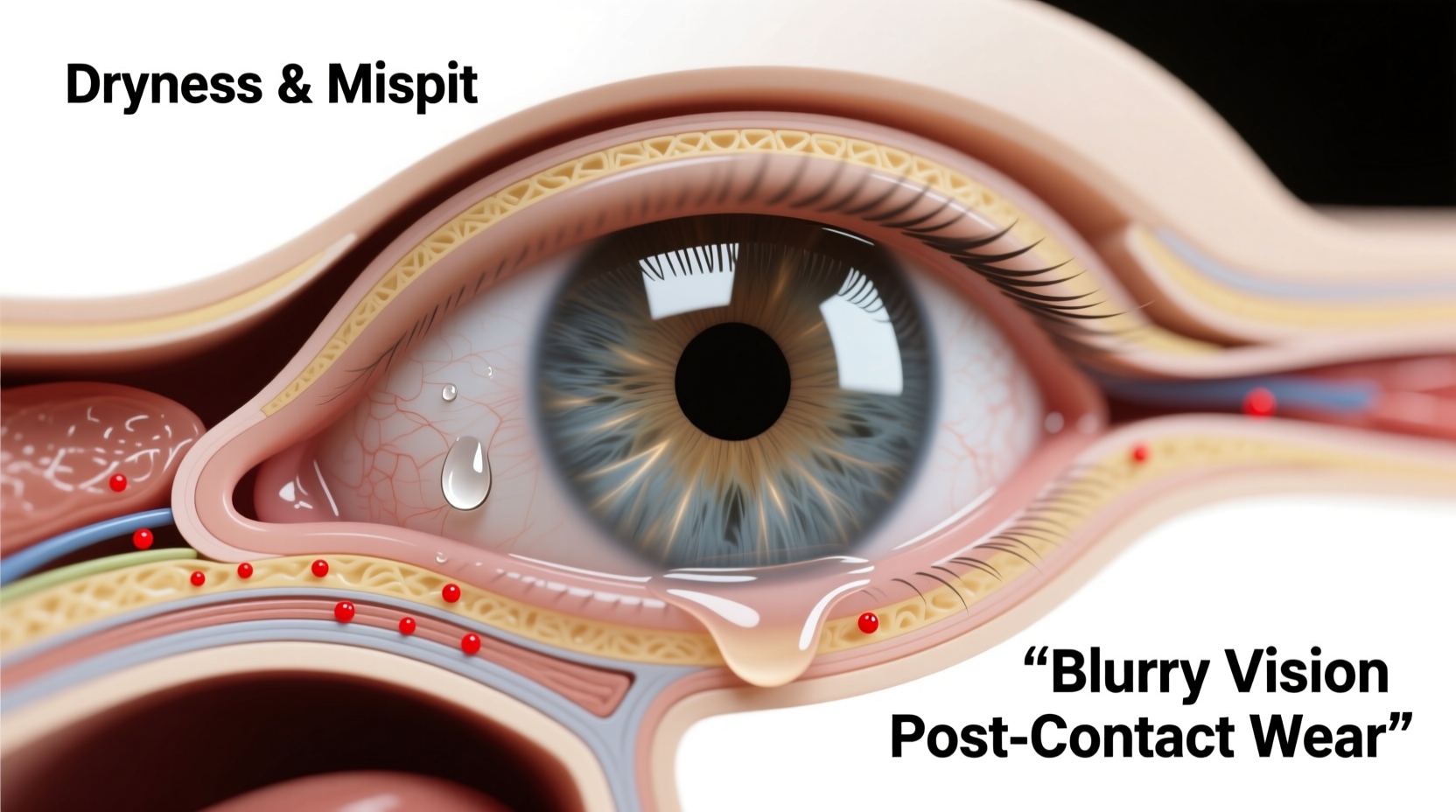
Blurry vision after putting in contacts doesn’t always mean there’s something wrong with your prescription. In fact, several factors—some mechanical, others physiological—can interfere with visual clarity. Identifying the cause is the first step toward resolution.
- Dry eyes: Contact lenses rest on the tear film. When your eyes don’t produce enough tears or the tears evaporate too quickly, the lens surface becomes uneven, scattering light and causing blur.
- Lens dehydration: Some materials, especially older hydrogel lenses, lose moisture throughout the day, leading to stiffening and reduced optical quality.
- Improper fit: If your lenses are too tight or too loose, they may move excessively or fail to center properly over the cornea, distorting vision.
- Lens deposits: Protein, lipid, and debris buildup from tears can coat the lens, reducing transparency and oxygen flow.
- Wearing time: Exceeding recommended daily wear limits leads to corneal swelling and hypoxia (oxygen deprivation), both of which impair vision.
- Incorrect prescription: A change in your refractive error—especially if it’s gone undetected—can result in undercorrection or overcorrection.
- Backward lens insertion: Though rare, inserting a lens inside-out alters its curvature and optical properties, causing immediate blurriness.
Step-by-Step Troubleshooting Guide
When your vision turns blurry shortly after wearing contacts, follow this systematic approach to identify and resolve the issue:
- Check for lens orientation. Hold the lens on your fingertip and look at it from the side. It should form a smooth “U” shape. If the edges flare outward like a saucer, it’s inside-out.
- Inspect the lens for damage or debris. Rinse it with fresh solution and examine under good lighting. Scratches, nicks, or visible gunk indicate it needs replacement or cleaning.
- Rinse and reinsert. Use sterile saline or multipurpose solution to clean the lens before reapplying. Avoid tap water at all costs.
- Blink deliberately. Close your eyes and roll them gently in circular motions to help the lens settle into place.
- Wait 10–15 minutes. Minor blurriness upon insertion is common as the lens hydrates and aligns. If clarity doesn’t improve, remove the lens.
- Switch to glasses temporarily. Give your eyes a break. Persistent blur could signal irritation or fatigue.
- Consult your eye care professional. If problems recur, schedule an evaluation to check fit, prescription, and ocular health.
Do’s and Don’ts: Contact Lens Care That Prevents Blurriness
Maintaining optimal lens hygiene and usage habits plays a major role in preventing visual disturbances. The following table outlines essential practices to adopt—and those to avoid.
| Do’s | Don’ts |
|---|---|
| Wash hands thoroughly before handling lenses | Use tap water to rinse or store lenses |
| Replace lens case every 3 months | Top off old solution with new (“solution layering”) |
| Follow prescribed wear schedule (daily, bi-weekly, monthly) | Sleep in lenses unless approved for extended wear |
| Use rewetting drops approved for contact lens wearers | Use redness-reducing eye drops regularly |
| Attend annual eye exams to monitor corneal health | Ignore persistent discomfort or blurred vision |
Real-Life Scenario: When Dry Eye Was the Hidden Culprit
Sophie, a 28-year-old graphic designer, began experiencing blurry vision within two hours of wearing her monthly silicone hydrogel lenses. She assumed she needed a stronger prescription and considered switching brands. However, her optometrist noticed mild corneal staining and low tear breakup time during examination. Sophie worked long hours in air-conditioned office environments, frequently stared at screens without blinking, and rarely used artificial tears. The diagnosis? Evaporative dry eye exacerbated by environmental and behavioral factors.
Her treatment plan included switching to daily disposable lenses (less prone to deposit buildup), using preservative-free lubricating drops four times daily, and implementing the 20-20-20 rule (every 20 minutes, look at something 20 feet away for 20 seconds). Within three weeks, Sophie reported significantly clearer vision and greater comfort. Her case highlights how systemic dry eye—often overlooked—can manifest primarily as visual blurriness rather than overt pain or redness.
Expert Insight: What Eye Care Professionals Want You to Know
“Patients often blame their contacts when the real issue lies in tear film instability or improper lens selection. A lens that fits perfectly for one person may cause chronic blur in another due to subtle differences in corneal curvature.” — Dr. Alan Zhou, Optometrist and Corneal Specialist
“Daily disposables are increasingly becoming the gold standard—not just for convenience, but for ocular surface health. They minimize protein accumulation and reduce inflammatory responses that lead to fluctuating vision.” — Dr. Lena Patel, Clinical Director at VisionWell Eye Clinic
When to Seek Professional Help
Some degree of adaptation is expected when starting new lenses or adjusting to a new prescription. However, certain warning signs warrant prompt attention from an eye care provider:
- Persistent blurriness beyond 30 minutes of wear
- Pain, burning, or sharp discomfort
- Redness or bloodshot appearance
- Sensitivity to light
- Halos or glare around lights
- Feeling like something is stuck in your eye
These symptoms may indicate more serious conditions such as corneal abrasions, microbial keratitis, or giant papillary conjunctivitis (GPC)—a reaction to protein buildup on lenses. Left untreated, these can lead to permanent vision changes or scarring.
Tip: Keep an extra pair of glasses handy. If your contacts feel off, switch immediately. Pushing through discomfort increases risk of complications.Frequently Asked Questions
Why does my vision go blurry when I blink?
Temporary blurring with blinking often means your lens is moving excessively or dehydrating. It may also suggest poor tear film stability. Try using rewetting drops designed for contact lens wearers. If the problem persists, consult your eye doctor about lens material or fit adjustments.
Can allergies cause blurry vision with contacts?
Yes. Allergies trigger histamine release, leading to itching, swelling, and mucus production. This disrupts the tear film and can displace lenses. Moreover, allergens bind to lens surfaces, creating a hazy barrier. Daily disposables are recommended during allergy season to minimize allergen accumulation.
Is it normal for new contacts to feel blurry at first?
Minor blurriness for the first few minutes is common as the lens settles and hydrates. However, if blur lasts longer than 15–20 minutes or worsens, the fit or prescription may be incorrect. Never assume your eyes will “adjust” to significant blurriness—it’s not normal and should be evaluated.
Action Plan: Checklist for Clearer, More Comfortable Vision
If you're struggling with blurry vision or discomfort while wearing contacts, use this checklist to systematically address potential issues:
- ✅ Wash and dry hands before touching lenses
- ✅ Inspect lenses for tears, dust, or inversion
- ✅ Clean and replace lens case monthly
- ✅ Use only recommended solutions—never water or saliva
- ✅ Limit screen time and consciously blink more often
- ✅ Use preservative-free artificial tears as needed
- ✅ Stick to your prescribed replacement schedule
- ✅ Avoid sleeping in lenses unless specifically approved
- ✅ Schedule annual eye exams—even if vision seems fine
- ✅ Carry backup glasses for emergencies
Conclusion: Take Control of Your Contact Lens Experience
Blurry vision after wearing contacts isn’t something you should simply endure. It’s a signal—sometimes subtle, sometimes urgent—that something needs attention. Whether it’s dry eyes, lens fit, hygiene habits, or an outdated prescription, the solution begins with awareness and action. By applying proper care techniques, recognizing early warning signs, and partnering with your eye care professional, you can enjoy consistently sharp, comfortable vision.
💬 Your eyes deserve the best care. If you’ve experienced unexplained blurriness or discomfort, share your story in the comments or schedule an eye exam today. Small changes now can protect your vision for years to come.








