
Introducing a new skincare product can feel like a fresh start—especially when you're hoping for clearer, brighter, or more hydrated skin. But instead of improvement, many people experience sudden breakouts, redness, or irritation shortly after starting a new routine. This reaction can be confusing and frustrating, especially when you’re trying to do the right thing for your skin.
The truth is, not all breakouts are caused by acne. Sometimes, what appears to be a breakout is actually your skin reacting to an ingredient it doesn’t tolerate, undergoing purging due to active ingredients, or experiencing barrier damage from overuse. Understanding the difference—and knowing exactly what to check—can help you make informed decisions about whether to continue using a product or remove it from your regimen.
Understanding the Difference: Purging vs. Irritation vs. Allergic Reaction
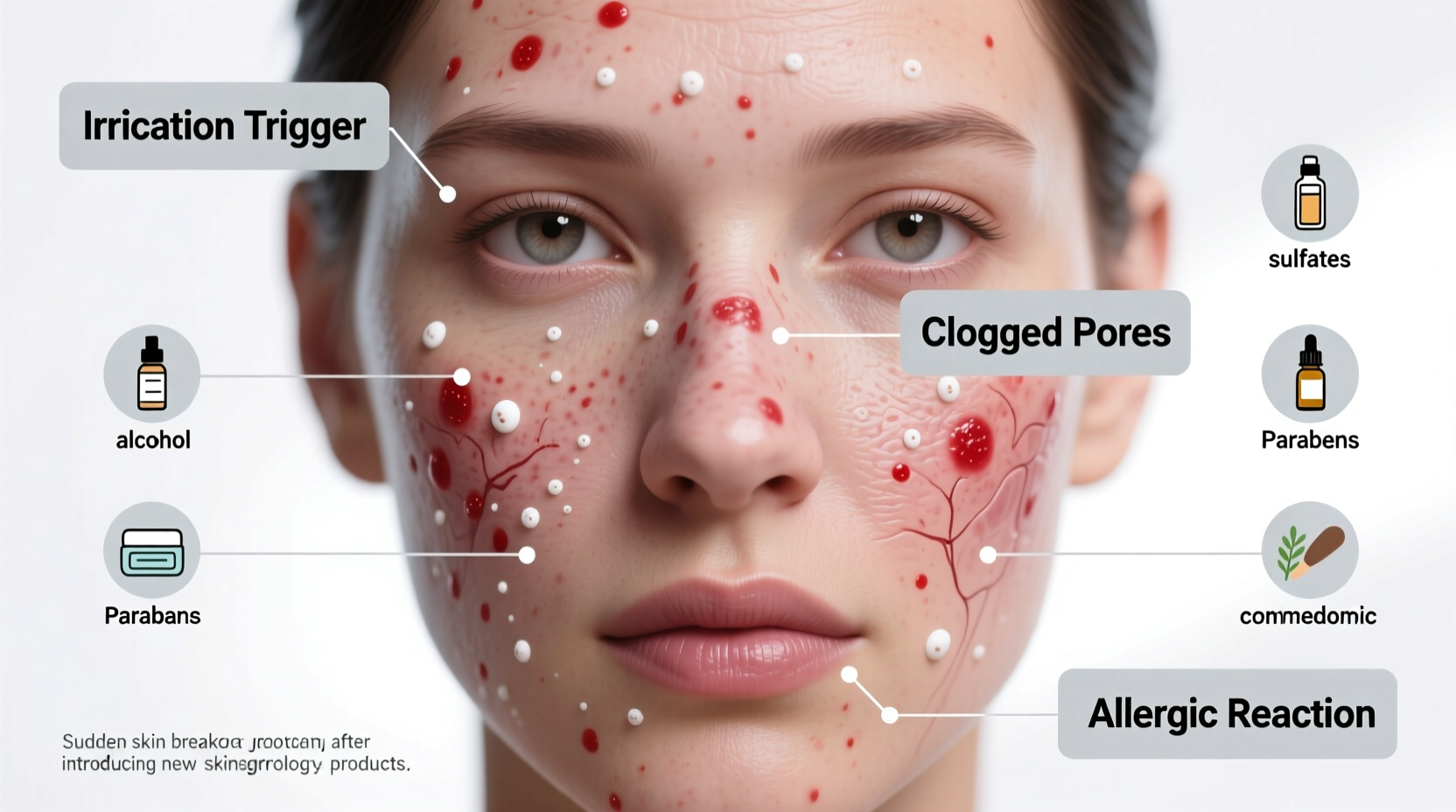
One of the most critical distinctions in skincare is between purging, irritation, and allergic reactions. Each has different causes, timelines, and responses.
- Purging: Occurs when active ingredients like retinoids, AHAs (glycolic acid), BHAs (salicylic acid), or vitamin C accelerate cell turnover. This brings existing clogged pores to the surface faster, causing temporary breakouts. These typically appear in areas where you already tend to get blemishes and resolve within 4–6 weeks.
- Irritation: Results from harsh ingredients or over-exfoliation. Signs include stinging, redness, flaking, and small pimple-like bumps that may appear anywhere on the face—not just acne-prone zones. Irritation can worsen with continued use.
- Allergic Reaction: Involves the immune system. Symptoms include intense itching, swelling, hives, or widespread rash. If this occurs, discontinue use immediately and seek medical advice.
“Many patients come in thinking their new serum is ‘detoxing’ their skin, but true purging is rare and only happens with specific actives. Persistent breakouts beyond six weeks are usually signs of sensitivity or incompatibility.” — Dr. Lena Torres, Board-Certified DermatologistTip: Introduce one new product at a time, waiting 7–10 days before adding another. This makes it easier to pinpoint which product is causing issues.
What to Check in Your New Skincare Product
When a breakout follows a new product, don’t assume it’s your skin “adjusting.” Take a closer look at the formula and application habits. Here’s what to investigate:
1. Active Ingredients That Cause Purging
If your product contains exfoliating agents such as:
- Retinol, tretinoin, adapalene
- Glycolic acid, lactic acid, mandelic acid
- Salicylic acid
- Vitamin C (L-ascorbic acid)
…then some level of purging may be expected. However, purging should not cause pain, burning, or spread to new areas of the face. It also shouldn’t last longer than six weeks.
2. Comedogenic Ingredients
Some ingredients are known to clog pores, especially in acne-prone or oily skin types. Even if a product is labeled “non-comedogenic,” individual sensitivities vary. Watch for these common pore-clogging ingredients:
- Coconut oil
- Cocoa butter
- Isopropyl myristate
- Algae extract (in high concentrations)
- Some silicones like dimethicone (though controversial, can trap debris for some users)
3. Fragrance and Essential Oils
Fragrance—whether synthetic or natural—is one of the top causes of skin irritation and contact dermatitis. Essential oils like lavender, citrus, tea tree, or eucalyptus may seem “natural,” but they’re highly volatile and can trigger inflammation, especially around the delicate jawline and chin area—common breakout zones.
4. Preservatives and Alcohol
Drying alcohols (like denatured alcohol, ethanol, SD alcohol) can strip the skin barrier, leading to increased oil production and breakouts as a compensatory response. Similarly, preservatives like methylisothiazolinone or formaldehyde-releasers may cause delayed reactions in sensitive individuals.
5. Product pH and Compatibility
The skin’s natural pH is slightly acidic (around 4.5–5.5). Using products outside this range—especially alkaline cleansers or overly acidic treatments—can disrupt the acid mantle, making skin more vulnerable to bacteria and breakouts.
“The skin barrier is like a brick wall. When compromised by harsh formulations, even non-acnegenic ingredients can lead to breakouts because the defense system is down.” — Dr. Rajiv Mehta, Cosmetic Dermatologist
Checklist: What to Do When Your Skin Breaks Out After a New Product
Follow this step-by-step checklist to determine the cause and take appropriate action:
- Stop introducing new products immediately. Stick to a simple, gentle routine.
- Identify the timeline. Did breakouts start within 3–7 days? Could indicate irritation. Within 2–4 weeks? Possibly purging.
- Review the ingredient list. Look for known comedogenic, fragranced, or irritating components.
- Assess the location of breakouts. Are they in your usual acne zones? Or appearing on cheeks, neck, or areas not typically prone?
- Check frequency of use. Are you applying the product daily when it should be used 2–3 times per week?
- Eliminate the suspect product. Remove it for at least two weeks and monitor improvement.
- Reintroduce slowly (if desired). After skin calms, patch test and use once weekly to assess tolerance.
Mini Case Study: From Breakout to Clarity
Sophia, a 28-year-old with combination skin, started using a popular brightening serum containing 15% L-ascorbic acid and essential oils. Within five days, she developed small, itchy bumps along her jawline and chin—areas she rarely broke out in before.
She assumed it was purging and continued use. By week two, the bumps worsened, spreading to her cheeks. She paused all new products and reverted to a basic routine: gentle cleanser, ceramide moisturizer, and mineral sunscreen.
After ten days, the irritation subsided. She then patch-tested the serum behind her ear. Within 24 hours, redness and itching returned—confirming an intolerance, likely to either the high acid concentration or fragrance components. She discontinued the product and later switched to a fragrance-free vitamin C with a lower concentration (10%) and phosphates, which her skin tolerated well.
This case illustrates that not every breakout is purging—and patch testing is crucial, especially with potent formulas.
Do’s and Don’ts When Evaluating a Problematic Product
| Do’s | Don’ts |
|---|---|
| Introduce one new product at a time | Start multiple new products simultaneously |
| Perform a patch test behind the ear or on the jawline | Apply a new product all over your face without testing |
| Use active ingredients gradually (e.g., retinoids 2–3x/week) | Use strong actives every night from day one |
| Read full ingredient lists, not just marketing claims | Assume “clean” or “natural” means non-irritating |
| Keep a skincare journal noting changes and reactions | Guess which product caused the issue without tracking |
Step-by-Step Guide: How to Safely Reintroduce or Replace a Problematic Product
If you want to give a product a second chance—or find a better alternative—follow this timeline:
- Week 1: Reset – Use only a mild cleanser, fragrance-free moisturizer, and sunscreen. Avoid actives, scrubs, or masks.
- Week 2: Assess Healing – Confirm that breakouts or irritation have fully resolved.
- Week 3: Patch Test – Apply a small amount of the product behind the ear or on the side of the jaw. Wait 48 hours. No reaction? Proceed cautiously.
- Week 4: Limited Application – Apply to a small facial area (e.g., one cheek) every other night for 3–4 applications.
- Week 5: Full Face (Optional) – If no issues arise, apply sparingly to the entire face, once or twice a week.
- Alternative Path: If the product still causes issues, research gentler alternatives—e.g., encapsulated retinol instead of retinol, or a buffered AHA/BHA blend.
FAQ: Common Questions About Post-Skincare Breakouts
Can a moisturizer cause breakouts?
Yes. Even though moisturizers hydrate, certain formulations contain oils, butters, or emulsifiers that can clog pores—especially in acne-prone or oily skin. Look for labels like “oil-free,” “non-comedogenic,” or “gel-based” if you’re breakout-prone.
How long should I wait before seeing results from a new product?
Most skincare products take 4–8 weeks to show visible benefits. However, adverse reactions usually appear within days to two weeks. If your skin worsens significantly in the first week, it’s unlikely to improve without adjustments.
Is it normal for my skin to break out when I switch to “clean” beauty products?
Not necessarily. “Clean” doesn’t mean non-irritating. Many natural ingredients—like plant oils, essential oils, and herbal extracts—are common allergens. Sudden breakouts after switching brands often stem from undisclosed sensitivities, not detoxification.
Conclusion: Listen to Your Skin, Not the Hype
Your skin’s reaction to a new product is valuable feedback—not a failure on your part. Breakouts after introducing skincare aren’t always a sign of impurity being drawn out. More often, they signal incompatibility, overuse, or formulation flaws.
By checking ingredients, monitoring timelines, and respecting your skin’s limits, you can avoid unnecessary flare-ups and build a routine that works with your biology, not against it. Skincare isn’t one-size-fits-all, and the best regimen is one that leaves your skin calm, resilient, and healthy—not inflamed and confused.
💬 Have you experienced a sudden breakout from a new product? Share your story or tip in the comments—your experience could help someone else avoid the same mistake.








