
Shadow Health has become a cornerstone of nursing education, offering students the chance to practice clinical reasoning, communication, and assessment skills in a safe, virtual environment. While its Digital Clinical Experience™ (DCE) provides invaluable training, many learners are frustrated when their scores don’t reflect their effort or understanding. A low Shadow Health score doesn’t necessarily mean you lack knowledge—it often signals missteps in technique, missed cues, or subtle errors in documentation and interaction.
This article breaks down the most frequent reasons behind low scores, offers actionable strategies for improvement, and provides insight from educators and experienced clinicians who have seen these patterns repeat across hundreds of student attempts.
Understanding How Shadow Health Scores Are Calculated
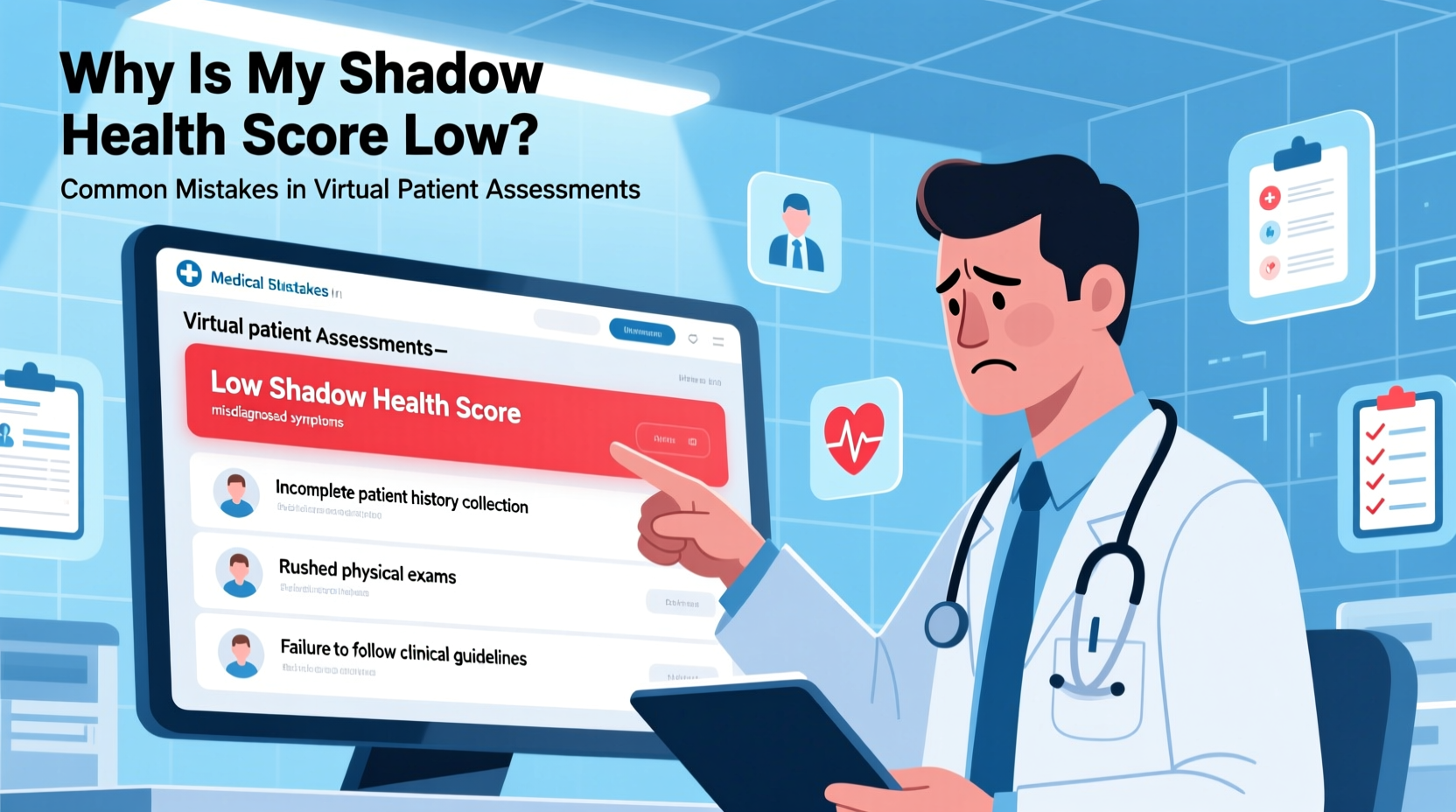
Before addressing specific mistakes, it’s essential to understand what Shadow Health evaluates. The platform uses an algorithm-driven scoring system that assesses multiple domains:
- Health History Collection: Did you ask all relevant questions? Were they open-ended and patient-centered?
- Physical Assessment: Did you perform the correct techniques in the right sequence?
- Clinical Judgment: Did you interpret findings accurately and prioritize follow-up actions?
- Documentation: Was your subjective and objective data recorded clearly and completely?
- Therapeutic Communication: Did you use empathy, avoid medical jargon, and respond appropriately to emotional cues?
Each action—every question asked, every exam maneuver performed—is tracked and scored against a benchmark of best practices. Missing even one key element can significantly reduce your overall score, especially if it relates to critical symptoms or safety concerns.
Tip: Review the rubric before each assignment. Know exactly which categories carry the most weight so you can focus your efforts strategically.Common Mistakes That Lower Your Score
1. Skipping Key Questions During Health History
One of the top reasons for low scores is incomplete history-taking. Students often jump into focused systems without establishing baseline information. For example, when assessing a patient with shortness of breath, failing to ask about smoking history, recent travel, or chest pain can result in lost points—even if you perform the physical exam perfectly.
The platform expects comprehensive screening. Even if a symptom seems unrelated, Shadow Health may expect you to rule it out systematically. This includes reviewing all body systems unless explicitly instructed otherwise.
2. Using Closed-Ended Questions Instead of Open-Ended Ones
Shadow Health rewards therapeutic communication. Phrases like “Do you have any pain?” yield a yes/no answer and are considered poor technique. The preferred approach is: “Can you tell me about any discomfort you’ve been feeling lately?”
The system tracks language patterns and deducts points for directive or leading questions. It also penalizes rapid-fire questioning without allowing time for narrative responses.
3. Performing Physical Assessments Out of Sequence
There’s a standard order for physical exams: inspection, palpation, percussion, auscultation (except in abdominal exams, where auscultation comes first). Deviating from this sequence—even slightly—can trigger point deductions.
For instance, palpating the abdomen before listening for bowel sounds alters the results and demonstrates flawed clinical judgment. Shadow Health flags such deviations as procedural errors.
4. Overlooking Red Flags and Failing to Follow Up
If a patient mentions unintentional weight loss, night sweats, or family history of heart disease, those are red flags. Not exploring them further suggests poor clinical reasoning.
Students sometimes collect data but fail to link findings. For example, noting tachycardia and anxiety without asking about caffeine intake, medications, or stressors will cost points in the clinical judgment category.
5. Incomplete or Inaccurate Documentation
Many students lose points not because of poor performance, but due to sloppy documentation. Omitting vital signs, writing vague statements like “patient denies illness,” or failing to record both subjective quotes and objective observations impacts scoring.
Remember: Shadow Health expects SOAP-style notes. Each entry should include:
- S: Patient’s exact words in quotation marks
- O: Measurable findings (e.g., “HR 110 bpm”)
- A: Interpretation of data
- P: Plan for education, referrals, or next steps
“Students often know the content but lose points on execution. Precision in language and adherence to protocol matter more than raw knowledge.” — Dr. Linda Tran, Nursing Education Specialist at University of Florida College of Nursing
Checklist: How to Improve Your Next Shadow Health Attempt
Use this checklist before, during, and after your next DCE session to maximize your score:
- ✅ Review the case scenario thoroughly and identify primary and secondary concerns.
- ✅ Begin with open-ended questions: “What brought you in today?”
- ✅ Conduct a full review of systems—even if only one issue is presented.
- ✅ Use proper exam sequence for each body area (especially abdomen).
- ✅ Explore abnormal findings with follow-up questions (e.g., “How long has that been happening?”).
- ✅ Document using clear, specific language—avoid generalizations.
- ✅ Include patient quotes in subjective section.
- ✅ Double-check that all required tasks appear in your transcript.
- ✅ Provide patient education tailored to their condition and literacy level.
- ✅ Submit a complete, organized SOAP note with logical flow.
Do’s and Don’ts in Virtual Patient Interactions
| Do | Don't |
|---|---|
| Use empathetic statements: “That sounds really difficult.” | Interrupt the patient mid-sentence. |
| Ask one question at a time and allow response. | Bundle multiple questions: “Any pain, nausea, or dizziness?” |
| Clarify ambiguous answers: “When you say ‘tired,’ do you mean physically or mentally drained?” | Assume meaning without verification. |
| Perform exams in standard clinical order. | Palpate before auscultating in abdominal assessments. |
| Document findings immediately after collection. | Rely on memory; delay documentation until post-exam. |
| Educate patients using plain language. | Use terms like “myocardial infarction” without explanation. |
Real Example: A Case Study in Recovery
Jessica, a second-year BSN student, scored 68% on her first Shadow Health cardiovascular assignment. She was baffled—she’d reviewed heart anatomy, knew risk factors for hypertension, and felt confident during the interaction.
Upon reviewing her transcript, her instructor pointed out several issues:
- She skipped asking about diet and exercise despite the patient being overweight.
- She used closed-ended questions: “You don’t smoke, right?” instead of “Have you ever used tobacco products?”
- She documented “no edema” without specifying bilateral lower extremities.
- She missed an opportunity to explore fatigue—mentioned by the patient—as a potential sign of heart failure.
After targeted feedback and using a structured script, Jessica reattempted the case. She opened with open-ended inquiry, followed systematic assessment protocols, expanded on symptoms, and improved her documentation. Her score rose to 94%.
“I didn’t realize how much nuance mattered,” she said. “It wasn’t just about knowing the facts—it was about applying them thoughtfully and completely.”
Step-by-Step Guide to Maximizing Your Shadow Health Performance
Follow this timeline-based strategy to ensure consistent high scores:
- Pre-Session (1–2 Days Before): Study the focused system (e.g., respiratory, cardiac). Identify common conditions, red flags, and expected questions. Create a mental script for opening and closing the interview.
- Preparation (Day Of): Log in early. Read the patient profile carefully. Note age, chief complaint, and social context. Prepare your digital workspace with reference materials (if allowed).
- Opening the Encounter: Start with greetings, confirm identity, establish rapport. Use open-ended prompts: “Tell me what’s been going on with your breathing lately.”
- History Collection: Move through onset, duration, characteristics, aggravating/relieving factors, associated symptoms (OLDCARTS). Cover relevant lifestyle factors: smoking, alcohol, activity level.
- Physical Exam: Perform maneuvers in correct order. Verbalize each step (“Now I’m going to listen to your lungs with the stethoscope”). Allow virtual pauses for realism.
- Clinical Reasoning: Link findings. If crackles are present, connect them to possible causes like pneumonia or CHF. Ask follow-ups based on discoveries.
- Documentation: Write notes immediately. Use direct quotes for subjective data. Record objective findings precisely (e.g., “Crackles heard in left lower lobe posteriorly” vs. “Lungs sound bad”).
- Patient Education: Tailor advice. For a COPD patient, discuss inhaler technique and smoking cessation. For hypertension, talk about sodium reduction and medication adherence.
- Post-Session Review: Analyze your transcript. Identify missing elements. Compare your performance against the scoring rubric. Save insights for future cases.
Frequently Asked Questions
Why did I lose points even though I asked the right questions?
You may have used closed-ended phrasing or failed to explore the patient’s responses deeply. Shadow Health evaluates not just *what* you ask, but *how* you ask and whether you build on answers. Also, ensure all required tasks are completed—sometimes a missed vital sign or omitted system review drags down the score.
Can I improve my score by retaking the same assignment?
Yes, most instructors allow retakes. However, simply repeating the same approach won’t help. Use your transcript and feedback to identify gaps, revise your strategy, and apply best practices in communication, assessment, and documentation.
Does tone of voice affect my score?
Shadow Health does not analyze vocal tone since interactions are text-based. However, the *language* you choose impacts scoring. Phrases that show empathy, respect, and active listening earn higher marks in therapeutic communication domains.
Final Thoughts: Turning Low Scores Into Learning Opportunities
A low Shadow Health score isn’t a reflection of your potential—it’s diagnostic feedback. Like a lab test revealing a deficiency, it highlights areas needing attention. The platform is designed not to trick students, but to simulate real-world expectations where thoroughness, empathy, and precision are non-negotiable.
Every clinician, at some point, misses a cue or fumbles a question. What separates competent practitioners is the willingness to review, reflect, and refine. Use each attempt as a rehearsal for real patient encounters. With deliberate practice, attention to detail, and a commitment to patient-centered care, your scores will rise—not because you’re gaming the system, but because you’re becoming a better nurse.
🚀 Ready to transform your next attempt? Download a printable checklist, practice script templates, and sample SOAP notes at your school’s clinical resource portal—or share your own tips in the comments below to help fellow students succeed.








