
Frizz remains one of the most persistent hair concerns—even among those who invest in high-end serums and salon treatments. You apply a premium product, wait for the promised sleekness, only to wake up or step outside hours later to find your hair puffing up like it never got the memo. If this sounds familiar, you're not alone. The truth is, frizz isn't always about what you're putting on your hair—it's often about what you're missing underneath.
Expensive doesn’t always mean effective, especially when the product doesn’t match your hair’s biology or environmental needs. Understanding the root causes of frizz—beyond surface-level smoothing—is essential to achieving long-term control. This article breaks down the science behind stubborn frizz, reveals why luxury serums sometimes fail, and delivers actionable solutions that actually work.
The Science Behind Frizz: It’s Not Just About Humidity
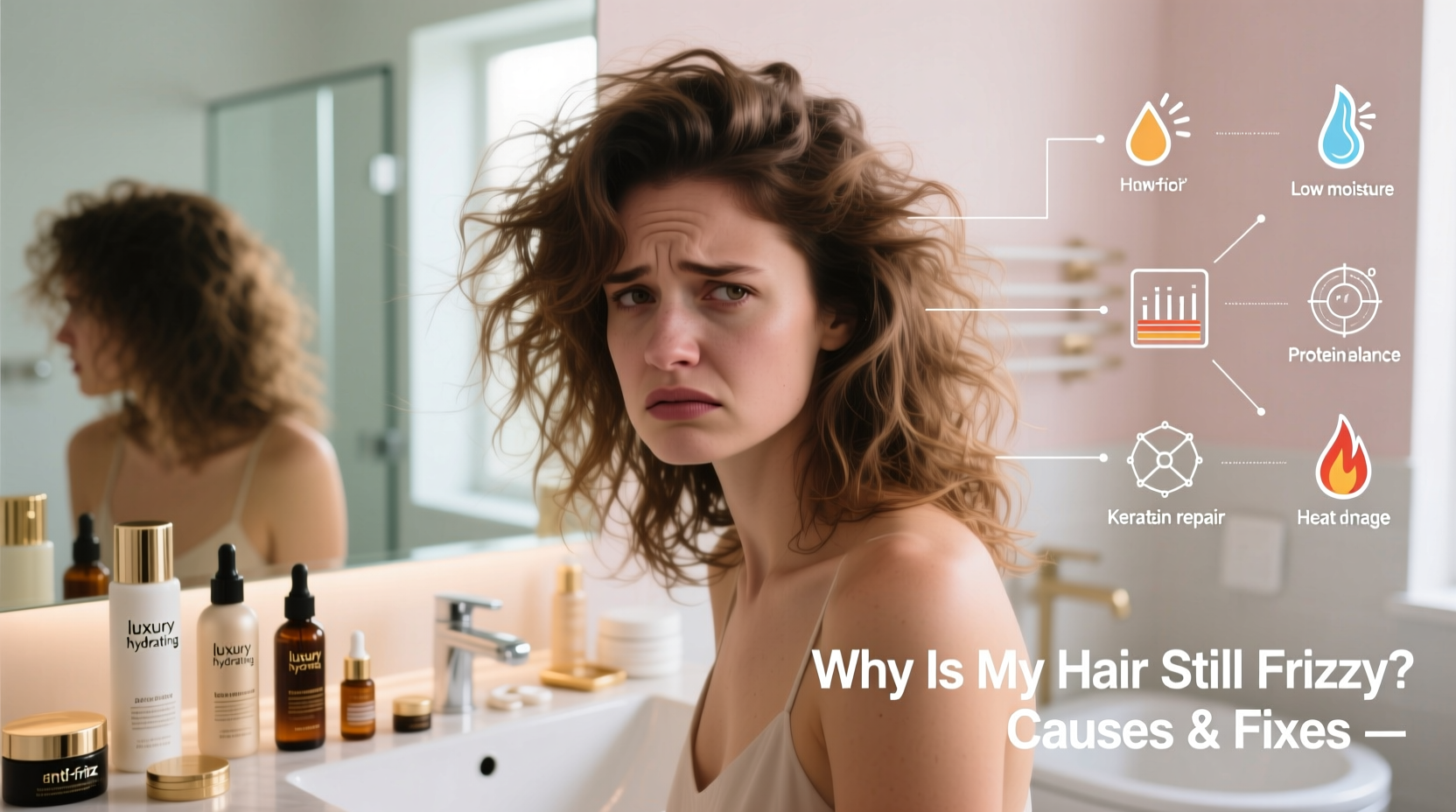
At its core, frizz occurs when the hair cuticle—the outer protective layer—lifts, allowing moisture from the environment to penetrate the cortex. When this happens, the hair shaft swells, disrupting its natural alignment and creating that fuzzy, unmanageable texture. While humidity is a well-known trigger, it’s far from the only culprit.
Hair is hygroscopic, meaning it absorbs water from the air. Curly and wavy hair types are more prone to frizz because their asymmetrical shape makes it harder for natural oils to travel from root to tip. But even straight hair can become frizzy due to damage, improper care, or mismatched products.
Here’s where many people get tripped up: serums primarily work by coating the hair with silicones or oils to create a barrier against moisture. But if the underlying hair structure is compromised—due to porosity issues, chemical processing, or mechanical damage—that sealant effect becomes temporary at best.
“Most clients come in frustrated because their serum stops working after a few hours. What they don’t realize is that without proper internal hydration and cuticle support, no topical product can deliver lasting results.” — Dr. Lena Torres, Trichologist & Hair Research Scientist
Why Expensive Serums Fail: 5 Hidden Reasons
Luxury branding and elegant packaging don’t guarantee performance. In fact, some high-end serums may be making your frizz worse over time. Here’s why:
- They’re silicone-heavy but lack conditioning agents. Many serums rely on dimethicone or cyclomethicone to smooth the surface instantly, but these ingredients don’t address dryness inside the hair shaft. Over time, buildup can prevent moisture absorption, leading to increased frizz when the serum wears off.
- They ignore hair porosity. High-porosity hair absorbs moisture quickly but loses it just as fast. A lightweight serum meant for fine, low-porosity hair won’t penetrate or stay effective on damaged or porous strands.
- They’re applied incorrectly. Applying serum to dry, dehydrated hair locks in existing frizz rather than preventing it. The ideal time to apply is on damp hair post-wash, when cuticles are open and receptive.
- They contain alcohol-based solvents. Some “lightweight” serums include drying alcohols (like SD alcohol or denatured alcohol) that evaporate quickly but strip moisture, increasing brittleness and flyaways.
- They’re used as a standalone solution. No serum can compensate for poor wash-day routines, heat damage, or lack of leave-in conditioning. Relying solely on a serum is like painting over cracked drywall.
Fixing Frizz at the Root: A Step-by-Step System
If you want lasting smoothness, you need a holistic approach. Think of frizz control as a three-layer system: cleanse properly, hydrate deeply, then seal effectively. Here’s how to build it:
- Clarify monthly. Product buildup blocks moisture absorption. Use a gentle clarifying shampoo once every 4–6 weeks to reset your scalp and strands.
- Wash with sulfate-free shampoo. Harsh sulfates strip natural oils, increasing dryness and cuticle lift. Opt for creamy, pH-balanced formulas.
- Condition based on porosity.
- Low porosity: Use lightweight conditioners and apply warmth (a warm towel) to help penetration.
- High porosity: Use thicker, protein-rich masks weekly to strengthen the cuticle.
- Apply a leave-in conditioner. This is non-negotiable. It provides internal hydration before any serum is added. Focus on mid-lengths to ends.
- Use serum on damp, not dry, hair. Towel-dry gently with a microfiber cloth, then apply 1–2 drops of serum while hair is still 70% wet.
- Air-dry or diffuse—don’t rough-dry. Rubbing hair with a regular towel creates friction and frizz. Instead, scrunch gently and let dry naturally or use a diffuser on low heat.
- Protect overnight. Sleep on a silk pillowcase or wrap hair in a silk scarf to reduce friction and retain moisture.
Do’s and Don’ts: Frizz Control at a Glance
| Do | Don’t |
|---|---|
| Use a wide-tooth comb on wet hair | Brush dry curly hair aggressively |
| Apply products in sections for even coverage | Apply serum to roots (can cause greasiness) |
| Reapply a tiny amount of serum to dry ends during the day | Layer multiple silicone-heavy products |
| Deep condition weekly | Use hot tools daily without heat protectant |
| Trim split ends every 8–12 weeks | Ignore signs of over-processing (brittleness, tangling) |
Real Example: How Sarah Fixed Her Serum-Resistant Frizz
Sarah, a 34-year-old marketing executive, spent over $200 a year on a popular argan oil serum advertised for “glass-like shine.” Despite daily use, her hair frizzed within two hours of styling, especially in the humid summers of Atlanta. She avoided washing her hair frequently, fearing it would worsen frizz, and relied heavily on dry shampoo and touch-ups.
After consulting a trichologist, she discovered her hair was high-porosity due to years of bleaching and flat iron use. Her routine lacked internal hydration—she skipped conditioner regularly and never used a leave-in. The serum was sitting on top of parched, damaged hair, sealing in dryness rather than moisture.
Her new regimen included:
- Washing every 4–5 days with a moisturizing shampoo
- Using a deep conditioning mask with keratin and shea butter weekly
- Applying a lightweight leave-in spray after every wash
- Using half the amount of serum—but only on damp hair
- Sleeping on a silk pillowcase
Within three weeks, her hair stayed smoother for longer. By week six, she could go all day without reapplying product. The serum hadn’t changed—but everything else had.
Essential Checklist: Your 7-Day Frizz Reset Plan
Checklist: Follow this plan to reset your hair health in one week.- Day 1: Clarify with a gentle chelating shampoo.
- Day 2: Deep condition with a protein-moisture balance mask for 30 minutes under a warm cap.
- Day 3: Wash with sulfate-free shampoo, apply leave-in, then serum on damp hair. Air-dry.
- Day 4: Assess frizz level at 4 PM. Note improvements or lingering issues.
- Day 5: Diffuse hair instead of air-drying. Compare texture and volume.
- Day 6: Sleep on a silk pillowcase. Check morning frizz reduction.
- Day 7: Re-evaluate your serum. Does it still feel necessary? Is it causing buildup?
Frequently Asked Questions
Can too much serum cause frizz?
Yes. Over-applying serum leads to buildup, which weighs hair down and attracts dirt and oil. Excess product can also prevent moisture from entering the hair, creating a cycle of dryness underneath and greasiness on the surface—both of which contribute to frizz.
Is frizz a sign of damaged hair?
Often, yes. Chronic frizz can indicate raised cuticles due to chemical processing, heat exposure, or mechanical stress (like rough towel drying). Damaged hair has uneven texture, making it harder for products to adhere evenly and increasing susceptibility to humidity.
Should I avoid silicones completely?
No—silicones aren’t inherently bad. Water-soluble silicones (like PEG-modified ones) provide excellent slip and protection without buildup. However, if you don’t clarify regularly, heavy silicones (e.g., dimethicone) can accumulate. Balance is key: use them, but cleanse periodically.
Conclusion: Smooth Hair Starts With Strategy, Not Spending
Frizz isn’t a failure of willpower or wallet size—it’s a signal from your hair that something in your routine isn’t aligned with its needs. Expensive serums can play a role in smoothing, but they’re finishing touches, not foundations. Lasting results come from understanding your hair’s porosity, improving its internal health, and applying products at the right time and in the right order.
You don��t need to buy more—you need to *do* differently. Replace guesswork with a structured system: cleanse mindfully, hydrate consistently, seal strategically. Track changes over time, and don’t hesitate to adjust based on seasons, lifestyle, or hair transitions.
💬 Your hair journey matters. Have you found a serum that actually works for you? Share your experience, tips, or questions below—let’s build a smarter approach to frizz together.








