
It’s a familiar scene: your partner enjoys a few drinks in the evening, falls into a deep sleep, and within minutes, the room fills with rhythmic snoring. Yet on nights without alcohol, they sleep quietly. You’re not imagining things—this pattern is backed by physiology. Alcohol has a measurable, often disruptive effect on sleep architecture and airway function, and understanding this connection can help improve both your partner’s rest and your own.
Snoring after drinking isn’t just an annoyance; it’s a sign of how alcohol impacts muscle tone, breathing patterns, and brain activity during sleep. While occasional post-drinking snoring may seem harmless, repeated episodes can contribute to long-term sleep disturbances and even increase the risk of sleep apnea. This article explores the biological mechanisms at play, offers practical solutions, and provides insight from sleep specialists to help you navigate this common yet misunderstood issue.
The Physiology of Snoring: How Alcohol Relaxes More Than Just Inhibitions
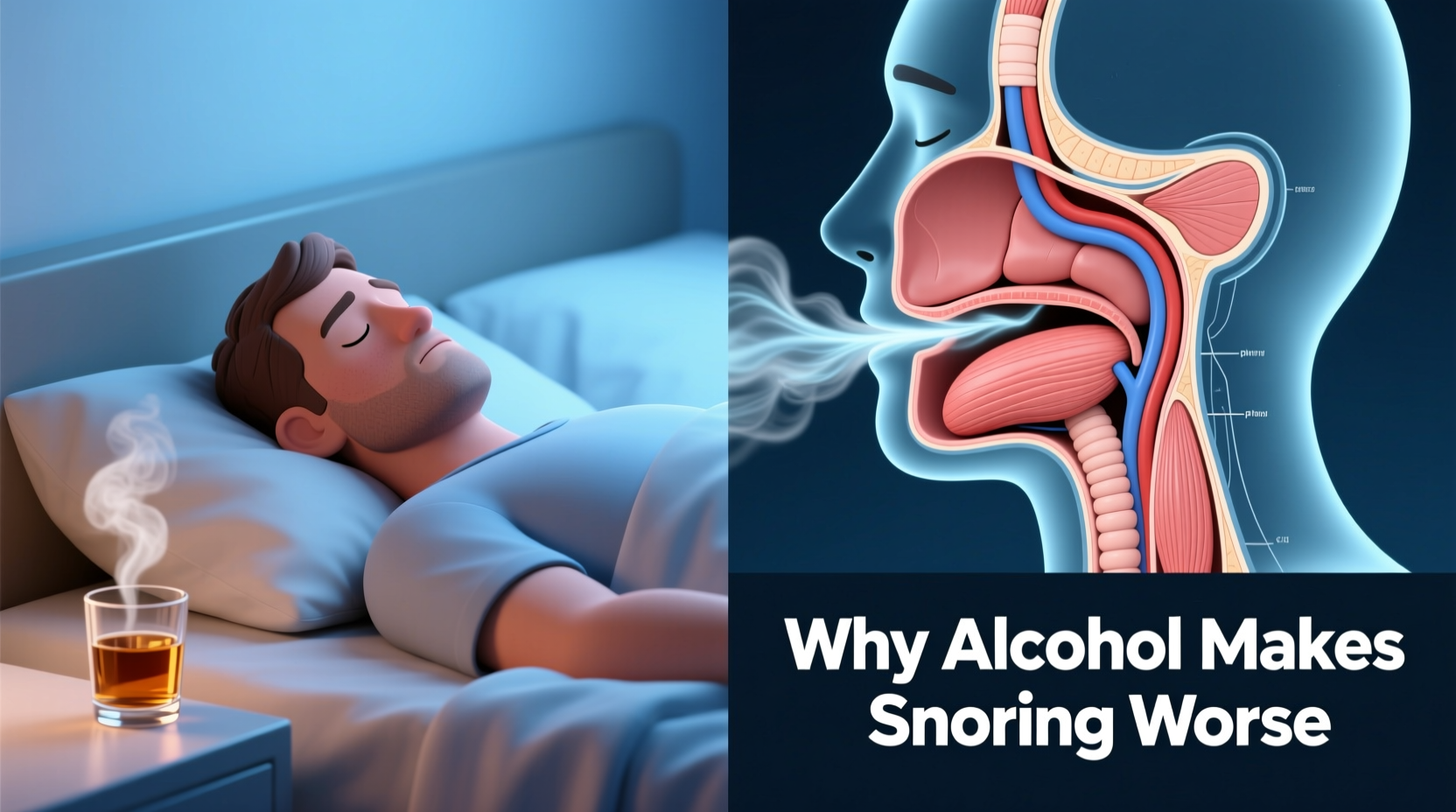
Snoring occurs when airflow causes tissues in the upper airway—particularly the soft palate, uvula, and throat—to vibrate during breathing. Normally, muscles in the airway maintain enough tension to keep the passage open. But alcohol acts as a central nervous system depressant, reducing neural activity and relaxing skeletal muscles throughout the body—including those that support the airway.
When these muscles become overly relaxed due to alcohol consumption, the airway narrows significantly. As air is forced through this constricted space, turbulence increases, leading to vibrations and the characteristic sound of snoring. The more alcohol consumed, especially close to bedtime, the greater the muscle relaxation and the louder and more frequent the snoring tends to be.
“Alcohol is one of the most potent natural muscle relaxants we consume recreationally. It doesn’t just affect voluntary muscles—it directly compromises the tone of pharyngeal dilator muscles critical for maintaining an open airway during sleep.” — Dr. Lena Torres, Sleep Medicine Specialist, Cleveland Clinic
This effect is particularly pronounced in individuals who already have anatomically narrower airways, such as those with enlarged tonsils, a deviated septum, or excess neck fat. Even people who don’t typically snore may begin to do so after drinking because alcohol lowers the threshold for airway collapse.
Alcohol’s Impact on Sleep Stages and Breathing Regulation
Beyond physical airway changes, alcohol disrupts the brain’s ability to regulate breathing during sleep. Normally, the brain continuously monitors blood oxygen and carbon dioxide levels, making micro-adjustments to breathing rate and depth. Alcohol suppresses this feedback loop, especially during REM (rapid eye movement) sleep—the stage most associated with vivid dreaming and muscle atonia.
Research shows that alcohol initially shortens the time it takes to fall asleep and enhances slow-wave (deep) sleep early in the night. However, this comes at a cost: later in the sleep cycle, REM sleep is severely suppressed or fragmented, and sleep becomes more unstable. As the body metabolizes alcohol, there’s often a “rebound” effect around 3–5 a.m., where arousal levels spike, leading to lighter, more disrupted sleep—and worse snoring.
Tip: Avoid drinking alcohol within 3 hours of bedtime to minimize its impact on airway tone and sleep quality.Moreover, alcohol reduces the body’s sensitivity to rising carbon dioxide levels—a key trigger for increasing breathing effort. When this failsafe mechanism is impaired, breathing can become shallow or irregular, further promoting snoring and even brief pauses in breathing known as hypopneas.
Why Snoring Only Happens When Drinking: A Closer Look at Thresholds
Many partners report that their significant other only snores after drinking. This selective pattern highlights the concept of a \"snoring threshold\"—the point at which multiple factors combine to cause airway vibration. On non-drinking nights, muscle tone, posture, and nasal patency may be sufficient to prevent snoring. But add alcohol to the mix, and that delicate balance tips.
Consider the following cumulative contributors:
- Muscle relaxation: Alcohol decreases neuromuscular control of the upper airway.
- Increased airway resistance: Dehydration from alcohol thickens mucus, worsening congestion.
- Supine sleeping position: Gravity pulls relaxed tissues backward, narrowing the airway.
- Nasal congestion: Alcohol can cause mild inflammation and vasodilation in nasal passages.
Each factor alone might not cause snoring, but together—especially under alcohol’s influence—they create the perfect storm. This explains why someone might sleep silently for weeks, then suddenly snore loudly after a single cocktail.
From Snoring to Sleep Apnea: When Occasional Becomes Chronic
Occasional snoring after drinking is common and usually benign. However, frequent alcohol-related snoring can accelerate the development of obstructive sleep apnea (OSA), a serious condition characterized by repeated breathing interruptions during sleep.
A study published in *Alcoholism: Clinical and Experimental Research* found that regular alcohol consumption increases the risk of OSA by up to 25%, independent of body weight. Even moderate drinking—defined as two drinks per day for men—was linked to more frequent apneic events and lower overnight oxygen saturation.
Worse, many people misinterpret alcohol-induced drowsiness as improved sleep. In reality, they’re experiencing sedation, not restorative rest. Over time, this can lead to chronic fatigue, morning headaches, irritability, and cardiovascular strain—all hallmarks of poor sleep quality.
| Sleep Factor | Without Alcohol | With Alcohol (Before Bed) |
|---|---|---|
| Airway Muscle Tone | Normal | Reduced by 30–50% |
| Snoring Frequency | Rare or absent | Common, often loud |
| REM Sleep Duration | Full, uninterrupted cycles | Suppressed or fragmented |
| Oxygen Saturation | Stable (>95%) | Periodic dips (90% or lower) |
| Sleep Efficiency | High (85%+) | Reduced (70–75%) |
This table illustrates how alcohol alters key aspects of sleep health. While one drink may not cause dramatic changes, habitual use compounds these effects over time.
Real-Life Example: Mark and Sarah’s Weekend Pattern
Mark, a 42-year-old project manager, rarely snores during the week. He goes to bed around 10:30 p.m., avoids screens, and sleeps soundly. But on Fridays and Saturdays, he and his wife Sarah enjoy wine with dinner—usually two glasses each. Within 20 minutes of lying down, Mark begins snoring loudly. Sarah often wakes up due to the noise or because Mark briefly stops breathing, then gasps awake.
After several months of disrupted sleep, Sarah encouraged Mark to try abstaining from alcohol for two weekends. During that time, his snoring disappeared completely. Surprised, Mark consulted a sleep clinic. A home sleep test revealed he had mild obstructive sleep apnea—only evident when drinking. His doctor explained that alcohol was unmasking an underlying vulnerability.
By limiting alcohol to one drink earlier in the evening and avoiding it entirely on weekdays, Mark reduced his snoring by 80%. Sarah reported better sleep quality, and Mark felt more alert during the day. This case underscores how alcohol can act as a trigger rather than the sole cause—and how small behavioral changes yield significant improvements.
Practical Solutions: Reducing Alcohol-Related Snoring
You don’t need to eliminate alcohol entirely to reduce snoring, but strategic adjustments can make a big difference. Consider the following evidence-based approaches:
- Limit quantity: Stick to one standard drink for women, two for men—and avoid binge drinking.
- Time it right: Finish drinking at least 3 hours before bedtime to allow partial metabolism.
- Stay hydrated: Drink a glass of water for every alcoholic beverage to counteract dehydration.
- Elevate the head: Use an extra pillow or adjustable bed to keep the airway more open.
- Encourage side sleeping: Lying on the back worsens snoring; positional therapy can help.
Checklist: Minimizing Alcohol-Induced Snoring
- ✅ Limit alcohol intake to moderate levels
- ✅ Avoid drinking within 3 hours of bedtime
- ✅ Hydrate well throughout the evening
- ✅ Use positional aids to prevent back sleeping
- ✅ Keep bedroom air moist with a humidifier
- ✅ Monitor for signs of sleep apnea (gasping, daytime fatigue)
- ✅ Consult a sleep specialist if snoring persists
Frequently Asked Questions
Can non-alcoholic beer still cause snoring?
Non-alcoholic beer contains little to no ethanol, so it doesn’t have the same muscle-relaxing effects. However, some brands contain histamines or sulfites that may trigger nasal congestion in sensitive individuals, indirectly contributing to snoring. If you notice issues, switch to a low-histamine brand or avoid it before bed.
Is wine worse than whiskey for snoring?
The type of alcohol matters less than the total ethanol content and timing of consumption. However, red wine contains congeners and histamines that may increase inflammation and nasal stuffiness in some people, potentially worsening snoring. Clear spirits like vodka, while less inflammatory, still depress respiratory control. Dose and timing are more important than the specific drink.
Could my partner have sleep apnea even if they only snore when drinking?
Yes. Alcohol can reveal a latent predisposition to obstructive sleep apnea. If your partner experiences choking, gasping, or excessive daytime sleepiness—even occasionally—consider a sleep evaluation. Early diagnosis prevents long-term complications like hypertension and heart disease.
Conclusion: Understanding the Link for Better Sleep Health
The reason your partner snores only when drunk lies in the powerful physiological effects of alcohol on the nervous system and upper airway. It’s not laziness, poor habits, or exaggeration—it’s science. By recognizing alcohol as a modifiable risk factor for snoring and sleep disruption, couples can take proactive steps to protect their rest and long-term health.
Small changes—like adjusting drinking windows, improving hydration, or changing sleep positions—can dramatically reduce nighttime noise and improve sleep quality for both partners. And if symptoms persist, seeking professional guidance is not an overreaction; it’s preventive care.
💬 Have you noticed a change in your partner’s snoring after drinking? Share your experience or tips in the comments—your insight could help others find relief and better sleep.








