Snoring is a common sleep disturbance affecting millions of couples worldwide. While it might seem like a minor annoyance, chronic snoring can disrupt sleep quality, strain relationships, and sometimes signal underlying health concerns. One consistent pattern many partners notice is that snoring intensifies when the person sleeps on their back. Understanding the biomechanics behind this—and knowing which natural interventions truly help—can transform restless nights into peaceful ones.
The Science Behind Back Sleeping and Increased Snoring
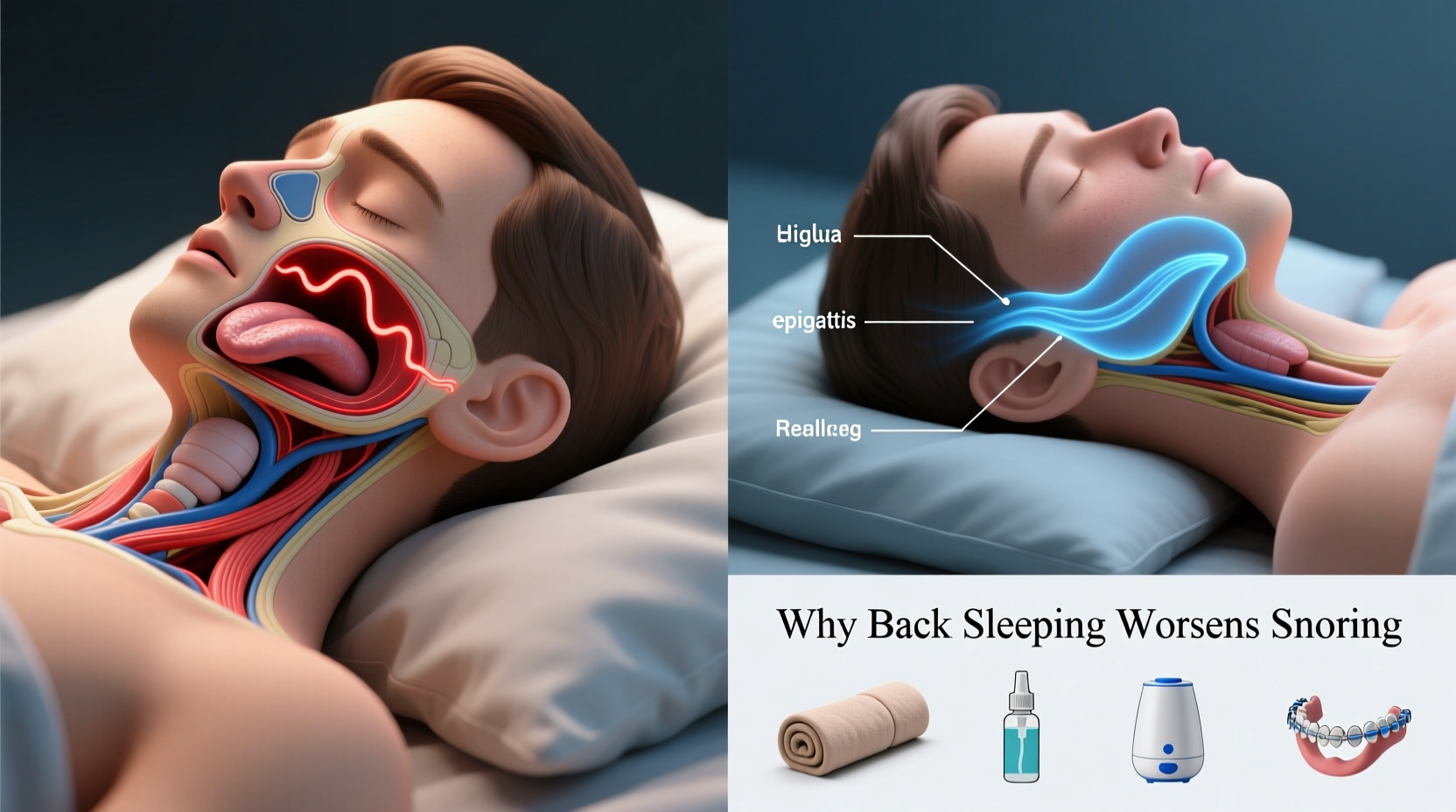
When someone lies on their back, gravity pulls the soft tissues in the throat—including the tongue, soft palate, and uvula—downward toward the airway. This narrowing reduces airflow, increasing the velocity of breath during inhalation and exhalation. As air passes through this constricted space, the tissues vibrate, producing the familiar sound of snoring.
This positional effect is particularly pronounced in individuals with excess throat tissue, enlarged tonsils, or a naturally narrow airway. Even slight relaxation of muscles during deep sleep can exacerbate the issue. According to Dr. Richard Kimball, a board-certified sleep specialist:
“Over 60% of chronic snorers are ‘positional snorers’—meaning their symptoms worsen significantly when supine. Changing sleep position is often the first-line, non-invasive strategy we recommend.”
Back sleeping also encourages the jaw to fall slightly open, further collapsing the upper airway. This combination of anatomical factors makes the supine position the most problematic for snoring.
Tip: Try placing a small pillow under the upper back to encourage a slight side tilt without fully rolling over.Natural Remedies That Actually Work
While medical devices like CPAP machines are effective for sleep apnea, many people prefer starting with natural, low-cost solutions—especially if snoring is mild to moderate. The following approaches are backed by clinical observation and patient-reported outcomes.
1. Positional Therapy: Train Side Sleeping
Encouraging your partner to sleep on their side is one of the most effective ways to reduce back-related snoring. Several techniques can support this shift:
- Tennis ball trick: Sew a tennis ball into the back of a fitted T-shirt. The discomfort of lying on the ball prevents rolling onto the back.
- Wedge pillows: Use a contoured foam pillow that supports the upper body at an angle, reducing airway compression.
- Positional alarms: Wearable devices detect supine positioning and emit a gentle vibration to prompt repositioning.
2. Nasal Breathing Optimization
Blocked nasal passages force mouth breathing, which increases the likelihood of snoring. Improving nasal airflow can make a significant difference:
- Nasal strips: Adhesive bands lift the sides of the nose, expanding the nasal valve during inhalation.
- Sinus rinses: Daily use of a saline rinse (e.g., neti pot) clears allergens and mucus, improving airflow.
- Allergen control: Wash bedding weekly in hot water, use HEPA filters, and minimize dust-collecting items in the bedroom.
3. Lifestyle Adjustments That Reduce Snoring
Diet, exercise, and daily habits play a surprisingly large role in nighttime breathing. Consider these evidence-based changes:
- Lose excess weight: Even a 5–10% reduction in body weight can decrease neck circumference and fat deposits around the airway.
- Avoid alcohol before bed: Alcohol relaxes throat muscles excessively, increasing tissue collapse during sleep.
- Quit smoking: Chronic smoke exposure inflames the airway and increases mucus production, both contributing to snoring.
- Stay hydrated: Dehydration leads to stickier secretions in the throat, making tissues more prone to vibration.
4. Throat and Tongue Exercises (Myofunctional Therapy)
Strengthening the muscles of the upper airway can reduce their tendency to collapse. A 2020 study published in *Sleep Medicine Reviews* found that regular oropharyngeal exercises reduced snoring frequency and intensity by up to 39% over three months.
Sample daily routine (5 minutes, twice daily):
- Press the tip of the tongue against the roof of the mouth and slide it backward. Repeat 20 times.
- Say “k” repeatedly for 1 minute to engage the back of the throat.
- Hold the mouth open and press the molars together while tensing the throat muscles for 30 seconds.
- Inhale deeply, then hum loudly while feeling vibrations in the palate. Do for 2 minutes.
Comparison of Natural Remedies: Effectiveness and Ease of Use
| Remedy | Effectiveness (1–5) | Time to See Results | Cost | Effort Required |
|---|---|---|---|---|
| Side-sleeping training | ⭐⭐⭐⭐☆ | Immediate–2 weeks | $ | Medium |
| Nasal strips | ⭐⭐⭐☆☆ | Immediate | $$ | Low |
| Weight loss | ⭐⭐⭐⭐⭐ | 6–12 weeks | Varies | High |
| Throat exercises | ⭐⭐⭐★☆ | 4–8 weeks | $ | Medium |
| Alcohol avoidance | ⭐⭐⭐⭐☆ | Next night | $ | Low–Medium |
| Saline rinses | ⭐⭐⭐☆☆ | Immediate (if congestion present) | $ | Low |
Real-Life Example: How Sarah Reduced Her Partner’s Snoring
Sarah, a 42-year-old teacher from Portland, noticed her husband Mark’s snoring had become unbearable—especially when he slept on his back. After several sleepless nights, she researched natural options and implemented a multi-pronged approach:
First, she bought a supportive wedge pillow and encouraged Mark to sleep at a 30-degree angle. She also introduced nightly saline rinses, as Mark suffered from seasonal allergies. They eliminated evening wine, a habit they both enjoyed but realized was worsening the issue.
After three weeks, Sarah reported a noticeable drop in snoring volume. By week six, Mark began doing throat exercises recommended by a local speech therapist. Within two months, their bedroom was quiet enough that Sarah no longer needed earplugs.
“It wasn’t one magic fix,” Sarah said. “But combining position change, nasal care, and giving up late-night drinks made all the difference.”
Step-by-Step Plan to Reduce Back-Related Snoring
If you're ready to take action, follow this practical timeline to implement lasting changes:
- Week 1: Assess and Prepare
- Observe your partner’s sleep patterns—note snoring frequency and position.
- Purchase a wedge pillow or try the tennis ball method.
- Buy saline rinse supplies and nasal strips for trial use.
- Week 2–3: Implement Position & Nasal Strategies
- Introduce side-sleeping aids consistently each night.
- Begin nightly sinus rinses, especially if allergies are suspected.
- Replace evening alcohol with herbal tea or warm milk.
- Week 4–6: Add Throat Exercises and Monitor Progress
- Start a daily 5-minute throat exercise routine.
- Track improvements using voice notes or a snoring app.
- Adjust pillow setup or technique based on comfort and results.
- Week 7–8: Evaluate and Optimize
- Review what’s working—double down on effective methods.
- Consider a sleep study if snoring persists or includes gasping.
- Discuss long-term maintenance strategies with your partner.
Frequently Asked Questions
Is back sleeping the only cause of loud snoring?
No, while back sleeping significantly worsens snoring for many, other factors include obesity, nasal congestion, alcohol consumption, aging, and structural issues like deviated septum or enlarged adenoids. However, positional snoring is one of the most correctable types.
Can natural remedies replace CPAP therapy?
Natural remedies are effective for primary snoring or mild obstructive sleep apnea. However, if your partner experiences frequent breathing pauses, choking sounds, or daytime fatigue, a formal diagnosis is essential. CPAP remains the gold standard for moderate to severe sleep apnea and should not be abandoned without medical guidance.
How do I talk to my partner about their snoring without causing offense?
Frame the conversation around shared well-being. Instead of saying “You snore too loud,” try: “I’ve been reading about how sleep positions affect breathing—want to try a new pillow together?” Emphasize teamwork and mutual rest, not blame.
Checklist: Natural Snoring Reduction Plan
Use this actionable checklist to get started:
- ☐ Observe and confirm snoring occurs mainly on the back
- ☐ Purchase a wedge pillow or sew in a tennis ball for positional training
- ☐ Begin nightly saline nasal rinses
- ☐ Eliminate alcohol within 3 hours of bedtime
- ☰ Start daily throat and tongue exercises (5–10 minutes)
- ☐ Replace old pillows and allergen-trapping bedding
- ☐ Track progress weekly using notes or audio recordings
- ☐ Schedule a doctor visit if snoring persists beyond 8 weeks or includes apnea signs
Conclusion: Rest Starts With Awareness and Action
Snoring may be common, but it doesn’t have to be accepted as inevitable. The reason your partner snores louder on their back lies in basic anatomy—gravity narrows the airway, setting the stage for disruptive vibrations. The good news is that simple, natural strategies can yield meaningful improvements without costly equipment or medications.
From adjusting sleep position to strengthening throat muscles and optimizing nasal breathing, real change is possible with consistency and compassion. Every small step contributes to deeper sleep, better health, and a quieter bedroom.
💬 Ready to reclaim your nights? Start tonight with one simple change—try a new pillow position or skip the evening drink. Share your journey or tips in the comments below and help others find peace in their sleep.








