Parrots are intelligent, social creatures that form deep emotional bonds with their human caregivers. When you walk out of the room, the sudden absence can trigger loud, persistent screaming—often mistaken for misbehavior. In reality, this vocalization is typically a sign of separation anxiety, a common but misunderstood condition in companion parrots. Unlike dogs or cats, parrots don’t hide distress quietly. They express it through sound, sometimes at ear-splitting volumes. Understanding the roots of this behavior is the first step toward creating a calmer, more confident bird.
The Social Nature of Parrots
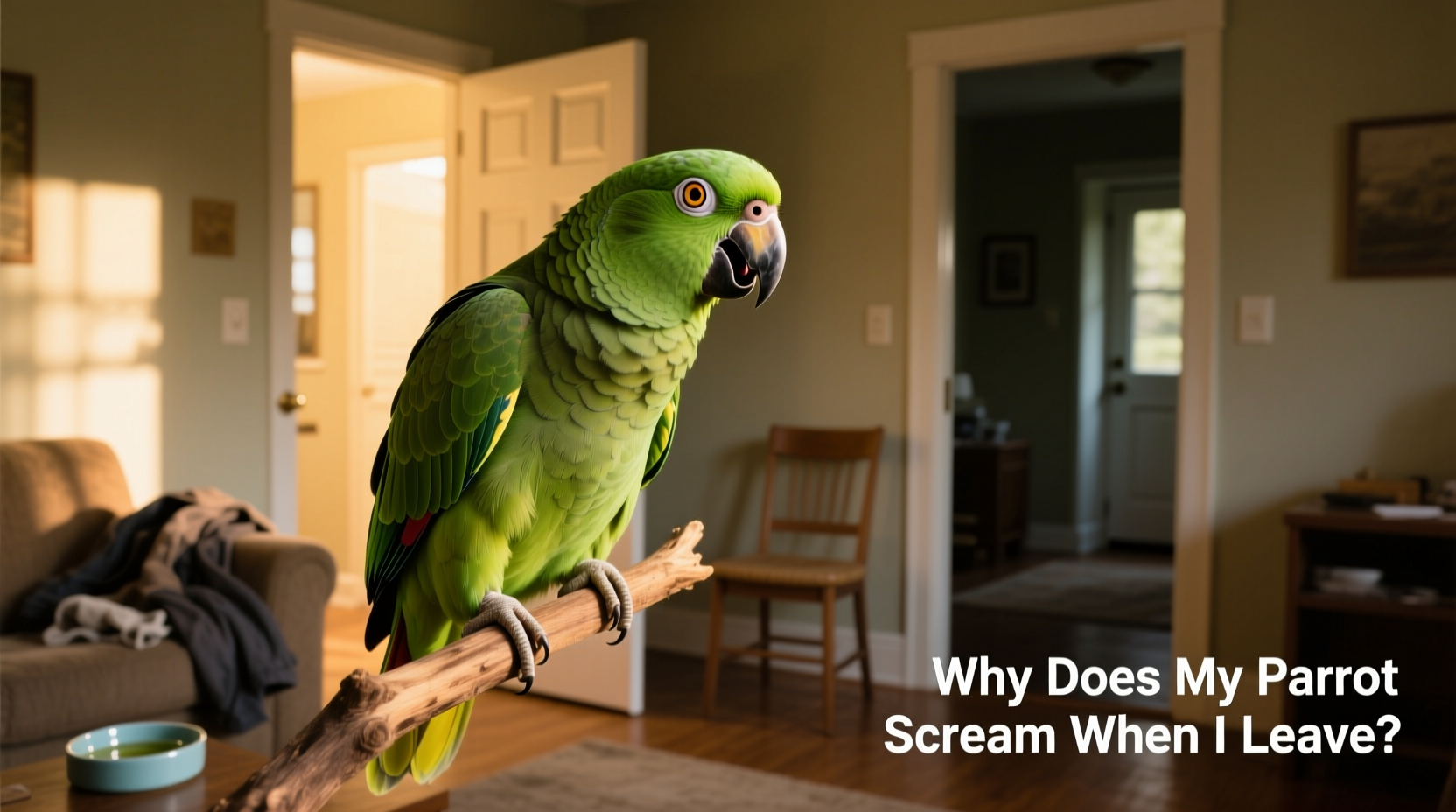
In the wild, parrots live in flocks where constant communication ensures safety and cohesion. Vocalizations serve multiple purposes: maintaining contact with flock members, signaling danger, and reinforcing social bonds. A lone call in the jungle could mean a bird is lost or threatened—prompting others to respond. This instinct doesn’t disappear in captivity. When your parrot screams after you leave, it’s not being defiant; it’s attempting to reestablish connection with its perceived flock member—you.
Domesticated parrots often view their human family as their entire social unit. Without other birds around, they become hyper-dependent on their owners for interaction, security, and stimulation. Sudden isolation—even for a few minutes—can be interpreted as abandonment. The resulting panic manifests as screaming, pacing, feather plucking, or destructive chewing.
Tip: Gradually increase your time away from the parrot to build tolerance and reduce dependency.Recognizing Separation Anxiety in Parrots
Not all screaming indicates anxiety. Parrots vocalize naturally during dawn and dusk (known as “contact calling”), but anxiety-driven screaming follows a distinct pattern:
- Screaming begins immediately or within seconds of your departure
- Intensity increases over time if ignored
- Behavior stops abruptly when you return
- May be accompanied by pacing, wing flapping, or refusal to eat
- Occurs consistently across different rooms or situations involving separation
Some owners mistakenly reinforce the behavior by returning to quiet the bird, unintentionally teaching the parrot that screaming brings attention. Over time, this creates a feedback loop: the bird learns that only extreme noise yields results.
Differentiating Normal vs. Problematic Screaming
| Aspect | Normal Vocalization | Separation Anxiety Screaming |
|---|---|---|
| Timing | Morning/evening chorus, sporadic calls | Immediately after owner leaves, persists for long periods |
| Duration | Short bursts (seconds to a few minutes) | Continues for 10+ minutes unless interrupted |
| Response to Return | Ignores or greets calmly | Stops instantly upon seeing owner |
| Body Language | Relaxed posture, preening, playing | Pacing, fluffed feathers, dilated pupils |
| Context | During play, excitement, or environmental stimuli | Only during isolation or anticipation of separation |
“Parrots don’t scream to annoy—they scream to survive. In their mind, silence could mean being forgotten.” — Dr. Irene Pepperberg, Avian Cognition Researcher
Root Causes of Parrot Separation Anxiety
While the immediate trigger is physical separation, the underlying causes are often behavioral and environmental:
Overbonding to One Person
When a parrot forms an exclusive attachment to a single caregiver, it becomes distressed when that person is absent. This is especially common in homes with one primary handler.
Lack of Independent Play Skills
Parrots need mental engagement. Birds left without toys, foraging opportunities, or environmental enrichment have nothing to focus on but the absence of their owner.
Inconsistent Routines
Unpredictable schedules confuse parrots. If you leave suddenly or return at random times, the bird cannot anticipate your comings and goings, increasing uncertainty and fear.
Past Trauma or Rehoming
Birds with histories of abandonment, neglect, or frequent cage changes may develop heightened sensitivity to separation, even in safe environments.
Confinement Without Stimulation
Caging a parrot in a quiet, isolated room while you’re gone sends the message that solitude equals punishment. This worsens anxiety rather than alleviating it.
Tip: Rotate toys weekly and introduce foraging puzzles to keep your parrot mentally occupied during alone time.Step-by-Step Guide to Reducing Separation Anxiety
Rehabilitating a parrot with separation anxiety requires patience and consistency. Follow this gradual process to build confidence and independence:
- Establish a Predictable Routine
Create consistent daily patterns for feeding, playtime, and departures. Parrots thrive on predictability. - Practice Short Absences
Start by stepping out of sight for just 5–10 seconds. Return calmly before the bird begins to panic. Repeat multiple times daily, gradually increasing duration. - Use Calm Departure Cues
Instead of sneaking away (which increases confusion), say a soft phrase like “I’ll be back” and maintain neutral body language. Avoid emotional goodbyes. - Provide Engaging Distractions
Offer a favorite treat or puzzle toy just before leaving. This associates your departure with something positive. - Desensitize to Leaving Rituals
Practice putting on shoes, picking up keys, or opening doors without actually leaving. This reduces the bird’s association of these actions with abandonment. - Expand Safe Spaces
Set up a second play stand in another room so the parrot can see household activity even when you're not directly interacting. - Increase Independent Play
Teach simple tricks or foraging behaviors that encourage self-sufficiency. Reward calm solo time with praise upon return. - Avoid Reinforcing Screams
Do not return or shout at the bird while it’s screaming. Wait until there’s a moment of quiet—even a split second—before re-entering or acknowledging.
Mini Case Study: Luna the Sun Conure
Luna, a 4-year-old sun conure, began screaming uncontrollably whenever her owner, Mark, went to the bathroom or worked from his home office. The noise lasted up to 30 minutes and disrupted the entire household. Initially, Mark would rush back to comfort her, which only intensified the behavior.
After consulting an avian behaviorist, he implemented a structured plan:
- Introduced a foraging box filled with hidden treats to occupy Luna during short absences
- Started leaving the room for 10 seconds, then returning during calm moments
- Used a consistent verbal cue: “Be right back, Luna”
- Installed a small perch near his office door so she could see him working
Within six weeks, Luna’s screaming decreased by 80%. By week ten, she remained quiet for up to 20 minutes alone, often preening or playing with her toys. The key was consistency and avoiding reinforcement of anxious behavior.
Prevention Checklist: Building a Resilient Parrot
Whether your parrot already shows signs of anxiety or you want to prevent it, use this checklist to promote emotional health:
- ✅ Encourage interaction with multiple household members to avoid overattachment
- ✅ Provide daily foraging opportunities (e.g., shredded paper, hidden treats)
- ✅ Rotate toys weekly to maintain novelty and interest
- ✅ Allow supervised free flight or exploration outside the cage
- ✅ Maintain a consistent daily schedule for feeding and interaction
- ✅ Practice short, controlled separations daily
- ✅ Use positive reinforcement for calm behavior during alone time
- ✅ Avoid yelling or punishing screaming—it increases stress
Frequently Asked Questions
Can separation anxiety be completely cured in parrots?
While some birds may never be entirely silent when alone, most can learn to tolerate separation with reduced anxiety. Complete resolution depends on the severity, history, and consistency of training. Early intervention yields the best outcomes.
Should I get a second parrot for companionship?
Adding another bird is not a guaranteed solution and can create new problems—territorial aggression, favoritism, or dual dependency. It’s better to first address environmental enrichment and behavioral training. If considering a companion, consult an avian specialist and ensure proper introduction protocols.
How long does it take to reduce parrot screaming?
Improvement can begin within 2–4 weeks with consistent effort, but full progress may take several months. Patience is essential. Rapid fixes often fail because they don’t address the root cause of insecurity.
Conclusion: Helping Your Parrot Feel Safe
Understanding why your parrot screams when you leave the room transforms frustration into empathy. What seems like noise is actually a plea for reassurance from a creature wired for lifelong companionship. Separation anxiety isn’t a flaw in your bird—it’s a reflection of how deeply it trusts you. With structured routines, environmental enrichment, and patient training, you can help your parrot develop confidence and independence.
Every quiet moment your bird spends alone without screaming is a victory. Celebrate small progress, stay consistent, and remember that emotional well-being is just as important as physical health in parrots. By meeting your bird’s psychological needs, you’re not just reducing noise—you’re building a stronger, more trusting relationship.
💬 Have a parrot with separation anxiety? Share your experience or tips in the comments—your story could help another bird parent find peace.








