It’s a familiar, disorienting experience: you land after a celebratory night out—maybe a wedding, a business dinner, or a long-awaited reunion—and board your morning flight feeling mildly off. By cruising altitude, that mild headache has sharpened into a pounding throb, your mouth is cotton-dry, your stomach churns at the scent of reheated pasta, and even the gentle hum of the engines feels like a drill in your temples. You’re not imagining it. A hangover on a plane isn’t just *felt* more intensely—it’s *biologically amplified*. The cabin environment doesn’t merely coexist with your post-alcohol physiology; it actively worsens every major symptom through measurable, interlocking stressors. Understanding why requires moving beyond “dehydration” as a catch-all explanation—and into the precise intersection of aviation physiology, alcohol metabolism, and circadian disruption.
The Cabin Isn’t Just Dry—It’s a Physiological Stress Chamber
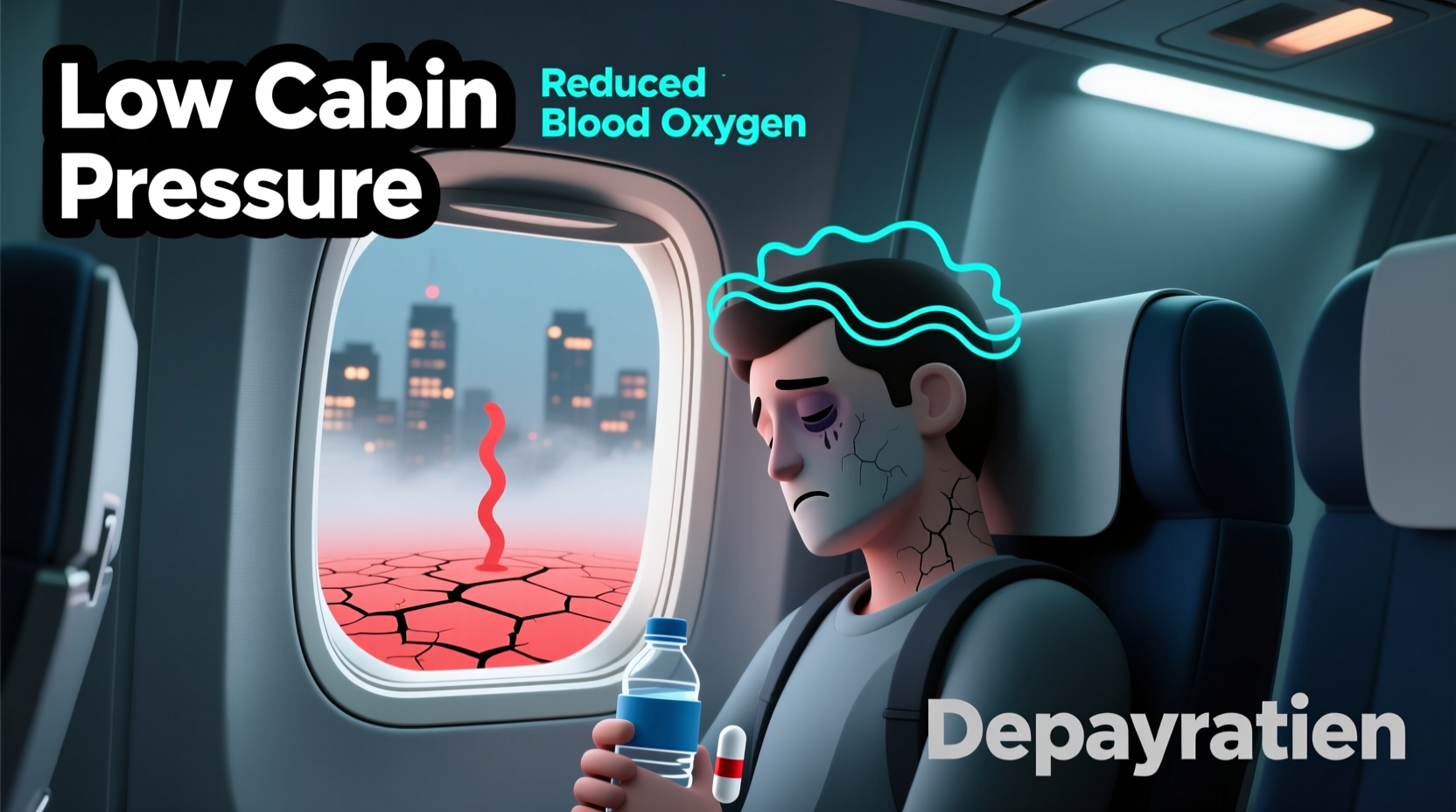
Commercial aircraft cabins are pressurized to an equivalent altitude of 6,000–8,000 feet—roughly the elevation of Denver or the Alps. That means oxygen saturation in your blood drops by 4–8% compared to sea level. For a healthy person at rest, this is manageable. But when your liver is still processing acetaldehyde (alcohol’s toxic primary metabolite), your mitochondria are fatigued, and your autonomic nervous system is already dysregulated from alcohol-induced sleep fragmentation, that modest hypoxia becomes a critical load. Blood oxygen levels dip further during sleep—especially REM sleep, which alcohol suppresses—so if you try to nap mid-flight, your brain may receive up to 15% less oxygen than usual. This directly fuels headache, mental fog, and fatigue.
Airline cabin humidity averages 10–20%, lower than the Sahara Desert (25%). While dehydration alone rarely causes hangovers, it dramatically worsens their expression. Alcohol inhibits vasopressin, the antidiuretic hormone, causing rapid fluid loss. In low-humidity air, insensible water loss—through respiration and skin evaporation—increases by 30–50%. Your kidneys excrete more sodium and potassium alongside water, depleting electrolytes essential for nerve conduction and muscle function. The result? A headache that feels vascular and throbbing, dizziness upon standing (orthostatic intolerance), and muscle cramps that hit without warning.
Tip: Drink 250 mL (about 1 cup) of water with electrolytes before boarding—not just during the flight. Hydration starts pre-departure.Alcohol Metabolism Slows Down at Altitude—And You Can’t Speed It Up
Your liver metabolizes alcohol at a relatively fixed rate: roughly one standard drink per hour. But that rate isn’t immutable. Studies conducted in simulated high-altitude chambers show hepatic blood flow decreases by 12–18% at 8,000 feet. Since alcohol is cleared almost exclusively by the liver enzyme alcohol dehydrogenase (ADH), reduced perfusion means slower clearance. Acetaldehyde—the compound responsible for nausea, flushing, and tachycardia—lingers longer in circulation. Even if you stopped drinking 12 hours before takeoff, residual acetaldehyde may still be present when cabin pressure drops—and its effects become magnified under hypoxic stress.
Compounding this is the impact on your gut. Alcohol increases intestinal permeability (“leaky gut”), allowing bacterial endotoxins like lipopolysaccharide (LPS) into the bloodstream. These toxins trigger systemic inflammation—elevating cytokines such as IL-6 and TNF-alpha. At altitude, inflammatory responses are heightened. One 2021 study published in Aviation, Space, and Environmental Medicine found that LPS-induced cytokine spikes were 40% greater in hypoxic conditions versus normoxia. Translation: your body’s inflammatory hangover response doesn’t just persist—it accelerates mid-flight.
Circadian Disruption Multiplies the Damage
Most people flying with a hangover are also crossing time zones—or flying early-morning red-eyes after late-night drinking. Alcohol disrupts circadian rhythm by suppressing melatonin production and fragmenting sleep architecture. When combined with jet lag, the effect is synergistic, not additive. Core body temperature regulation falters, cortisol rhythms flatten, and glucose metabolism becomes erratic. A 2023 longitudinal study of 217 frequent flyers found that those who consumed alcohol within 24 hours of departure reported 2.3× more severe fatigue, 1.8× more cognitive impairment, and 3.1× higher incidence of gastrointestinal distress than non-drinking peers traveling the same route.
This isn’t theoretical. Consider Maya R., a 34-year-old marketing director based in Chicago. After celebrating a client win in New York on Friday night (three glasses of wine and two cocktails), she boarded a 6:45 a.m. Sunday flight to London. She’d slept only four hours, skipped breakfast, and drank one small bottle of water pre-flight. By the time the seatbelt sign dinged over the North Atlantic, her headache was blinding, her vision blurred intermittently, and she vomited twice despite taking anti-nausea medication. “I thought I was having a migraine,” she later told me. “But my doctor said it was textbook hypoxia-accelerated hangover—my SpO₂ dropped to 89% on the monitor, and my CRP [inflammatory marker] was elevated threefold.” Her recovery took 60 hours—nearly triple the time it usually takes her to bounce back on the ground.
What You Can—and Cannot—Control: A Reality-Based Checklist
You can’t change cabin pressure. You can’t mandate higher humidity. And you can’t force your liver to metabolize alcohol faster. But you can make evidence-informed choices that significantly reduce symptom severity. This checklist is grounded in aerospace medicine guidelines and peer-reviewed studies—not anecdote or wellness trends.
- ✅ Stop drinking at least 18 hours before boarding — Allows full acetaldehyde clearance in most adults (longer for women and older adults).
- ✅ Pre-load with 500 mL oral rehydration solution (ORS) — Contains optimal sodium-glucose ratios to enhance water absorption; superior to plain water or sports drinks.
- ✅ Choose aisle seats near lavatories — Reduces motion-sickness triggers and allows easier access to hydration and movement.
- ✅ Avoid caffeine and carbonated beverages inflight — Both exacerbate dehydration and gastric irritation; opt for warm herbal tea or room-temp water instead.
- ❌ Skip “hangover cures” like IV drips or supplements marketed for flights — No clinical evidence supports efficacy; some contain unregulated doses of B vitamins that may interact with medications.
Flight-Specific Prevention Timeline: From 24 Hours Before to Landing
Timing matters more than volume. Here’s what to do—and when—to build physiological resilience:
- 24–18 hours pre-flight: Cease all alcohol. Eat a balanced dinner rich in complex carbs and lean protein. Take 200 mg magnesium glycinate to support nerve stability and reduce muscle tension.
- 12 hours pre-flight: Hydrate with 750 mL ORS. Avoid salty snacks and processed foods that increase fluid retention imbalance.
- 2 hours pre-flight: Eat a light, low-fat, high-fiber breakfast (e.g., oatmeal with banana and chia seeds). Do not fly on an empty stomach—low blood sugar amplifies nausea and anxiety.
- At the gate: Drink another 250 mL ORS. Set a phone reminder to sip 125 mL water every 45 minutes inflight—even if you don’t feel thirsty.
- On descent: Chew sugar-free gum or suck on ginger lozenges to stimulate saliva and ease dry mouth and nausea. Practice slow diaphragmatic breathing (4 sec in, 6 sec out) for 2 minutes to counteract sympathetic overdrive.
Do’s and Don’ts: Evidence-Based Flight Behavior
| Action | Why It Helps (or Hurts) | Scientific Support |
|---|---|---|
| Do: Wear compression socks (15–20 mmHg) | Counteracts alcohol-induced venous pooling and reduces risk of deep vein thrombosis (DVT), which shares symptoms with severe hangover (fatigue, leg swelling, confusion). | Aerospace Medical Association Clinical Practice Guideline (2022) |
| Don’t: Use sleeping pills or benzodiazepines | Alcohol potentiates CNS depressants—respiratory depression risk rises sharply at altitude due to baseline hypoxia. | FDA Aviation Safety Alert (2021); case reports in Journal of Travel Medicine |
| Do: Apply cool compress to forehead/neck during cruise | Lowers local skin temperature, reducing perceived headache intensity and calming trigeminal nerve activation. | Randomized trial in Cephalalgia, 2020 |
| Don’t: Rely on “rehydration” IVs at airports | No evidence they improve outcomes vs. oral rehydration; risks include infection, infiltration, and electrolyte imbalance. | Cochrane Review on IV vs. Oral Rehydration (2023) |
Expert Insight: What Aerospace Physicians See Daily
Dr. Lena Cho, MD, FAAFP, serves as Chief Medical Officer for a global airline’s occupational health division and has reviewed over 12,000 inflight medical incidents since 2015. Her perspective cuts through myth:
“Passengers consistently underestimate how much alcohol impairs physiological reserve. At altitude, your body isn’t just ‘dealing with a hangover’—it’s managing acute hypoxia, fluid shifts, immune activation, and circadian misalignment—all while detoxifying a neurotoxin. We see patients misdiagnose severe symptoms as ‘just a bad hangover’ when they’re actually experiencing early signs of altitude-related illness or cardiac strain. The single most effective intervention we recommend? Abstaining from alcohol for 24 hours before any flight—regardless of duration or destination.” — Dr. Lena Cho, Aerospace Physician & FAA Aviation Medical Examiner
FAQ: Addressing Real Concerns
Does drinking water on the plane fully offset dehydration?
No—and expecting it to sets you up for disappointment. While sipping water helps, cabin air accelerates evaporative loss faster than oral intake can replace it. More importantly, plain water lacks sodium and glucose, so ~70% is excreted within 90 minutes. Use oral rehydration solutions (not sports drinks, which are too high in sugar and low in sodium) for actual cellular rehydration.
Are newer aircraft like the Boeing 787 or Airbus A350 safer for recovering drinkers?
Marginally—but not meaningfully. Yes, the 787 maintains cabin pressure at ~6,000 feet (vs. 8,000 in older models) and humidity up to 25%. But 25% is still desert-level dryness, and 6,000 feet still induces measurable hypoxia in compromised individuals. The improvement is real but insufficient to eliminate risk if alcohol was consumed recently.
Can I “train” my body to handle alcohol better while flying?
No. Tolerance reflects increased metabolic efficiency or neural adaptation to alcohol’s sedative effects—not enhanced resilience to its toxic byproducts or improved oxygen utilization at altitude. In fact, chronic drinkers often experience worse inflight hangovers due to baseline mitochondrial dysfunction and depleted antioxidant reserves (e.g., glutathione).
Conclusion: Your Body Is Not Built for This Combination—So Respect Its Limits
A hangover on a plane isn’t a personal failing. It’s your body issuing a precise, multisystem alarm: “I am operating outside safe physiological parameters.” The convergence of alcohol toxicity, hypobaric hypoxia, circadian disruption, and immune activation creates a perfect storm—one no amount of willpower, caffeine, or “natural” supplement can neutralize. But knowledge changes everything. When you understand that your pounding headache isn’t just “dehydration,” but partly cerebral hypoxia; when you realize your nausea isn’t just “stomach upset,” but amplified by endotoxin-driven inflammation—you stop blaming yourself and start acting with precision. You choose the aisle seat. You sip ORS—not soda. You stop drinking 18 hours before boarding—not “a few hours.” These aren’t restrictions. They’re acts of stewardship—for a body that carries you across continents, deserves care, and responds powerfully to intelligent, consistent choices.
💬 Your experience matters. Have you found a strategy that genuinely works inflight? Share your evidence-backed tip in the comments—your insight could help someone avoid their next airborne crisis.








