
It’s not uncommon for people to notice subtle differences in how their hair grows across different areas of the scalp. One of the most frequently reported concerns is slower hair growth on one side of the head. While this asymmetry might seem puzzling—or even alarming—it’s often rooted in a combination of biological, behavioral, and environmental factors. Understanding why this happens can help you take targeted steps to support more balanced, healthy hair growth.
Hair doesn’t grow at a perfectly uniform rate across the scalp. Individual follicles have their own growth cycles, and external influences can amplify minor differences. When one side consistently lags behind, it's usually not due to a single cause but rather an interplay of several underlying elements. From sleep patterns to circulation, styling habits to structural anatomy, each factor plays a role in determining how fast—and how fully—your hair grows.
Anatomical and Biological Factors
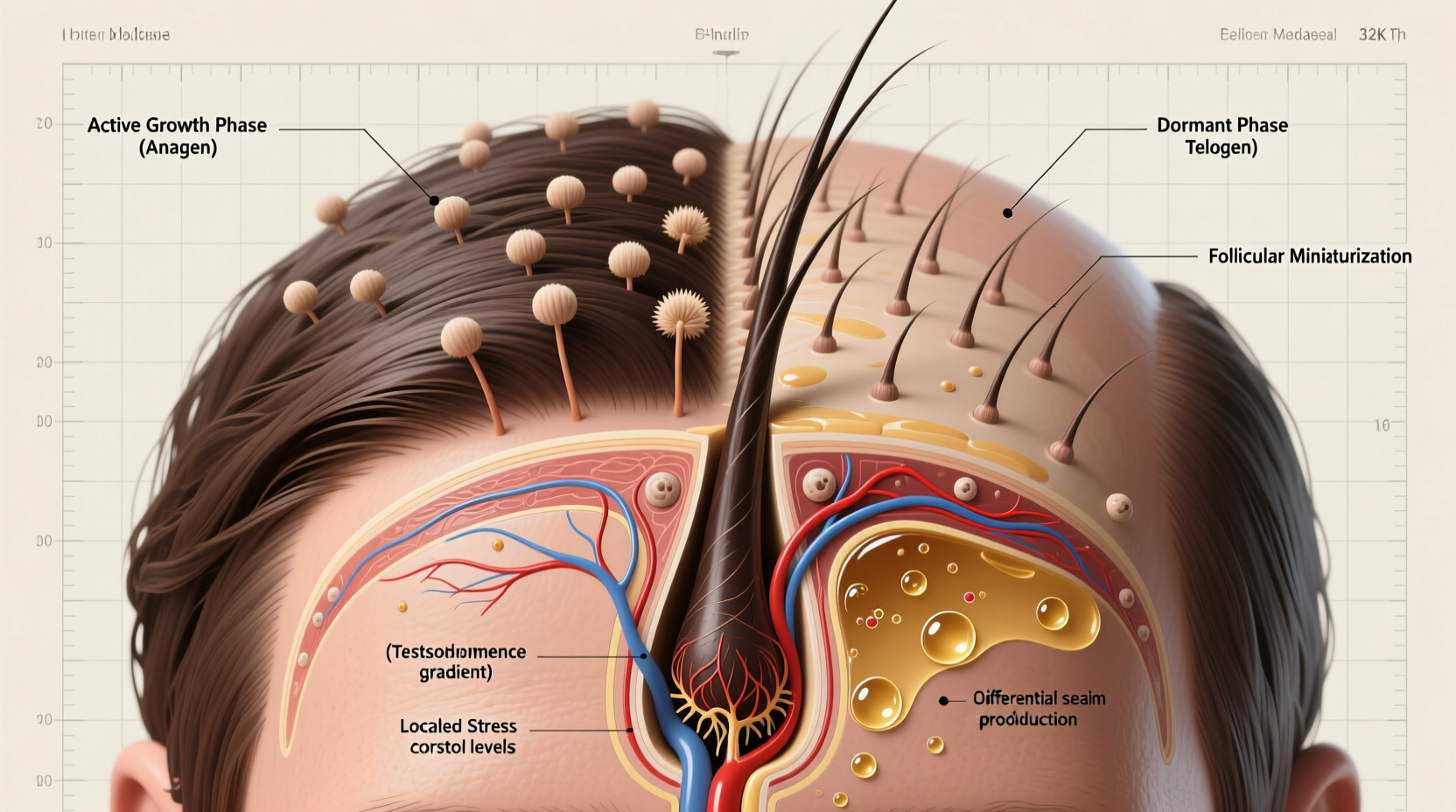
The human body is naturally asymmetrical. No two sides are identical—not even the blood flow, nerve supply, or follicle density on your scalp. These small variations can lead to noticeable differences in hair growth over time.
- Uneven Blood Circulation: Scalp circulation delivers oxygen and nutrients essential for hair growth. If one side of your head receives slightly less blood flow due to posture, sleeping position, or vascular structure, follicles there may grow more slowly.
- Follicle Density Variation: Some people naturally have fewer active hair follicles on one side of the scalp. This genetic variation can make growth appear thinner or slower, even if the rate per strand is similar.
- Cranial Bone Structure: Slight differences in skull shape can influence tension on the scalp, which in turn affects follicle health. Areas under more tension may experience reduced growth efficiency.
“Hair growth isn’t uniform by design. The scalp is like any other organ—its function varies slightly across regions based on blood supply, nerve input, and local tissue environment.” — Dr. Lena Patel, Trichologist and Hair Health Researcher
Daily Habits That Influence Growth Patterns
Your routine behaviors—many of which you might not even think about—can significantly impact where and how quickly your hair grows.
Sleeping Position and Pillow Friction
If you consistently sleep on one side, that side of your scalp experiences repeated friction against the pillow. Over time, this micro-trauma can weaken hair shafts, increase breakage, and disrupt the growth cycle. Additionally, lying on one side may temporarily compress blood vessels, reducing nutrient delivery during the critical overnight recovery phase.
Tip: Use a silk or satin pillowcase to reduce friction, and try alternating sides when you sleep to distribute pressure evenly.Styling and Parting Habits
Most people part their hair on the same side every day. This creates consistent tension on one area of the scalp, potentially leading to traction-related slowdowns in growth. Similarly, frequent use of clips, pins, or tight styles (like ponytails pulled to one side) can stress specific follicles and impair their long-term performance.
Handedness and Touch Frequency
Right-handed individuals tend to touch, brush, or manipulate the right side of their hair more often. Increased handling can lead to more breakage and oil transfer, while also stimulating blood flow—which may paradoxically encourage slightly faster growth on the dominant-hand side. However, excessive manipulation increases split ends and mechanical damage, counteracting any benefits.
Nutritional and Hormonal Influences
Systemic factors like nutrition and hormones affect overall hair health, but they can also contribute to regional differences if combined with localized stressors.
| Nutrient | Role in Hair Growth | Deficiency Impact |
|---|---|---|
| Iron | Supports oxygen transport to follicles | Can cause diffuse thinning, possibly exaggerated on weaker-growing side |
| Vitamin D | Regulates follicle cycling | Linked to prolonged resting phase (telogen), slowing visible growth |
| Zinc | Aids protein synthesis for keratin | May lead to brittle hair and increased shedding |
| Biotin (B7) | Metabolic support for hair cells | Rare deficiency, but can impair growth rate |
Hormonal fluctuations—such as those during menstruation, pregnancy, or thyroid imbalances—can alter the hair growth cycle. While these changes typically affect the entire scalp, pre-existing weak spots (like a slower-growing side) may become more pronounced during periods of hormonal stress.
Medical and Scalp Conditions
Localized medical issues can directly inhibit hair growth on one side without affecting the rest of the scalp.
- Scalp Psoriasis or Seborrheic Dermatitis: Inflammatory skin conditions may flare up asymmetrically, creating patches of flaking, redness, and compromised follicle function.
- Fungal Infections (e.g., Tinea Capitis): Though rare in adults, fungal infections can target one area, leading to patchy thinning and stunted growth.
- Temporal Auricular Alopecia: A condition sometimes seen in women involving gradual thinning near the temples, often more prominent on one side.
- Traction Alopecia: Caused by prolonged pulling from hairstyles, this can develop unevenly if one side bears more tension.
If you notice sudden thinning, bald patches, or changes in texture on just one side, consult a dermatologist. Imaging or scalp biopsies may be needed to rule out neural or vascular abnormalities.
Mini Case Study: Sarah’s Asymmetrical Growth Pattern
Sarah, a 32-year-old graphic designer, noticed her left side wasn’t keeping up with the right after growing her hair out for nearly a year. Her stylist pointed out that she always tucked her hair behind her left ear and slept on her left side. She also wore a heavy braid over her left shoulder daily, causing constant friction and pull.
After switching to a silk pillowcase, alternating her sleep position, and changing her part weekly, Sarah observed improved consistency in growth within three months. She also began massaging both sides equally during shampooing, promoting circulation. By addressing mechanical stressors, she restored balance without medical intervention.
Actionable Steps to Promote Even Hair Growth
You don’t need to accept uneven growth as permanent. With mindful adjustments, you can create conditions that support symmetrical development.
- Alternate Your Sleep Side: Make a habit of switching which side you lie on each night. Consider using a supportive neck pillow to make transitions easier.
- Change Your Hair Part Weekly: Move your part from left to center to right on a rotating schedule to relieve tension on one area.
- Use Gentle Styling Techniques: Avoid tight elastics, one-sided braids, or clips that pull repeatedly on the same spot.
- Massage Both Sides Equally: Spend 2–3 minutes daily massaging the entire scalp with fingertips or a soft brush to stimulate circulation.
- Optimize Nutrition: Ensure adequate intake of iron, zinc, vitamin D, and protein through diet or supplements (after consulting a doctor).
- Minimize Heat and Chemical Exposure: Apply heat protectant before styling and limit bleaching or perming, especially on already fragile sections.
Hair Care Checklist for Balanced Growth
- ☑ Alternate sleeping side at least 3 nights per week
- ☑ Change hair part every 7 days
- ☑ Perform 3-minute scalp massage daily
- ☑ Use silk/satin pillowcase
- ☑ Avoid tight, one-sided hairstyles
- ☑ Eat protein-rich meals with leafy greens and healthy fats
- ☑ Schedule a dermatology check-up if asymmetry worsens
FAQ: Common Questions About Uneven Hair Growth
Is it normal for hair to grow slower on one side?
Yes, mild asymmetry in hair growth is common and often due to habitual factors like sleep position, parting, or styling. As long as there are no signs of inflammation, balding, or pain, it’s likely benign and correctable with lifestyle adjustments.
Can poor circulation really affect just one side of the head?
Yes. While systemic circulation affects overall health, localized compression—such as from sleeping on one side nightly—can temporarily reduce blood flow to that region. Over months or years, this may contribute to slower follicle activity compared to the opposite side.
Should I be worried if only one side is thinning?
Gradual thinning on one side warrants attention. It could indicate traction alopecia, a neurological issue, or early-stage pattern hair loss with asymmetrical presentation. See a healthcare provider if you observe widening parts, visible scalp, or changes in texture.
Conclusion: Take Control of Your Hair Growth Balance
Slower hair growth on one side isn’t necessarily a sign of a serious problem—but it is a signal. Your body responds to daily habits, structural tendencies, and nutritional inputs in ways that manifest visibly over time. Recognizing the root causes empowers you to make informed choices that promote symmetry, strength, and vitality across your entire scalp.
Start with simple changes: rotate your part, switch your sleep side, and treat both halves of your head with equal care. Monitor progress patiently, knowing that hair grows about half an inch per month on average. Small, consistent actions compound into significant improvements.
💬 Have you noticed uneven growth? What changes helped you? Share your experience below—your insight could help someone else achieve balanced, healthy hair.








