
It’s a familiar sensation: you’ve been sitting for a short while—maybe at your desk, on the couch, or in a cramped airplane seat—and suddenly your foot feels numb, tingly, or completely lifeless. You shift your leg, stand up, and wait for the “pins and needles” to subside. While this is usually temporary and harmless, frequent episodes can be uncomfortable and may hint at underlying habits or health patterns worth addressing.
This phenomenon, commonly referred to as a limb “falling asleep,” occurs due to disrupted nerve signaling and blood flow. Understanding the physiological mechanisms behind it allows you to take control through posture adjustments, movement strategies, and lifestyle changes. Below, we break down the causes, risks, and most effective prevention techniques.
The Science Behind Numbness: Nerves and Blood Flow
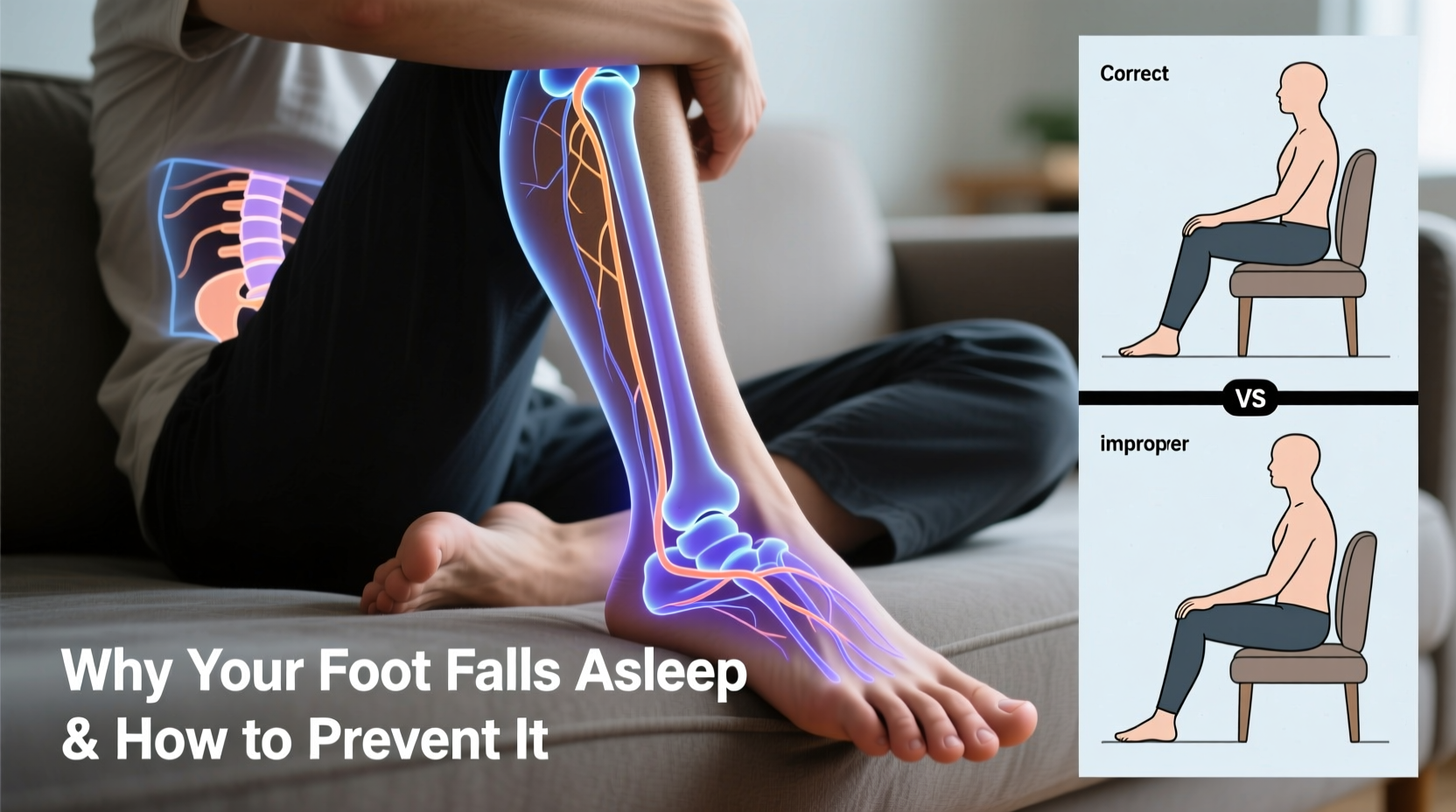
When your foot goes numb during prolonged sitting, it’s primarily due to mechanical pressure on nerves or reduced circulation. The most common culprit is compression of the peroneal nerve, which runs along the outside of your knee and controls sensation and movement in the lower leg and foot.
Sitting with your legs crossed or tucked beneath you places sustained pressure on this nerve. Even brief compression—just 5 to 10 minutes—can interfere with the nerve’s ability to transmit signals to the brain. This results in paresthesia: the tingling, prickling, or numbness often described as “pins and needles.”
Blood flow also plays a role. When a limb is compressed, oxygen delivery slows, and metabolic waste products accumulate. Though temporary ischemia (reduced blood supply) doesn’t typically cause tissue damage in healthy individuals, it contributes to the odd sensation when circulation resumes.
“Nerve compression from poor sitting posture is one of the most common reasons patients report foot numbness. The good news is, it’s largely preventable with awareness and small behavioral shifts.” — Dr. Lena Torres, Neurologist, Boston Spine Institute
Common Postures That Trigger Foot Numbness
Not all sitting is created equal. Certain positions dramatically increase the risk of nerve compression:
- Legs crossed at the knee or ankle: Places direct pressure on the peroneal nerve just below the fibular head.
- Sitting on your foot or calf: Compresses both nerves and blood vessels in the lower leg.
- Slouching with knees sharply bent: Increases pressure on the popliteal fossa (back of the knee), affecting multiple nerve pathways.
- Low chairs or stools: Force hips and knees into extreme flexion, stretching and compressing nerves simultaneously.
A study published in *Clinical Biomechanics* found that crossing the legs for more than 15 minutes significantly reduced nerve conduction velocity in the peroneal pathway. While the effect was reversible, repeated exposure could contribute to chronic irritation over time.
Tip: Set a reminder every 20–30 minutes to uncross your legs and reposition your feet flat on the floor.Who Is More at Risk?
While anyone can experience foot numbness from poor posture, certain individuals are more susceptible due to anatomical, medical, or lifestyle factors:
| Group | Risk Factors | Prevention Focus |
|---|---|---|
| Office Workers | Prolonged sitting, ergonomic neglect | Desk ergonomics, scheduled movement breaks |
| Pregnant Individuals | Fluid retention, increased nerve sensitivity | Elevated leg rest, supportive seating |
| Diabetics | Pre-existing peripheral neuropathy | Blood sugar control, footwear, nerve monitoring |
| People with Sciatica or Herniated Discs | Compromised spinal nerve roots | Posture correction, physical therapy |
| Long-Distance Travelers | Cramped seating, immobility | In-seat exercises, hydration |
For those with diabetes or vitamin B12 deficiency, even mild nerve compression can trigger more intense or longer-lasting symptoms due to already impaired nerve function. These individuals should be especially vigilant about avoiding prolonged pressure on limbs.
Step-by-Step Guide to Preventing Foot Numbness
Preventing your foot from falling asleep doesn’t require drastic changes—just consistent attention to body mechanics. Follow this actionable routine throughout your day:
- Adjust Your Chair Height: Ensure your feet rest flat on the floor with knees at or slightly below hip level. Use a footrest if needed.
- Keep Feet Active: Gently point and flex your toes every 15 minutes. Rotate ankles clockwise and counterclockwise.
- Avoid Crossing Legs: Consciously keep both feet planted on the ground. If you catch yourself crossing, reset immediately.
- Take Movement Breaks: Stand up and walk for 2–3 minutes every 30–60 minutes. This boosts circulation and resets nerve activity.
- Check Your Seating Surface: Soft sofas or low chairs encourage slouching. Opt for firm, supportive seats with lumbar support.
- Wear Non-Restrictive Clothing: Tight jeans or boots can compress nerves and reduce blood flow. Choose flexible footwear and breathable fabrics.
- Hydrate Regularly: Dehydration thickens blood and reduces circulation efficiency. Aim for 1.5–2 liters of water daily.
“Movement is medicine for the nervous system. Even micro-movements while seated can prevent nerve stagnation.” — Dr. Rajiv Mehta, Physical Therapist
Mini Case Study: Sarah’s Remote Work Routine
Sarah, a 34-year-old software developer, began experiencing frequent left-foot numbness after transitioning to full-time remote work. She worked from her living room couch, often sitting with legs curled under her for hours. Initially dismissing it as minor discomfort, she started noticing delayed recovery—sometimes taking over five minutes for sensation to return.
After consulting a physiotherapist, Sarah learned her seated position was compressing her left peroneal nerve. She made several changes: investing in an ergonomic desk chair, setting a timer to move every half hour, and incorporating ankle circles into her workflow. Within two weeks, the numbness disappeared entirely. “I didn’t realize how much my couch was working against me,” she said. “Now I feel more alert and less stiff overall.”
Checklist: Daily Habits to Keep Your Feet Awake
Use this checklist to build sustainable habits that protect nerve health and circulation:
- ✅ Sit with feet flat on the floor (no tucking or crossing)
- ✅ Take a standing or walking break every 30–60 minutes
- ✅ Perform toe raises and ankle rolls hourly
- ✅ Use a footrest if your chair is too high
- ✅ Avoid tight shoes or restrictive socks during long sits
- ✅ Stay hydrated throughout the day
- ✅ Evaluate your chair: does it support neutral spine alignment?
- ✅ Monitor for recurring numbness—even without pain, it’s a signal
When to Seek Medical Advice
Occasional foot numbness from sitting is normal. However, persistent or worsening symptoms may indicate an underlying condition requiring evaluation. Consult a healthcare provider if you experience:
- Numbness that lasts more than 10–15 minutes after standing
- Frequent episodes without obvious postural triggers
- Weakness in foot muscles (e.g., difficulty lifting the front of the foot)
- Shooting pain radiating from the lower back down the leg
- Symptoms in both feet or progressing upward
Conditions such as lumbar radiculopathy, peripheral neuropathy, or tarsal tunnel syndrome can mimic or exacerbate positional numbness. Early diagnosis improves outcomes, especially when nerve damage is involved.
FAQ: Common Questions About Foot Numbness
Why does my foot tingle when it \"wakes up\"?
The tingling sensation occurs as nerves regain function and blood flow returns. This phase, called paresthesia, is the nervous system rebooting communication between your foot and brain. It’s usually brief but can feel intense if the compression was prolonged.
Can sitting cause permanent nerve damage?
In rare cases, sustained or repeated nerve compression can lead to chronic neuritis or even muscle weakness. For example, “Saturday night palsy” refers to peroneal nerve injury from prolonged leg compression, sometimes seen after sleeping in awkward positions. While uncommon from typical sitting, it underscores the importance of timely movement.
Is foot numbness related to poor circulation?
Yes, but indirectly. Compression affects both nerves and blood vessels. In healthy individuals, circulation recovers quickly. However, people with vascular conditions like peripheral artery disease may experience more pronounced or prolonged symptoms due to compromised blood flow.
Conclusion: Listen to Your Body’s Signals
Your foot falling asleep isn’t just an odd sensation—it’s a message from your body asking for better alignment and movement. Ignoring it repeatedly may lead to cumulative nerve stress or reinforce poor postural habits. The solutions are simple: sit mindfully, move consistently, and respect your body’s need for dynamic positioning.
By integrating small, deliberate actions into your daily routine, you can eliminate unnecessary numbness and support long-term nerve and circulatory health. Whether you're working, traveling, or relaxing at home, your feet don’t have to pay the price for stillness.
💬 Have a tip that helps you avoid foot numbness? Share your experience in the comments—your insight could help someone else stay comfortable and mobile!








