
If you’ve ever placed a box on the floor only to return moments later and find your cat curled up inside—despite the box being far larger than necessary—you’re not alone. This common feline behavior baffles many pet owners: Why would a cat choose a cardboard container over a plush, custom-made bed? The answer lies deep within feline psychology, survival instincts, and environmental preferences. Cats don’t just “like” boxes—they rely on them for emotional, physical, and psychological comfort. Understanding this behavior offers valuable insight into how cats perceive safety, manage stress, and interact with their surroundings.
The Instinct for Concealment and Security
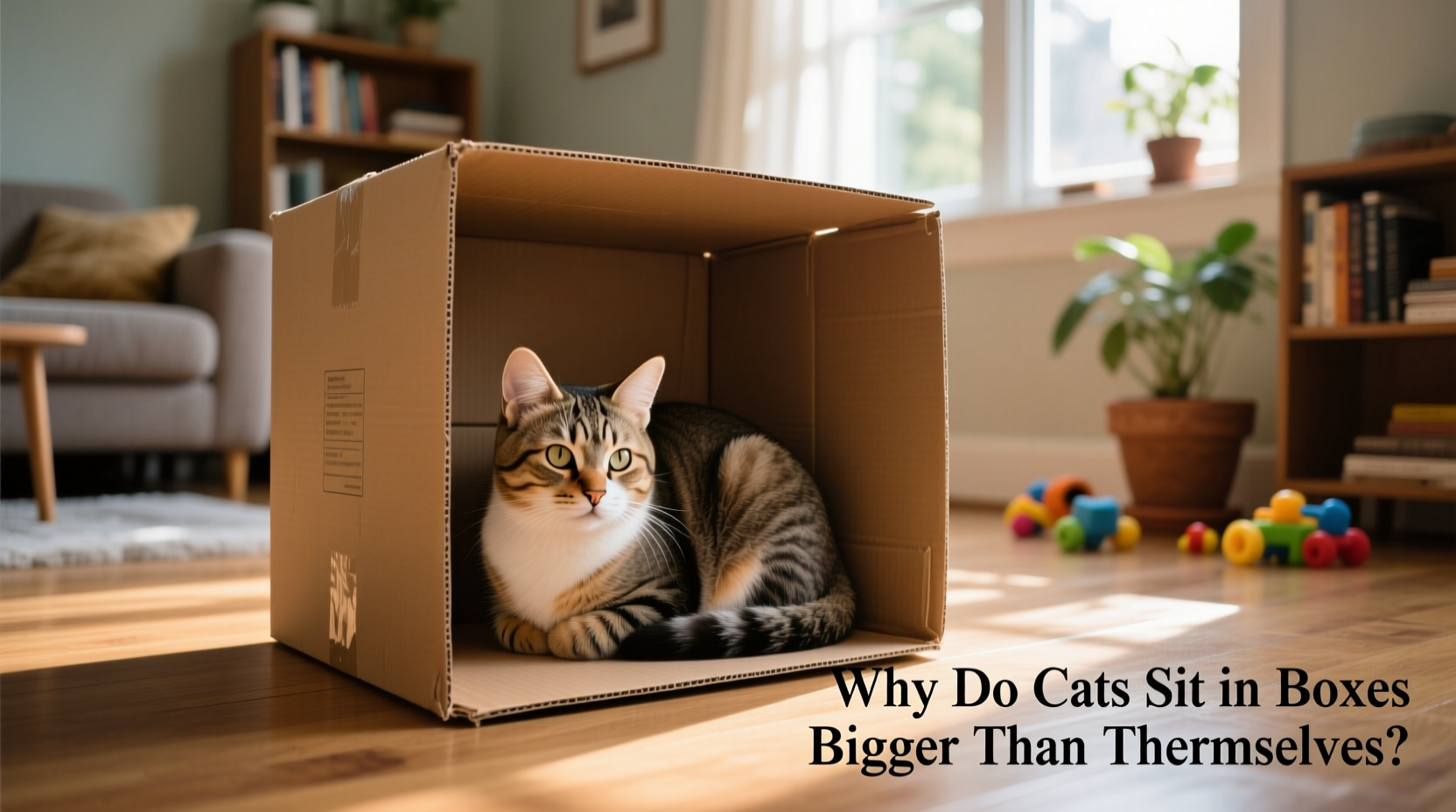
Cats are both predators and prey animals. In the wild, even solitary hunters like feral cats must remain vigilant against larger predators. This dual role has shaped their need for secure hiding places. A box—regardless of size—provides visual concealment, limiting exposure from potential threats. Even in the safety of a modern home, these instincts remain hardwired.
When a cat enters a box, it gains a vantage point to observe its environment without being fully seen. The walls offer a psychological barrier that reduces anxiety. This sense of enclosure mimics the natural dens or burrows cats would seek in the wild. It’s not about fitting perfectly; it’s about feeling enclosed and protected.
Tip: If your cat seems anxious after a change in routine, placing an open box in a quiet corner can provide instant reassurance.Interestingly, studies have shown that shelter cats given access to boxes acclimate faster and display lower stress levels than those without. A 2014 study published in *Applied Animal Behaviour Science* found that boxes significantly reduced stress indicators such as vocalization and hiding behaviors in newly arrived shelter cats. This underscores that the box isn’t just a quirky preference—it’s a functional tool for emotional regulation.
Thermoregulation: The Warmth Factor
Cats maintain a higher body temperature than humans—between 100.5°F and 102.5°F (38°C–39.2°C). To conserve heat, they seek out warm, insulated spaces. Cardboard is a surprisingly effective insulator, trapping body heat and creating a microclimate within the box. Even oversized boxes contribute to this effect when a cat curls tightly into a ball, minimizing surface area exposed to cooler air.
Additionally, the act of kneading or scratching the cardboard warms the material slightly through friction, further enhancing comfort. Many cats will rotate positions within a large box, adjusting until they find the optimal thermal zone. This behavior is especially noticeable during colder months or in homes with drafty floors.
It’s also worth noting that cats prefer ambient temperatures between 86°F and 97°F (30°C–36°C)—much warmer than typical human living conditions. An oversized box allows them to nest deeply, piling limbs inward and tucking their nose under their tail to reduce heat loss. The extra space isn’t wasted; it becomes part of their thermal strategy.
Sensory Control and Environmental Management
A cat’s world is dominated by sensory input: sudden noises, unfamiliar scents, and unpredictable movements can all be overwhelming. Boxes serve as sensory buffers. Once inside, sound echoes less, airflow decreases, and peripheral movement is restricted. This reduction in stimuli helps cats regain control over their environment.
In multi-pet households or busy homes, a large box acts as a retreat—a personal “control room” where the cat can monitor activity at its own pace. The size of the box may actually enhance this function. A bigger interior allows the cat to reposition itself to block light, turn away from foot traffic, or face the entrance strategically.
“Cats use confined spaces not because they fit perfectly, but because they feel contained. That perception of boundaries—even if there’s extra room—is what provides comfort.” — Dr. Sarah Ellis, Feline Behavior Specialist, University of Lincoln
This explains why some cats prefer sitting in the corner of a large box rather than the center. They’re using available structure to create psychological boundaries. It’s not about spatial efficiency; it’s about perceived safety.
Play, Exploration, and Cognitive Engagement
Beyond security and warmth, boxes fulfill a cognitive need. Cats are curious by nature, drawn to novel objects and changes in layout. A new box represents unexplored territory—an opportunity to investigate, manipulate, and claim. The fact that it’s larger than their body doesn’t deter them; it may even increase engagement.
Larger boxes allow for dynamic movement: stretching, rolling, pawing at the sides, or leaping in and out repeatedly. These actions stimulate motor skills and mental alertness. Some cats treat oversized boxes like interactive toys, pushing them around or using them as launch pads for play.
In homes where enrichment is limited, boxes become essential tools for preventing boredom. Unlike static beds, boxes offer variability. Flattening one side, tearing corners, or adding holes transforms the experience. Owners often report that their cats spend more time investigating a box than playing with expensive cat furniture.
Checklist: How to Maximize Box Benefits for Your Cat
- Use clean, non-toxic cardboard boxes without tape or staples.
- Remove plastic liners, labels, or printed ink that could be ingested.
- Place boxes in quiet areas but within sight of household activity.
- Rotate boxes weekly to maintain novelty.
- Add soft bedding or catnip to encourage use.
- Supervise kittens to prevent suffocation risks with flimsy boxes.
Psychological Comfort vs. Physical Fit
One of the most misunderstood aspects of this behavior is the assumption that cats prefer snug spaces. While tight enclosures do provide pressure comfort (similar to weighted blankets in humans), oversized boxes fulfill different needs. A cat may enter a large box and appear “lost” in space, yet still exhibit relaxed body language—ears forward, eyes half-closed, tail wrapped neatly.
This contradiction highlights a key principle in feline behavior: choice matters more than precision. Having the option to move within a defined boundary gives cats autonomy. They can stretch out when overheated or curl tightly when cold. The same box serves multiple functions throughout the day.
Compare this to rigid cat carriers or closed beds with fixed dimensions. These often restrict movement and lack ventilation, increasing stress. A cardboard box, even if too big, remains porous, breathable, and adjustable. Its impermanence may even be a benefit—cats know it won’t last forever, which makes it feel less like a trap and more like a temporary sanctuary.
Table: Box Use vs. Commercial Cat Bed – Behavioral Comparison
| Feature | Cardboard Box | Commercial Cat Bed |
|---|---|---|
| Perceived Safety | High – enclosed sides, low visibility from outside | Variable – depends on design and placement |
| Thermal Retention | Moderate to high – improves with nesting behavior | Depends on material; often less breathable |
| Sensory Control | High – reduces noise and visual stimuli | Low to moderate – open designs offer little buffer |
| Cognitive Stimulation | High – encourages exploration and manipulation | Low – static structure with no novelty |
| User Autonomy | High – cat controls positioning and duration | Moderate – limited by shape and firmness |
Mini Case Study: Luna, the Apartment-Dwelling Rescue Cat
Luna, a three-year-old domestic shorthair adopted from a city shelter, struggled with anxiety in her new high-rise apartment. Despite having multiple cat trees and designer beds, she consistently chose to sleep behind the washing machine or under dining chairs. Her owner, frustrated, consulted a feline behaviorist.
The solution? A medium-sized shipping box placed near the living room window. Within hours, Luna climbed in, circled twice, and settled in the far left corner—leaving nearly two-thirds of the box unused. Over the next two weeks, her confidence improved dramatically. She began using the box as a base for exploring the room, eventually transitioning to nearby furniture.
The turning point wasn’t the size of the box, but the sense of control it gave her. She could see out without being exposed, hear household sounds without feeling overwhelmed, and retreat instantly if startled. The oversized space allowed her to self-regulate her proximity to stimuli—a luxury fixed beds couldn’t provide.
Frequently Asked Questions
Why does my cat sit in a box that’s clearly too big?
Cats prioritize perceived security over physical fit. A large box still provides walls and a defined boundary, which reduces stress. Extra space allows them to adjust position based on temperature, mood, or alertness level.
Are boxes better than cat beds?
Not inherently—but boxes often meet more behavioral needs. They offer concealment, insulation, and novelty, which many commercial beds lack. However, combining both can give your cat choices, supporting better mental well-being.
Is it safe for cats to chew on cardboard?
Small amounts of plain, uncoated cardboard are generally non-toxic. However, excessive chewing may indicate boredom or dietary deficiency. Avoid boxes with glue, tape, or colored inks, and supervise cats prone to ingestion.
Encouraging Healthy Box Habits: A Step-by-Step Guide
- Source Safe Boxes: Choose clean, dry cardboard containers free of staples, tape, or chemical residues. Remove all packaging materials.
- Modify for Comfort: Cut entry holes at different heights or remove one side to create a cave-like opening depending on your cat’s preference.
- Enhance Appeal: Line the bottom with a soft towel or sprinkle catnip to encourage initial interest.
- Strategic Placement: Position boxes in low-traffic zones but near family activity (e.g., beside the couch or near a sunlit wall).
- Rotate Regularly: Introduce a new box every 7–10 days to maintain novelty and prevent habituation.
- Monitor Behavior: Observe how your cat uses the space—do they face the door? Stretch out or curl up? Adjust placement or size accordingly.
- Phase Out Gently: When a box becomes worn, replace it gradually. Place the new one beside the old to allow transition without stress.
Conclusion: Respecting the Feline Mindset
The sight of a cat lounging in a box much larger than its body is more than a cute internet meme—it’s a window into feline cognition and emotional needs. What seems illogical to humans is entirely rational to cats. The box represents safety, warmth, control, and stimulation, all in one accessible package. Its size doesn’t diminish its value; if anything, it enhances versatility.
By embracing this behavior instead of questioning it, owners can create environments that truly support their cats’ well-being. Simple, cost-free solutions like cardboard boxes often outperform expensive products because they align with innate instincts. Rather than trying to change feline nature, the best care comes from understanding it.
💬 Have a story about your cat’s favorite box? Share your experience and help others appreciate the simple joys of feline life.








