
If you’ve ever settled in for a quiet evening only to feel your cat rhythmically pressing their paws into your lap, you’re not alone. This behavior—commonly known as “kneading” or “making biscuits”—is one of the most endearing quirks of feline companionship. But what drives it? Is your cat expressing deep affection, acting on ancient instincts, or both? Understanding the roots of this behavior offers insight into your cat’s emotional world and strengthens the human-feline bond.
Kneading typically involves alternating front paws pushing in and out against a soft surface—often a blanket, pillow, or your thigh. It’s frequently accompanied by purring, half-closed eyes, and a relaxed posture, especially just before sleep. While it may seem random, this action is deeply rooted in biology, emotion, and learned comfort.
The Origins of Kneading: A Survival Instinct
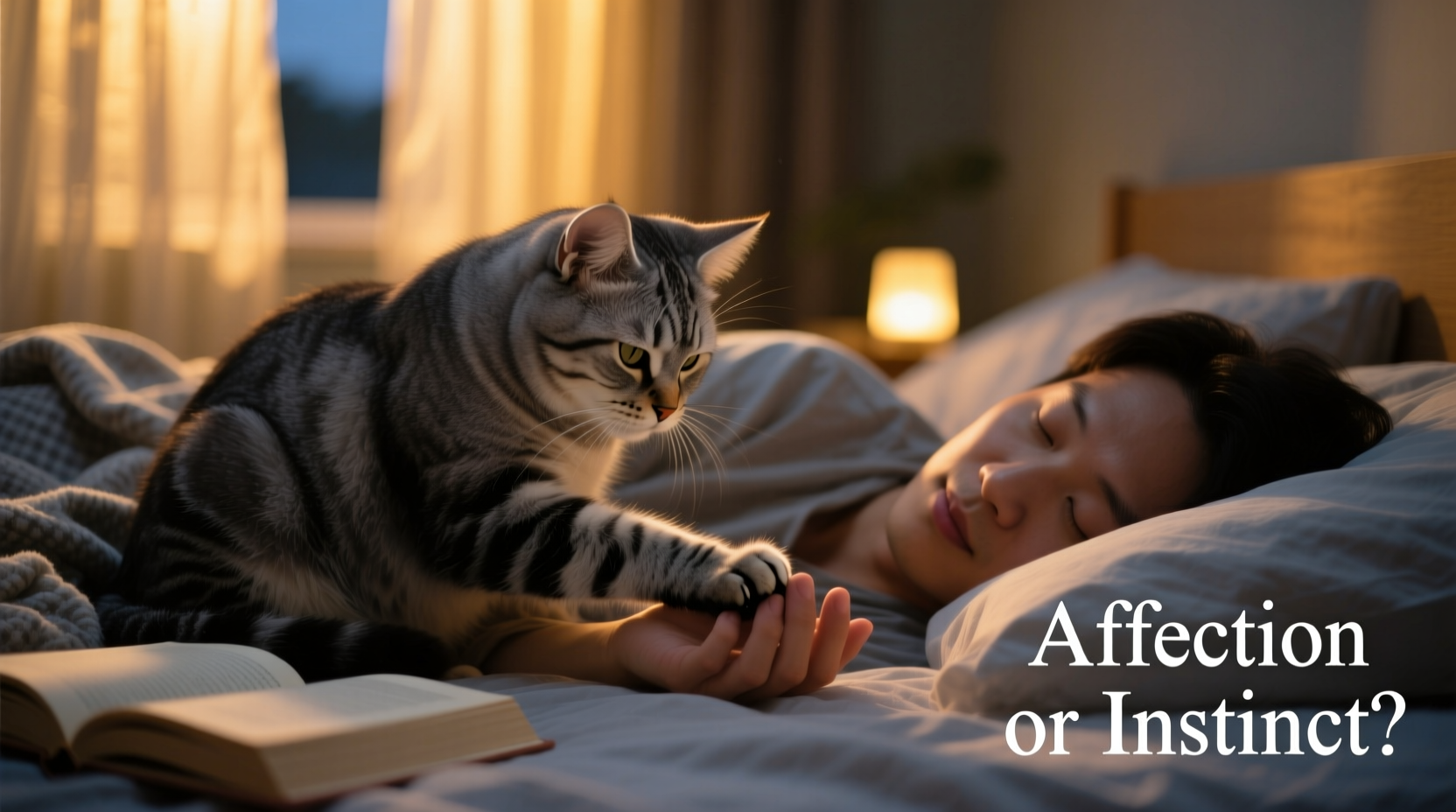
Kneading begins in kittenhood. Newborn kittens instinctively knead their mother’s mammary glands to stimulate milk flow during nursing. The motion helps increase circulation and release oxytocin in the mother, encouraging milk letdown. Because this action is so closely tied to nourishment and warmth, it becomes associated with safety and satisfaction early in life.
As cats mature, they often retain this behavior even though they no longer need milk. The act of kneading triggers memories of comfort and security from infancy. When an adult cat kneads you before settling down to sleep, they are likely re-experiencing that primal sense of calm. It’s not merely habit—it’s a physiological echo of one of their first survival mechanisms.
“Kneading is a throwback to nursing behavior, but in domestic cats, it has evolved into a self-soothing mechanism linked to feelings of safety.” — Dr. Sarah Thompson, Feline Behavior Specialist
This instinctual foundation explains why cats often knead soft surfaces that resemble fur or skin. Your sweater, blanket, or bare leg might feel close enough to their mother’s belly to trigger the response. Even declawed or older cats who never had kittens of their own may continue kneading, underscoring its deep-seated nature.
Affection and Bonding: The Emotional Layer
Beyond instinct, kneading is also a powerful expression of trust and affection. Cats are selective about whom they display vulnerable behaviors around. When your cat chooses to knead *you*—especially in moments of relaxation or drowsiness—they are signaling that they feel safe in your presence.
Cats use scent marking as a primary form of communication. They have scent glands located in their paw pads, and kneading deposits their unique pheromones onto you or your belongings. In doing so, they are claiming you as part of their social group. To a cat, this isn’t just physical contact—it’s olfactory bonding. You become marked as “theirs,” a member of their inner circle.
This dual function—comfort-seeking and territorial marking—makes kneading a complex social signal. It’s not simply nostalgia; it’s active relationship-building. A cat that kneads you regularly sees you as a source of emotional stability, much like their mother once was.
Tip: If your cat kneads you while purring and nuzzling, respond gently with slow blinks or soft petting—they’re expressing deep contentment.Why Before Sleeping? The Calming Ritual
One of the most common times for kneading is just before sleep. This timing is no accident. Like humans who might fluff a pillow or adjust their blankets, cats use kneading as a pre-sleep ritual to prepare their resting spot.
In the wild, ancestors of domestic cats would pat down grass, leaves, or soil to create a comfortable, secure nest. This nesting behavior ensured warmth, camouflage, and protection from predators. While modern house cats don’t face those dangers, the instinct remains. Kneading softens the surface, checks for hidden threats (like crinkly paper or uneven textures), and reinforces ownership of the space.
When your cat kneads you before dozing off, they are combining multiple needs: physical comfort, emotional reassurance, and environmental control. The rhythmic motion may even have a meditative effect, lowering heart rate and promoting relaxation—similar to how repetitive movements soothe anxious humans.
Step-by-Step: What Happens During Pre-Sleep Kneading?
- Approach: The cat selects a preferred resting spot—often near or on you.
- Sniff and Nudge: They may smell the area or nudge you slightly to ensure it’s acceptable.
- Initiate Kneading: Front paws begin the alternating push-pull motion.
- Scent Marking: Pheromones from paw glands are released onto the surface.
- Vocalization & Purring: Often accompanies the process, reinforcing positive emotions.
- Settle: Once satisfied, the cat lies down, often curling up tightly.
This sequence can last anywhere from a few seconds to several minutes. Interruption may cause mild frustration or restart the cycle, highlighting its importance in their routine.
When Kneading Becomes Uncomfortable: Managing Claws and Pressure
While kneading is generally harmless, sharp claws can make the experience painful, especially if your cat gets overly enthusiastic. Some cats also drool or suckle on fabric during intense sessions—a carryover from kitten nursing behavior that, while normal, may require management.
| Issue | Why It Happens | Practical Solution |
|---|---|---|
| Painful claw pressure | Natural extension of claws during kneading | Trim claws regularly; place a thick blanket over your lap |
| Drooling or fabric sucking | Strong association with nursing comfort | Redirect to a soft toy or blanket; avoid punishment |
| Overstimulation leading to biting | Sensory overload during prolonged petting/kneading | Watch for tail flicking or ear twitching; give breaks |
| Kneading on inappropriate surfaces | Seeking comfort or marking territory | Provide designated kneading zones (e.g., plush mats) |
Never punish a cat for kneading. It’s a natural, emotionally significant behavior. Instead, redirect or modify the environment to make it more comfortable for both of you.
Real-Life Example: Bella and Her Evening Ritual
Consider Bella, a 4-year-old domestic shorthair adopted at eight weeks old. Every night at 9 PM, she jumps onto her owner’s couch, circles three times, sniffs the cushion, then begins kneading vigorously on a fleece throw. She purrs loudly, her eyes slowly closing as she presses her paws in steady rhythm. After two minutes, she flops down and sleeps soundly for hours.
Her owner noticed that when the fleece was washed and temporarily unavailable, Bella became restless, pacing and vocalizing until it was returned. This dependency highlights how strongly cats associate specific textures with emotional regulation. Over time, the owner began placing the blanket out earlier, helping Bella transition smoothly into sleep. The ritual wasn’t just cute—it was essential to her sense of security.
Bella’s story illustrates how kneading functions as both a behavioral relic and a present-day coping tool. For rescued or early-weaned cats, these rituals may be even more pronounced, compensating for lost nursing time or unstable early environments.
Checklist: Is Your Cat’s Kneading Healthy?
- ✅ Occurs during relaxed states, especially before sleep or after feeding
- ✅ Accompanied by purring, slow blinking, or drooping eyelids
- ✅ Directed toward trusted humans or familiar objects
- ✅ Not causing injury to the cat or excessive damage to furniture
- ✅ Does not escalate into aggression or obsessive repetition
If all these apply, your cat’s kneading is a normal, healthy behavior. However, if kneading becomes compulsive—lasting for extended periods without leading to rest, or occurring in stressful contexts—it may indicate anxiety. In such cases, consult a veterinarian or certified feline behaviorist.
Frequently Asked Questions
Do all cats knead, or is it breed-specific?
No single breed is more prone to kneading, though individual personality plays a role. Early experiences, weaning age, and temperament influence how often and intensely a cat kneads. Some cats never develop the habit, while others do it throughout life.
Can I stop my cat from kneading?
You shouldn’t try to stop it unless it causes harm. Kneading is emotionally beneficial. Instead, manage the side effects: keep claws trimmed, use protective barriers like blankets, or offer alternative kneading surfaces filled with catnip or lavender for added appeal.
Why does my cat knead but not purr?
Not all cats purr, even when content. Some are silent kneaders. As long as your cat appears relaxed—ears forward, body loose, breathing steady—the lack of purring doesn’t indicate discomfort. Observe overall body language rather than relying on sound alone.
Expert Insight: The Science Behind the Behavior
Recent studies in feline ethology support the dual explanation of kneading as both instinctual and emotional. Research published in *Applied Animal Behaviour Science* found that cats who were weaned early were more likely to exhibit intense kneading and suckling behaviors as adults, suggesting a compensatory mechanism for lost nursing time.
“Kneading isn’t just a leftover quirk—it’s a window into a cat’s emotional history. The more secure their upbringing, the more calmly they express it.” — Dr. Lena Ruiz, Veterinary Ethologist
Additionally, neurochemical analysis shows that activities like kneading and purring trigger the release of endorphins and oxytocin in cats—hormones linked to pleasure and bonding. This biochemical feedback loop reinforces the behavior, making it self-rewarding and more likely to recur.
Conclusion: Embrace the Biscuit-Making
Your cat’s pre-sleep kneading is far more than a funny habit. It��s a layered behavior woven from survival instinct, emotional attachment, and sensory comfort. Whether they’re reliving kittenhood, marking you as family, or simply preparing their nest, each press of their paws is a quiet affirmation of trust.
Instead of viewing it as a nuisance—even when claws dig in—consider it a privilege. Few animals allow themselves to be so vulnerable around humans. By understanding the why behind the behavior, you deepen your connection and respond with empathy rather than irritation.
💬 Does your cat knead you nightly? Share your story in the comments—what does their ritual look like, and how do you make it comfortable for both of you?








