Morning back pain is more than just a nuisance—it’s a signal. While it’s common to blame stress, poor ergonomics at work, or aging, one of the most overlooked culprits is your sleep posture. If you consistently wake up with stiffness, aching in the lower back, or tightness along the spine, your body may be reacting to how it’s positioned during eight hours of unconscious rest. The way you lie down, the support your mattress provides, and even the shape of your pillow can contribute to spinal misalignment, muscle strain, and long-term discomfort.
The good news: unlike other sources of back pain, sleep-related issues are often correctable with small, intentional changes. By understanding the biomechanics of sleep and aligning your habits with spinal health, you can transform your mornings from painful to energized.
Understanding the Link Between Sleep Posture and Back Pain
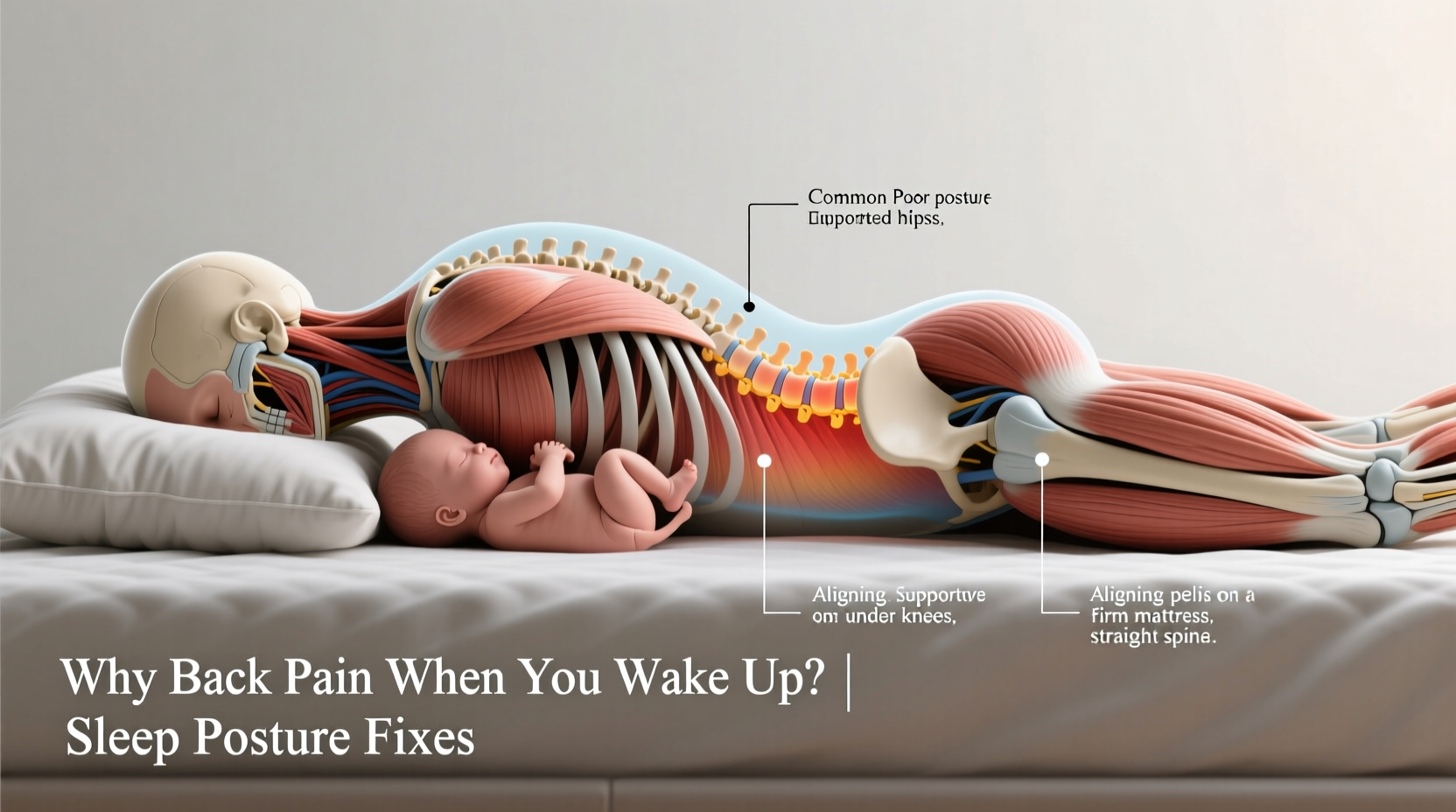
Your spine has natural curves—the cervical (neck), thoracic (mid-back), and lumbar (lower back)—that must be maintained for optimal function. When these curves flatten or exaggerate during sleep due to poor positioning, pressure builds on discs, ligaments, and muscles. Over time, this leads to inflammation, reduced circulation, and chronic tension.
Sleep posture refers not only to whether you lie on your back, side, or stomach but also to how your limbs are arranged, the firmness of your mattress, and the alignment of your head and neck. Even slight deviations—like tucking a pillow under your knees or twisting your torso—can either relieve or worsen spinal stress.
According to Dr. Laura Chen, a board-certified physical medicine and rehabilitation specialist:
“Eight hours spent in a compromised position can undo the benefits of good posture during the day. The spine doesn’t get a break—it’s constantly adapting. If your sleep setup doesn’t support neutral alignment, you’re essentially training your body into dysfunction.”
This explains why some people wake up feeling worse than when they went to bed. The damage isn't sudden; it's cumulative. Each night compounds minor misalignments until pain becomes unavoidable.
Common Sleep Postures That Cause Morning Back Pain
Not all sleeping positions are created equal. Some naturally support spinal health, while others place undue strain on key areas. Below is an analysis of the three primary sleep postures and their impact on back health.
Stomach Sleeping: The Spinal Stressor
Though common, sleeping on your stomach is widely regarded as the worst position for back and neck health. It forces your spine into hyperextension and requires you to turn your head sideways for breathing, straining cervical vertebrae.
- Lower back strain: Your pelvis sinks into the mattress, arching the lumbar spine excessively.
- Neck torsion: Turning your head 90 degrees for minutes or hours compresses nerves and restricts blood flow.
- Reduced lung capacity: Chest compression limits deep breathing, potentially disrupting sleep quality.
Back Sleeping: Neutral—but Not Foolproof
Lying flat on your back offers the most potential for spinal neutrality, but only if properly supported. Without attention to detail, this position can still lead to issues.
- Flat lumbar curve: A lack of support under the lower back causes the natural lordosis to flatten, increasing disc pressure.
- Pillow height mismatch: Too high or too low a pillow strains the neck and upper back.
- Sleep apnea risk: For those with airway issues, back sleeping can worsen snoring and oxygen disruption, indirectly affecting muscle tension.
Side Sleeping: Popular but Prone to Imbalance
Over 60% of adults prefer side sleeping, which can be excellent for spinal alignment—if done correctly. However, many side sleepers curl into a fetal position or allow their top shoulder to collapse forward, creating asymmetry.
- Hip compression: Knees drawn tightly upward shorten hip flexors and strain the lower back.
- Shoulder impingement: The bottom shoulder bears excessive weight, reducing circulation and triggering referred pain.
- Spinal lateral tilt: If the mattress sags or the pillow is too thin, the spine bends sideways, stressing facet joints.
Do’s and Don’ts of Sleep Posture by Position
| Position | Do’s | Don’ts |
|---|---|---|
| Back Sleeping | Use a small pillow under the knees; choose a supportive pillow that keeps the neck neutral | Avoid thick pillows that push the head forward; don’t use memory foam that traps heat |
| Side Sleeping | Place a pillow between the knees; ensure shoulders and hips stack vertically | Don’t let knees pull up tightly; avoid sagging mattresses that misalign the spine |
| Stomach Sleeping | Try a thin pillow under the hips; switch to a softer mattress to reduce pelvic lift | Never use a thick pillow under the head; avoid heavy blankets that increase chest pressure |
Step-by-Step Guide to Optimizing Your Sleep Posture
Improving sleep posture isn’t about perfection overnight—it’s about gradual refinement. Follow this seven-day plan to assess and adjust your setup for lasting relief.
- Day 1: Assess Your Current Setup
Take note of your sleep position, mattress age, pillow type, and any pain patterns. Use a notebook or app to log observations upon waking. - Day 2: Evaluate Mattress Support
If your mattress is over 7–8 years old or shows visible sagging, especially in the lumbar zone, consider replacement. Test firmness: you should sink slightly, but your spine should remain straight. - Day 3: Choose the Right Pillow
Select a pillow based on your primary sleep position:- Back sleepers: Medium loft, contour-designed to support neck curvature.
- Side sleepers: Higher loft to fill space between head and shoulder.
- Stomach sleepers: Very thin or no pillow under the head; consider switching positions.
- Day 4: Add Strategic Support
Introduce supportive aids:- Back sleepers: Place a rolled towel or small pillow under the knees.
- Side sleepers: Use a firm pillow between the knees to keep hips aligned.
- All positions: Consider a lumbar roll for added lower back support if needed.
- Day 5: Adjust Bedroom Ergonomics
Ensure your bed allows feet to touch the floor when sitting on the edge. Avoid beds that are too high or too low, which disrupt smooth transitions in and out of bed—critical for reducing strain. - Day 6: Practice Pre-Bed Stretching
Perform gentle stretches targeting the lower back, hamstrings, and hips. Try:- Knee-to-chest stretch (30 seconds per side)
- Child’s pose (1 minute)
- Seated forward bend (hold 30 seconds)
- Day 7: Reassess and Refine
Compare notes from Day 1. Has pain decreased? Is movement easier in the morning? Continue tweaking supports and monitor progress weekly.
Real Example: How One Woman Eliminated Her Morning Back Pain
Sarah, a 42-year-old graphic designer from Portland, had suffered from lower back pain for over three years. She attributed it to long hours at her desk but noticed the pain was worst immediately upon waking. Despite trying chiropractic care and anti-inflammatory medication, relief was temporary.
After consulting a sleep therapist, she discovered she was a dedicated stomach sleeper on a 10-year-old innerspring mattress. The combination caused her pelvis to rise and her lower back to arch aggressively throughout the night.
Her fix was simple but effective:
- She transitioned to side sleeping using a body pillow to prevent rolling back.
- Replaced her old mattress with a medium-firm hybrid model.
- Added a knee pillow and switched to a contoured memory foam pillow for neck support.
Within two weeks, Sarah reported a 70% reduction in morning pain. After six weeks, she no longer needed daily ibuprofen. “I didn’t realize how much my sleep setup was working against me,” she said. “It wasn’t just about comfort—it was about alignment.”
Essential Checklist: Fix Your Sleep Posture Tonight
Use this checklist to audit your bedroom setup and make immediate improvements:
- ☐ Replace your mattress if it’s older than 8 years or visibly sagging.
- ☐ Choose a pillow that matches your sleep position and keeps your neck in line with your spine.
- ☐ Add a pillow under your knees (back sleepers) or between your knees (side sleepers).
- ☐ Avoid stomach sleeping; if necessary, place a thin pillow under your hips.
- ☐ Perform 5–10 minutes of gentle stretching before bed.
- ☐ Ensure your bedroom temperature is cool (60–67°F) to promote deeper, less restless sleep.
- ☐ Limit screen time 30–60 minutes before bed to reduce muscle tension from blue light exposure.
Frequently Asked Questions
Can the wrong mattress really cause back pain?
Yes. A mattress that’s too soft fails to support the spine’s natural curves, leading to sinking and misalignment. One that’s too firm can create pressure points at the hips and shoulders, forcing the spine out of balance. The ideal mattress supports your body weight evenly while allowing slight contouring.
Is it better to sleep without a pillow if I have back pain?
Generally, no. Going pillow-free often causes the neck to extend unnaturally, especially for back and side sleepers. This increases strain on the upper back and can refer pain down into the shoulders. The goal is proper alignment, not elimination of support.
How long does it take to adjust to a new sleep position?
Most people adapt within 2–4 weeks. You may experience restlessness initially as your body unlearns habitual patterns. Using aids like body pillows or positional alarms (such as a tennis ball sewn into the back of pajamas for stomach sleepers) can speed up the transition.
Final Thoughts: Wake Up Pain-Free Starts Tonight
Morning back pain doesn’t have to be a permanent condition. Often, the solution lies not in expensive treatments or medications, but in re-evaluating the eight hours you spend asleep. Your body repairs itself during rest—so if your posture undermines that process, healing becomes impossible.
By aligning your sleep environment with the biomechanical needs of your spine, you give your muscles, joints, and nervous system the chance to recover fully each night. Small adjustments—pillow placement, mattress choice, mindful positioning—add up to significant change.
You don’t need to overhaul your life. Start with one change tonight: add a pillow between your knees, adjust your pillow height, or simply notice how your body feels when you wake. Pay attention. Respond with care. Over time, those small acts of intention will transform your mornings—and your long-term spinal health.
💬 Ready to wake up pain-free? Pick one fix from the checklist and implement it tonight. Share your progress or questions in the comments—your journey could inspire someone else to finally find relief.








