
It happens to millions: stepping outside on a sunny day, squinting into the sunlight, and suddenly—achoo! A powerful, unexpected sneeze erupts without warning. This phenomenon, known as the photic sneeze reflex (PSR), affects an estimated 18% to 35% of the population. While harmless in most cases, it’s a curious neurological quirk that blends sensory pathways in ways scientists are still unraveling. Understanding why bright light triggers sneezing offers insight into how our nervous system cross-wires signals and responds to stimuli in surprising ways.
What Is the Photic Sneeze Reflex?
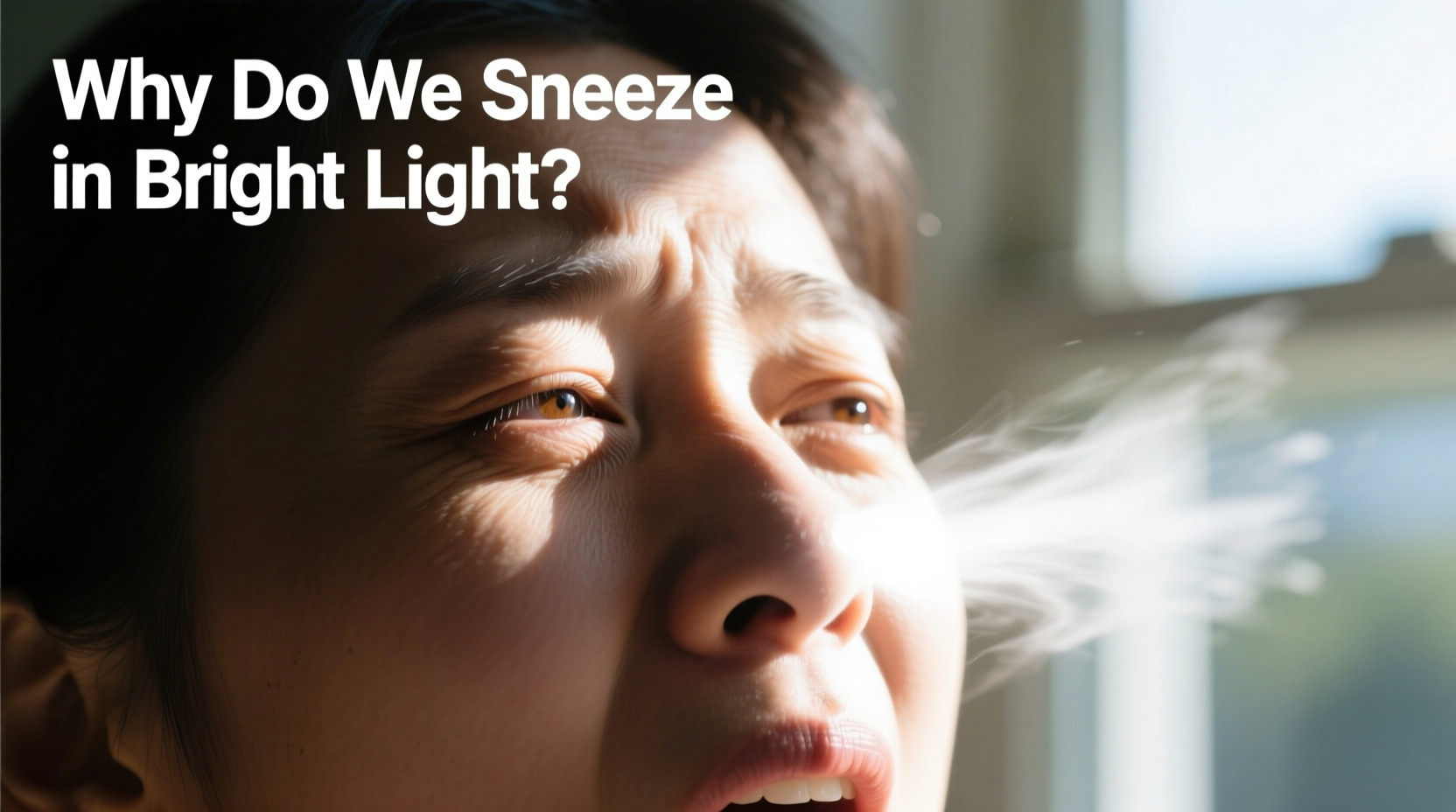
The photic sneeze reflex, also known as \"autosomal dominant compelling helio-ophthalmic outburst\" (ACHOO) syndrome, is a condition in which exposure to bright light induces an involuntary sneeze. The term ACHOO was coined as a playful acronym but is now used clinically to describe this genetically influenced trait.
Unlike typical sneezes triggered by nasal irritation or allergens, the photic reflex bypasses the nose entirely. Instead, it originates from a miscommunication between cranial nerves in the head. When intense light—especially sudden or high-contrast illumination—enters the eyes, it stimulates the optic nerve (cranial nerve II). In individuals with PSR, this signal appears to inadvertently activate the nearby trigeminal nerve (cranial nerve V), which governs facial sensation and controls the sneeze reflex.
“Photic sneezing is one of the clearest examples of cross-talk in the peripheral nervous system. It shows how closely related neural circuits can sometimes interfere with each other.” — Dr. Laura Chen, Neurophysiologist, Stanford Medicine
The Science Behind the Crossed Wires
To understand the photic sneeze reflex, it helps to examine the anatomy involved. The optic nerve transmits visual information from the retina to the brain. Adjacent to it runs the ophthalmic branch of the trigeminal nerve, responsible for sensations in the face, including the nasal cavity.
In people with PSR, researchers believe there may be either:
- Hyperexcitability of the trigeminal nerve
- Insufficient insulation (myelination) between the optic and trigeminal nerves
- Crosstalk due to shared pathways in the brainstem
When bright light floods the retina, the strong signal sent via the optic nerve may “leak” into the trigeminal pathway. The brain interprets this erroneous input as nasal irritation—even though no physical irritant exists—prompting a sneeze to expel a non-existent threat.
Genetic studies show that PSR is inherited in an autosomal dominant pattern, meaning only one parent needs to carry the gene for a child to have a 50% chance of developing the trait. A specific genetic variant near the *PLCG1* gene has been associated with increased likelihood, though the full genetic profile remains under investigation.
Tip: If you experience photic sneezing, wear polarized sunglasses when transitioning from dark to bright environments to reduce sudden light exposure.Triggers and Common Scenarios
The photic sneeze reflex isn’t limited to direct sunlight. Any abrupt increase in brightness can act as a trigger. Common real-world situations include:
- Exiting a dimly lit building into bright daylight
- Looking at reflective surfaces like snow, water, or white sand
- Encountering camera flashes or surgical lights during medical procedures
- Driving eastward in the morning when the sun rises directly in your line of sight
- Turning on bright indoor lighting after being in darkness
Interestingly, not all bright lights provoke the response equally. Rapid onset and high intensity are key factors. Gradual changes in ambient light rarely cause sneezing, suggesting the reflex depends on the speed and contrast of illumination change rather than absolute brightness.
Mini Case Study: Maria’s Morning Commute
Maria, a 32-year-old architect, began noticing she sneezed every weekday around 8:15 a.m. as she exited her underground parking garage. Initially dismissing it as allergies, she tracked her symptoms and realized the sneezes occurred only on sunny mornings immediately upon seeing sunlight. After consulting an ophthalmologist, she learned she had the photic sneeze reflex. By wearing transition lenses and pausing briefly in the shaded entrance before stepping fully into the sun, she reduced the frequency of sneezing episodes. This small adjustment improved both comfort and safety during her walk to work.
Risks and Safety Considerations
While generally benign, the photic sneeze reflex can pose risks in certain high-stakes environments where sudden loss of control is dangerous. These include:
| Situation | Potential Risk | Preventive Measure |
|---|---|---|
| Driving | Sudden sneeze while turning toward the sun | Use visor, polarized glasses, gradual head movement |
| Aviation | Unplanned sneeze during takeoff/landing | Pilots screened; some report limitations |
| Surgery (patient) | Sneezing under anesthesia could disrupt procedure | Taping eyelids, shielding eyes pre-incision |
| Sports (e.g., skiing) | Sneeze-induced loss of balance on slopes | Wear UV-protective goggles |
In military and aviation medicine, photic sneezing has been taken seriously enough to influence pilot eligibility in rare cases. Though not disqualifying on its own, uncontrolled sneezing during critical maneuvers could theoretically compromise performance.
Expert Insight: Medical Perspectives
“We’ve seen patients wake up mid-surgery sneezing because the overhead lights triggered their reflex. That’s why we now routinely ask about light-induced sneezing during pre-op assessments.” — Dr. Rajiv Mehta, Anesthesiologist, Cleveland Clinic
This anecdote underscores how a seemingly trivial reflex can impact clinical outcomes. As a result, many hospitals include questions about photic sneezing in standard preoperative checklists, especially for eye, facial, or neurological surgeries.
How to Manage the Photic Sneeze Reflex
There is no cure for the photic sneeze reflex, nor is one needed—it’s a normal variation in human neurology. However, several strategies can help minimize its impact:
Step-by-Step Guide: Reducing Light-Induced Sneezes
- Anticipate exposure: Before stepping into bright light, mentally prepare and shield your eyes slightly with your hand.
- Wear tinted lenses: Use photochromic or polarized sunglasses that adjust to changing light conditions.
- Turn your head gradually: Avoid rapid head movements toward bright sources; instead, rotate slowly to allow adaptation.
- Breathe steadily: Some individuals report suppressing the urge to sneeze by inhaling deeply through the nose just before exposure.
- Close your eyes momentarily: Blink rapidly or close your eyes for a second when entering bright areas to dampen the stimulus.
Checklist: Daily Habits to Reduce Photic Sneezing Episodes
- ✅ Keep sunglasses in your car or bag for outdoor transitions
- ✅ Install anti-glare screens on digital devices if working near windows
- ✅ Inform healthcare providers before eye exams or surgery
- ✅ Adjust home and office lighting to reduce stark contrasts
- ✅ Share the information with family—PSR may run in your genes
Frequently Asked Questions
Is photic sneezing a sign of a neurological disorder?
No. The photic sneeze reflex is considered a benign genetic trait, not a disease or symptom of underlying pathology. It does not indicate nerve damage or increased risk for neurological conditions.
Can you develop photic sneezing later in life?
Typically, the reflex appears in adolescence or early adulthood and remains consistent throughout life. While rare reports exist of onset after trauma or illness, most cases are lifelong and hereditary.
Are there any treatments available?
There are no approved medical treatments because none are necessary. Research into neuromodulation techniques continues, but current management focuses on behavioral adaptations and protective eyewear.
Conclusion: Embracing Your Body’s Quirks
The photic sneeze reflex is more than a curiosity—it’s a window into the complexity of human neurology. What might seem like a random glitch reveals the intricate connections between our senses and how easily one signal can influence another. For those affected, recognizing and adapting to this reflex can enhance comfort and even improve safety in everyday situations.
Far from something to correct or suppress, the photic sneeze reflex exemplifies the diversity of human biology. Whether you're someone who sneezes at sunrise or simply fascinated by the brain’s wiring, understanding this phenomenon adds depth to how we perceive our own bodies.
💬 Do you sneeze in bright light? Have a story or strategy to share? Join the conversation and help others navigate this fascinating reflex.








