
Spending hours in front of a screen has become the norm for work, education, and entertainment. But many people notice a persistent sensation afterward—eyes that feel dry, scratchy, or as if there’s sand trapped beneath the lids. This \"gritty\" feeling isn’t just uncomfortable; it can interfere with focus, sleep, and daily comfort. While artificial tears are commonly recommended, they often provide only temporary relief. The real solution lies in understanding the root causes and adopting holistic, sustainable habits that support long-term eye health.
The discomfort stems from a condition known as digital eye strain or computer vision syndrome, often accompanied by evaporative dry eye. Prolonged screen use reduces blink rate by up to 60%, disrupting the tear film that keeps the ocular surface smooth and hydrated. Without consistent blinking, the lipid layer of tears evaporates too quickly, leaving the cornea exposed and irritated. Simply relying on drops treats the symptom but not the underlying behavior patterns fueling the problem.
Understanding the Science Behind Gritty Eyes
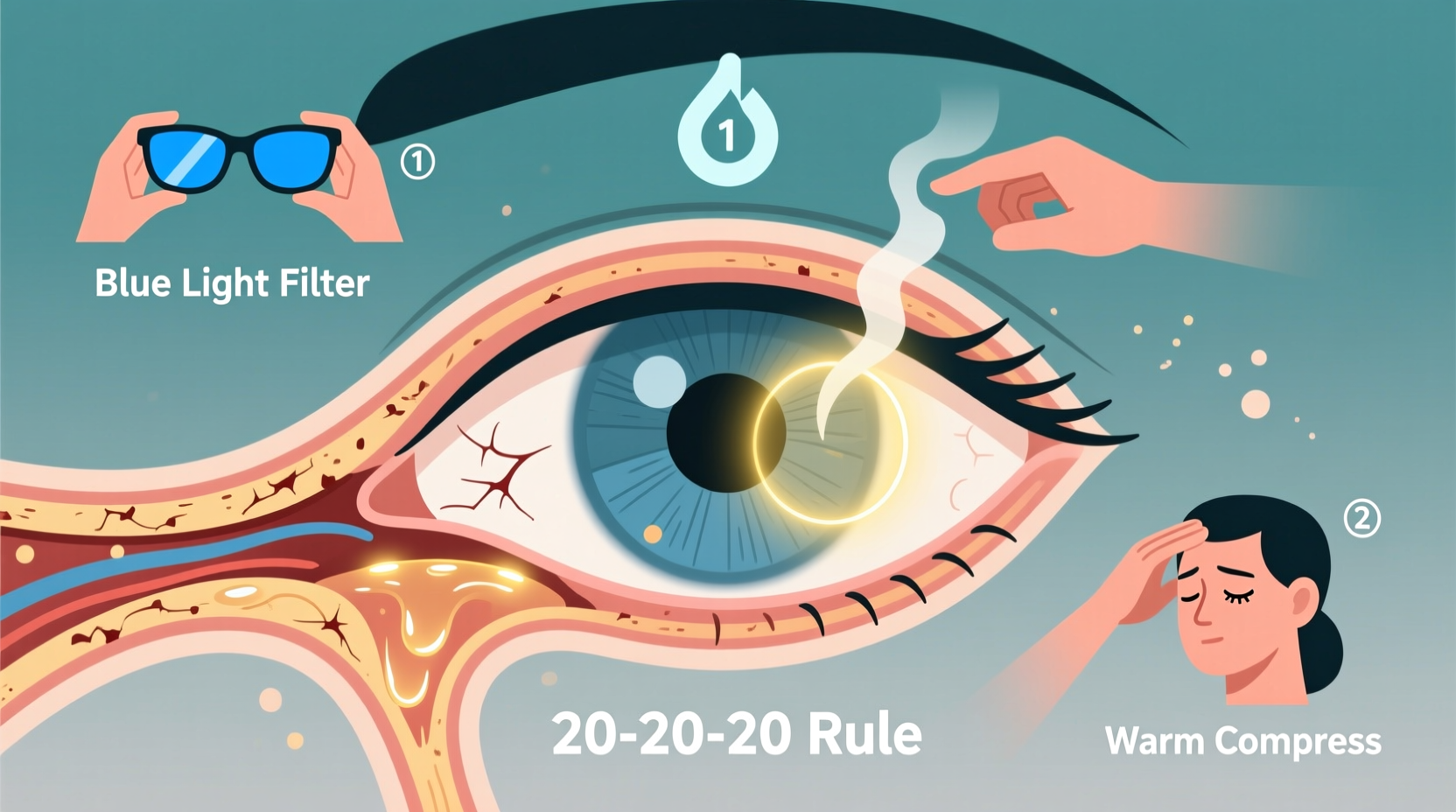
The human eye relies on a delicate balance of three components in its tear film: mucin (which helps tears adhere), aqueous (the watery layer), and oil (produced by meibomian glands to prevent evaporation). Screen-based tasks disrupt this equilibrium primarily through reduced blinking and increased exposure to blue light and environmental dryness.
When you're focused on a screen, your blink rate drops from a healthy 15–20 times per minute to as low as 5–7 times. Worse, many of these blinks are incomplete—meaning the eyelids don’t fully close, failing to spread fresh tears across the eye. Over time, this leads to micro-inflammation of the ocular surface and dysfunction of the meibomian glands, which produce the essential oily layer that prevents tear evaporation.
“Patients often come in complaining of gritty eyes, assuming they just need more drops. But the real issue is behavioral. We’re asking our eyes to perform under unnatural conditions for extended periods.” — Dr. Lena Torres, Optometrist & Dry Eye Specialist
This chronic stress on the ocular surface can progress into chronic dry eye disease if left unaddressed. Recognizing the physiological mechanisms at play allows for more targeted, lasting interventions than simply reaching for the nearest bottle of lubricant.
Effective Relief Strategies Beyond Eye Drops
While over-the-counter eye drops offer momentary relief, true improvement comes from addressing lifestyle, environment, and physiology together. Below are proven, non-pharmaceutical strategies that target the root causes of post-screen grittiness.
Optimize Your Workspace Ergonomics
Your physical setup plays a crucial role in eye comfort. A poorly arranged desk forces your eyes to work harder, increasing strain and reducing blink frequency.
- Position your screen 20–26 inches from your face, slightly below eye level so you look down at a 10–20 degree angle. This narrows the palpebral fissure (eye opening), reducing tear evaporation.
- Ensure ambient lighting matches screen brightness. Harsh contrasts between a bright screen and dark room increase visual fatigue.
- Use an anti-glare screen filter if reflections are unavoidable.
Practice the 20-20-20 Rule—and Expand It
The well-known 20-20-20 rule (every 20 minutes, look at something 20 feet away for 20 seconds) helps reduce focusing fatigue. But for gritty eyes, add two critical enhancements:
- Conscious blinking during breaks: After each 20-second gaze into the distance, perform five slow, full blinks—closing your eyes completely and holding briefly. This actively replenishes the tear film.
- Palming: Rub your hands together to warm them, then gently cup them over closed eyes without pressing. This promotes relaxation and increases moisture retention.
Improve Indoor Air Quality
Dry air accelerates tear evaporation. Office HVAC systems, fans, and heaters often create arid environments that exacerbate eye discomfort.
| Factor | Solution | Avoid |
|---|---|---|
| Low humidity (<40%) | Use a desktop humidifier | Overheating rooms |
| Direct airflow | Reposition fans or vents | Blowing air toward face |
| Indoor pollutants | Run an air purifier with HEPA filter | Candles, aerosols near workspace |
Nutritional Support for Tear Production
Diet directly influences ocular surface health. Omega-3 fatty acids, particularly EPA and DHA, have been shown in clinical studies to improve meibomian gland function and reduce inflammation.
Foods rich in omega-3s include fatty fish (salmon, mackerel), flaxseeds, chia seeds, and walnuts. Alternatively, supplements delivering at least 1,000 mg of combined EPA/DHA daily may benefit those with documented dry eye symptoms.
“A 12-week trial showed patients taking high-dose omega-3s reported 40% less grittiness and improved tear stability.” — Journal of the American Optometric Association, 2022
Lifestyle Adjustments That Make a Difference
Beyond ergonomics and nutrition, integrating mindful habits into your routine can significantly reduce end-of-day eye discomfort.
Morning and Evening Eye Care Routine
Just like skin, the eye benefits from a simple hygiene regimen. Meibomian gland dysfunction often begins with clogged glands due to stagnant oils.
- Warm compresses: Apply a clean, warm (not hot) cloth to closed eyes for 5–10 minutes each morning or evening. Heat liquefies hardened oils, allowing glands to secrete properly.
- Gentle lid massage: After warming, use a clean fingertip to apply light pressure along the lash line, moving from inner to outer corner. This encourages oil release.
- Clean lids: Use a hypochlorous acid spray or mild lid cleanser weekly to reduce bacterial load that can contribute to inflammation.
Reduce Blue Light Exposure Before Bed
Evening screen use not only strains the eyes but also suppresses melatonin, disrupting sleep. Poor sleep quality impairs tear production and corneal repair overnight.
Wear blue-light-blocking glasses in the evening or enable night mode on devices. Better yet, avoid screens for at least one hour before bedtime to allow natural tear recovery.
Tip: Replace late-night scrolling with a book or podcast—your eyes and brain will thank you.Real-Life Example: Sarah’s Transformation
Sarah, a 34-year-old software developer, spent 9–10 hours daily in front of multiple monitors. She relied on rewetting drops four times a day but still experienced burning, blurred vision, and fatigue by mid-afternoon. After consulting an optometrist, she learned her symptoms stemmed from chronic incomplete blinking and meibomian gland blockage.
She implemented several changes: repositioned her monitor, set a timer for 20-20-20 breaks with intentional blinking, started daily warm compresses, and added a fish oil supplement. Within three weeks, her reliance on drops dropped to once a day. By week six, she no longer woke up with sticky, dry eyes—a sign of improved overnight tear stability.
“I didn’t realize how much my habits were working against my eyes,” Sarah said. “It wasn’t about using more drops—it was about giving my eyes what they actually needed to function.”
Checklist: Daily Habits to Prevent Gritty Eyes
Adopt this actionable checklist to protect your eyes throughout the day:
- ✅ Position screen slightly below eye level
- ✅ Take a 20-second break every 20 minutes (look 20 feet away)
- ✅ Perform 5 full blinks during each break
- ✅ Use a humidifier if indoor air feels dry
- ✅ Apply a warm compress for 5–10 minutes morning or night
- ✅ Consume omega-3-rich foods or take a daily supplement
- ✅ Avoid ceiling fans or vents blowing directly onto your face
- ✅ Limit screen use 60 minutes before bed
- ✅ Keep lids clean with a gentle wipe or spray twice a week
- ✅ Stay hydrated—drink at least 1.5 liters of water daily
Frequently Asked Questions
Can gritty eyes lead to permanent damage?
Occasional discomfort from screen use is unlikely to cause permanent harm. However, untreated chronic dry eye can lead to corneal abrasions, inflammation, or even scarring over time. Persistent symptoms should be evaluated by an eye care professional.
Are all eye drops equally effective?
No. Preservative-free single-dose vials are gentler for frequent use. Avoid drops labeled “get-the-red-out,” as they can worsen dryness over time by constricting blood vessels without addressing the underlying issue.
Why do my eyes feel worse in the morning?
Morning grittiness may indicate nocturnal lagophthalmos (incomplete eye closure during sleep) or severe meibomian gland dysfunction. Using a nighttime ointment or taping the eyes lightly with medical-grade tape can help seal moisture in overnight.
Conclusion: Reclaim Comfort Through Sustainable Change
Gritty eyes after screen time are not inevitable. They are a signal from your body that current habits are unsustainable. While artificial tears offer quick relief, lasting comfort comes from rethinking how you interact with technology, nourish your body, and care for your eyes daily.
Small, consistent changes—like adjusting your screen height, blinking fully, or adding omega-3s to your diet—compound into significant improvements. You don’t need expensive treatments or drastic overhauls. What you need is awareness and commitment to eye-friendly routines.
💬 Start today: Pick one strategy from the checklist and implement it for seven days. Notice the difference. Share your experience or ask questions in the comments—let’s build healthier screen habits together.








