
Sitting in front of a screen for hours may seem harmless, but many people report a persistent, uncomfortable sensation: gritty, dry, or burning eyes. This feeling—often described as having sand trapped under the eyelids—is more than just fatigue. It's a sign that your eyes are struggling to maintain their natural balance in a digital environment. With screen use now an unavoidable part of daily life, understanding the root causes of this discomfort and knowing how to counteract it is essential for comfort, productivity, and long-term eye health.
The sensation of grittiness arises when the ocular surface becomes unstable due to insufficient tear production or poor tear quality. Prolonged screen exposure disrupts the delicate mechanics of blinking and tear distribution, setting off a chain reaction that leads to irritation. The good news is that most cases can be managed effectively with simple behavioral changes, environmental adjustments, and targeted care strategies.
What Causes Gritty Eyes After Screen Use?
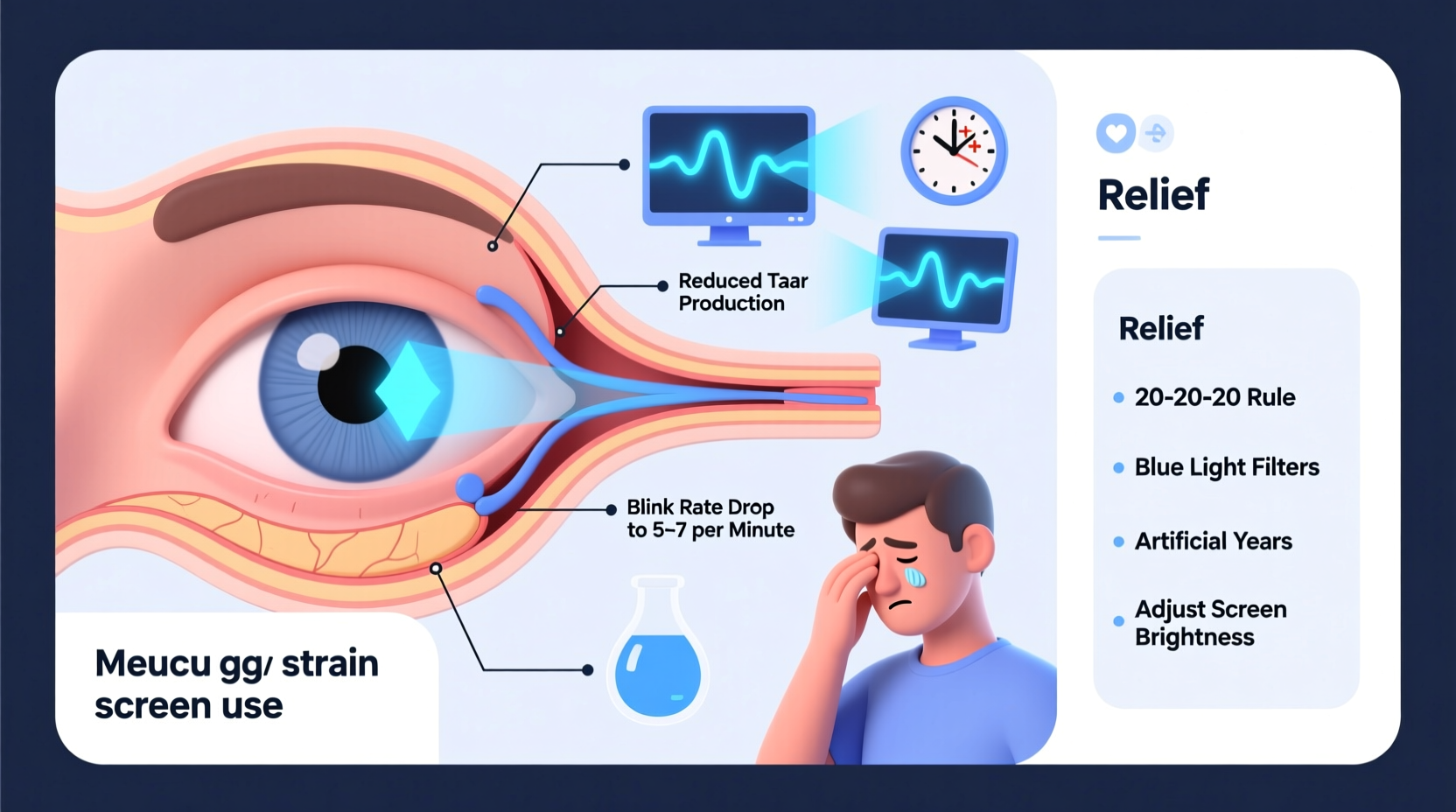
The human eye relies on a continuous film of tears to stay lubricated, clear, and protected from irritants. This tear film consists of three layers: oil, water, and mucus. Each plays a role in preventing evaporation, spreading moisture evenly, and shielding the cornea. When you stare at a screen, multiple factors interfere with this system.
One primary culprit is reduced blink rate. Studies show that people blink about 66% less while using screens—dropping from a normal rate of 15–20 blinks per minute to just 5–7. Blinking isn't just reflexive; it actively spreads tears across the eye’s surface and replenishes the lipid (oil) layer that prevents rapid evaporation. Incomplete or infrequent blinking allows the tear film to break down, leading to dry spots and the sensation of grittiness.
Another factor is screen positioning. Most users place monitors too high or too far away, forcing the eyes to open wider than usual. This increases the exposed surface area of the eye, accelerating tear evaporation. Additionally, indoor environments often have low humidity, especially in air-conditioned or heated spaces, further drying out the ocular surface.
Digital blue light, while not directly damaging in typical use, contributes to visual strain. Though research hasn’t confirmed permanent harm from standard screen exposure, prolonged blue light can increase perceived eye fatigue and disrupt circadian rhythms, indirectly worsening dry eye symptoms by affecting sleep quality and tear regulation.
“Prolonged screen time doesn’t just tire the eyes—it alters fundamental protective mechanisms like blinking and tear stability. This sets the stage for chronic discomfort if left unaddressed.” — Dr. Lena Torres, Optometrist and Dry Eye Specialist
Effective Relief Strategies You Can Start Today
Relief from gritty eyes doesn’t require expensive treatments or drastic lifestyle changes. Often, small, consistent adjustments yield significant improvements. The key is addressing both environmental triggers and personal habits.
Tip: Set a reminder to close your eyes fully for 20 seconds every hour. This resets tear film stability and reduces surface dryness.Optimize Your Workspace Setup
Ergonomics play a crucial role in eye comfort. Position your screen so the top of the monitor is at or slightly below eye level. This encourages a more natural downward gaze, reducing eyelid exposure and minimizing tear evaporation. The screen should be about an arm’s length (20–28 inches) away.
Use a matte screen filter if glare is an issue. Ambient lighting should match screen brightness—avoid working in a dark room with a bright screen, as this increases pupil constriction and strain.
Incorporate the 20-20-20 Rule
Every 20 minutes, look at something 20 feet away for at least 20 seconds. This simple habit gives your focusing muscles a break and encourages full, deliberate blinking. Pair this with slow, complete blinks—close your eyes gently, hold for two seconds, then reopen. Repeat 3–5 times during each break to re-lubricate the eyes.
Boost Humidity and Reduce Airflow
Dry air accelerates tear evaporation. Consider using a desktop humidifier, especially in winter or air-conditioned offices. Avoid sitting directly in the path of fans, heaters, or HVAC vents, as direct airflow dries the eyes rapidly.
When to Use Artificial Tears—and Which Ones Work Best
Over-the-counter lubricating eye drops, commonly called artificial tears, can provide immediate relief. However, not all formulas are equal, and misuse can worsen symptoms.
For occasional dryness, preservative-free single-dose vials are ideal. They avoid chemical additives that may irritate sensitive eyes with frequent use. Look for formulations containing hyaluronic acid or carboxymethylcellulose, which mimic natural tear components and offer longer-lasting hydration.
If you wear contact lenses, choose drops labeled “compatible with contacts.” Some ingredients, like polyquaternium, can build up on lenses and cause discomfort.
| Type of Artificial Tear | Best For | Frequency | Avoid If |
|---|---|---|---|
| Preservative-free drops | daily use, sensitive eyes | up to 10x/day | none |
| Preserved drops | occasional relief | max 4–5x/day | using >3x daily or with irritation |
| Gels | nighttime relief | before bed | needing clear vision immediately |
| Ointments | severe dryness | evening only | daytime use (blurs vision) |
Step-by-Step Guide to a Grit-Free Eye Routine
Integrating eye care into your daily routine takes less than five minutes but can dramatically improve comfort. Follow this sequence to minimize grittiness over time:
- Morning: Wash hands and apply a warm compress to closed eyes for 30 seconds. This stimulates oil glands in the eyelids (meibomian glands) to secrete lipids that stabilize tears.
- Before Work: Position your screen correctly and adjust lighting. Apply a drop of preservative-free lubricant if you’re prone to morning dryness.
- During Work: Follow the 20-20-20 rule religiously. Use a timer or app to remind you. Perform 3–5 full blinks every break.
- Lunch Break: Step away from screens entirely. Walk outside if possible—natural light helps regulate circadian rhythms tied to tear production.
- Evening: Clean eyelids with a gentle wipe or diluted baby shampoo on a cotton swab to remove debris and prevent gland blockage.
- Before Bed: Apply a lubricating gel or ointment if eyes feel dry. Use a humidifier in the bedroom.
Real Example: How Sarah Reduced Her Eye Discomfort
Sarah, a 34-year-old software developer, began experiencing persistent gritty eyes after transitioning to remote work. She worked 9–10 hours daily in front of dual monitors, often skipping breaks. Her symptoms worsened in the afternoons, sometimes causing headaches and blurred vision.
After visiting an optometrist, she was diagnosed with mild evaporative dry eye—caused by incomplete blinking and poor workspace ergonomics. Her doctor recommended adjusting her monitor height, using preservative-free drops twice daily, and practicing intentional blinking.
Sarah implemented the 20-20-20 rule using a browser extension and placed a small humidifier on her desk. Within two weeks, her symptoms decreased significantly. After a month, she no longer needed drops during the day. “I didn’t realize how much my posture and blink habits were affecting my eyes,” she said. “Now I feel more alert and less strained by the end of the day.”
Common Mistakes That Make Grittiness Worse
- Rubbing your eyes: This irritates the surface and can damage the cornea or introduce bacteria.
- Using redness-relief drops regularly: Products like tetrahydrozoline constrict blood vessels temporarily but can cause rebound redness and dependency.
- Ignoring contact lens hygiene: Wearing lenses too long or sleeping in them exacerbates dryness and increases infection risk.
- Staying in dry, stagnant environments: Poor ventilation and low humidity create a hostile environment for ocular health.
- Skipping regular eye exams: Chronic dry eye can signal underlying conditions like Sjögren’s syndrome or blepharitis.
Frequently Asked Questions
Can blue light glasses help with gritty eyes?
While blue light-blocking glasses don’t directly treat dryness, they may reduce overall eye strain and improve sleep quality. Better sleep supports healthy tear production. However, they’re not a substitute for blinking exercises or proper hydration.
Is gritty eye a sign of a serious condition?
Occasional grittiness due to screen fatigue is common and usually benign. However, persistent symptoms—especially with redness, light sensitivity, or vision changes—may indicate chronic dry eye disease, blepharitis, or autoimmune disorders. Consult an eye care professional if symptoms last more than a few weeks despite self-care.
How long does it take for dry eye remedies to work?
Simple fixes like improved blinking and humidifiers can bring relief within days. Lubricating drops offer immediate comfort. However, restoring meibomian gland function or treating underlying inflammation may take 4–8 weeks of consistent care. Patience and routine adherence are key.
Your Action Plan for Lasting Eye Comfort
Feeling grit in your eyes after screen time is your body’s way of signaling imbalance. Rather than dismissing it as inevitable, treat it as a prompt to reassess your digital habits. Small changes—like blinking fully, optimizing your workspace, and using the right eye drops—can restore comfort and prevent long-term issues.
Eye health is cumulative. Just as posture affects your spine over years, daily screen behaviors shape your ocular well-being. By integrating sustainable practices now, you protect not just your vision but your overall quality of life in an increasingly digital world.
💬 Have you found a solution that works for your gritty eyes? Share your experience in the comments and help others discover what brings real relief.








