
Waking up with gritty, burning, or sore eyes is more than just a minor annoyance—it can disrupt your entire day. If you regularly open your eyes in the morning only to feel like sandpaper has been rubbed across them, you're likely experiencing nocturnal dry eye syndrome. This condition occurs when your eyes don’t stay sufficiently lubricated during sleep. While occasional dryness might be harmless, chronic morning dry eyes signal an underlying issue that deserves attention. The good news? Most causes are manageable with simple lifestyle changes, environmental adjustments, and targeted treatments.
Understanding Nocturnal Dry Eye: What Happens While You Sleep?
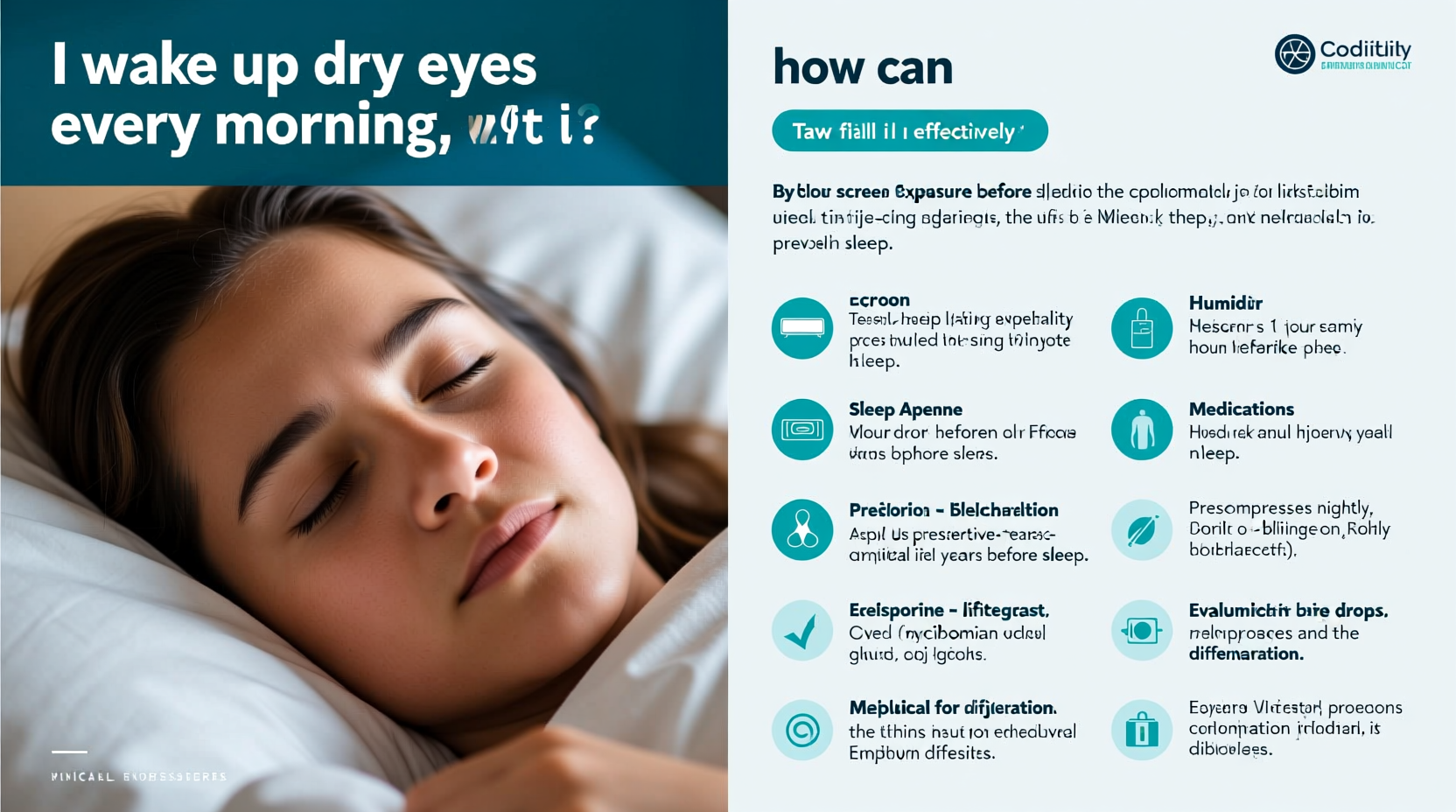
Your eyes rely on a continuous tear film to stay moist, clear, and protected from irritants. This film consists of three layers: oil (to prevent evaporation), water (for hydration), and mucus (to spread tears evenly). During sleep, tear production naturally slows, but your eyelids should remain fully closed to preserve moisture. When this balance is disrupted—either through poor tear quality, incomplete eyelid closure, or environmental factors—the surface of your eyes dries out overnight.
Nocturnal dry eye isn't a standalone diagnosis but rather a symptom of broader ocular or systemic issues. Common contributors include aging, prolonged screen use, certain medications, autoimmune diseases like Sjögren’s syndrome, and even sleeping habits. Unlike daytime dry eye, which may improve with blinking or artificial tears, morning dryness persists because the repair mechanisms are inactive during rest.
“Patients often overlook nighttime exposure as a cause of dry eye. Even slight eyelid gaps during sleep can lead to significant surface drying.” — Dr. Lena Torres, Board-Certified Ophthalmologist
Common Causes of Morning Dry Eyes
Several interrelated factors can leave your eyes parched by sunrise. Identifying the root cause is essential for choosing the right solution.
1. Nocturnal Lagophthalmos (Incomplete Eyelid Closure)
This condition affects up to 20% of adults and involves partial eyelid opening during sleep. It can result from facial nerve weakness, trauma, or anatomical differences. Without full closure, air continuously evaporates the tear film, leading to severe dryness upon waking.
2. Low Humidity and Airflow Exposure
Indoor environments with forced-air heating, air conditioning, or ceiling fans reduce humidity levels. Sleeping near vents or with a fan blowing directly toward your face accelerates tear evaporation, especially in winter months.
Tip: Use a bedside humidifier set to 40–60% relative humidity to maintain optimal moisture in your bedroom.3. Medications That Reduce Tear Production
Many common prescriptions and over-the-counter drugs have anticholinergic effects, which suppress natural secretions. These include:
- Antihistamines (e.g., diphenhydramine)
- Decongestants
- Antidepressants (especially SSRIs and tricyclics)
- Acne medications (like isotretinoin)
- Blood pressure medications
4. Meibomian Gland Dysfunction (MGD)
The meibomian glands along your eyelid margins produce the oily layer of your tear film. When these glands become blocked or inflamed—a common issue with age or chronic blepharitis—they fail to secrete enough oil, causing tears to evaporate too quickly, even at night.
5. Autoimmune and Systemic Conditions
Diseases such as Sjögren’s syndrome, rheumatoid arthritis, lupus, and diabetes are strongly linked to chronic dry eye. Inflammation interferes with lacrimal gland function, reducing tear volume and quality.
Evidence-Based Solutions to Prevent Morning Dry Eyes
Treating nocturnal dry eye requires addressing both environmental triggers and physiological causes. A combination approach often yields the best results.
Step-by-Step Guide to Overnight Eye Protection
- Assess Your Sleep Environment: Measure bedroom humidity using a hygrometer. If below 40%, introduce a cool-mist humidifier.
- Adjust Airflow: Redirect ceiling fans, HVAC vents, or space heaters away from your bed.
- Use Overnight Lubricating Eye Drops: Apply preservative-free artificial tears or thicker gels (like carbomer-based) before bed. Avoid ointments if they blur vision unless you’re okay with temporary blurriness.
- Try Moisture-Retaining Eye Masks: Silicone or hydrogel masks create a sealed microenvironment that reduces evaporation.
- Apply Medical-Grade Tape (if needed): For diagnosed lagophthalmos, hypoallergenic surgical tape can gently keep eyelids closed. Always consult an eye doctor first.
- Perform Daily Lid Hygiene: Warm compresses and lid scrubs help unclog meibomian glands and reduce inflammation.
Advanced Treatments for Chronic Cases
If basic interventions fail, consider clinical options:
- Punctal Plugs: Tiny inserts placed in tear ducts to slow drainage and increase tear retention.
- LipiFlow: A thermal pulsation system that unblocks meibomian glands.
- Intense Pulsed Light (IPL) Therapy: Originally used for skin conditions, IPL reduces inflammation around glands and improves oil secretion.
- Prescription Eye Drops: Cyclosporine (Restasis) or lifitegrast (Xiidra) modulate immune response to boost tear production over time.
Do’s and Don’ts: Managing Dry Eyes at Night
| Do’s | Don’ts |
|---|---|
| Use preservative-free eye drops before bed | Use redness-relief drops nightly (they worsen dryness long-term) |
| Sleep with a humidifier running | Sleep under a ceiling fan or near an open window |
| Clean eyelids daily with warm compresses | Rub your eyes aggressively upon waking |
| Wear moisture chamber goggles if prescribed | Ignore persistent symptoms beyond two weeks |
| Stay hydrated throughout the day | Take decongestants without discussing alternatives with your doctor |
Real-Life Example: How Sarah Reduced Her Morning Discomfort
Sarah, a 42-year-old graphic designer, woke up daily with red, stinging eyes. She attributed it to late-night screen work but found relief elusive despite using over-the-counter drops. After visiting an optometrist, she was diagnosed with mild lagophthalmos and MGD. Her treatment plan included nightly use of a heated eye mask, switching from liquid tears to a preservative-free gel, and applying medical tape to keep her eyelids sealed. Within three weeks, her symptoms decreased significantly. “I didn’t realize how much airflow from my AC vent was affecting me,” she said. “Moving my bed and adding a humidifier made a bigger difference than I expected.”
Expert-Recommended Checklist for Immediate Relief
Checklist: What to Do Tonight to Protect Your Eyes- ☐ Turn on a humidifier in your bedroom
- ☐ Switch to preservative-free artificial tears or nighttime gel
- ☐ Position your bed away from direct airflow
- ☐ Apply a warm compress to eyelids for 5–10 minutes before sleep
- ☐ Wash pillowcases in fragrance-free detergent to reduce allergens
- ☐ Avoid alcohol and caffeine close to bedtime (both are dehydrating)
- ☐ Book an eye exam if symptoms persist past 14 days
Frequently Asked Questions
Can sleeping with your eyes slightly open damage your cornea?
Yes. Chronic exposure due to incomplete eyelid closure increases the risk of corneal abrasions, ulcers, and infections. The cornea relies on constant lubrication; without it, surface cells deteriorate. If left untreated, this can lead to scarring and vision changes. Early intervention with lubrication and eyelid protection is crucial.
Are nighttime eye gels safe for long-term use?
Preservative-free formulations are generally safe for nightly application. However, ointments containing petroleum or mineral oil should be used cautiously, as they may interfere with natural tear dynamics over time. Always consult your eye care provider to determine the best product for your condition.
Why do my eyes water during the day if they’re dry at night?
This paradoxical tearing is common in dry eye disease. When the eye surface is irritated from overnight dryness, it triggers reflex tearing—a flood of low-quality tears that don’t properly coat the eye. These tears lack the necessary oils and mucus, so they provide little relief and often blur vision temporarily.
Conclusion: Take Control of Your Eye Comfort Starting Tonight
Morning dry eyes aren’t something you have to accept as part of aging or modern life. With a few strategic adjustments to your sleep environment, hygiene routine, and eye care products, you can wake up feeling refreshed instead of raw. The key is consistency and early action. Don’t wait until discomfort becomes severe—start implementing the steps outlined here tonight. Your eyes play a vital role in your daily well-being, and protecting them during sleep is just as important as caring for them during waking hours.
💬 Have you tried any of these solutions? Share your experience or ask questions in the comments—your insight could help someone finally find relief.








