
It sounds counterintuitive: you’ve given your body extra time to rest, yet instead of waking up refreshed, you feel groggy, sluggish, and somehow more exhausted than if you’d slept just seven hours. This phenomenon—oversleeping leading to fatigue—is more common than people realize. While we often assume that more sleep equals better recovery, the reality is far more complex. Sleep quality, circadian rhythms, and individual biological needs all play a role in how rested you feel. Understanding why excessive sleep can backfire is key to achieving truly restorative rest.
The Science Behind Oversleeping and Fatigue
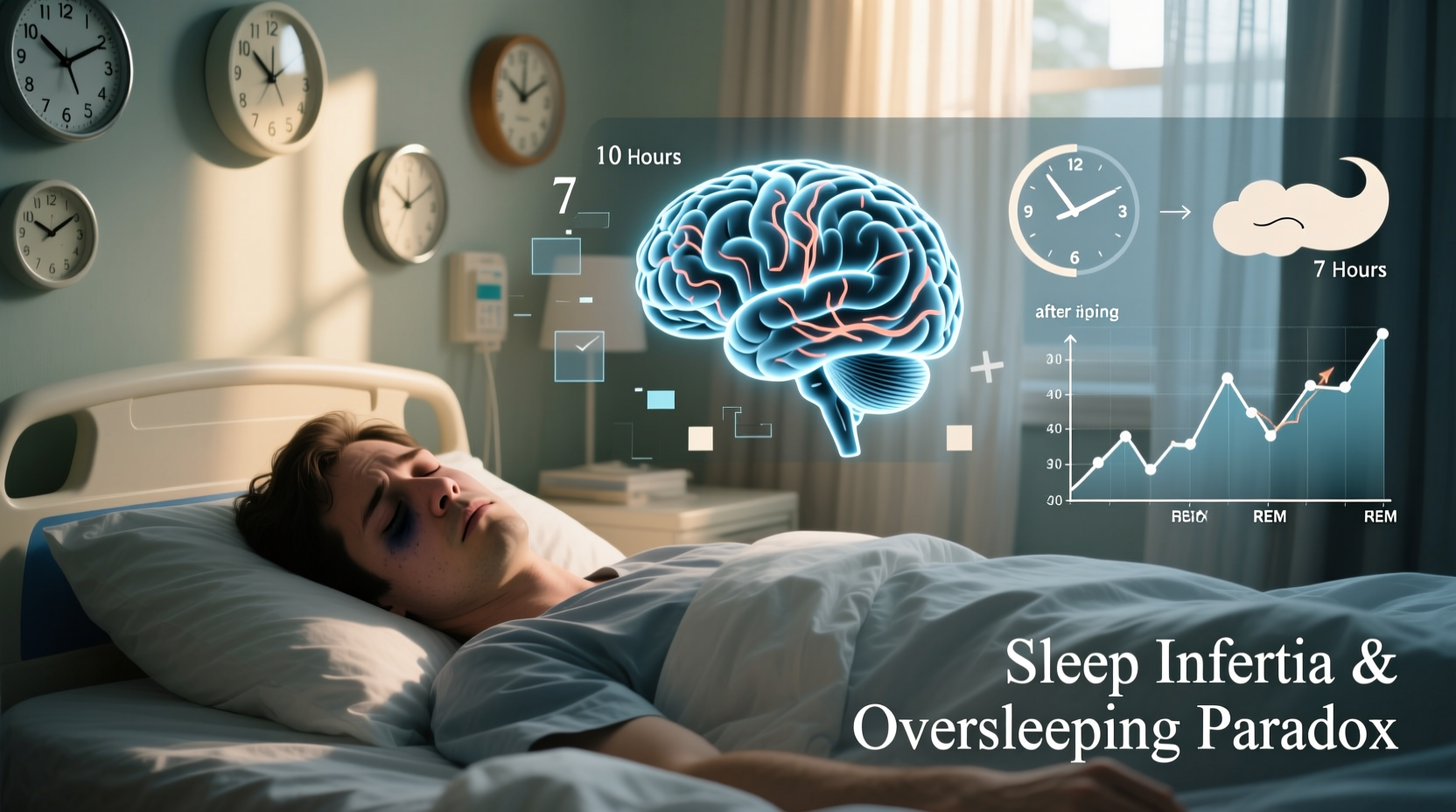
Sleep isn’t simply about duration—it’s about timing, depth, and consistency. The human body operates on a finely tuned internal clock known as the circadian rhythm, which regulates when we feel alert and when we feel sleepy. This rhythm influences hormone release, body temperature, and brain wave activity throughout the night.
When you sleep significantly longer than your body needs—such as 10 hours instead of the recommended 7 to 9—you may be disrupting this natural cycle. One major factor is \"sleep inertia,\" the groggy state that occurs upon waking, especially from deep or poorly timed sleep stages. Extended sleep increases the likelihood of waking during deep non-REM (slow-wave) sleep, which leads to prolonged grogginess and cognitive impairment.
Additionally, oversleeping can suppress the production of serotonin and dopamine—neurotransmitters linked to mood and alertness—while increasing levels of adenosine, a compound that promotes sleepiness. This biochemical imbalance contributes to that heavy, drained feeling commonly referred to as “sleep drunkenness.”
“Sleeping too much can throw off your entire neurochemical balance. It's not unlike jet lag—your brain wakes up in the wrong time zone.” — Dr. Lena Peterson, Neurologist and Sleep Specialist
Circadian Misalignment and Sleep Quality
Your best sleep occurs when it aligns with your body’s natural circadian rhythm. Most adults experience peak melatonin production between 10 p.m. and 6 a.m., signaling optimal conditions for rest. When you extend sleep beyond this window—say, by waking at noon—you’re forcing your body to remain dormant during periods when cortisol (the wakefulness hormone) should be rising.
This misalignment leads to a condition called social jet lag, where your internal clock conflicts with external schedules. Even if you're in bed longer, the final hours of sleep are often lighter, fragmented, and less restorative. You may spend more time asleep, but less time in deep sleep or REM—the stages most crucial for memory consolidation, emotional regulation, and physical recovery.
Tip: Try to wake up within the same two-hour window every day—even on weekends—to stabilize your circadian rhythm.Common Causes of Post-Oversleep Fatigue
Several underlying factors can turn long sleep into low-quality rest. These include:
- Sleep apnea: A disorder causing breathing interruptions during sleep, leading to frequent micro-awakenings. People with undiagnosed sleep apnea often sleep 9–10 hours but still feel exhausted due to poor oxygenation and disrupted cycles.
- Depression: Prolonged sleep is a common symptom of depression. The fatigue stems not from lack of sleep, but from altered brain chemistry and reduced motivation.
- Poor sleep hygiene: Using screens before bed, irregular sleep times, or consuming caffeine late in the day can fragment sleep, making longer durations ineffective.
- Hypersomnia: A medical condition characterized by excessive sleepiness despite long sleep periods. It requires professional diagnosis and treatment.
- Diet and hydration: Heavy meals before bedtime or dehydration can impair sleep quality, even if total sleep time is high.
Real-Life Example: The Weekend Sleeper
Consider Mark, a 32-year-old software developer who works long hours during the week. On weekdays, he sleeps about 6.5 hours per night and feels moderately tired. Come Saturday, he sleeps for 10 hours straight, hoping to “catch up.” Instead of feeling energized, he spends the day with a headache, low motivation, and mental fog.
After consulting a sleep specialist, Mark learns that his extended weekend sleep disrupts his circadian rhythm. His body expects to wake around 7 a.m., but sleeping until 10 a.m. delays cortisol release and confuses his internal clock. Additionally, his late-night screen use and occasional alcohol consumption reduce sleep efficiency. The extra three hours aren’t adding rest—they’re compounding fatigue.
Optimal Sleep Duration: It’s Not One-Size-Fits-All
While health organizations recommend 7–9 hours of sleep for adults, individual needs vary based on genetics, age, lifestyle, and health status. Some people naturally thrive on 7 hours (short sleepers), while others require closer to 9 (long sleepers). Sleeping 10 hours consistently may indicate an underlying need—or a problem.
Chronic oversleeping has been linked to increased risks of cardiovascular disease, diabetes, obesity, and cognitive decline. A 2018 meta-analysis published in JAMA Neurology found that individuals who regularly slept more than 9 hours had a 50% higher risk of developing dementia over ten years compared to those sleeping 7–8 hours.
| Sleep Duration | Typical Effects | Risks & Notes |
|---|---|---|
| 6 hours or less | Fatigue, impaired focus, mood swings | Increased accident risk, long-term health strain |
| 7–8 hours | Optimal alertness, good recovery | Ideal range for most adults |
| 9 hours | May benefit teens, pregnant individuals, or recovering patients | Generally safe if consistent |
| 10+ hours | Grogginess, mental fog, low energy | Linked to depression, heart issues, and mortality |
How to Improve Sleep Quality Without Adding Hours
If you’re sleeping 10 hours and still tired, the solution likely isn’t more sleep—but better sleep. Focus on enhancing the quality of each stage rather than extending total time. Here’s how:
- Set a consistent wake-up time: Choose a realistic morning alarm and stick to it daily. This anchors your circadian rhythm and improves sleep pressure at night.
- Limit light exposure before bed: Blue light from phones and screens suppresses melatonin. Avoid devices 60–90 minutes before sleep.
- Create a wind-down routine: Read, meditate, or take a warm bath to signal your brain that it’s time to rest.
- Optimize your sleep environment: Keep your bedroom cool (60–67°F), dark, and quiet. Use blackout curtains and white noise if needed.
- Avoid alcohol and heavy meals before bed: Both can disrupt REM sleep and cause awakenings later in the night.
- Exercise regularly—but not too late: Physical activity improves sleep depth, but intense workouts within three hours of bedtime can interfere with falling asleep.
Step-by-Step: Transitioning from 10-Hour Sleep to Optimal Rest
If you're currently sleeping 10 hours and want to shift toward a more energizing pattern, follow this gradual approach:
- Week 1: Reduce sleep by 30 minutes. If you usually sleep 10 hours, aim for 9.5. Adjust bedtime slightly earlier if needed to avoid staying up later.
- Week 2: Cut back to 9 hours. Focus on improving sleep quality with a consistent pre-bed routine.
- Week 3: Aim for 8.5 hours. Monitor your energy levels upon waking and throughout the day.
- Week 4: Target 7.5 to 8 hours. Wake up at the same time every day, regardless of when you fell asleep.
- Ongoing: Track your sleep and energy using a journal or app. Adjust based on how you feel—not just the clock.
The goal isn’t to force yourself into a rigid 7-hour box, but to find your personal sweet spot where you wake up naturally, feel alert, and sustain energy through the day.
Checklist: Signs Your Long Sleep Is a Problem
Use this checklist to assess whether your 10-hour sleep pattern might be doing more harm than good:
- ☑️ Do you wake up feeling groggy even after long sleep?
- ☑️ Are you frequently napping during the day?
- ☑️ Do you rely on caffeine to function in the morning?
- ☑️ Have you noticed changes in mood, such as increased irritability or low motivation?
- ☑️ Do you snore loudly or wake up gasping for air?
- ☑️ Is your sleep schedule inconsistent from day to day?
- ☑️ Have blood tests ruled out anemia or thyroid issues?
If you answered yes to three or more, consider consulting a sleep specialist. Conditions like sleep apnea, narcolepsy, or clinical depression could be contributing factors.
FAQ: Common Questions About Oversleeping
Is it possible to get too much sleep?
Yes. While individual needs vary, consistently sleeping more than 9 hours has been associated with higher risks of chronic diseases, including heart disease, diabetes, and cognitive decline. More sleep isn’t always better—if it’s disrupting your rhythm or masking an underlying issue, it can worsen fatigue.
Why do I feel worse after sleeping in on weekends?
Sleeping in disrupts your circadian rhythm, delaying the release of hormones like cortisol that help you feel awake. It’s similar to traveling eastward across time zones—your body is forced to adjust abruptly, leading to grogginess, headaches, and low energy. This effect is sometimes called “weekend jet lag.”
Can oversleeping cause weight gain?
Indirectly, yes. Excessive sleep is linked to lower physical activity, disrupted metabolism, and hormonal imbalances involving leptin and ghrelin—hormones that regulate hunger. Combined with fatigue-induced cravings for sugary or high-carb foods, long sleep durations can contribute to weight gain over time.
Conclusion: Reclaim Real Rest
Feeling more tired after 10 hours of sleep than after 7 isn’t a sign of laziness—it’s a signal from your body that something is off. True rest isn’t measured in hours, but in alignment: with your biology, your environment, and your daily rhythm. By prioritizing sleep quality over quantity, stabilizing your wake-up time, and addressing potential health issues, you can transform your rest from draining to rejuvenating.
You don’t need to sleep longer to feel better. You need to sleep smarter. Start tonight—set a consistent wake-up goal, create a calming routine, and pay attention to how you feel in the morning. Small adjustments can lead to profound changes in energy, focus, and well-being.
💬 What’s your ideal sleep routine? Share your experiences or questions below—let’s build healthier rest habits together.








