Stress doesn’t just tighten your shoulders or quicken your pulse—it rewires your brain’s reward circuitry in real time. When deadlines pile up, relationships fray, or uncertainty looms, many people feel an almost reflexive pull toward a glass of wine, a cold beer, or a stiff cocktail. That craving isn’t mere habit or weakness. It’s a predictable, biologically grounded response shaped by evolution, neurochemistry, learned behavior, and social conditioning. Understanding *why* stress so reliably unlocks the desire for alcohol is the first step—not toward judgment, but toward agency. This article unpacks the layered psychology behind stress-induced alcohol cravings, moving beyond oversimplified “just say no” advice to reveal what’s actually happening in your nervous system, how past experiences cement the link, and—most importantly—what concrete, science-informed steps you can take to loosen that connection.
The Neurochemical Loop: How Stress Hijacks Your Reward System
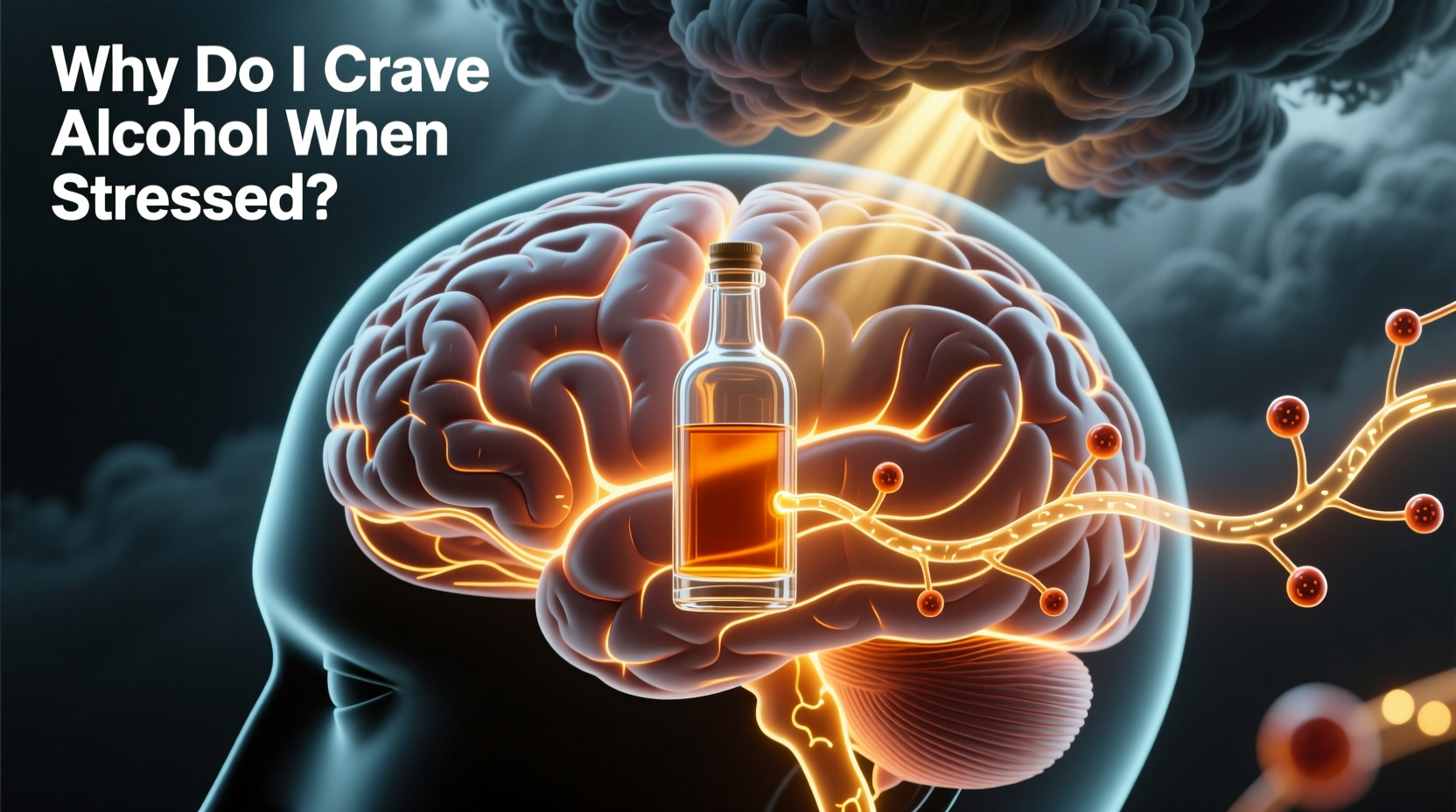
At its core, the stress–alcohol craving loop is a collision of two powerful neurobiological systems: the hypothalamic-pituitary-adrenal (HPA) axis—the body’s central stress-response network—and the mesolimbic dopamine pathway—the brain’s primary reward and motivation circuit. Under acute stress, the HPA axis floods your system with cortisol and norepinephrine. Cortisol sharpens alertness short-term but, when chronically elevated, impairs prefrontal cortex function—the region responsible for impulse control, long-term planning, and emotional regulation. Simultaneously, norepinephrine heightens arousal and vigilance, often manifesting as restlessness or mental “static.”
Alcohol temporarily counteracts this cascade. Within minutes of consumption, it enhances GABA activity—the brain’s main inhibitory neurotransmitter—producing sedation and reducing neural “noise.” It also indirectly boosts dopamine release in the nucleus accumbens, creating a fleeting sense of relief, calm, and even mild euphoria. Crucially, this effect is most potent *when the brain is already in a state of stress-induced dysregulation*. In other words, alcohol doesn’t just relax you—it *corrects* a perceived biochemical imbalance, reinforcing the belief that it’s an effective solution. Over time, repeated pairing of stress + alcohol trains the brain to anticipate relief *before* the drink is even poured—a process known as classical conditioning. The sight of a wine bottle, the sound of ice clinking, or even the end of a workday can trigger dopamine surges and physical cravings, independent of conscious intent.
Tip: Notice your body’s early stress signals—clenched jaw, shallow breathing, racing thoughts—*before* reaching for alcohol. Pausing for 90 seconds to take three slow diaphragmatic breaths can interrupt the automatic stress-to-drink reflex and restore prefrontal engagement.Learned Coping and the “Self-Medication” Hypothesis
Many people begin using alcohol to cope with stress not because they’re predisposed to addiction, but because it works—initially and visibly. A 2023 longitudinal study published in JAMA Psychiatry found that adults reporting high levels of chronic work stress were 2.7 times more likely to escalate alcohol use over five years, especially if they lacked access to alternative coping tools like therapy, exercise, or supportive social networks. This aligns with the well-established “self-medication hypothesis”: individuals unconsciously select substances that alleviate specific psychological discomforts. For stress, alcohol serves several perceived functions: it dampens hypervigilance, silences rumination, softens social anxiety, and creates a temporal “pause” from overwhelming responsibilities.
But self-medication becomes self-perpetuating. Each use reinforces the neural association between stress relief and alcohol, while simultaneously weakening the brain’s natural capacity to regulate distress. Chronic alcohol exposure blunts cortisol reactivity over time, meaning the body requires *more* stress—or *more* alcohol—to achieve the same calming effect. Simultaneously, it reduces baseline GABA receptor sensitivity, making natural calm harder to access. What began as situational relief evolves into a default coping script: stress → discomfort → craving → consumption → temporary relief → increased baseline tension → repeat.
“People don’t drink to feel good—they drink to feel *less bad*. Stress doesn’t cause addiction, but it powerfully accelerates the transition from recreational use to dependence by narrowing the brain’s behavioral repertoire.” — Dr. Sarah Chen, Clinical Neuropsychologist and author of Stress and Substance Use: Breaking the Cycle
Social, Cultural, and Environmental Triggers
Psychology doesn’t operate in a vacuum. Your environment continuously shapes—and often amplifies—the stress–alcohol link. Consider these common, often invisible, reinforcements:
- Ritual anchoring: “Wine o’clock,” post-work happy hours, or weekend cocktails become embedded in daily rhythms. The brain associates specific times, locations, or activities (e.g., logging off email, sitting on the couch) with alcohol as a signal to shift states.
- Social modeling: If friends, partners, or colleagues routinely unwind with drinks, your brain registers this as socially sanctioned and normative—even adaptive—behavior. A 2022 survey by the National Institute on Alcohol Abuse and Alcoholism found that 68% of adults who reported drinking to manage stress cited “everyone else does it” as a key factor in normalizing their use.
- Marketing and accessibility: Alcohol is uniquely positioned as both a consumer product and a mood regulator. Advertisements consistently pair it with relaxation, success, and social ease—reinforcing the idea that it’s the logical, even sophisticated, response to pressure.
- Emotional avoidance scaffolding: In cultures that stigmatize vulnerability or prioritize productivity over emotional processing, alcohol offers a socially acceptable way to “step out” of difficult feelings without needing to name or address them directly.
Evidence-Based Strategies to Disrupt the Cycle
Breaking the stress–alcohol link requires more than willpower—it demands targeted interventions that address the neurobiological, behavioral, and environmental layers simultaneously. Below is a step-by-step approach grounded in cognitive behavioral therapy (CBT), mindfulness-based stress reduction (MBSR), and behavioral neuroscience.
- Map Your Triggers (Week 1): For seven days, log every alcohol craving: time, location, stressor (e.g., “client email,” “child’s meltdown”), physical sensations (e.g., “tight chest,” “racing thoughts”), and what you did. Look for patterns—not just *what* triggered you, but *how* you interpreted it (“I can’t handle this”) and what need it seemed to meet (“I need quiet,” “I need control”).
- Build Replacement Responses (Weeks 2–3): For each top 3 craving scenarios, identify *two non-alcoholic actions* that address the same underlying need. Example: If “needing quiet after work” drives your wine craving, try 10 minutes of guided breathwork *before* entering the house, or lighting a candle and sipping herbal tea while sitting in silence—not multitasking.
- Practice Distress Tolerance (Ongoing): When a craving hits, use the “STOPP” technique: Stop; Take a breath; Observe your thoughts/feelings without judgment; Pull back—ask “Is this thought helpful or true?”; Proceed mindfully. Research shows this 30-second pause reduces impulsive action by 42% in clinical trials.
- Reframe the Narrative (Daily): Replace “I’m stressed, so I need a drink” with “My stress response is activated—I’m having a human reaction. What does my nervous system truly need right now? (e.g., movement, connection, rest, safety).” This shifts identity from “someone who drinks when stressed” to “someone learning to respond skillfully.”
- Modify Your Environment (Week 4): Remove visual cues (e.g., move liquor cabinet to a closet), establish alcohol-free zones (e.g., bedroom, home office), and proactively schedule one weekly “connection ritual” that doesn’t involve alcohol (e.g., walk-and-talk with a friend, shared cooking).
Do’s and Don’ts for Managing Stress-Related Cravings
| Action | Do | Don’t |
|---|---|---|
| When a craving arises | Pause, name the emotion (“This is anxiety, not danger”), and wait 5 minutes before deciding. | Immediately suppress it or shame yourself (“I’m weak”). Suppression increases intensity; self-criticism activates threat circuits. |
| Building resilience | Engage in regular aerobic exercise (even 20 min brisk walking 3x/week) — it lowers baseline cortisol and boosts BDNF, supporting neural repair. | Rely solely on “positive thinking.” Stress physiology operates below conscious thought—action matters more than affirmation. |
| Seeking support | Use precise language with trusted people: “I’m working on changing how I respond to stress—can we hang out doing something active instead of drinking?” | Isolate or assume others won’t understand. Most adults have wrestled with similar patterns—even if unspoken. |
| Tracking progress | Measure success by reduced *distress* during cravings (e.g., “I felt the urge but stayed calm”) — not just abstinence. | Focus only on “days sober.” This ignores the critical skill-building happening beneath the surface: improved emotional granularity, faster recovery from stress spikes, stronger impulse control. |
Real-World Example: Maya’s Shift From Automatic to Intentional
Maya, 34, a project manager in tech, described her pattern: “After 6 p.m., my brain felt like static. I’d pour a large glass of wine before dinner—no ceremony, no pleasure, just relief. If I skipped it, I’d feel wired, irritable, and unable to sleep. I thought I ‘needed’ it to decompress.”
Using the trigger-mapping strategy, she discovered her strongest cravings occurred not after big crises, but after minor, unresolved stressors: unanswered emails, ambiguous feedback, or household tasks piling up. Her body responded with muscle tension and mental fog—not classic “anxiety,” but a low-grade physiological alarm. She realized alcohol wasn’t helping her relax; it was numbing her awareness of unmet needs: clarity, closure, and physical release.
She replaced her 6:15 p.m. wine ritual with a 12-minute routine: 4 minutes of foam-rolling tight shoulders, 4 minutes of journaling three unfinished items (“What’s one small step I can take tomorrow?”), and 4 minutes of seated meditation focusing on the sensation of her feet on the floor. Within three weeks, her evening tension decreased by 60%. By week six, the *urge* to drink had softened significantly—not disappeared, but lost its urgency. “It’s not that I don’t want wine anymore,” she shared. “It’s that I trust my ability to handle the discomfort without it. That changes everything.”
FAQ
Is craving alcohol when stressed a sign of alcohol use disorder (AUD)?
Not necessarily—but it’s a significant risk indicator. Occasional stress-related drinking is common. Concern arises when cravings intensify, lead to loss of control (e.g., drinking more than intended), cause distress or impairment (e.g., missed obligations, relationship strain), or persist despite negative consequences. The DSM-5 defines AUD by patterns of behavior, not frequency alone. If stress consistently overrides your ability to choose alternatives, consulting a healthcare provider or addiction specialist is a proactive, evidence-based step—not a label.
Can I ever drink moderately again if stress triggers me?
For some, yes—with structured support and ongoing skill-building. For others, especially those with family history of addiction, prior escalation, or co-occurring anxiety/depression, abstinence may be the safest, most sustainable path. The goal isn’t rigid rules, but honest self-assessment: Does alcohol reliably help you engage with life, or does it increasingly narrow your options and erode your resilience? Professional guidance helps clarify this.
What if non-alcoholic alternatives (mocktails, sparkling water) still trigger cravings?
This is common and revealing. The craving isn’t always about alcohol itself—it’s about the ritual, the pause, the sensory experience, or the symbolic “permission to stop.” Experiment with ritual substitutions: a favorite ceramic mug filled with warm ginger-turmeric tea, a 5-minute stretch sequence, or lighting a specific scent candle while listening to a calming playlist. Focus on replicating the *function*, not just the form.
Conclusion
Craving alcohol when stressed isn’t a personal failing—it’s your brain executing a survival algorithm honed over millennia, now misfiring in a world of chronic, low-grade pressure. The very systems designed to protect you—cortisol surges, dopamine anticipation, conditioned relief—have been co-opted by a substance that provides short-term solace at long-term cost. But neuroplasticity means this loop isn’t fixed. Every time you notice a craving without acting on it, every time you choose movement over numbness, every time you name your stress instead of silencing it—you’re not resisting your biology. You’re rewiring it. You’re expanding your nervous system’s capacity to hold discomfort, to find calm without chemical intervention, and to meet life’s pressures with greater flexibility and self-trust. That’s not deprivation. It’s profound self-empowerment.
💬 Your experience matters. Have you recognized patterns in your own stress-related cravings? What replacement strategies have worked—or surprised you? Share your insights in the comments to help others navigate this deeply human challenge with clarity and compassion.








