
Every time a person donates blood, receives a transfusion, or undergoes prenatal screening, their blood type plays a crucial role. Yet most people know little about why these differences exist in the first place. The ABO blood group system—comprising types A, B, AB, and O—is not random. It is the result of deep evolutionary forces, environmental pressures, and genetic inheritance patterns that have shaped human biology over tens of thousands of years.
The presence of distinct blood types isn't unique to humans; similar systems appear in primates and other mammals. But in our species, the variation has persisted with surprising balance across global populations. Understanding why requires delving into immunology, anthropology, and even ancient pandemics that may have influenced which blood types survived and thrived.
The Basics of Blood Types
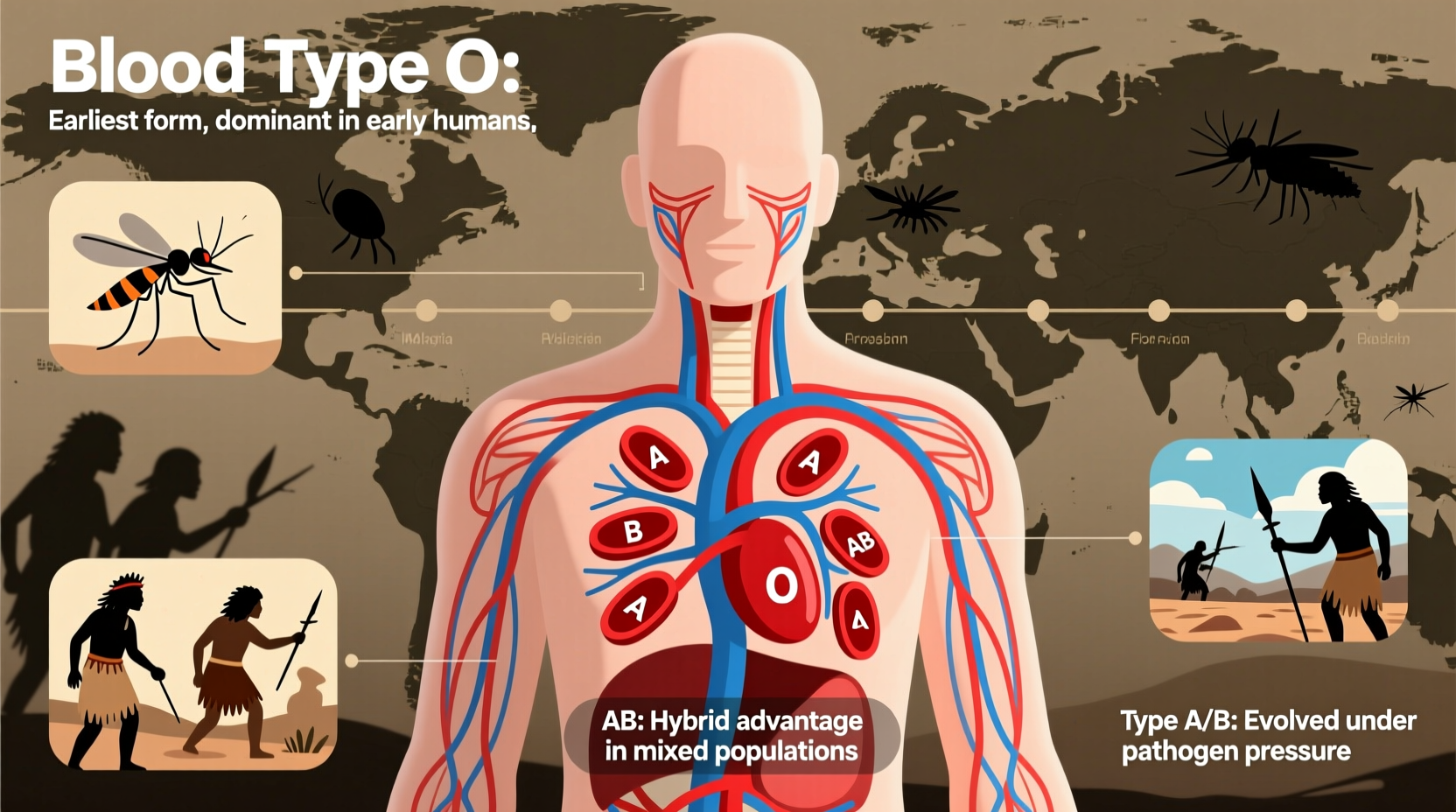
Blood types are determined by the presence or absence of specific antigens—molecular markers—on the surface of red blood cells. In the ABO system, two primary antigens, A and B, define the four main blood groups:
- Type A: Has A antigens on red blood cells and anti-B antibodies in plasma.
- Type B: Has B antigens and anti-A antibodies.
- Type AB: Has both A and B antigens but neither antibody—making it the universal recipient.
- Type O: Lacks both A and B antigens but has both anti-A and anti-B antibodies—making it the universal donor.
These antigens are produced by enzymes encoded by the ABO gene located on chromosome 9. Small mutations in this gene determine whether an individual expresses A, B, both, or neither antigen. While this genetic mechanism explains how blood types are inherited, it doesn’t fully answer why such diversity evolved in the first place.
Tip: Knowing your blood type is essential for medical emergencies, pregnancy planning, and understanding certain disease risks.Evolutionary Origins: Why Did Blood Types Diverge?
The earliest evidence of blood type variation dates back over 20 million years, with related antigen systems found in apes and Old World monkeys. However, the modern distribution of ABO types in humans likely began taking shape between 5 and 7 million years ago as hominins diverged from other primates.
Genetic studies suggest that the ancestral human population primarily carried the O allele. Mutations leading to A and later B variants arose at different points and spread unevenly across regions. For example, the A allele appears to have emerged first, possibly in Asia or Europe, while the B allele developed later, around 3.5 million years ago, potentially in Central Asia or Africa.
What’s remarkable is that none of these alleles disappeared. If one blood type conferred a clear survival advantage, we might expect it to dominate globally. Instead, all major types persist, suggesting balancing selection—a process where multiple variants are maintained because each offers benefits under different conditions.
“Blood type diversity isn’t noise—it’s nature’s insurance policy against pathogens.” — Dr. Lena Patel, Evolutionary Biologist, University of Edinburgh
Survival Advantages and Disease Resistance
One of the strongest theories explaining blood type variation centers on infectious diseases. Pathogens often use host cell surface molecules—including blood group antigens—as entry points. This means that changes in antigen structure can block infection.
For instance:
- Type O individuals show greater resistance to severe forms of malaria caused by *Plasmodium falciparum*. Studies in sub-Saharan Africa have shown that those with type O blood are up to 60% less likely to develop life-threatening complications from malaria.
- Type A and B may offer protection against certain strains of cholera and norovirus. Research indicates that people with type O are more susceptible to severe cholera infections due to increased binding of the cholera toxin to gut cells resembling O antigens.
- Norovirus, the common stomach bug, binds specifically to H1-antigens abundant in secretors (people who express blood group antigens in bodily fluids). Type O individuals tend to be more vulnerable to some strains.
This trade-off—resistance to one disease at the cost of vulnerability to another—helps explain regional patterns. Malaria-endemic regions like West Africa and Papua New Guinea have high frequencies of type O. Meanwhile, parts of Central Asia and Eastern Europe show higher rates of type B, possibly linked to historical exposure to waterborne diseases like cholera.
Historical Pandemics and Selective Pressure
Evidence suggests that ancient plagues may have played a role in shaping blood type distributions. The Black Death (bubonic plague) in 14th-century Europe killed up to 60% of the population. Some researchers believe that blood type influenced survival odds.
A study analyzing skeletal remains from plague pits found that individuals with type O were slightly more likely to survive, though results remain debated. What’s clearer is that any widespread epidemic capable of killing millions exerts massive selective pressure. Even a small survival advantage tied to blood type could shift population genetics within a few generations.
Migration, Mixing, and Modern Distribution
As human populations migrated out of Africa and settled across continents, genetic drift and founder effects further diversified blood type frequencies. Isolated communities often exhibit skewed distributions simply due to the limited genetic pool of early settlers.
Consider the following table showing approximate global distribution of ABO blood types:
| Blood Type | Global Average (%) | High Prevalence Regions | Low Prevalence Regions |
|---|---|---|---|
| O | 44% | Indigenous Americas, Sub-Saharan Africa | Central Asia |
| A | 29% | Europe, Australia | South America (indigenous) |
| B | 19% | Central Asia, India, China | Indigenous Americas |
| AB | 8% | Japan, Korea, Egypt | Native American populations |
Note the extreme case of indigenous South Americans, where over 90% have type O. This is likely due to a combination of founder effect and possible selective advantage against local pathogens prior to European contact.
Case Study: The Basque Enigma
The Basque people of northern Spain and southern France stand out genetically among Europeans. They have the highest frequency of type O (over 60%) and unusually low rates of type B. Genetic isolation dating back over 5,000 years, combined with minimal mixing during migrations, preserved this distinct profile.
Researchers believe this anomaly supports the idea that geographic isolation and localized disease environments can lock in certain blood type advantages. Despite living in a region with historically high tuberculosis rates, the Basques maintained robust population health—possibly aided by immune interactions linked to their dominant O-type prevalence.
Rhesus Factor and Other Systems
Beyond ABO, the Rhesus (Rh) factor adds another layer of complexity. People are classified as Rh+ or Rh− based on the presence of the D antigen. Rh− is relatively rare globally (about 15%), but reaches 25–30% in some Basque and Berber populations.
The origin of Rh− remains unclear, but one theory suggests it may have arisen as a mutation in Europe 30,000–40,000 years ago. Unlike ABO, Rh status has fewer known links to infectious disease resistance. Its persistence may be due to genetic drift—or possibly unknown immunological benefits.
Other blood group systems—such as Kell, Duffy, and Kidd—also influence disease susceptibility. For example, the Duffy-negative trait, common in Africans, confers near-complete resistance to *Plasmodium vivax* malaria. This reinforces a broader principle: blood polymorphisms often evolve as defenses against pathogens.
Medical Implications Today
While transfusions and organ transplants rely heavily on blood type compatibility, emerging research suggests deeper connections between blood groups and chronic conditions:
- Cardiovascular risk: Type AB and B individuals have a slightly higher risk of heart disease and venous thromboembolism, possibly due to elevated levels of von Willebrand factor, a clotting protein.
- Gastric cancer: Type A is associated with a modest increase in risk, while type O correlates with higher susceptibility to peptic ulcers due to *H. pylori* adhesion preferences.
- Pregnancy complications: Rh incompatibility between mother and fetus can trigger hemolytic disease of the newborn—now preventable with Rh immunoglobulin (RhoGAM).
Despite these associations, no blood type is inherently “better.” Each carries a unique risk-benefit profile shaped by evolution.
Tip: If you're planning surgery, traveling to remote areas, or pregnant, confirm your full blood type (ABO and Rh) with your healthcare provider.Step-by-Step: Understanding Your Blood Type’s Story
- Get tested: Request an ABO and Rh test from your doctor or use a certified home kit.
- Trace ancestry: Compare your type to regional averages. High O? Possible African or Indigenous American roots. High B? Likely Central/South Asian lineage.
- Assess health risks: Discuss with your physician whether your type influences cardiovascular, digestive, or pregnancy-related care.
- Donate wisely: Type O negative is universally compatible in emergencies. AB plasma can be given to anyone. Consider regular donation if eligible.
- Educate family: Share results with relatives—blood type patterns can inform genetic health risks across generations.
Frequently Asked Questions
Can two parents with type A blood have a child with type O?
Yes. If both parents carry a recessive O allele (genotype AO), there’s a 25% chance their child will inherit O from both and have type O blood.
Do animals have blood types too?
Yes. Dogs have DEA types, cats have A, B, and AB, and chimpanzees predominantly share type A or O. However, animal blood types are not compatible with humans.
Has natural selection stopped affecting blood types?
Largely, yes. Modern medicine, sanitation, and global mobility reduce selective pressures. Blood type distributions today reflect ancient adaptations rather than current evolution.
Conclusion: Embracing Biological Diversity
The existence of different blood types is a testament to humanity’s long journey through changing environments, deadly diseases, and vast migrations. Far from being a mere medical footnote, blood type diversity reflects our species’ resilience and adaptability.
Each variant—A, B, AB, or O—carries a legacy written in DNA, shaped by plagues, diets, and survival challenges our ancestors faced. Today, this knowledge empowers us to make informed health decisions and appreciate the intricate tapestry of human variation.
💬 Did you know your blood type before reading this? Share your type and thoughts in the comments—let’s map real-world experiences together!








