At 8,000 feet above sea level—where many mountain towns, ski resorts, and hiking trailheads sit—you may feel lightheaded after just one beer. A cocktail that barely registers at sea level can leave you unsteady, nauseous, or disoriented in the thin air of the Rockies, Andes, or Alps. This isn’t imagination or “mountain fever.” It’s measurable physiology: high altitude fundamentally alters how your body processes alcohol—not by changing metabolism directly, but by intensifying its neurological and cardiovascular impact through hypoxia, dehydration, and physiological stress. Understanding this interaction is essential for travelers, outdoor enthusiasts, medical professionals, and anyone who enjoys a drink while exploring elevated terrain.
The Core Mechanism: Hypoxia Amplifies Alcohol’s Effects
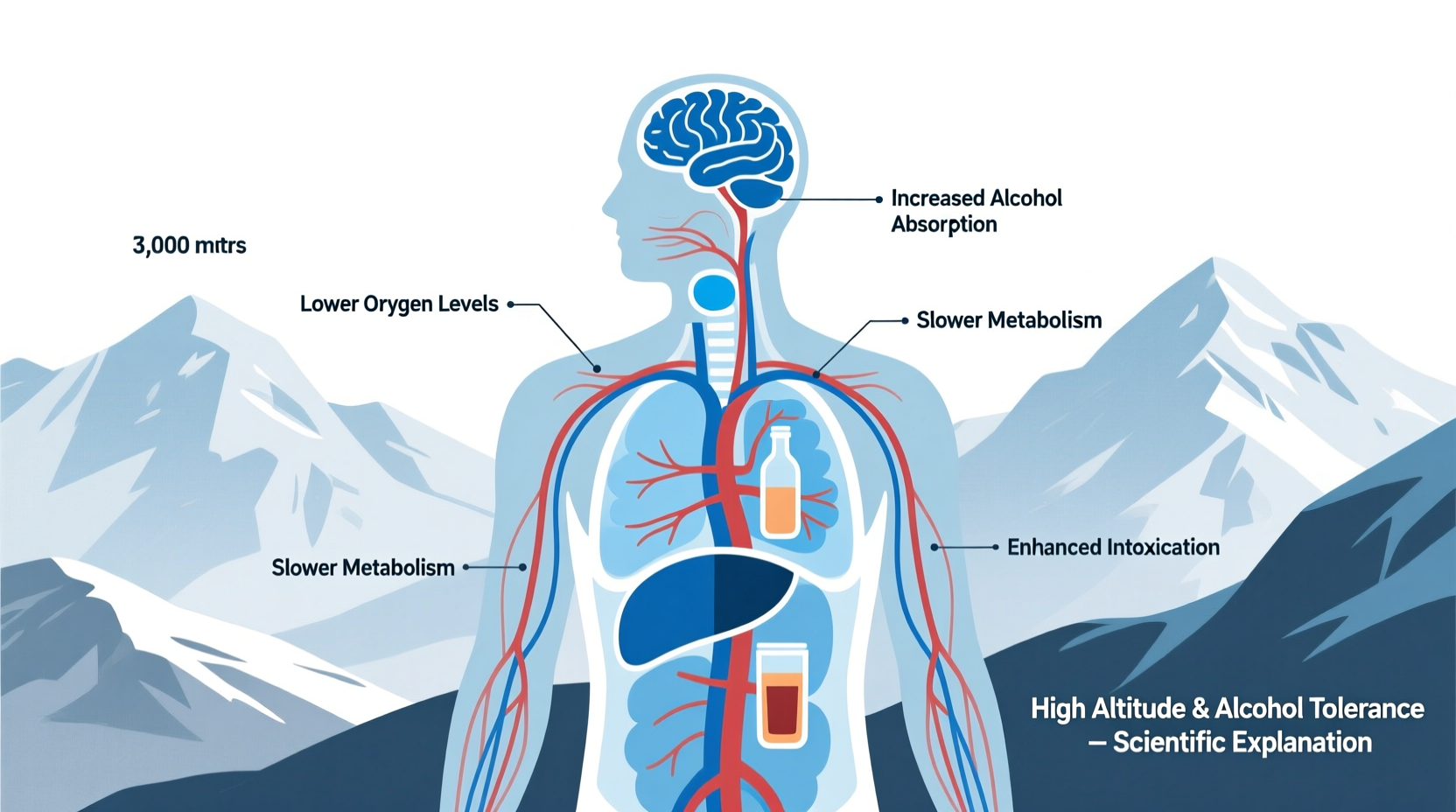
Alcohol is a central nervous system depressant. Its primary actions—slowing reaction time, impairing coordination, reducing inhibitory control, and disrupting balance—are mediated through GABA receptor potentiation and glutamate suppression. At high altitude, where barometric pressure drops and oxygen saturation in arterial blood declines (a state called *hypoxia*), the brain becomes more vulnerable to these disruptions.
Studies using functional MRI show that even mild hypoxia (equivalent to ~9,000 ft) reduces prefrontal cortex activation—the region responsible for executive function, decision-making, and self-monitoring. When alcohol enters this already compromised neural environment, the combined effect isn’t additive; it’s synergistic. A 2021 study published in High Altitude Medicine & Biology found that subjects exposed to simulated 12,000-ft conditions exhibited 40% greater impairment in psychomotor tracking tasks after consuming the equivalent of two standard drinks compared to sea-level controls—despite identical blood alcohol concentrations (BAC).
This means your BAC may read the same on a breathalyzer, but your functional capacity—your ability to walk a straight line, judge speed, or recognize intoxication—is significantly diminished. The brain isn’t processing alcohol faster or slower; it’s operating on reduced oxygen reserves, making every milligram of ethanol more consequential.
Dehydration: The Silent Accelerator
High-altitude environments are inherently dehydrating. Lower atmospheric pressure increases respiratory rate (to compensate for less oxygen per breath), leading to greater water loss through exhaled vapor. Cold, dry air further accelerates insensible fluid loss. Meanwhile, alcohol suppresses antidiuretic hormone (ADH), increasing urine output by up to 30%. The result is a double-hit dehydration cascade.
Dehydration thickens blood, reduces cerebral perfusion, and impairs thermoregulation—all of which mimic or worsen symptoms of both altitude sickness and alcohol intoxication: headache, dizziness, fatigue, nausea, and confusion. Crucially, dehydration also concentrates alcohol in the bloodstream. With less plasma volume, the same amount of ethanol yields a higher effective BAC—even before metabolic processing begins.
| Factor | Sea Level Effect | High Altitude Effect |
|---|---|---|
| Oxygen saturation (SpO₂) | 95–99% | 85–92% (at 8,000 ft); 75–82% (at 12,000 ft) |
| Respiratory water loss | Moderate | ↑ 2–3× baseline |
| ADH suppression by alcohol | ↑ Urine output | ↑↑ Urine output + ↑ insensible loss = rapid volume depletion |
| Perceived intoxication at 0.05% BAC | Mild relaxation | Noticeable drowsiness, impaired balance, slowed speech |
Altitude Sickness and Alcohol: A Dangerous Feedback Loop
Acute Mountain Sickness (AMS) affects up to 25% of people ascending to 8,000 ft and 50% at 12,000 ft. Symptoms—headache, insomnia, gastrointestinal distress, and lassitude—are often mistaken for a hangover. But combining alcohol with early AMS creates a dangerous feedback loop: alcohol worsens sleep architecture (reducing restorative slow-wave and REM sleep), impairs ventilatory response to hypoxia, and delays acclimatization. In turn, AMS-induced fatigue and cognitive fog amplify perceived intoxication.
A real-world illustration occurred in July 2022 in Breckenridge, Colorado (elevation 9,600 ft). A group of four hikers celebrated reaching the summit of Quandary Peak with craft beers at the trailhead lodge. Within 90 minutes, two members developed severe vertigo and vomiting. One passed out briefly while walking to their car. Emergency responders found BACs of 0.06% and 0.07%—levels typically associated with mild impairment at sea level—but both exhibited signs consistent with moderate AMS exacerbated by alcohol. Neither had taken acetazolamide, and both had ascended from Denver (5,280 ft) that morning without overnight acclimatization. Their recovery required supplemental oxygen, IV hydration, and 24 hours of rest—far beyond what would be expected from alcohol alone.
Tip: Never use alcohol to “sleep better” at altitude—it fragments sleep, blunts hypoxic ventilatory drive, and delays acclimatization. Prioritize hydration, gradual ascent, and proven prophylactics like acetazolamide if advised by your physician.What Doesn’t Change—and Why That Matters
It’s critical to dispel a persistent myth: alcohol is not metabolized faster or slower at altitude. Liver enzymes—primarily alcohol dehydrogenase (ADH) and aldehyde dehydrogenase (ALDH)—function at near-identical rates regardless of elevation. Blood alcohol concentration still rises predictably based on dose, body weight, sex, and food intake. What changes is the *functional threshold* at which that BAC produces impairment.
Think of it like driving a car with low tire pressure. The engine performs the same, but handling, braking distance, and stability degrade. Similarly, your liver clears ethanol at ~0.015% BAC per hour whether you’re in Miami or Machu Picchu—but your brain’s margin for error shrinks dramatically in hypoxia.
This distinction matters clinically. Emergency departments in mountain communities routinely see patients misdiagnosed with “severe intoxication” when they’re actually experiencing high-altitude cerebral edema (HACE) triggered or masked by alcohol use. Conversely, clinicians may underestimate true alcohol impairment because patients appear “only mildly drunk”—while their gait, cognition, and oxygen saturation tell a different story.
“Altitude doesn’t make you ‘get drunk faster’—it makes your brain less resilient to the neurodepressant effects of alcohol. The danger lies in the mismatch between subjective feeling and objective impairment.” — Dr. Lena Torres, Director of High-Altitude Medicine, University of New Mexico School of Medicine
Practical Risk Mitigation: A Step-by-Step Protocol
Protecting yourself requires proactive, evidence-based habits—not just abstinence, but intelligent adaptation. Follow this sequence before, during, and after alcohol exposure at elevation:
- Acclimatize first, celebrate later. Spend at least 24–48 hours at your target altitude before consuming alcohol. If arriving from sea level, consider sleeping at an intermediate elevation (e.g., 5,000–6,000 ft) the night before ascending further.
- Hydrate aggressively—before the first drink. Consume 500 mL (about 17 oz) of water or electrolyte solution upon arrival and hourly thereafter until bedtime. Avoid caffeine in the first 12 hours—it compounds diuresis.
- Adjust your definition of “one drink.” At 8,000 ft, treat one standard drink (14 g ethanol) as equivalent to 1.5 drinks at sea level. At 10,000+ ft, halve your usual limit.
- Eat fat- and protein-rich meals. Food slows gastric emptying, delaying alcohol absorption and buffering blood sugar fluctuations—critical when hypoxia already stresses glucose metabolism.
- Monitor symptoms—not just BAC. Use the Lake Louise AMS Scoring System (headache, GI upset, fatigue, dizziness, sleep disturbance) daily. If total score ≥3, avoid alcohol entirely until symptoms resolve.
- Stop drinking at least 3 hours before bedtime. This allows time for ADH rebound and minimizes sleep disruption, supporting overnight acclimatization.
Do’s and Don’ts at Elevation
- DO carry portable pulse oximeters to track SpO₂ (normal at 8,000 ft is 88–92%; below 85% warrants descent or medical evaluation).
- DO choose lower-alcohol beverages (e.g., 4% ABV lagers over 8% IPAs) and alternate each drink with 250 mL water.
- DO recognize that “feeling fine” is unreliable—hypoxia impairs self-assessment. Use objective metrics: can you walk heel-to-toe in a straight line? Can you count backward from 20 accurately?
- DON’T combine alcohol with sedatives (benzodiazepines, sleep aids) or opioids—respiratory depression risk multiplies exponentially.
- DON’T ascend further after drinking—even if you feel alert. Impaired judgment increases risk of poor decisions (e.g., venturing onto unstable terrain, underestimating weather shifts).
- DON’T assume tolerance resets overnight. Residual sleep debt and subclinical dehydration persist for 48+ hours post-alcohol, extending vulnerability.
FAQ
Does drinking coffee help sober me up at altitude?
No—and it may increase risk. Caffeine is a mild diuretic and vasoconstrictor. While it may temporarily mask fatigue, it does nothing to accelerate alcohol metabolism or improve oxygen delivery. In fact, studies show caffeine worsens headache and anxiety in hypoxic conditions, potentially amplifying discomfort without addressing underlying impairment.
Can I build “altitude tolerance” to alcohol over repeated visits?
Not physiologically. Acclimatization improves oxygen utilization and reduces AMS susceptibility, but it does not restore neural resilience to alcohol’s depressant effects. A 2023 longitudinal study of seasonal ski instructors found no reduction in functional impairment after six weeks of regular high-altitude residence—only improved recognition of personal limits and stricter adherence to hydration protocols.
Is there a safe altitude threshold for drinking?
There is no universally safe elevation. Sensitivity varies widely by individual fitness, genetics (e.g., EPAS1 gene variants common in Tibetan populations), and prior exposure. However, consensus guidelines from the Wilderness Medical Society advise extreme caution above 2,500 meters (8,200 ft) and recommend avoiding alcohol entirely during the first 48 hours above 3,000 meters (9,800 ft), especially during active ascent.
Conclusion
High altitude doesn’t change how alcohol moves through your liver—but it reshapes how your brain, lungs, and circulatory system respond to it. The resulting synergy between hypoxia and ethanol creates a uniquely hazardous environment where judgment falters before awareness catches up, where dehydration masquerades as intoxication, and where delayed acclimatization silently compounds risk. This isn’t theoretical: it’s the reason search-and-rescue teams in the Rockies report disproportionate numbers of alcohol-involved incidents above timberline, and why emergency departments in alpine towns see predictable surges in falls, hypothermia, and AMS complications on weekends.
Knowledge transforms risk into responsibility. You don’t need to forgo celebration in the mountains—but you do need to recalibrate expectations, prioritize physiology over habit, and treat every drink at elevation as a conscious act of stewardship over your body’s fragile oxygen economy. Start today: hydrate before your next trip, track your SpO₂, and share this understanding with fellow travelers. Because the most breathtaking views deserve clear heads—and the safest journeys begin long before the first pour.
💬 Your experience matters. Have you navigated alcohol use at altitude safely—or learned from a close call? Share your practical insight in the comments to help others travel wiser and safer.








