
Many people in their 30s, 40s, and beyond notice a shift in their ability to stay up late. What once came naturally—breezing through midnight movies or late-night conversations—now feels exhausting. You're not imagining it. This isn’t just about being “tired from adulting.” Real physiological and neurological changes are at play. As we age, our circadian rhythms, hormone levels, and sleep architecture evolve, often making late nights unsustainable. Understanding these shifts is the first step toward adapting your routine for better quality rest and overall well-being.
The Biological Clock Shift: Circadian Rhythm Changes
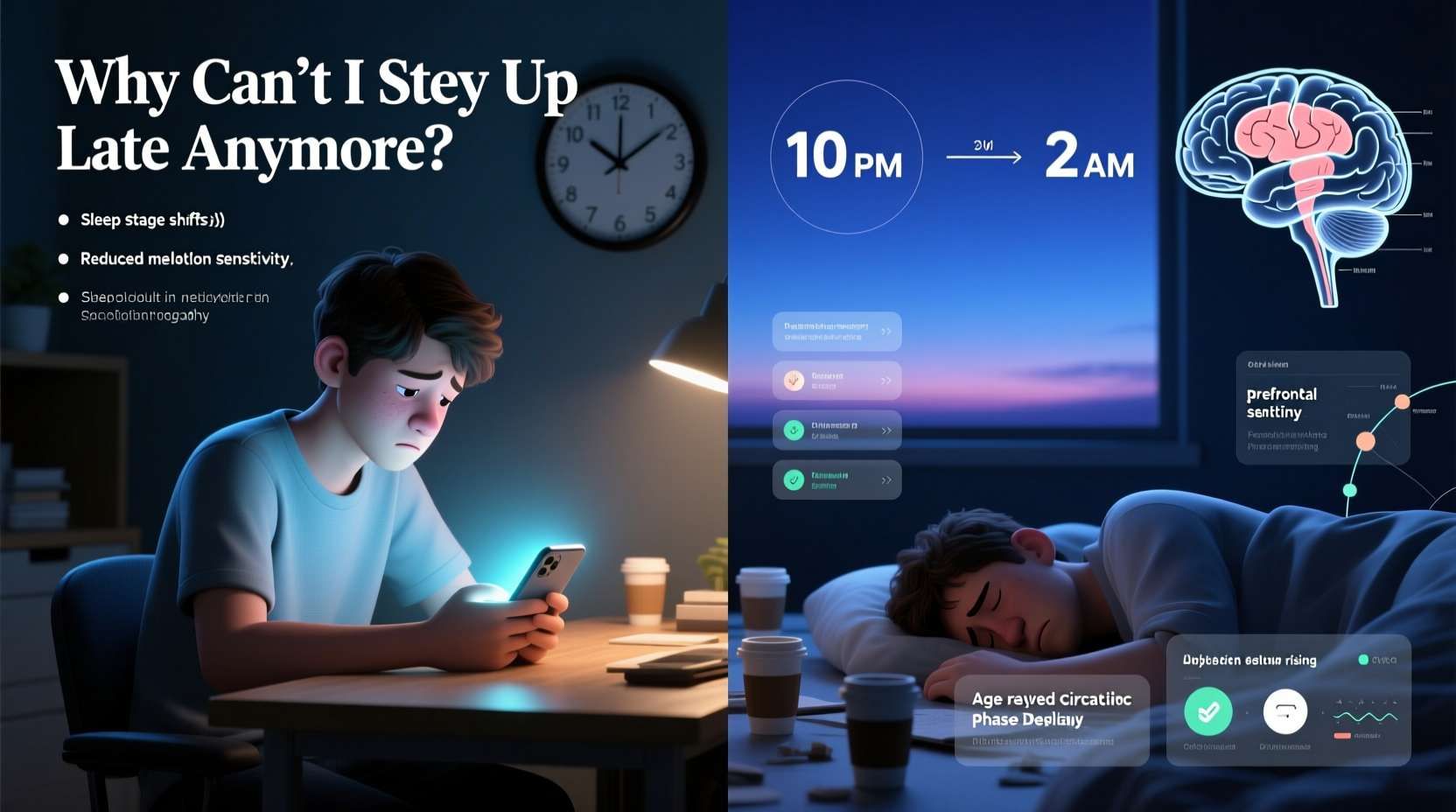
Your body runs on an internal clock known as the circadian rhythm, which regulates when you feel alert and when you feel sleepy. This rhythm is primarily influenced by light exposure, but it also changes predictably with age. In adolescence and early adulthood, the circadian phase tends to delay—meaning melatonin (the sleep hormone) is released later at night, allowing young people to stay awake longer and wake up later. This is why teenagers often resist bedtime and struggle with early school schedules.
However, starting in the mid-20s and accelerating into middle age, this rhythm begins to advance. Melatonin release happens earlier in the evening, sometimes as early as 8 or 9 PM. This means your body starts signaling that it’s time to wind down while others are still finishing dinner. By your 40s and 50s, this shift becomes even more pronounced. You may find yourself yawning before 10 PM, no matter how engaging the activity.
“After age 30, most adults experience a gradual phase advance in their circadian rhythm. It's not laziness—it's biology.” — Dr. Rebecca Fielding, Sleep Neurologist, Stanford Center for Sleep SciencesTip: If you want to stay up later, try increasing bright light exposure in the evening—especially blue-enriched light from screens or lamps. Just avoid doing so too close to bed.
Sleep Architecture and Quality Over Time
Beyond timing, the very structure of your sleep changes. Sleep occurs in cycles of REM (rapid eye movement) and non-REM stages, including deep slow-wave sleep, which is crucial for physical restoration and memory consolidation. With age, the amount of time spent in deep sleep decreases significantly. Adults over 50 may get less than half the deep sleep they enjoyed in their 20s.
This reduction means that even if you sleep eight hours, the quality may not feel restorative. You’re more likely to wake up feeling groggy or unrested. Additionally, older adults tend to experience more fragmented sleep—waking up multiple times during the night due to factors like nocturia (nighttime urination), discomfort, or lighter sleep stages.
| Life Stage | Average Deep Sleep Duration | Typical Bedtime | Common Challenges |
|---|---|---|---|
| Teens (13–19) | 100–120 minutes | 11 PM – 1 AM | Social pressure, screen use |
| Young Adults (20–30) | 80–100 minutes | 10:30 PM – 12 AM | Work stress, alcohol |
| Middle-Aged (35–55) | 60–80 minutes | 9:30 PM – 11 PM | Kids, work, hormonal shifts |
| Older Adults (55+) | 40–60 minutes | 8:30 PM – 10 PM | Pain, medications, insomnia |
Lifestyle and Environmental Factors
While biology plays a major role, lifestyle choices amplify or mitigate sleep changes. Demanding careers, parenting responsibilities, and increased screen time all contribute to altered sleep patterns. Blue light from phones and laptops suppresses melatonin, but paradoxically, many adults rely on screens to stay awake in the evening—creating a cycle of delayed sleep onset followed by early waking.
Stress and anxiety, which often increase with age due to financial pressures or caregiving roles, further disrupt sleep continuity. Chronic stress elevates cortisol, a hormone that promotes alertness and counteracts melatonin. Even small amounts of evening alcohol, often used to relax, fragment sleep and reduce REM duration.
Real-Life Example: The Case of Mark, Age 47
Mark, a software project manager, used to stay up until 1 AM coding or watching shows. After turning 45, he began falling asleep by 9:30 PM, despite wanting to spend time with his wife after the kids went to bed. At first, he blamed burnout. But adjusting his habits revealed deeper causes. He started using his laptop in dim lighting and reduced caffeine after noon. When he added a short evening walk under streetlights, he successfully pushed his bedtime back to 10:30 PM without sacrificing morning energy. His case illustrates how combining biological awareness with behavioral tweaks can restore balance.
How to Adapt: A Step-by-Step Guide to Better Evening Habits
You don’t have to fight your biology—work with it. Here’s a practical timeline to help realign your evenings for sustainable rest.
- 6:00–7:00 PM – Wind Down Stress: Finish work tasks, avoid intense discussions or problem-solving. Practice mindfulness or light stretching to lower cortisol.
- 7:00–8:00 PM – Manage Light Exposure: Increase ambient lighting indoors. Use cool-white bulbs or sit near a window if it’s still daylight. This delays melatonin onset slightly.
- 8:00–9:00 PM – Limit Stimulants: Avoid caffeine, nicotine, and heavy meals. Switch to herbal tea or water.
- 9:00–10:00 PM – Reduce Screen Brightness: Enable night mode on devices. Consider wearing blue-light-blocking glasses if screen use is necessary.
- 10:00–10:30 PM – Begin Sleep Ritual: Dim lights, read a physical book, listen to calm music. Signal to your brain that sleep is approaching.
- 10:30–11:00 PM – Lights Out: Aim for consistent sleep and wake times, even on weekends, to stabilize your internal clock.
Actionable Checklist: Supporting Healthy Sleep Aging
- ✅ Get 15–30 minutes of morning sunlight to anchor your circadian rhythm
- ✅ Exercise regularly, but avoid intense workouts within 3 hours of bedtime
- ✅ Keep bedroom temperature between 60–67°F (15–19°C)
- ✅ Limit naps to 20–30 minutes and avoid them after 3 PM
- ✅ Review medications with your doctor—some can interfere with sleep
- ✅ Track sleep patterns for two weeks to identify trends
Frequently Asked Questions
Is it normal to wake up so early in the morning as I age?
Yes. Advanced sleep phase syndrome (ASPS) is common in middle-aged and older adults. Your body naturally shifts toward earlier sleep and wake times. While it can be disruptive, especially if you need to stay up later socially, it’s typically not a disorder unless it causes distress or dysfunction.
Can I reverse my inability to stay up late?
You can modestly delay your bedtime through behavioral adjustments like evening light exposure and avoiding early-evening melatonin triggers (such as dim lighting or sedentary activities). However, trying to force yourself into a teenage sleep schedule long-term may lead to chronic sleep deprivation. It’s healthier to align your social and work life with your natural rhythm when possible.
Does menopause or andropause affect nighttime staying power?
Absolutely. Women going through menopause often experience hot flashes and night sweats that disrupt sleep and make late nights difficult. Similarly, declining testosterone in men (andropause) can reduce energy and alter sleep depth. Hormonal shifts directly impact both sleep quality and circadian timing.
Final Thoughts: Embracing the Change
The inability to stay up late isn’t a flaw or a failure—it’s a sign of maturity, both biologically and psychologically. Rather than resisting this shift, consider reframing it as an opportunity. Earlier bedtimes allow for more consistent, high-quality rest, which supports cognitive function, emotional resilience, and long-term health. Instead of viewing sleep as lost time, see it as recovery time—essential fuel for a productive, vibrant day.
💬 Have you noticed your sleep patterns changing with age? Share your experiences or tips in the comments—your insight could help others navigate this universal transition.








