
Blurred vision, difficulty focusing, or sudden changes in visual clarity can be unsettling. If you’ve found yourself squinting at screens, struggling to read signs, or noticing shadows in your field of view, you’re not alone. Millions experience some form of vision impairment each year. While aging is a well-known factor, many underlying conditions—some preventable, others requiring medical attention—can impair your ability to see clearly. Understanding the root causes is the first step toward preserving your eyesight and improving your quality of life.
Common Refractive Errors: The Usual Suspects
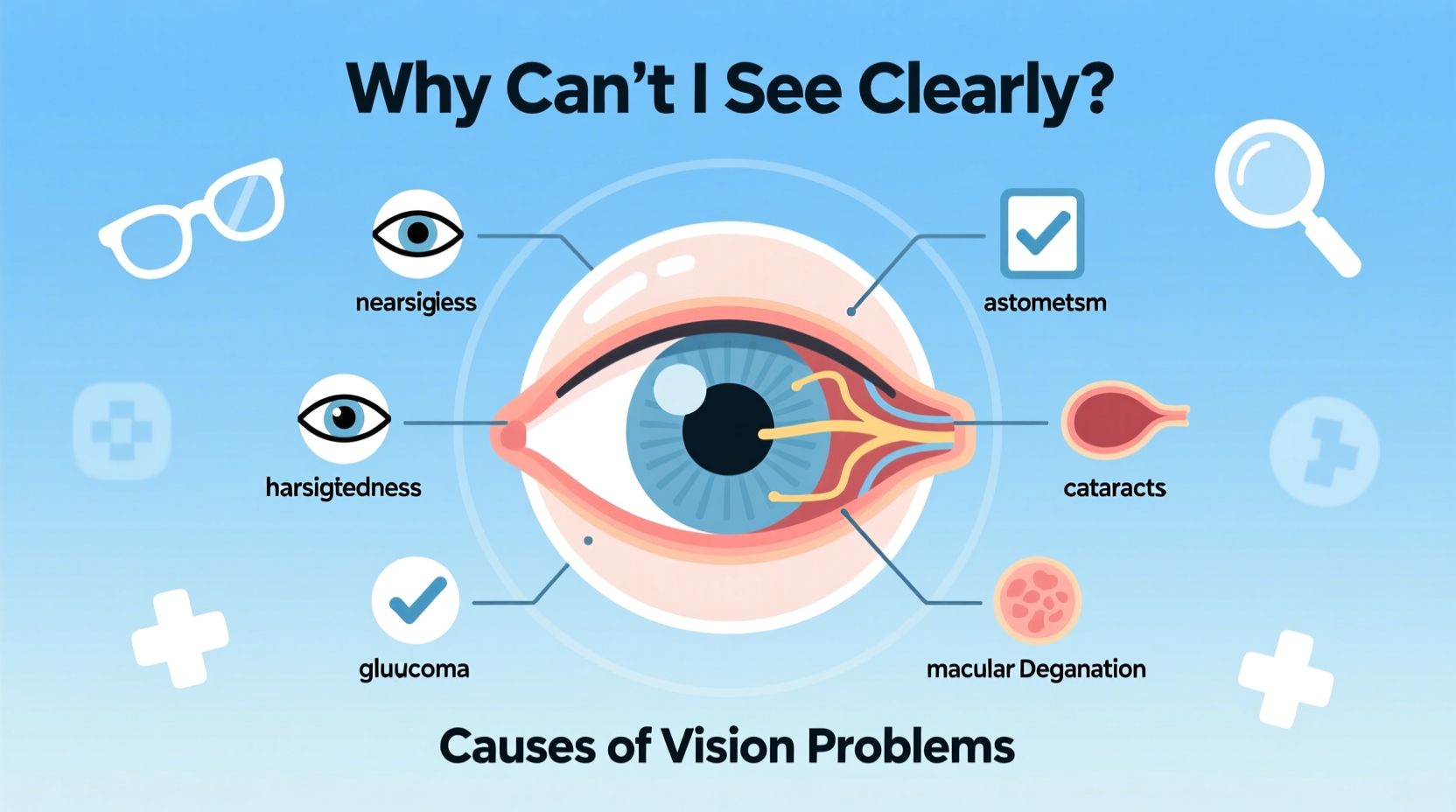
The most frequent reasons people can��t see clearly stem from refractive errors—conditions where the eye doesn’t bend light properly, resulting in blurred vision. These are typically correctable with glasses, contact lenses, or surgery.
- Myopia (nearsightedness): Distant objects appear blurry because light focuses in front of the retina. Often develops in childhood and progresses during adolescence.
- Hyperopia (farsightedness): Close-up tasks like reading become difficult as light focuses behind the retina. Can affect people of all ages.
- Astigmatism: Caused by an irregularly shaped cornea or lens, leading to distorted or stretched vision at all distances.
- Presbyopia: An age-related condition that reduces the eye’s ability to focus on nearby objects, usually emerging after age 40.
Medical Conditions That Affect Vision
Beyond refractive errors, systemic health issues can significantly impact your eyesight. The eyes are often early indicators of broader health problems.
“Your eyes can reveal diabetes, high blood pressure, and even neurological disorders before other symptoms arise.” — Dr. Lena Torres, Ophthalmologist and Clinical Researcher
Diabetic Retinopathy
High blood sugar damages the blood vessels in the retina, leading to swelling, leakage, or abnormal vessel growth. Early stages may show no symptoms, but untreated cases can result in blindness.
Glaucoma
A group of diseases causing optic nerve damage, often due to elevated intraocular pressure. It typically begins with peripheral vision loss and is known as the \"silent thief of sight\" because it progresses slowly without pain.
Age-Related Macular Degeneration (AMD)
AMD affects the macula—the central part of the retina—leading to loss of sharp, central vision needed for driving and reading. More common in people over 50.
Cataracts
A clouding of the eye’s natural lens, causing foggy or yellowed vision. Most often age-related, but can also result from trauma, radiation, or certain medications.
Environmental and Lifestyle Factors
Daily habits and surroundings play a significant role in visual health. Even if you don’t have an underlying disease, poor lifestyle choices can degrade your vision over time.
| Factor | Impact on Vision | Prevention Strategy |
|---|---|---|
| Prolonged screen use | Digital eye strain, dry eyes, headaches | Follow the 20-20-20 rule; take breaks every 20 minutes |
| UV exposure | Increased risk of cataracts and macular degeneration | Wear UV-blocking sunglasses outdoors |
| Smoking | Doubles risk of cataracts and AMD | Quit smoking; seek support programs |
| Poor diet | Lack of nutrients weakens retinal function | Eat leafy greens, fish rich in omega-3s, and colorful vegetables |
Case Study: Sarah’s Screen Fatigue Turned Around
Sarah, a 34-year-old graphic designer, began experiencing persistent blurriness and eye fatigue after long workdays. She assumed her prescription had changed. However, after an eye exam, her optometrist diagnosed her with computer vision syndrome—not a new refractive error, but a condition caused by extended screen exposure without adequate breaks. By adjusting her workstation, using blue-light filtering glasses, and implementing the 20-20-20 rule, her symptoms improved within two weeks. Her case highlights how environmental factors can mimic more serious vision problems.
When Sudden Vision Changes Signal Emergency
Not all vision issues develop gradually. Some require immediate medical attention. Sudden onset of symptoms could indicate a serious condition such as:
- Retinal detachment – marked by flashes of light, floaters, or a curtain-like shadow across the visual field.
- Optic neuritis – inflammation of the optic nerve, often linked to multiple sclerosis, causing pain with eye movement and vision loss.
- Stroke or transient ischemic attack (TIA) – sudden vision loss in one or both eyes, double vision, or partial blindness can be neurological in origin.
“If you experience sudden vision loss, even if it resolves quickly, go to the emergency room immediately. Time is critical.” — Dr. Rajiv Mehta, Neuro-Ophthalmologist
Step-by-Step: What to Do When Vision Changes Suddenly
- Stop what you’re doing and assess the symptoms: Is vision blurred, double, or partially missing?
- Note the time the change occurred and whether it affects one or both eyes.
- Check for other symptoms: Headache, dizziness, weakness, speech difficulties.
- Contact a healthcare provider immediately or go to the nearest emergency department.
- Do not drive yourself if vision is impaired.
Prevention Checklist: Protect Your Vision Daily
Vision loss isn’t always inevitable. Many conditions can be delayed or prevented with proactive care. Use this checklist to safeguard your eyesight:
- ✅ Get a comprehensive eye exam every 1–2 years, especially if over 40 or diabetic.
- ✅ Wear protective eyewear during sports or when using power tools.
- ✅ Use sunglasses with 100% UVA/UVB protection whenever outdoors.
- ✅ Manage chronic conditions like diabetes and hypertension.
- ✅ Follow the 20-20-20 rule when working on digital devices.
- ✅ Eat a nutrient-rich diet including lutein, zeaxanthin, vitamin C, E, zinc, and omega-3 fatty acids.
- ✅ Avoid smoking and limit alcohol consumption.
Frequently Asked Questions
Can lack of sleep cause blurry vision?
Yes. Chronic sleep deprivation can lead to eye strain, twitching, dry eyes, and temporary blurriness. The eyes need rest to repair and rehydrate. Aim for 7–9 hours per night to maintain optimal eye health.
Why do I see floaters, and should I worry?
Floaters are tiny clumps of gel or cells inside the vitreous (the clear jelly-like fluid in the eye). They’re common and usually harmless, especially with age. However, a sudden increase in floaters, especially with flashes of light or vision loss, requires immediate evaluation to rule out retinal detachment.
Can vitamins improve my vision?
While vitamins won’t reverse refractive errors, specific supplements can slow progression of certain eye diseases. For example, the AREDS2 formula (vitamins C, E, zinc, copper, lutein, and zeaxanthin) has been shown to reduce the risk of advanced age-related macular degeneration by about 25% in high-risk individuals. Always consult your doctor before starting supplements.
Take Control of Your Vision Health Today
Your eyes are irreplaceable. Whether your vision problems stem from aging, lifestyle, or an underlying condition, early detection and consistent care make all the difference. Don’t wait for symptoms to worsen. Schedule regular eye exams, adopt healthy habits, and pay attention to changes—no matter how minor they seem. Clear vision isn’t just about convenience; it’s about independence, safety, and enjoying life to the fullest.
💬 Your eyes speak volumes about your health. Have you had your last eye exam? Share your experience or tips to protect vision in the comments below.








