Curved fingers can be a subtle change that develops gradually, often going unnoticed until daily tasks become difficult. Whether it's an inability to place your hand flat on a surface or visible bending of one or more fingers, this condition may signal an underlying health issue. While occasional stiffness or discomfort might stem from overuse, persistent curvature—especially if accompanied by lumps, pain, or reduced mobility—warrants attention. Understanding the potential causes is the first step toward timely diagnosis and effective management.
Common Causes of Finger Curvature
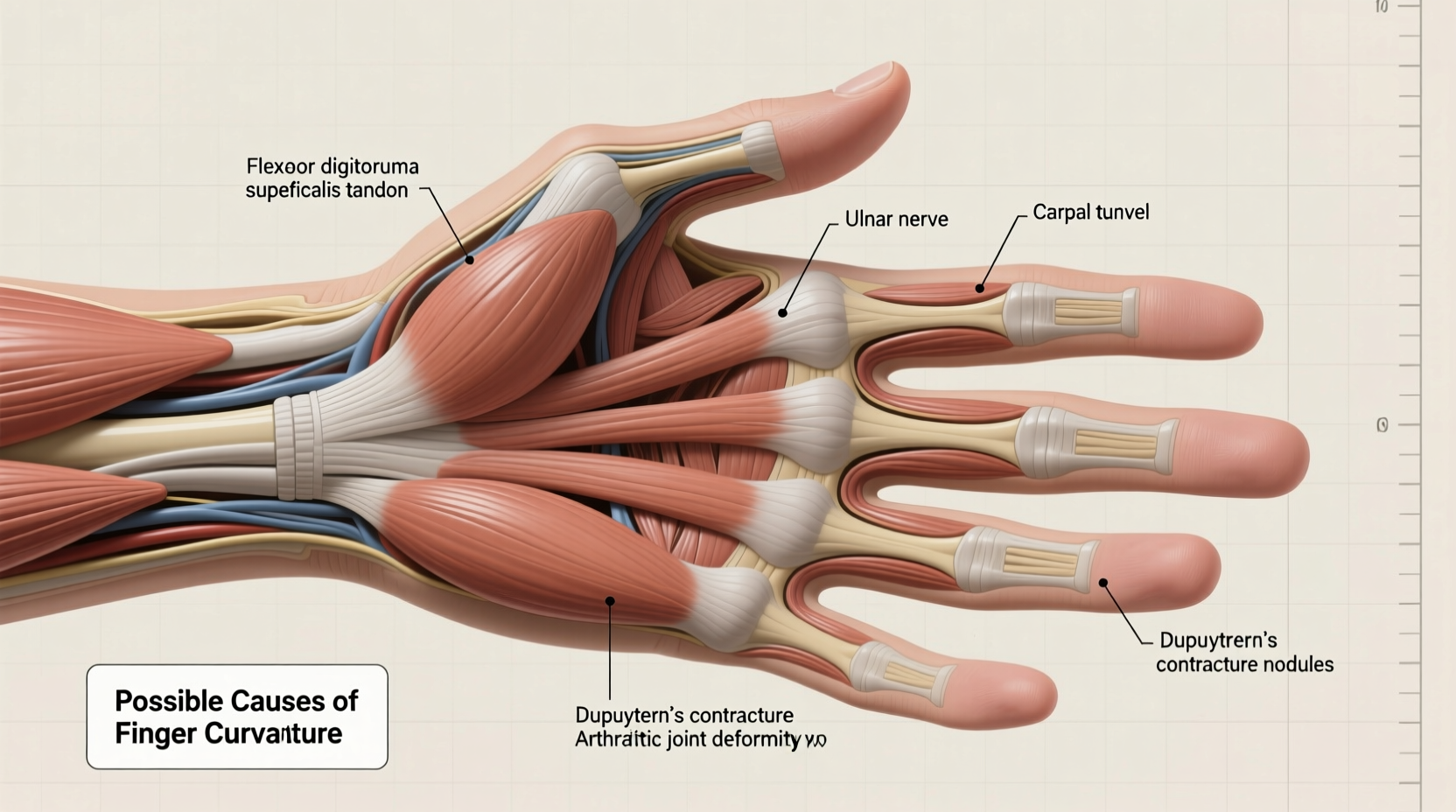
Finger curvature isn’t typically due to aging alone. Instead, it’s frequently linked to structural changes in tendons, ligaments, or connective tissues. Several medical conditions can lead to progressive bending, most commonly affecting the ring and little fingers. These changes may start mildly but can worsen over time without intervention.
- Dupuytren's Contracture: The most frequent cause, characterized by thickening of the palmar fascia (connective tissue under the skin of the palm), leading to nodules and cords that pull fingers into a bent position.
- Osteoarthritis: Degeneration of joint cartilage can alter finger alignment, especially in the distal interphalangeal joints, sometimes causing swan-neck or boutonnière deformities.
- Rheumatoid Arthritis: An autoimmune disorder that inflames joint linings, potentially resulting in ulnar deviation (fingers drifting toward the pinky side) and flexion contractures.
- Trigger Finger (Stenosing Tenosynovitis): Inflammation of the tendon sheath restricts movement, causing fingers to lock or snap when bent, which over time may contribute to fixed flexion.
- Trauma or Scar Tissue: Previous injuries, burns, or surgery can lead to contractures due to fibrosis or shortened tendons.
Dupuytren's Contracture: A Closer Look
Dupuytren's contracture is a progressive condition most prevalent in men over 50, particularly those of Northern European descent. It begins with firm nodules in the palm, usually near the base of the ring or little finger. Over months or years, these nodules evolve into rope-like cords that contract and pull the fingers toward the palm, making it impossible to fully straighten them.
The exact cause remains unclear, but genetic predisposition plays a strong role. Other contributing factors include smoking, diabetes, alcohol use, and certain medications like anticonvulsants. Although not painful in most cases, the functional impact can be significant—difficulty shaking hands, putting on gloves, or placing the hand in a pocket.
“Dupuytren’s contracture doesn’t just affect appearance—it compromises hand function. Early assessment allows for less invasive treatment options.” — Dr. Alan Pierce, Hand Surgeon and Peripheral Nerve Specialist
Stages of Dupuytren's Progression
| Stage | Symptoms | Recommended Action |
|---|---|---|
| Early | Small, painless lump in palm | Monitor; avoid excessive pressure on palm |
| Moderate | Cord formation; slight finger pull | Consult hand therapist; consider enzyme injection |
| Advanced | Finger bent >30°; functional limitation | Evaluate surgical or needle fasciotomy options |
Other Medical Conditions Linked to Curved Fingers
Beyond Dupuytren’s, several systemic diseases manifest through hand deformities. Recognizing associated symptoms can guide diagnosis and broader health management.
Rheumatoid Arthritis and Joint Deformity
In rheumatoid arthritis (RA), chronic inflammation damages synovial tissue, weakening ligaments and tendons. This often leads to ulnar deviation, where fingers drift sideways, or swan-neck deformity, involving hyperextension of the middle joint with flexion at the end joint. Morning stiffness lasting more than 30 minutes and symmetrical joint involvement are hallmark signs.
Diabetes and Stiff Hand Syndrome
Prolonged high blood sugar levels increase collagen deposition in connective tissues, leading to limited joint mobility. Diabetic patients may develop “prayer sign” difficulty—unable to press palms together fully due to stiff fingers. This condition, known as diabetic cheiroarthropathy, often coexists with Dupuytren’s.
Neurological Disorders
Conditions like stroke, cerebral palsy, or peripheral nerve injuries can cause muscle imbalances in the hand. Spasticity may lead to clenched postures or fixed flexion, particularly in the fingers. Unlike Dupuytren’s, neurological causes usually involve multiple limbs and present with other motor deficits.
Tip: If you have diabetes and notice tightening in your hands, prioritize glycemic control and discuss hand exercises with your healthcare provider.When to See a Doctor: Red Flags and Evaluation
Not every bend in the finger requires immediate treatment, but certain warning signs should prompt a visit to a primary care physician or hand specialist:
- Inability to lay your hand flat on a table (tabletop test)
- New or growing lumps in the palm
- Progressive loss of grip strength or dexterity
- Pain, swelling, or warmth in the fingers or joints
- Symptoms affecting both hands or other joints
During evaluation, your doctor will likely perform a physical exam, assess range of motion, and possibly order imaging such as ultrasound or MRI to visualize soft tissue changes. Blood tests may be used to rule out inflammatory arthritis.
Step-by-Step Guide to Initial Self-Assessment
- Perform the Table Top Test: Place your palm flat on a hard surface. If any part lifts off, it may indicate contracture.
- Check for Lumps: Use your opposite hand to feel for nodules along the palm, especially near the base of the ring and little fingers.
- Assess Flexibility: Try to straighten each finger fully. Note resistance or pain.
- Monitor Daily Function: Record difficulties with tasks like opening jars, typing, or gripping tools.
- Document Changes: Take monthly photos of your palm to track progression.
Available Treatments and Management Options
Treatment depends on severity, rate of progression, and impact on quality of life. Mild cases may only require observation, while advanced contractures often need intervention.
Nonsurgical Approaches
- Needle Aponeurotomy: A minimally invasive procedure where a needle is used to break apart the cord, allowing improved extension.
- Enzyme Injections (Collagenase): Injected directly into the cord to weaken and dissolve it, followed by finger manipulation.
- Physical Therapy: Stretching and splinting may help maintain mobility, though they won’t stop progression.
Surgical Options
For severe contractures, surgery—such as fasciectomy (removal of affected tissue)—can restore function. Recovery may take weeks, and recurrence is possible, though delayed with complete removal.
“While surgery offers dramatic improvement, it’s not always necessary early on. We now have effective office-based treatments that delay or even prevent the need for surgery.” — Dr. Lena Torres, Orthopedic Hand Specialist
FAQ
Can Dupuytren's contracture be prevented?
There is no guaranteed prevention, especially with a genetic predisposition. However, avoiding smoking, managing diabetes, and limiting alcohol may reduce risk or slow progression.
Is finger curvature always permanent?
Not necessarily. Early-stage changes may stabilize, and modern treatments can significantly improve or restore finger alignment. Delaying care increases the likelihood of permanent contracture.
Can children develop curved fingers?
Rarely. Congenital hand differences exist, but acquired curvature in young people is uncommon unless linked to trauma, neuromuscular disorders, or rare syndromes like arthrogryposis.
Conclusion
Curved fingers are more than a cosmetic concern—they can signal underlying medical conditions that affect mobility and independence. From Dupuytren’s contracture to arthritis and diabetes-related complications, identifying the root cause is essential for proper treatment. Ignoring early signs may lead to irreversible limitations. By staying informed, performing simple self-checks, and seeking timely medical advice, you can preserve hand function and maintain quality of life.
💬 Have you noticed changes in your hand shape or flexibility? Share your experience or questions below—your story could help someone recognize the signs earlier.








