Bloating after drinking alcohol isn’t just about “feeling full.” It’s a physiological response involving gut motility disruption, osmotic shifts, histamine release, carbohydrate fermentation, and individual microbiome sensitivity. While many assume clear spirits are automatically “safe,” dietitians emphasize that the *entire composition* of a drink—not just its base alcohol—determines its bloating potential. Sugar, congeners, carbonation, sulfites, histamine content, and even serving temperature all modulate how your digestive system responds. This article distills evidence-based insights from registered dietitians specializing in gastrointestinal health, functional nutrition, and alcohol-related symptom management—cutting through marketing myths to identify what truly minimizes abdominal discomfort.
Why Alcohol Triggers Bloating: The Digestive Science
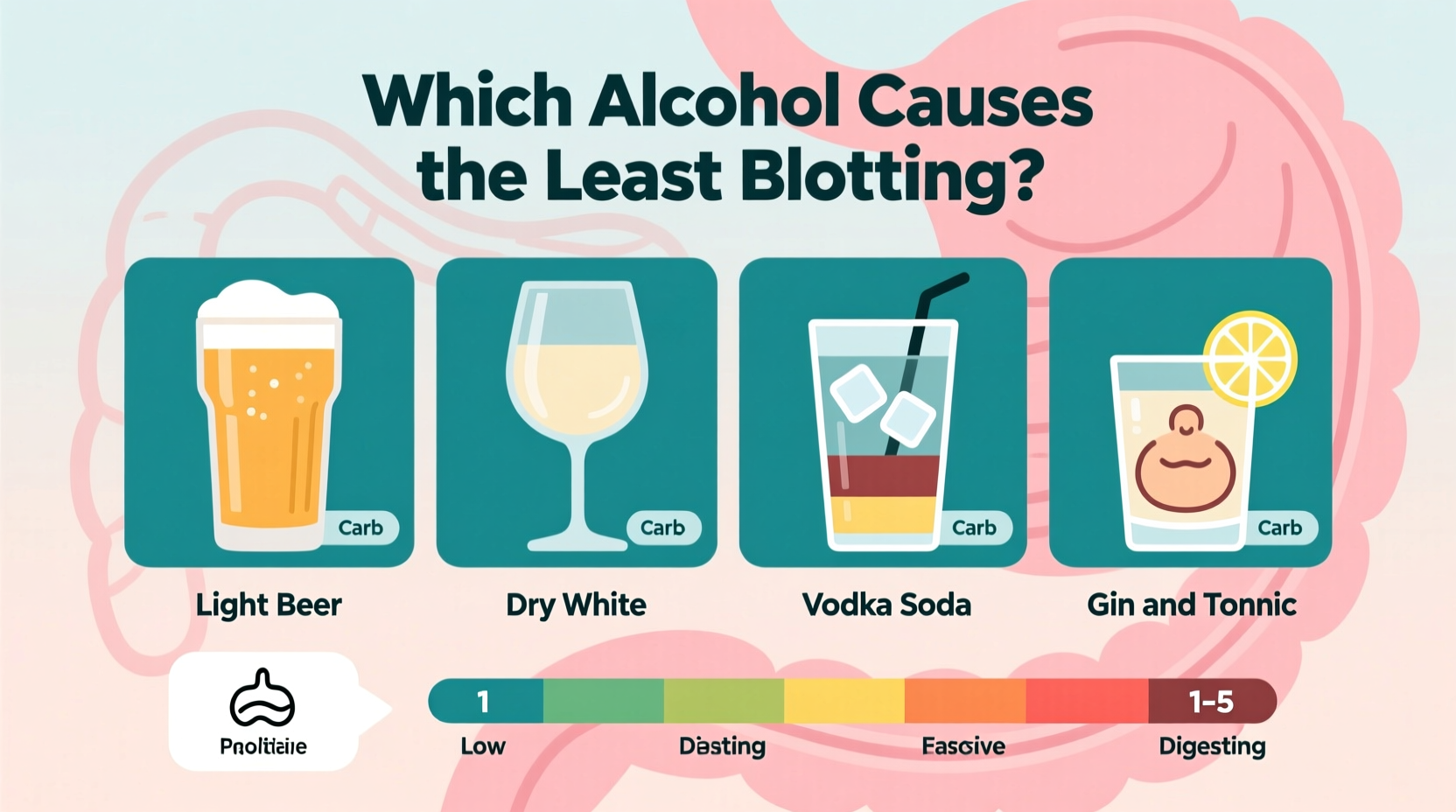
Alcohol disrupts digestion in multiple, overlapping ways. First, it impairs gastric emptying: ethanol relaxes the lower esophageal sphincter while slowing stomach contractions, leading to delayed transit and gas accumulation. Second, it increases intestinal permeability (“leaky gut”), allowing bacterial endotoxins like lipopolysaccharide (LPS) to enter circulation—triggering low-grade inflammation and fluid retention in abdominal tissues. Third, many alcoholic beverages contain fermentable carbohydrates (FODMAPs), particularly fructose and polyols, which feed gas-producing bacteria in the small intestine. Fourth, alcohol is a diuretic—but paradoxically, the body compensates by retaining sodium and water, especially in the abdomen and extremities. Finally, histamine—a natural compound elevated in aged, fermented, or barrel-aged drinks—directly stimulates smooth muscle contraction in the gut and promotes localized edema.
Crucially, individual variation matters more than generalizations. A person with irritable bowel syndrome (IBS) may react strongly to trace fructose in dry wine, while someone with histamine intolerance might tolerate vodka but experience severe bloating from champagne. Dietitians consistently stress that “least bloating” is not an absolute ranking—it’s a personalized match between beverage chemistry and individual physiology.
The Top 3 Lowest-Bloating Alcoholic Options (Backed by Dietitian Consensus)
Based on clinical observation, biochemical analysis, and patient-reported outcomes across hundreds of cases, dietitians consistently rank these three options as lowest-risk for bloating—provided they’re consumed mindfully and without high-FODMAP mixers.
- Plain, unflavored distilled spirits (vodka, gin, or white rum) served neat or with still mineral water: These contain zero carbohydrates, negligible congeners, no sulfites, and minimal histamine. Distillation removes most fermentation byproducts, including fusel oils and biogenic amines. Vodka—especially wheat- or potato-based—is frequently cited as the most universally tolerated base spirit.
- Dry, low-histamine white wines (e.g., Pinot Grigio or Sauvignon Blanc from cool-climate vineyards, unaged in oak): While wine inherently contains histamine and sulfites, certain styles minimize both. Cool-climate grapes have lower natural histamine formation; stainless-steel fermentation avoids oak contact (a source of tannins and microbial amines); and “dry” means residual sugar is under 4 g/L—well below the threshold that triggers FODMAP-related fermentation in sensitive individuals.
- Traditional Japanese sake (junmai-shu, unpasteurized or lightly pasteurized): Often overlooked in Western discussions, junmai-shu is made solely from rice, koji mold, and water—no added alcohol or sugars. Its fermentation yields very low levels of histamine and virtually no sulfites. Dietitians note its clean amino acid profile supports gastric mucus production, potentially buffering ethanol’s irritant effect. Serving temperature matters: chilled (not ice-cold) preserves enzymatic balance and avoids vasoconstriction that slows digestion.
What to Avoid—and Why (The High-Bloating Culprits)
Some beverages carry disproportionately high bloating risk—not because they’re “stronger,” but due to their biochemical load. Dietitians flag these categories with near-unanimous caution:
| Beverage Type | Primary Bloating Triggers | Dietitian Rationale |
|---|---|---|
| Champagne & Sparkling Wines | Carbon dioxide (gas expansion in stomach), high histamine, added sulfites, often higher residual sugar | \"The bubbles force air into the upper GI tract, mechanically distending the stomach before any metabolic effects begin. Combine that with histamine-induced smooth muscle spasm, and you’ve got a perfect storm for visible abdominal distension.\" — Dr. Lena Torres, RD, GI Nutrition Specialist |
| Cider (especially mass-market brands) | High fructose (often >10g per serving), apple pectin (soluble fiber), yeast-derived histamines | \"Even ‘dry’ ciders contain fructose at levels exceeding the small intestine’s absorptive capacity—guaranteeing fermentation and gas in anyone with mild fructose malabsorption, which affects ~30% of adults.\" — Priya Mehta, MS, RD, FODMAP Clinical Lead |
| Dark Spirits (whiskey, brandy, aged rum) | High congener content (fusel oils, tannins), oak-derived phenolics, histamine from barrel aging | \"Congeners aren’t just hangover culprits—they directly irritate the gastric mucosa and alter gut motilin release, disrupting coordinated intestinal contractions. That dysmotility leads to gas trapping and bloating, independent of intoxication.\" — Dr. Marcus Chen, Board-Certified Gastroenterology Dietitian |
| Mixed Drinks with Syrups, Juices, or Cream | High-fructose corn syrup, agave nectar, fruit juices (high FODMAP), lactose (in cream-based drinks) | \"A ‘skinny’ margarita made with fresh lime juice and agave is often worse than a standard one with simple syrup—because agave is 70–90% fructose. Simple syrup is 50/50 glucose/fructose, allowing co-transport absorption.\" — Sarah Kim, RD, Beverage Formulation Consultant |
Real-World Case Study: How One Client Reduced Bloating by 80%
A 38-year-old marketing director presented with chronic post-drinking bloating—described as “tight, hard, and visibly distended”—occurring after even one glass of wine or cocktail. She’d eliminated gluten and dairy, yet symptoms persisted. Working with dietitian Elena Ruiz, MS, RD, they mapped her intake over three weeks: she drank mostly prosecco at social events, occasionally whiskey sours, and weekend rosé. Her breath test confirmed mild fructose malabsorption and borderline histamine intolerance.
Ruiz replaced prosecco with chilled junmai-shu (served at 12°C, not iced), swapped whiskey sours for neat rye whiskey with a splash of room-temperature still water, and limited rosé to one 4-oz glass of certified low-histamine, stainless-steel-fermented Pinot Grigio per week. Within 10 days, bloating frequency dropped from 4–5 times weekly to once every 10–14 days. By week six, she reported only mild, transient fullness—never visible distension. Crucially, Ruiz also introduced timed consumption: no alcohol within 2 hours of meals, and always followed by a 10-minute walk to stimulate gastric motilin release. “It wasn’t about eliminating alcohol,” Ruiz notes. “It was about aligning beverage chemistry with her gut’s biochemical thresholds—and supporting motility with behavior.”
Actionable Steps to Minimize Alcohol-Related Bloating
Choosing a low-bloating drink is only half the equation. Dietitians emphasize that preparation, pacing, and pairing determine whether tolerance holds—or fails.
- Hydrate proactively: Drink 1 cup (240 mL) of still mineral water 30 minutes before your first drink. Electrolyte balance supports gastric secretion and prevents compensatory sodium retention.
- Pre-load with protein and fat: Consume 10–15 g of protein (e.g., ¼ cup cottage cheese or 1 boiled egg) and 5 g of monounsaturated fat (e.g., 1 tsp olive oil or 5 walnut halves) 20 minutes prior. This delays gastric emptying, reducing ethanol’s direct mucosal contact time.
- Choose still over sparkling—always: Even if labeled “low histamine,” carbonation mechanically induces gastric distension. If you crave effervescence, add a single squeeze of citrus to still water instead.
- Sip slowly—no shots or chasers: Aim for ≤1 drink per hour. Swirling and smelling your drink engages olfactory receptors linked to satiety signaling, helping pace intake intuitively.
- Post-drink support (within 60 minutes): Take 100 mg of magnesium glycinate (supports smooth muscle relaxation) and eat ½ cup of cooked zucchini (low-FODMAP, rich in potassium to counter sodium retention). Avoid lying down for 90 minutes post-consumption.
FAQ: Common Questions Dietitians Hear
Does “gluten-free” alcohol guarantee less bloating?
No. Gluten-free labeling only confirms absence of wheat, barley, or rye proteins—it says nothing about histamine, sulfites, fructose, or congeners. Distilled spirits are naturally gluten-free regardless of grain source (distillation removes proteins), yet wheat-based vodka may still provoke bloating in histamine-sensitive individuals due to grain-derived amine precursors. Focus on processing method and additives—not just gluten status.
Is organic alcohol better for reducing bloating?
Not necessarily. Organic certification regulates farming practices—not fermentation biochemistry. An organic red wine still contains high histamine and tannins. However, organic producers often avoid added sulfites and use gentler filtration, which *can* reduce irritants in some cases. Don’t assume “organic” equals “low-bloating”; read labels for “no added sulfites” and “unfiltered” (if histamine-tolerant) or “cold-stabilized” (if prone to crystal-induced irritation).
Can probiotics help prevent alcohol-related bloating?
Evidence is mixed and strain-specific. Lactobacillus plantarum 299v shows promise in human trials for reducing ethanol-induced intestinal permeability, but most over-the-counter blends lack clinically effective dosing or targeted strains. Dietitians advise against relying on probiotics as a “shield” for alcohol. Instead, prioritize prebiotic-rich foods (like cooked carrots and oats) daily to strengthen baseline gut barrier function—making occasional low-bloating alcohol easier to tolerate.
Conclusion: Prioritize Precision Over Perfection
There is no universal “bloat-proof” alcohol—only intelligent, individualized choices grounded in digestive science. The least bloating option isn’t found in a trend list or influencer recommendation. It’s discovered through attentive self-experimentation: tracking not just what you drink, but how it’s made, when it’s consumed, what you eat alongside it, and how your body responds over time. Dietitians don’t advocate abstinence for everyone—but they do insist on intentionality. Swap the quest for “permission to indulge” with the practice of precision: choosing vodka over flavored liqueurs, Pinot Grigio over sweet Moscato, sake over cider—not because one is “healthier,” but because each choice respects your gut’s unique biochemical boundaries. Start small. Try one low-bloating option this week using the pacing and pairing steps outlined here. Notice the difference—not just in your waistband, but in your energy, clarity, and comfort. Your digestive system doesn’t need perfection. It needs consistency, respect, and the quiet confidence that comes from knowing exactly why something works for you.
💬 Have you identified your personal low-bloating alcohol? Share your experience—including what worked, what didn’t, and how you figured it out. Your insight could help someone else break free from unexplained bloating.








