Retro round glasses have made a powerful comeback, blending vintage charm with modern style. Whether inspired by John Lennon, 1960s mod fashion, or contemporary minimalist trends, these frames are a statement. But when you need vision correction, the real challenge begins: choosing the right prescription lenses. The wrong lenses can distort your vision, cause discomfort, or even diminish the aesthetic appeal of your favorite frames. This guide walks you through every critical factor in selecting lenses that enhance both clarity and style.
Understanding Retro Round Frame Characteristics
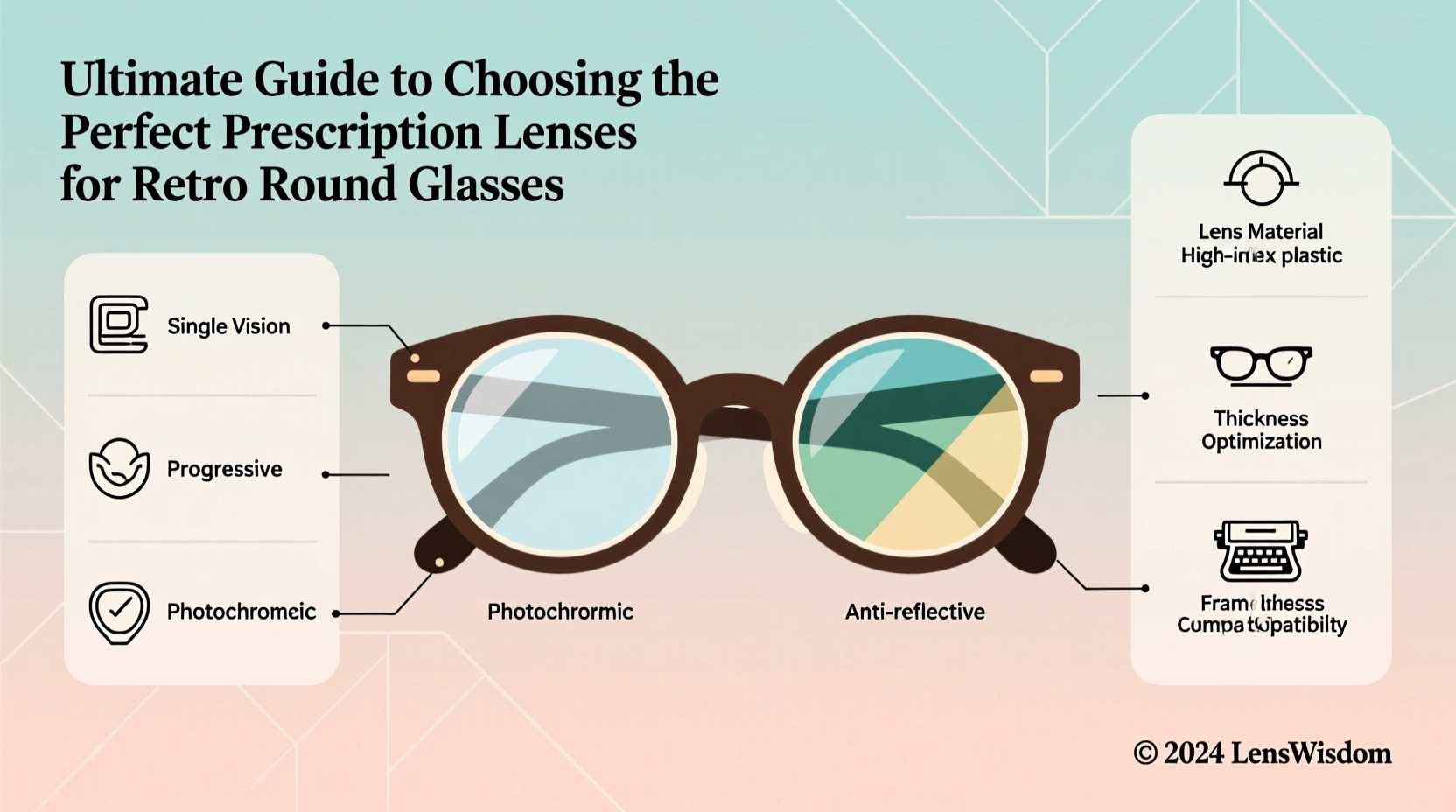
Retro round glasses typically feature small to medium circular lenses, narrow bridges, and minimal frame coverage. These design elements create a distinctive look but present unique optical challenges. Because the lens diameter is often smaller than standard frames, precise lens fitting becomes crucial. Off-center optical centers or poorly optimized lens curvature can lead to edge distortion, especially for higher prescriptions.
The shape also means less surface area for lens adjustments. Unlike rectangular or aviator frames, which allow more room for pupil positioning, round frames require exact measurements to ensure your line of sight aligns perfectly with the optical center of the lens.
Tip: Always provide your pupillary distance (PD) measurement when ordering prescription lenses—this is especially critical for round frames.Lens Materials: Matching Clarity, Weight, and Safety
The material of your lenses affects everything from visual sharpness to how light or heavy your glasses feel. For retro round frames, which are often lightweight and delicate, choosing the right lens material ensures comfort and durability.
| Material | Best For | Pros | Cons |
|---|---|---|---|
| Plastic (CR-39) | Low prescriptions, budget-conscious buyers | Affordable, good optical clarity | Thicker, heavier, less impact-resistant |
| Polycarbonate | Active lifestyles, high prescriptions | Lightweight, impact-resistant, thinner | Slightly lower Abbe value (may cause chromatic aberration) |
| Trivex | Maximum clarity and safety | Excellent optics, ultra-light, shatterproof | More expensive |
| High-Index (1.67 or 1.74) | Strong prescriptions | Thinner, flatter lenses | Higher cost, may reflect more light without coatings |
For retro round glasses, polycarbonate or Trivex are ideal for most wearers due to their lightweight nature and resistance to cracking—important for thin metal frames common in vintage-inspired designs. High-index lenses are recommended if your prescription exceeds ±3.00, as they reduce the \"bulging\" effect that can occur in small circular lenses.
Optical Precision: Why Lens Design Matters
Not all lenses are created equal in terms of optical performance. The design must compensate for the curvature and size of round frames to avoid peripheral distortion.
Aspheric lenses are highly recommended. Unlike traditional spherical lenses, which maintain a constant curve, aspheric lenses have a flatter, more gradual curvature. This reduces magnification effects (like the \"bug-eye\" look for farsighted prescriptions) and minimizes edge distortion—critical in round frames where the edges are more prominent in your field of view.
“Round frames demand higher optical precision. Aspheric designs significantly improve visual comfort, especially in stronger prescriptions.” — Dr. Alan Zhou, Optometric Consultant
Additionally, consider free-form digital lenses if you have astigmatism or progressive needs. These are custom-molded using digital surfacing technology to match your exact prescription, frame shape, and facial measurements. While more expensive, they deliver superior clarity across the entire lens surface.
Essential Coatings for Performance and Longevity
No lens is complete without the right coatings. Retro round glasses are often worn throughout the day, indoors and out, making protective layers essential.
- Anti-Reflective (AR) Coating: Reduces glare from screens, headlights, and overhead lighting. Vital for clear night vision and reducing eye strain during screen use.
- Scratch-Resistant Coating: Especially important for plastic and high-index lenses, which are softer and more prone to scuffs.
- UV Protection: Blocks harmful UVA and UVB rays. Most quality lenses include this by default, but verify before purchasing.
- Blue Light Filtering: Optional but beneficial for those spending hours on digital devices. Can be integrated into AR coating.
- Hydrophobic/Oleophobic Coating: Repels water, oil, and dust, keeping lenses cleaner longer—ideal for frequent wearers.
Step-by-Step Guide to Ordering Prescription Lenses
Follow this sequence to ensure your retro round glasses are fitted with lenses that meet both optical and aesthetic standards.
- Get an up-to-date prescription from your optometrist, including sphere, cylinder, axis, and add power (if needed).
- Measure your pupillary distance (PD). Use a ruler and mirror or request it from your eye care provider. Average PD is 62mm, but individual variation matters.
- Select your frame and confirm it’s compatible with prescription lenses. Check bridge fit and temple comfort.
- Choose lens material based on your prescription strength and lifestyle. Polycarbonate or Trivex for active users; high-index for strong corrections.
- Add necessary coatings, prioritizing anti-reflective and scratch-resistant options.
- Enter accurate measurements when ordering online: PD, dominant eye, and any special instructions (e.g., “optimize for computer use”).
- Review the lens summary before checkout. Confirm lens type, index, and coatings.
Real-World Example: Sarah’s Upgrade to Premium Lenses
Sarah, a graphic designer, purchased a pair of vintage-style round glasses online. Her initial lenses were basic CR-39 plastic with no coatings. She quickly noticed glare from her dual monitors, struggled with reflections during video calls, and found the lenses thick and unattractive due to her -4.50 prescription.
She returned to her optician and upgraded to 1.67 high-index aspheric lenses with full anti-reflective, blue light filtering, and hydrophobic coatings. The difference was immediate: reduced eye fatigue, sharper peripheral vision, and a much sleeker appearance. The lenses fit seamlessly within the round frame, eliminating the “magnified” look she had previously experienced.
Frequently Asked Questions
Can I put progressive lenses in retro round frames?
Yes, but with caution. Traditional round frames offer limited vertical space, which can make it difficult to accommodate the gradient zones of standard progressives. Consider shorter corridor or compact progressive lenses designed for smaller frames. Consult your optician to ensure compatibility.
Why do my new lenses look distorted at the edges?
This is common with strong prescriptions in curved or small frames. It may indicate improper lens design or misalignment of the optical center. Aspheric lenses and accurate PD measurements can correct this. If distortion persists, return to your provider for adjustment or remaking.
Are glass lenses a good option for retro round glasses?
Glass offers excellent optical clarity and scratch resistance but is heavy and fragile. Given that many retro frames are made of thin metal, glass lenses can imbalance the glasses and increase the risk of breakage. Modern alternatives like Trivex offer similar clarity with far better safety and weight profiles.
Final Checklist Before You Order
- Prescription Accuracy:
- Double-checked and current (within one year).
- Pupillary Distance (PD):
- Measured correctly—single or dual PD provided.
- Lens Material:
- Appropriate for prescription strength and frame size.
- Coatings Included:
- Anti-reflective, scratch-resistant, UV protection confirmed.
- Lens Design:
- Aspheric or free-form selected for optimal clarity.
- Frame Compatibility:
- Verified that the frame supports prescription lenses and your nose bridge fits well.
Conclusion
Choosing the perfect prescription lenses for retro round glasses isn’t just about vision—it’s about harmony between function and fashion. With the right lens material, design, and coatings, your stylish frames can deliver crisp, comfortable vision all day long. Don’t let poor optics dull your vintage flair. Take the time to understand your needs, invest in quality lenses, and enjoy the best of both worlds: timeless style and modern clarity.
💬 Found the perfect lens combo for your round frames? Share your experience in the comments and help others make smarter choices!








