
When you're pushing through a tough workout, the last thing you want is your earbuds falling out every few minutes. Whether you're sprinting on the treadmill, lifting weights, or doing high-intensity interval training, staying focused matters—and so does your audio gear. The debate between true wireless earbuds and wired headphones for gym use often comes down to one critical factor: which stays in place better during movement?
This isn't just about preference—it's about physics, design, fit, and how well technology adapts to human motion. While both options have evolved significantly, their performance under physical stress varies. Understanding the nuances can help you avoid mid-workout frustration and choose the right pair for your fitness routine.
Fit and Stability: The Core of Gym Performance
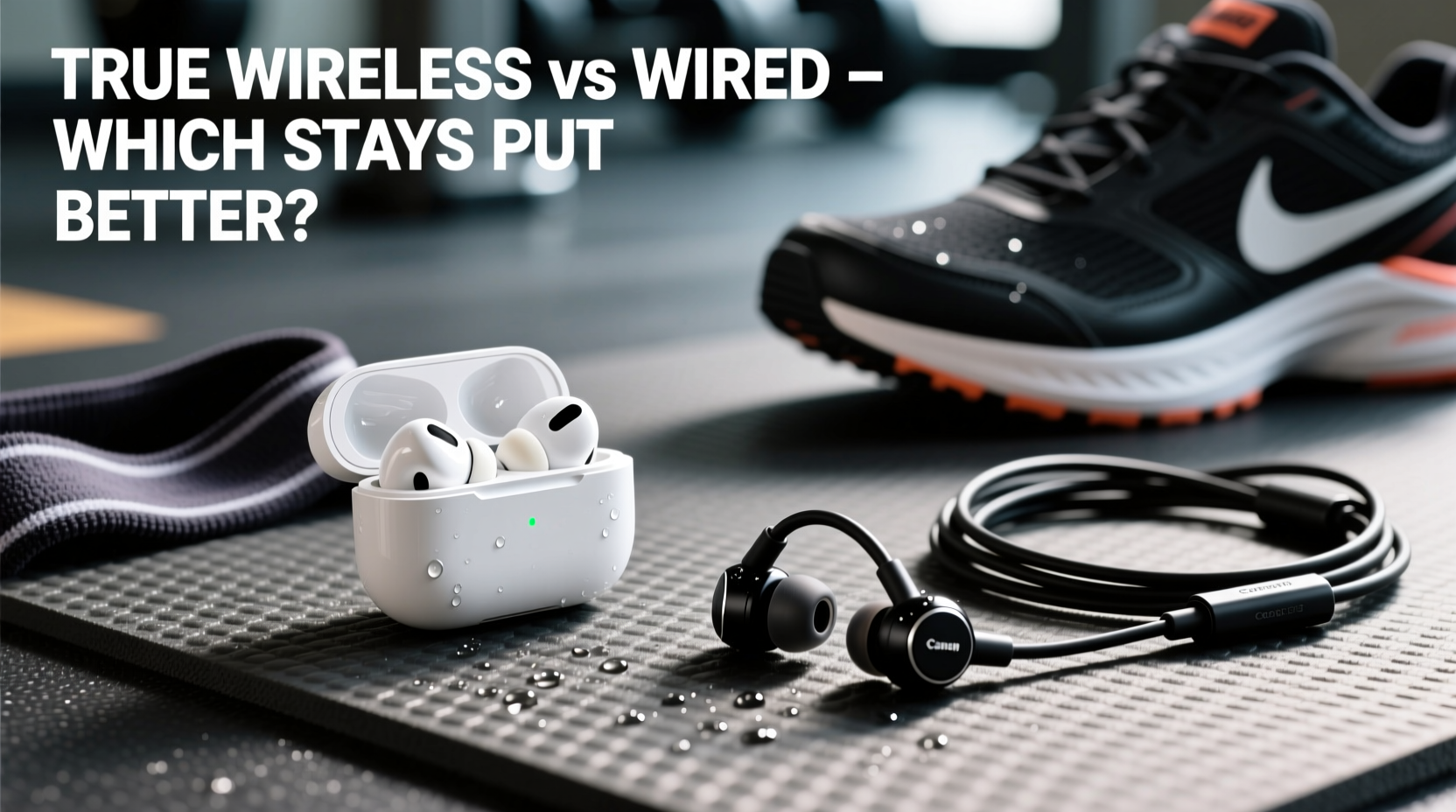
The primary reason earbuds fall out during exercise isn’t necessarily poor quality—it’s mismatched fit. Human ears vary widely in shape and size, and what works for one person may slip instantly for another. Both wired and true wireless models must overcome inertia, sweat, and repeated head motion. However, their structural differences affect how they respond.
Wired earbuds benefit from mechanical tension. The cable running down the back of the neck or around the ears creates a stabilizing force that counteracts lateral movement. Many athletic wired models use over-ear hooks or behind-the-neck bands to lock the earpieces in place. This design reduces bounce and minimizes dislodging during jumping or running.
True wireless earbuds, by contrast, rely entirely on passive fit—no cables, no external anchors. Their stability depends on ear tip design, weight distribution, and whether they include wingtips or fins. High-end models like the Jabra Elite Active 75t or Sony WF-1SB use ergonomic shapes and flexible stabilizers to grip the concha (the bowl-shaped part of the outer ear). These additions dramatically improve retention but aren’t universal across brands.
Tip: Try multiple ear tip sizes and fin types before deciding—many manufacturers include three to five options in the box.Sweat, Motion, and Environmental Challenges
Gym environments are harsh on electronics. Sweat contains salts and minerals that can corrode ports and degrade internal components over time. Movement introduces vibration and sudden directional changes that test grip strength. Temperature shifts—from cold locker rooms to heated cardio zones—can cause materials to expand or contract slightly, affecting fit.
Wired earbuds typically have fewer exposed entry points for moisture since battery and circuitry are housed within the earpiece or inline remote. Many sport-focused wired models carry IPX4 or higher ratings, meaning they resist splashing water from any direction. Because they’re tethered, accidental drops are less likely, reducing impact damage.
True wireless models now commonly feature IP55 or IPX7 ratings, offering strong protection against dust and water immersion. However, because each bud operates independently, losing one is more likely if it detaches mid-set. Some users report buds slipping after prolonged sweating, especially when earwax buildup reduces friction between the tip and ear canal.
“During dynamic movements like burpees or box jumps, we see up to 30% more dislodgement with poorly fitted true wireless models compared to contoured wired sets.” — Dr. Lena Torres, Biomechanics Researcher at SportsTech Lab
Comparison Table: Key Factors for Gym Use
| Feature | Wired Earbuds | True Wireless Earbuds |
|---|---|---|
| Stability During Motion | High (especially with over-ear hooks) | Variable (depends on fit and wingtips) |
| Sweat Resistance | IPX4–IPX7 common | IP55–IPX7 standard in premium models |
| Cable Interference | Potential snag during weightlifting or stretching | No cables—freedom of movement |
| Battery Life per Charge | Unlimited (powered by device) | 4–9 hours (plus case charging) |
| Loss Risk | Low (connected by wire) | Moderate to high (if not secured properly) |
| Fallout Recovery | Rarely falls out completely | May drop if unstabilized |
Real-World Example: A CrossFit Athlete’s Experience
Jamal Rivera, a competitive CrossFitter from Austin, Texas, tested both formats over a six-week period. He used a pair of Shure SE215 wired monitors with custom-molded tips for three weeks, followed by Jabra Elite 85t true wireless earbuds with sport wings.
During double-unders, kettlebell swings, and rope climbs, the wired set never budged. “They felt like part of my body,” he said. “Even when I wiped sweat off my ears, they stayed locked in.” In contrast, the Jabra buds required readjustment after every fifth round. One bud fell onto the rubber flooring during a muscle-up attempt. “I love the freedom of no wires,” Jamal admitted, “but I had to stop twice just to reseat them. That breaks focus.”
His takeaway? For short runs or steady-state cardio, true wireless worked fine. But for explosive, full-body workouts involving rapid head movement, wired earbuds provided unmatched reliability.
Choosing Based on Workout Type
Your ideal choice depends heavily on your typical gym session. Not all workouts impose the same demands on audio gear.
- Running & Cycling: True wireless excels here due to lack of cable tug. Lightweight models with secure fins (like Powerbeats Pro) stay put even at high speeds.
- Weight Training: Wired earbuds minimize snag risks near cables and machines. Over-ear designs prevent pull when turning your head.
- HIIT & Functional Training: Frequent directional changes and jumps favor either ultra-secure wireless models or wired sets with earhooks.
- Yoga & Low-Impact Workouts: Either option works, though wireless offers cleaner aesthetics and ease of movement.
If you rotate between workout styles, consider owning both types and switching based on the day’s routine. Alternatively, invest in top-tier true wireless earbuds specifically designed for sports, such as Bose Sport Earbuds or Beats Fit Pro, which combine secure fit with adaptive stability rings.
Action Checklist: How to Ensure Your Earbuds Stay Put
- Choose earbuds with interchangeable ear tips and stabilizing fins.
- Insert them correctly—pull your earlobe back to open the canal and twist gently into place.
- Test fit before exercising: shake your head side-to-side and jump lightly.
- Opt for over-ear or behind-the-neck routing if using wired models.
- Check IP rating—minimum IPX4 for sweat resistance.
- Avoid touching or adjusting frequently; sweat reduces grip over time.
- Replace worn-out ear tips every 3–6 months to maintain seal and comfort.
Technological Trade-offs: Sound, Latency, and Convenience
While stability is paramount, other factors influence long-term satisfaction. True wireless earbuds offer seamless Bluetooth pairing, touch controls, and integration with voice assistants. However, Bluetooth latency can disrupt synchronization during video-guided workouts or rhythm-based training. Even a 100ms delay becomes noticeable when following audio cues.
Wired earbuds deliver zero-latency audio and consistent signal quality. There’s no risk of Bluetooth dropout in crowded gyms where dozens of devices compete for bandwidth. On the downside, cables can get caught in equipment, and coiling/uncoiling adds minor hassle.
Battery life also plays a role. Most true wireless earbuds last 4–6 hours on a single charge—sufficient for most gym-goers, but risky for marathon training sessions. Carrying a charging case helps, but it’s one more item to manage. Wired sets draw power from your phone or MP3 player, eliminating this concern entirely.
Tip: For extended sessions, use wired earbuds or bring your charging case in a secure pocket.FAQ: Common Questions About Gym Earbud Performance
Do true wireless earbuds really stay in during intense workouts?
Yes—but only if they’re designed for sports and properly fitted. Look for models with wingtips, ear fins, or over-ear loops. Generic true wireless earbuds without stabilization features are likely to fall out during vigorous activity.
Are wired earbuds outdated for gym use?
No. Despite trends favoring wireless, many athletes still prefer wired options for their durability, consistent connection, and superior stability. Professional trainers and military personnel often stick with wired models for mission-critical reliability.
How can I make my earbuds more secure?
Use memory foam tips for better grip, ensure correct insertion depth, and consider third-party accessories like ear hooks or retention clips. Some users apply a tiny amount of medical-grade adhesive (like Wig Fix) to ear tips for extra hold—though this should be done cautiously and cleaned regularly.
Final Verdict: Which Stays Put Better?
For pure stability and reliability during high-motion gym sessions, **wired earbuds generally stay put better** than most true wireless alternatives. Their physical connection provides mechanical anchoring that wireless sets cannot replicate without additional hardware. When combined with over-ear hooks or behind-the-neck straps, wired models offer near-bulletproof retention.
That said, modern true wireless earbuds have closed the gap significantly. Premium sport-focused models now rival wired performance in fit and sweat resistance. If you prioritize freedom of movement and dislike managing cables, today’s best-in-class wireless earbuds can meet your needs—provided you select wisely and fit them correctly.
The key isn’t choosing one format over the other universally—it’s matching your earbuds to your workout style, ear anatomy, and personal tolerance for adjustment mid-session. Test both types if possible. Pay attention to how they feel after ten minutes of jumping jacks or burpees. What starts as a snug fit can loosen as sweat accumulates.
“The best earbuds for the gym aren’t the most expensive or the trendiest—they’re the ones that disappear during your workout.” — Marcus Lin, Audio Engineer and Fitness Tech Reviewer
Take Action Today
Ditch the distraction of constantly reinserting fallen earbuds. Evaluate your current pair: do they survive sprints, squats, and sprints again? If not, explore models built for endurance. Whether you go wired or wireless, prioritize fit, build quality, and real-world testing over specs alone. Your next breakthrough rep might come easier when your gear keeps up.
💬 Have a favorite pair that never slips? Share your go-to gym earbuds in the comments and help others find their perfect fit!








