When it comes to enduring outerwear, few garments command as much respect as the trench coat and the pea coat. Both have stood the test of time, transcending fashion cycles and military origins to become wardrobe essentials. Yet, for those building a refined, long-lasting closet, the question remains: which one earns the title of the more timeless piece? The answer isn’t just about personal taste—it’s rooted in history, construction, climate suitability, and sartorial flexibility. Understanding the nuances between these two icons helps clarify not only their differences but also why one may outshine the other in lasting relevance.
The Origins: Military Roots and Functional Design
The trench coat and pea coat were born from necessity, designed for men in service before becoming civilian staples. Their utilitarian beginnings shaped every detail—from fabric weight to button placement.
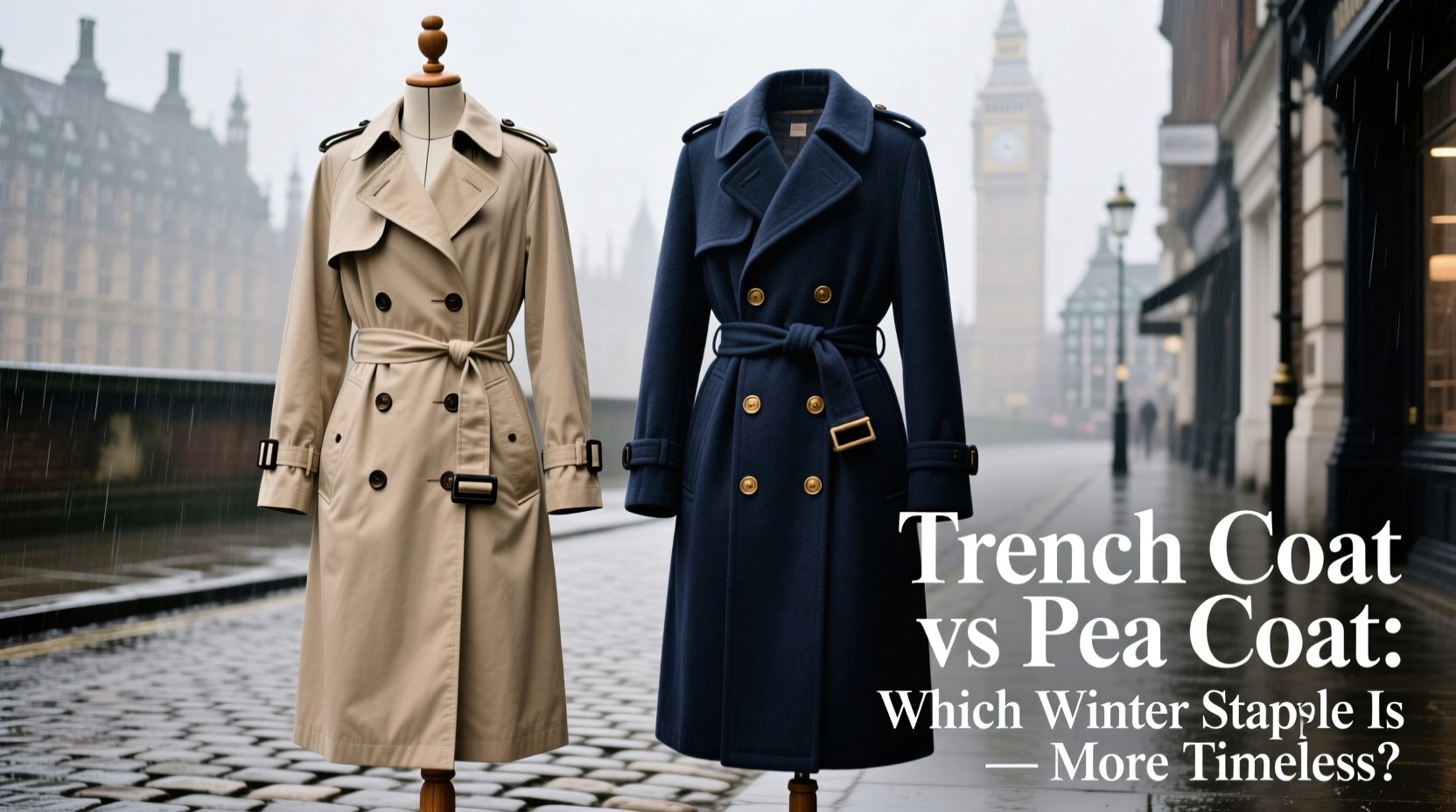
The **trench coat** emerged during World War I, developed for British officers stationed in the trenches. Crafted from water-resistant gabardine—a tightly woven cotton invented by Thomas Burberry—the coat featured epaulets, storm flaps, and a belted waist to protect against rain and wind. Its double-breasted front and deep pockets were engineered for practicality in harsh conditions. Over time, its silhouette evolved into a sleeker form, embraced by Hollywood detectives and spies, cementing its status as a symbol of sophistication and mystery.
In contrast, the **pea coat** traces its lineage back to 18th-century European navies, particularly the Dutch and later the U.S. Navy. Originally spelled “reefer coat,” it was made from heavy wool melton fabric, designed to insulate sailors in frigid maritime climates. The short length allowed freedom of movement on deck, while the broad lapels could be turned up to shield the face from wind. Its double-breasted front with large wooden or metal buttons secured tightly across the chest, minimizing heat loss.
“Both coats began as tools of survival. Their transition into fashion wasn’t accidental—it was earned through durability and intelligent design.” — Julian Hartwell, Menswear Historian
Design & Construction: Comparing Silhouette and Materials
While both coats are double-breasted, their proportions, materials, and tailoring differ significantly, influencing how they age in style and function.
| Feature | Trench Coat | Pea Coat |
|---|---|---|
| Length | Knee-length or mid-calf | Hip-length or slightly below |
| Material | Gabardine (cotton), sometimes blended with polyester | Heavy wool melton (100% wool typical) |
| Weight | Light to medium | Heavy, dense insulation |
| Seasonality | Spring, fall, light winter | Fall, winter, early spring |
| Formality Level | Versatile—works with suits or casual wear | Casual to smart-casual |
| Iconic Details | Belt, gun flap, epaulets, storm cuff | Wide lapels, toggle buttons, straight hem |
The trench coat’s elegance lies in its structured drape and tailored fit. It elongates the body and transitions seamlessly from office wear to evening outings. However, its cotton-based fabric offers limited warmth in sub-zero temperatures unless layered. Modern versions often include removable linings for seasonal adaptability.
The pea coat, by contrast, prioritizes warmth over length. Its compact cut keeps heat close to the core, making it ideal for urban winters where mobility matters. Wool naturally resists moisture and odor, and high-quality versions can last decades with proper care. That said, its boxy cut can appear bulky on slimmer frames if not well-fitted.
Tip: For a modern look, choose a pea coat with a slightly tapered cut—avoid overly oversized silhouettes that drown the frame.Versatility and Styling Across Contexts
Timelessness isn’t just about longevity; it’s about adaptability. A garment must perform across eras, settings, and wardrobes to earn the label “classic.” Here, the trench coat holds a distinct edge.
Worn with a crisp white shirt and tailored trousers, the trench exudes authority—reminiscent of 1940s film noir or diplomatic envoys. Paired with jeans and boots, it reads effortlessly cool. Its neutral palette (typically beige, khaki, or black) integrates easily into monochrome or earth-toned schemes. Women’s fashion has embraced the trench equally, with designers like Audrey Hepburn in *Breakfast at Tiffany’s* and modern influencers reinforcing its gender-neutral appeal.
The pea coat, while stylish, leans more toward casual or nautical aesthetics. It pairs naturally with sweaters, chinos, and rugged footwear but struggles to elevate formal ensembles. Wearing a pea coat over a suit often appears incongruous due to its short length and informal heritage. That doesn’t diminish its charm—it simply narrows its range.
Consider this real-world example: Daniel, a financial analyst in Chicago, owns both coats. During autumn commutes and rainy spring days, he reaches for his camel trench—it complements his workwear without needing adjustment. In deep winter, he switches to his navy pea coat for warmth during lunch walks. But when attending client dinners or networking events in cold months, he opts for a wool overcoat instead. The pea coat stays home. The trench, even in colder weather with layering, makes the cut more often.
Styling Checklist: Maximizing Timeless Appeal
- Choose classic colors: beige, navy, black, or charcoal
- Ensure proper fit—shoulders aligned, sleeves ending at the wrist
- Layer strategically: turtleneck under a pea coat; shirt and sweater under a trench
- Avoid overly trendy details like oversized collars or metallic finishes
- Maintain clean lines—skip backpacks that disrupt silhouette
Climate and Practical Longevity
A truly timeless coat must serve its owner across climates and seasons. While both coats endure, their functional lifespan depends heavily on environment and maintenance.
The trench coat excels in temperate or wet regions. London, Seattle, or Paris—cities known for drizzle rather than snow—are its natural habitat. Gabardine repels light rain effectively, though prolonged exposure requires reproofing. Cotton versions can mildew if stored damp, so airing after use is essential. Synthetic blends improve water resistance but reduce breathability.
The pea coat dominates in cold, dry, or windy environments. Its dense wool retains heat even when wet and resists pilling over time. Unlike cotton, wool regenerates shape after compression, meaning years of wear won’t leave permanent creases. With minimal care—brushing, airing, and occasional dry cleaning—it can remain serviceable for 15–20 years or more.
However, in humid or hot climates, the pea coat becomes impractical. Even in early fall, its thickness can cause overheating. The trench, being lighter, offers greater year-round usability outside extreme winters.
“A coat isn’t timeless because it’s old—it’s timeless because it remains useful. The trench adapts; the pea coat endures. One evolves, the other persists.” — Lila Chen, Sustainable Fashion Consultant
Step-by-Step: Choosing the Right Coat for Your Lifestyle
Selecting between these two icons shouldn’t hinge on trendiness but on daily needs. Follow this timeline to make an informed decision:
- Assess your climate: Do you experience heavy snow and freezing temps (favor pea coat), or frequent rain and mild winters (favor trench)?
- Evaluate your wardrobe: Do you wear suits or dressier attire often? If yes, the trench integrates better. Mostly casual? The pea coat fits naturally.
- Consider layering habits: Will you wear thick sweaters underneath? Pea coats need room; trenches accommodate layers if cut generously.
- Determine frequency of use: If you want one go-to coat for nine months of the year, lean toward the trench. If you need a dedicated winter warrior, the pea coat delivers.
- Test the fit: Try both on with typical clothing. Check shoulder seams, sleeve length, and ease of movement. A timeless coat must feel effortless.
FAQ: Common Questions About Trench Coats and Pea Coats
Can a trench coat be worn in winter?
Yes, but with limitations. Opt for a trench with a removable thermal lining and layer with a sweater and scarf. It works well in mild to moderate cold but lacks the insulation of wool coats in severe winter conditions.
Is the pea coat suitable for formal occasions?
Rarely. Its naval heritage and short length make it too casual for business or evening events. For formal winter wear, a Chesterfield or topcoat in dark wool is more appropriate.
Which coat holds value better over time?
Well-made versions of both retain value, especially from heritage brands like Aquascutum (trench) or Gloverall (pea coat). However, trench coats tend to have broader resale appeal due to their versatility and iconic status in pop culture.
Final Verdict: Which Is More Timeless?
The pea coat is undeniably durable, warm, and steeped in tradition. It performs exceptionally in specific contexts and remains a beloved staple. Yet, when measuring true timelessness—defined by enduring relevance, stylistic flexibility, and cross-season utility—the **trench coat emerges as the more timeless choice**.
It transcends gender, profession, and decade. From Humphrey Bogart to Meghan Markle, from boardrooms to city streets, the trench coat adapts without losing identity. It bridges seasons, styles, and social codes in a way the pea coat cannot. While the pea coat is a seasonal specialist, the trench is a year-round strategist.
That said, owning both is ideal for a complete wardrobe. The trench handles elegance and variable weather; the pea coat conquers deep winter with rugged reliability. But if forced to choose one as the single most timeless winter staple, the trench coat stands taller—not in length, but in legacy.
🚀 Ready to invest in a coat that lasts a lifetime? Start by trying on both styles with your everyday outfits. Pay attention to fit, comfort, and confidence. Then choose the one that doesn’t just keep you warm—but makes you feel unmistakably like yourself.








