
Skincare routines often become a mix of personal preference, marketing claims, and passed-down advice. One of the most common points of confusion? Whether to apply toner before or after moisturizer—especially when the goal is maximum hydration. With so many formulas on the market, from alcohol-heavy astringents to hyaluronic acid-infused essences, understanding the function of toner and its place in your regimen can dramatically improve your skin’s moisture retention.
The short answer: toner should be applied **before** moisturizer for better hydration results. But why? And does this rule apply to all skin types and toner varieties? Let’s break down the science, timing, and real-world outcomes behind the ideal layering sequence.
The Role of Toner in Modern Skincare
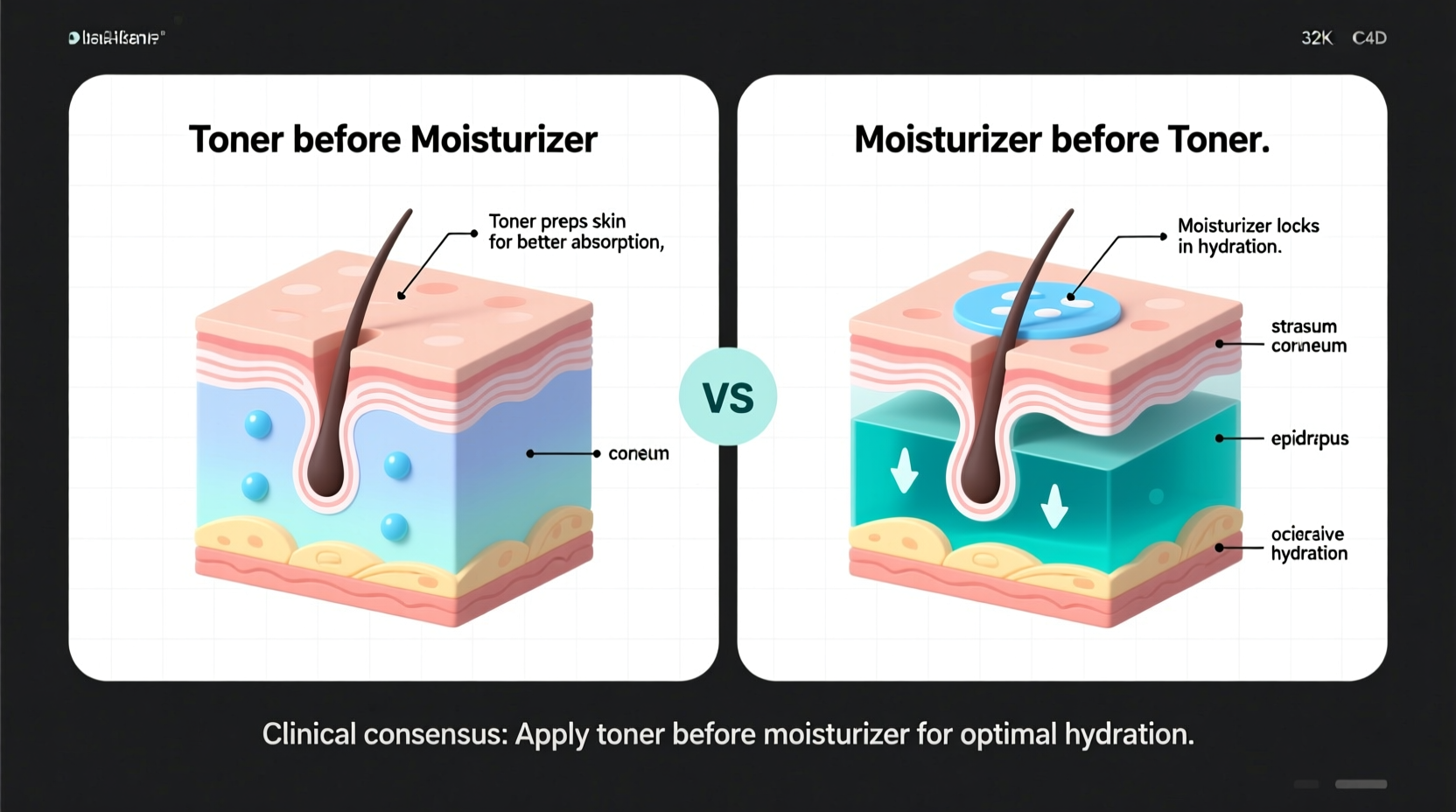
Historically, toners were formulated to remove residual cleanser, tighten pores, and restore pH balance after washing the face. Many early versions contained alcohol, which could strip moisture and irritate sensitive skin. Today’s hydrating toners, however, are far more advanced. They’re designed to deliver active ingredients like glycerin, ceramides, niacinamide, and hyaluronic acid directly into the skin’s upper layers.
Modern toners serve three primary functions:
- Prep the skin for better absorption of subsequent products.
- Rebalance pH after cleansing, which supports the skin barrier.
- Deliver hydration through humectants that draw water into the skin.
This means toner isn’t just a leftover step from outdated skincare—it plays an active role in boosting the effectiveness of the rest of your routine, especially when hydration is the goal.
Tip: Look for toners labeled “hydrating,” “soothing,” or “pH-balancing.” Avoid those with high alcohol content if you have dry or sensitive skin.Why Order Matters: The Science of Layering
Skin absorption follows a simple principle: lighter, water-based products penetrate best when applied first. Heavier, occlusive formulas (like moisturizers) sit on top and seal in what’s beneath. This concept, known as “skin layering” or the “thinnest to thickest” rule, is essential for maximizing hydration.
When you apply toner after moisturizer, you're essentially trying to push water-based ingredients through an oil-based barrier. This drastically reduces their ability to absorb into the skin. In contrast, applying toner first allows it to deliver humectants deep into the epidermis, where they can bind moisture and prepare the skin for sealing with a moisturizer.
“Applying toner before moisturizer creates a hydrated base that locks in more effectively. It’s like watering soil before covering it with mulch.” — Dr. Lena Park, Board-Certified Dermatologist
How Hydration Works in the Skin
Hydration refers to the water content within skin cells. Dehydrated skin lacks water, not oil, and can feel tight, look dull, and show fine lines more prominently. Humectants—ingredients that attract water—are key to improving hydration. Common examples include:
- Hyaluronic acid (can hold up to 1,000 times its weight in water)
- Glycerin
- Panthenol (pro-vitamin B5)
- Aloe vera
These work best when applied to damp skin and sealed with an emollient or occlusive agent—exactly what a moisturizer provides.
Step-by-Step Guide: Building a Hydrating Routine
Follow this proven sequence to maximize hydration using toner and moisturizer in the correct order:
- Cleanse gently: Use a sulfate-free, non-stripping cleanser. Rinse with lukewarm water and pat skin dry, leaving it slightly damp.
- Apply toner immediately: Pour a few drops into your palms or a cotton pad and press or swipe across the face. Don’t wait—damp skin enhances absorption.
- Wait 30–60 seconds: Allow the toner to fully absorb. You should feel a slight tackiness—this is the humectant layer forming.
- Apply serum (optional): If using a hydrating serum (e.g., hyaluronic acid), apply now while the skin is still receptive.
- Seal with moisturizer: Apply your preferred cream or lotion to lock in the hydration. For very dry skin, consider a thicker ointment or facial oil as a final step.
This sequence ensures that each product builds upon the last, creating a cumulative hydration effect rather than fighting against itself.
What Happens If You Reverse the Order?
Using moisturizer before toner may seem harmless, but it undermines the purpose of both products. Here’s why:
- Reduced absorption: Moisturizers create a film on the skin. Applying toner afterward means active ingredients can’t penetrate effectively.
- Wasted product: Much of the toner will sit on top of the moisturizer and evaporate or wipe off, offering little benefit.
- Potential pilling: Mixing water-based toners over creams can cause formulations to ball up, especially if ingredients don’t layer well.
In clinical observations, patients who reversed their routine reported less improvement in skin texture and hydration levels—even when using high-quality products.
Real Example: A Case Study in Routine Correction
Sophia, a 34-year-old office worker, struggled with persistent dryness and flakiness despite using a hyaluronic acid toner and a rich ceramide moisturizer. After reviewing her routine, her dermatologist discovered she was applying moisturizer first, believing it would “open pores” for the toner. She switched to applying toner on damp skin post-cleansing, followed by moisturizer. Within two weeks, her skin felt softer, looked more radiant, and no longer required midday reapplication of balm. Her hydration levels, measured via corneometer, improved by 38%.
This case illustrates how even effective products fail without proper layering.
Choosing the Right Toner for Your Skin Type
Not all toners are created equal. To get the best hydration results, match your toner to your skin type and concerns. Below is a comparison of recommended options:
| Skin Type | Best Toner Ingredients | Toner to Avoid |
|---|---|---|
| Dry | Hyaluronic acid, glycerin, squalane, panthenol | Alcohol-based, astringent, exfoliating (unless used sparingly) |
| Oily | Niacinamide, witch hazel (alcohol-free), zinc, green tea extract | Heavy oils, overly emollient formulas |
| Combination | Balanced humectants, mild acids (lactic, mandelic), centella asiatica | Fragranced, harsh stripping agents |
| Sensitive | Allantoin, chamomile, oat extract, ceramides | Alcohol, fragrance, essential oils, strong acids |
| Mature | Peptides, antioxidants (vitamin C), hyaluronic acid | Overly drying formulas |
Selecting the right formula ensures your toner complements—not compromises—your hydration goals.
Tip: Perform a patch test when introducing a new toner. Apply behind the ear or on the jawline for 2–3 nights to check for irritation.Common Misconceptions About Toner
Several myths persist about toner use, often leading to incorrect application:
- Myth: Toners are only for oily skin. Truth: Hydrating toners benefit all skin types, including dry and sensitive.
- Myth: You need to use a cotton pad. Truth: While pads help distribute product evenly, pressing toner into skin with clean hands can enhance absorption.
- Myth: Toners exfoliate by default. Truth: Only toners containing AHAs, BHAs, or PHAs exfoliate. Most are purely hydrating or soothing.
- Myth: All toners sting. Truth: Stinging indicates irritation or alcohol content—opt for gentle, fragrance-free versions.
Understanding these distinctions helps prevent misuse and supports better hydration outcomes.
Checklist: Optimize Your Toner Application for Hydration
Use this checklist to ensure you’re getting the most out of your toner and moisturizer pairing:
- ✅ Cleanse with a gentle, non-drying cleanser.
- ✅ Pat face dry but leave skin slightly damp.
- ✅ Choose a hydrating toner suited to your skin type.
- ✅ Apply toner within 60 seconds of cleansing.
- ✅ Use hands or a cotton pad—whichever feels more comfortable.
- ✅ Wait 30–60 seconds for toner to absorb.
- ✅ Follow with serum (if using).
- ✅ Seal with moisturizer to lock in hydration.
- ✅ Repeat morning and night for consistent results.
FAQ: Your Toner Questions Answered
Can I skip moisturizer if I use a hydrating toner?
No. While toners add moisture, they lack the occlusive properties needed to prevent transepidermal water loss (TEWL). Moisturizers contain emollients and occlusives that form a protective barrier—essential for long-term hydration.
How much toner should I use?
3–5 drops are usually sufficient for the entire face. Using too much can lead to excess dripping or evaporation without added benefit. Focus on even coverage, not volume.
Is it okay to use toner twice a day?
Yes, if it’s a gentle, hydrating formula. Avoid overusing exfoliating or astringent toners, which can compromise the skin barrier. For hydration-focused routines, daily use morning and night is safe and beneficial.
Final Thoughts: Consistency and Correct Order Win
The debate over toner before or after moisturizer isn’t just semantics—it’s rooted in dermatological science. Applying toner before moisturizer leverages the natural absorption process, allowing humectants to deeply hydrate the skin before being sealed in. Reversing the order disrupts this synergy and diminishes results.
Hydration isn’t about using the most expensive products; it’s about using them correctly. By following the thin-to-thick layering principle, choosing compatible formulas, and maintaining consistency, you can achieve visibly plumper, healthier skin over time.
💬 Have you noticed a difference since adjusting your toner order? Share your experience in the comments and help others build smarter skincare habits!








