
Curly hair demands a delicate approach. Unlike straight or wavy textures, curls are more prone to dryness, breakage, and tangles due to their natural structure. When it comes to detangling, the tool you choose can make the difference between smooth, defined coils and frizzy, broken strands. Two of the most talked-about tools in the curly hair community are Tangle Teezer brushes and wide-tooth combs. While both promise gentler detangling, they function very differently and suit distinct curl types and routines. Understanding their mechanics, benefits, and limitations helps you make an informed decision that supports your hair’s health and enhances its natural beauty.
How Curly Hair Reacts to Detangling Tools
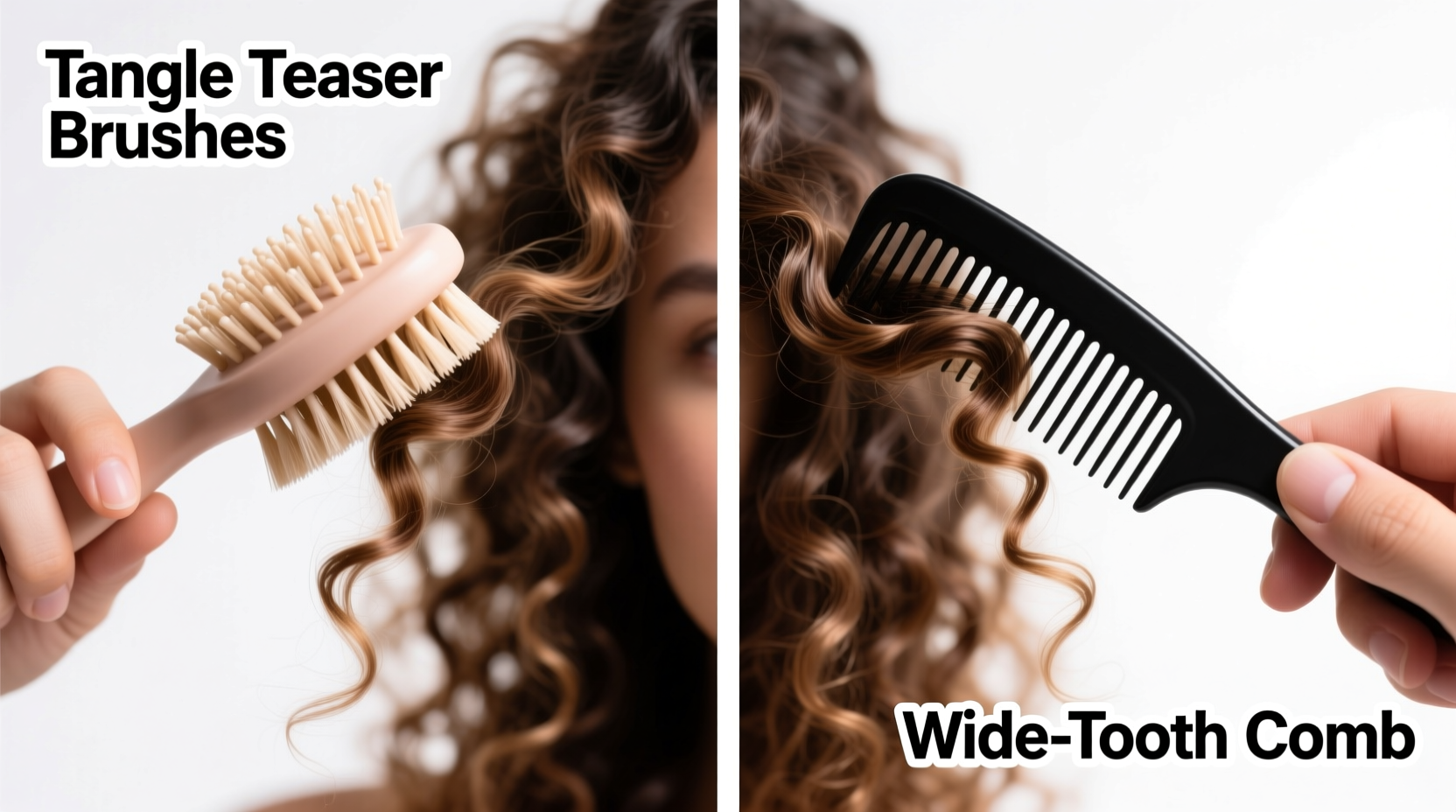
Curly hair forms loops and spirals that easily knot when moisture is low or when friction increases—especially during washing or drying. The cuticle layer of curly hair tends to be more raised than in straight hair, making it vulnerable to snagging. Aggressive brushing or improper technique can lead to hygral fatigue (damage from repeated swelling and shrinking) and mechanical stress. This is why selecting the right detangling tool isn’t just about convenience—it’s about preserving elasticity, reducing frizz, and maintaining curl integrity over time.
The ideal detangling process for curly hair should:
- Minimize tension on the scalp and follicles
- Preserve curl clumping and definition
- Reduce breakage and split ends
- Distribute conditioner or leave-in products evenly
- Work efficiently without requiring excessive force
Both Tangle Teezers and wide-tooth combs aim to meet these goals—but through different methods.
Understanding the Tangle Teezer Brush: Design and Function
Invented by Shaun Pulfrey in 2007, the Tangle Teezer gained popularity for its unique dual-length bristle design. The shorter, firmer bristles separate knots while the longer, flexible ones glide through hair with minimal resistance. Originally marketed as a pain-free detangling solution, it quickly became a staple in many haircare routines—even among those with textured hair.
For curly hair, the appeal lies in its ability to work through wet or dry tangles without pulling. However, not all Tangle Teezer models are created equal. The original “Classic” version has tighter bristles that may be too aggressive for tight curls (Type 3C–4C), whereas the “Gentle” or “Detangler” variants feature softer, more spaced-out bristles designed for sensitive scalps and fragile textures.
Tip: If using a Tangle Teezer on curly hair, opt for the \"Gentle\" model and always apply it on soaking-wet, conditioned hair to reduce friction.Because the bristles are plastic and closely set, they can stimulate the scalp and help distribute natural oils when used on dry hair. But caution is needed: overuse or incorrect technique can disrupt curl patterns and cause frizz, especially in high-porosity or coily hair.
Wide-Tooth Combs: The Gold Standard for Curly Hair?
Long favored by curl specialists and naturals, the wide-tooth comb remains a cornerstone of curly hair care. Typically made from wood, cellulose acetate, or durable plastic, these combs feature thick, widely spaced teeth that allow curls to pass through without being stretched or torn apart.
The key advantage of a wide-tooth comb is its ability to maintain curl grouping. Instead of separating each strand like a brush might, it gently loosens tangles while keeping clumps intact—a critical factor for achieving well-defined curls after drying. It's also less likely to generate static or snag fine edges around the hairline.
When used correctly—starting from the ends and working upward—wide-tooth combs minimize stress on the hair shaft. They're particularly effective during co-washing or deep conditioning, where slip is maximized by rich formulas. Many curl stylists recommend pairing a wide-tooth comb with a Denman-type brush only for styling, never for initial detangling.
“Combing, not brushing, is the foundation of healthy curly hair maintenance. A good wide-tooth comb respects the curl pattern instead of fighting it.” — Dr. Kari Williams, Board-Certified Trichologist and Curl Specialist
Direct Comparison: Tangle Teezer vs Wide Tooth Comb
| Feature | Tangle Teezer Brush | Wide Tooth Comb |
|---|---|---|
| Best For | Loose waves (Type 2), low-coil density curls, quick dry-touch detangling | All curl types, especially Type 3C–4C; ideal for wet detangling |
| Frizz Risk | Moderate to high (can disrupt curl clumps) | Low (preserves natural grouping) |
| Breakage Potential | Higher if used incorrectly or on dry, tangled hair | Lower when used with slip and proper technique |
| Scalp Stimulation | High (bristles massage scalp) | Minimal |
| Curl Definition Impact | May loosen or stretch curls | Promotes clumping and definition |
| Cleanability | Harder to clean between bristles | Easy to rinse and sanitize |
| Durability | Plastic bristles may bend or wear over time | Long-lasting, especially wooden or acetate versions |
This comparison shows that while Tangle Teezers offer speed and comfort for certain textures, wide-tooth combs provide superior control and protection for tightly coiled or fragile curls.
Step-by-Step Guide to Safe Detangling Based on Curl Type
The right tool depends not just on preference but on your specific curl pattern, porosity, and routine. Follow this tailored guide to maximize results:
- Wet Your Hair Thoroughly: Begin in the shower with fully saturated strands. Dry detangling should be limited to minor touch-ups.
- Apply Conditioner Generously: Use a silicone-free, moisturizing conditioner. Focus on mid-lengths and ends where tangles form.
- Section Hair (Optional but Recommended): Divide into 4–6 sections using clips. This prevents re-tangling already-combed areas.
- Start at the Ends: Whether using a comb or brush, begin detangling from the bottom few inches.
- Work Upward Gradually: Move up the shaft in small increments as knots release.
- Rinse and Repeat if Needed: Add more conditioner if resistance increases.
- Air-Dry or Diffuse Without Further Disturbance: Avoid touching or brushing post-detangle to preserve curl formation.
Tool Selection by Curl Type
- Type 2A–2C (Wavy): Can benefit from a Tangle Teezer on wet, conditioned hair. Less risk of frizz; faster detangling.
- Type 3A–3B (Loose to Medium Curls): Both tools work well. Use Tangle Teezer gently; prefer wide-tooth comb for wash day.
- Type 3C–4A (Tight Curls): Wide-tooth comb strongly recommended. Avoid dense-bristle brushes unless specifically designed for curls.
- Type 4B–4C (Coily/Zigzag Patterns): Stick strictly to wide-tooth combs, fingers, or AFRO picks. Brushes increase breakage risk.
Real Example: A Client’s Journey from Breakage to Bounce
Chloe, a 29-year-old with 4A/4B curls, had struggled with shedding and undefined curls for years. She used a standard paddle brush daily, believing it helped “smooth” her hair. Over time, she noticed thinning edges and constant tangling. After consulting a trichologist, she switched to a regimen centered on gentle handling.
Her new routine included sulfate-free shampoo, deep conditioning weekly, and exclusive use of a bamboo wide-tooth comb during showers. She stopped brushing entirely and began finger-detangling first, followed by combing under water. Within three months, her hair felt stronger, retained length, and formed consistent clumps when styled. Her stylist noted a visible reduction in split ends and improved shine.
“I thought I needed something ‘powerful’ to get through my tangles,” Chloe said. “But what my hair really needed was patience—and the right tool.”
Checklist: Choosing the Right Tool for Your Routine
Use this checklist before deciding which detangling method suits your needs:
- ✅ Is my hair fully wet and saturated with conditioner before detangling?
- ✅ Do I have a brush or comb specifically designed for curly textures?
- ✅ Am I starting from the ends and working up slowly?
- ✅ Does my tool cause pulling, snapping, or scalp discomfort?
- ✅ After detangling, does my hair retain its natural curl shape?
- ✅ Is my tool easy to clean and store properly?
- ✅ Have I tested alternatives if current results include frizz or breakage?
If multiple answers are “no,” consider switching to a wide-tooth comb and refining your technique.
Frequently Asked Questions
Can I use a Tangle Teezer on dry curly hair?
It’s possible for Type 2 or loose 3A curls with minimal tangles, but proceed with caution. Always spritz with a water-based refresher or leave-in conditioner first. Avoid using on dry, knotted, or high-shrinkage curls (Type 3C–4C), as this increases the risk of breakage and frizz.
Why do stylists recommend wide-tooth combs over brushes for curls?
Wide-tooth combs reduce manipulation and preserve curl clumping, which is essential for definition. Brushes tend to separate curls too much, leading to volume loss and puffiness. Combs also generate less friction and are easier to control in slippery conditions.
Are wooden wide-tooth combs better than plastic ones?
Wooden combs are naturally anti-static, smoother on the hair, and less likely to create friction. They’re also biodegradable and durable. However, high-quality cellulose acetate plastic combs (like those from Denman or AsaVea) are excellent alternatives that resist static and won’t chip easily.
Final Recommendations and Best Practices
While the Tangle Teezer has earned its place in mainstream haircare, it is not universally suitable for curly textures. Its design favors speed and scalp stimulation over curl preservation—qualities that often conflict with the needs of coily, fragile, or high-porosity hair. In contrast, the wide-tooth comb aligns perfectly with the principles of curly hair care: minimal disruption, maximum moisture retention, and respect for natural form.
That said, personalization matters. Some people with looser curls enjoy the efficiency of a gentle Tangle Teezer model during quick refreshes. Others find even light brushing causes flyaways. The key is observation: watch how your hair responds immediately after detangling and throughout the day.
Regardless of tool choice, technique is paramount. Never rush the process. Invest time in prepping your hair with ample slip, work in sections, and prioritize condition over speed. Healthy curls aren’t born overnight—they’re cultivated through consistent, mindful care.
“Your detangling tool should serve your hair—not the other way around.” — Michelle B., Natural Hair Educator & Founder of CurlyMethod.com
Take Action Today for Healthier Curls Tomorrow
Your journey to stronger, shinier, better-defined curls starts with one simple change: reevaluating how you detangle. Try switching to a wide-tooth comb for your next wash day. Notice the difference in tension, breakage, and final curl formation. If you currently rely on a brush, give the comb a fair trial—three full wash cycles—with proper conditioning and technique.
Share your experience in the comments below. What tool works best for your texture? Have you made a switch that transformed your routine? Your insights could help someone else finally break free from constant tangles and damage.
💬 Have questions about your detangling routine? Drop them below—we’re here to help you unlock healthier, happier curls!