
Weighing yourself is a common practice among individuals managing weight, tracking fitness progress, or improving overall health. But not all scales are created equal. The choice between a smart scale and a basic digital scale can significantly influence how often—and how motivated—you are to step on the scale. While both types deliver weight readings, their features, feedback mechanisms, and integration with personal goals shape user behavior in different ways. Understanding these differences helps determine which type of scale fosters more consistent engagement over time.
The Psychology Behind Consistent Weigh-Ins
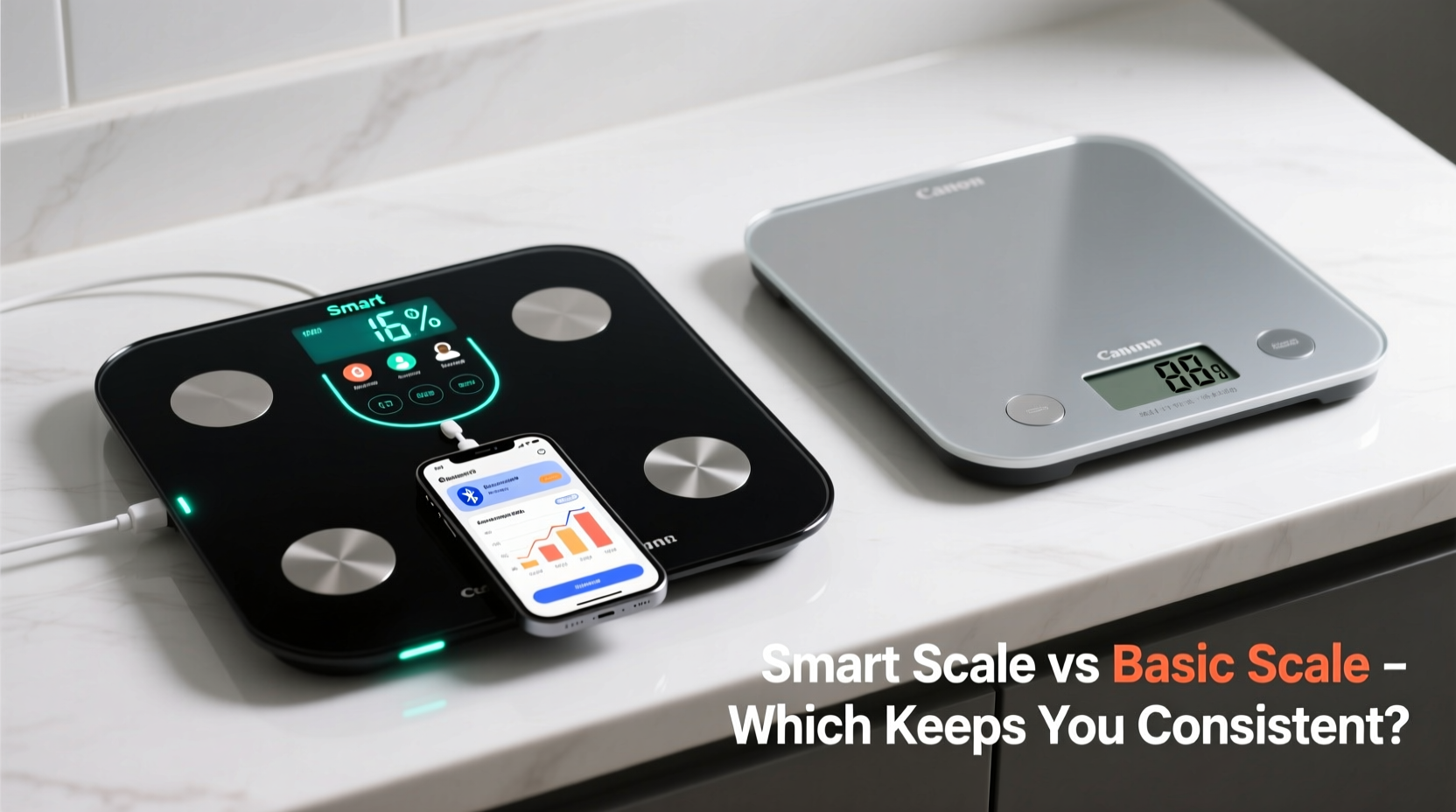
Consistency in monitoring body weight is linked to better long-term outcomes in weight management. Research published in the Journal of Obesity shows that individuals who weigh themselves regularly are more likely to maintain weight loss than those who do not. However, frequency alone isn’t enough—how the data is presented and interpreted matters just as much.
A key factor in sustaining regular weigh-ins is motivation. If stepping on the scale feels like a judgmental moment of truth, people tend to avoid it. Conversely, when the experience provides useful insights, tracks trends, and supports progress—even during plateaus—users are more likely to stay engaged.
“People don’t resist change because they’re lazy—they resist when feedback feels discouraging or meaningless.” — Dr. Laura Bennett, Behavioral Health Specialist
This psychological dynamic is where smart scales begin to differentiate themselves from basic models. They transform a single number into a broader narrative of health, potentially reducing anxiety and increasing adherence.
How Smart Scales Enhance Engagement
Smart scales go beyond measuring weight. Most connect via Bluetooth or Wi-Fi to mobile apps, automatically syncing data and offering deeper metrics such as body fat percentage, muscle mass, bone density, water weight, and BMI. These additional data points help users see progress in multiple dimensions, even when the scale doesn’t budge.
For example, someone building muscle while losing fat might feel discouraged by stagnant weight on a basic scale. A smart scale, however, reveals improved composition—providing positive reinforcement despite no change in pounds.
Many smart scales also offer trend analysis. Instead of reacting to daily fluctuations, users view rolling averages or weekly patterns. This reduces emotional responses to temporary changes caused by hydration, sodium intake, or hormonal shifts.
Tip: Use trend lines, not daily numbers, to assess real progress. Most smart scale apps display 7-day averages automatically.Integration with Health Ecosystems
One of the strongest advantages of smart scales is seamless integration with platforms like Apple Health, Google Fit, Fitbit, or MyFitnessPal. When weight data syncs automatically with activity trackers and nutrition logs, users gain a holistic picture of their habits.
This interconnectedness creates a feedback loop: logging meals or workouts becomes more meaningful when users know it will be reflected in upcoming body composition updates. It turns passive weighing into an active part of a larger health strategy.
Basic Digital Scales: Simplicity With Limitations
Basic digital scales remain popular due to affordability, ease of use, and reliability. They typically turn on instantly, display weight clearly, and require minimal setup. For some users, this simplicity is ideal—especially if they only want to track one metric without distractions.
However, the lack of context can become demotivating. Seeing the same number—or worse, an increase—without understanding why can lead to frustration. Without historical data visualization or goal tracking, users must manually record results, which many fail to do consistently.
Additionally, basic scales offer no protection against confirmation bias. Users may selectively remember favorable readings or skip days when they anticipate a negative result. Over time, this undermines the purpose of regular monitoring.
The Risk of Inconsistent Use
A study conducted by the University of Minnesota found that nearly 60% of participants using basic scales stopped weighing themselves within three months. Common reasons included feeling discouraged, forgetting, or perceiving no value in repeated measurements.
In contrast, users of smart scales reported higher satisfaction due to app reminders, visual progress charts, and non-scale victories (like increased muscle mass). These features helped sustain interest beyond initial enthusiasm.
Comparison: Smart Scales vs Basic Digital Scales
| Feature | Smart Scale | Basic Digital Scale |
|---|---|---|
| Weight Measurement | Yes | Yes |
| Body Composition Metrics | Yes (fat %, muscle, water, etc.) | No |
| App Integration | Yes (iOS/Android) | No |
| Data Sync & History | Automatic cloud backup and graphs | Manual recording required |
| User Profiles | Multiple (4–16 users) | Limited or none |
| Price Range | $50–$150+ | $15–$40 |
| Motivational Features | Trend lines, milestones, reminders | None |
| Setup Complexity | Moderate (app download, Wi-Fi setup) | Minimal (insert batteries) |
Real-World Example: Two Approaches to Weight Loss
Consider two individuals starting a 12-week weight loss journey.
Sarah uses a $25 basic digital scale. She weighs herself every morning and records her weight in a notebook. After week four, her weight stalls at 168 lbs despite consistent diet and exercise. Frustrated and feeling like she’s doing something wrong, she skips several days, then stops altogether by week eight.
Jamal, meanwhile, uses a smart scale connected to his fitness tracker. He sees that although his weight has plateaued at 182 lbs, his body fat dropped from 28% to 25%, and muscle mass increased by 3 lbs. His app shows a downward trend in visceral fat and stable hydration levels. Encouraged by these signs of internal progress, he continues his routine and eventually breaks through the plateau in week ten.
This scenario illustrates how richer data can preserve motivation during inevitable plateaus—a critical factor in long-term consistency.
Choosing Based on Your Goals and Personality
The best scale depends on your personality, goals, and tech comfort level. Here’s a checklist to guide your decision:
Checklist: Which Scale Is Right for You?- Do you want more than just weight? → Choose smart scale
- Are you comfortable using smartphone apps? → Smart scale viable
- Is budget under $30? → Likely need a basic scale
- Do you respond well to visual progress charts? → Smart scale recommended
- Are you easily discouraged by short-term fluctuations? → Smart scale helps reframe progress
- Will multiple household members use it? → Smart scale supports user profiles
- Do you prefer minimalist tools with no learning curve? → Basic scale may suit you better
When a Basic Scale Works Best
Not everyone needs advanced features. Some people thrive on simplicity. If you're highly disciplined, already track other metrics elsewhere, or simply want a reliable tool without tech dependencies, a basic digital scale can serve you well.
Older adults or those less familiar with technology may find smart scales overwhelming. In such cases, a straightforward device with large digits and immediate readouts promotes independence and ease of use.
Maximizing Motivation Regardless of Scale Type
Even the most advanced smart scale won’t help if used inconsistently. Here’s a step-by-step approach to build a sustainable weighing habit:
- Set a fixed time and day: Weigh first thing in the morning, after using the bathroom and before eating.
- Establish frequency: Aim for 3–7 times per week. Daily is fine if it doesn’t cause stress.
- Track objectively: Whether manually or via app, ensure every reading is recorded—even skipped entries should be noted.
- Review weekly: Look at trends, not daily swings. Celebrate directional movement over perfection.
- Pair with other behaviors: Link weighing with another habit (e.g., brushing teeth) to improve consistency.
- Adjust mindset: View the scale as a diagnostic tool, not a moral scorecard.
“The scale is a mirror, not a judge. What matters is what you do with the reflection.” — Dr. Nadia Patel, Clinical Psychologist
Frequently Asked Questions
Can smart scales be inaccurate?
Yes, all body composition scales—including smart ones—use bioelectrical impedance analysis (BIA), which sends a small current through the body. Accuracy can vary based on hydration, food intake, and foot placement. While excellent for tracking trends, they shouldn’t be considered medical-grade devices. For precise body fat measurement, DEXA scans or hydrostatic weighing are superior.
Do I need Wi-Fi for a smart scale?
Not always. Many smart scales use Bluetooth to sync with your phone when nearby. Wi-Fi is only necessary if you want automatic uploads without opening the app each time. Check product specs before purchasing.
Is daily weighing harmful?
For most people, daily weighing is safe and even beneficial when done with the right mindset. A 2022 review in Obesity Reviews concluded that frequent self-weighing correlates with greater weight loss and maintenance. However, individuals with eating disorders or high weight-related anxiety should consult a healthcare provider before adopting regular weighing habits.
Final Thoughts: Building Long-Term Accountability
The debate between smart scales and basic digital scales isn’t about technological superiority—it’s about sustainability. A $150 smart scale won’t help you if you stop using it after two weeks. Likewise, a simple scale can be powerful if it fits seamlessly into your routine and supports your goals.
What truly motivates consistent weigh-ins is relevance. When users understand *why* they’re weighing in and see meaningful feedback, they’re far more likely to stick with it. Smart scales excel here by turning isolated data points into stories of progress. But even with a basic model, intentional tracking, realistic expectations, and emotional resilience can foster consistency.
Ultimately, the best scale is the one you’ll use reliably—not just today, but six months from now. Choose based on your lifestyle, preferences, and psychological needs. Then, focus less on the number and more on the pattern it reveals over time.
🚀 Ready to make your weigh-ins more meaningful? Reassess your current scale, set up a tracking system, and commit to consistency—not perfection. Share your experience or tips in the comments below and help others stay motivated on their health journey.








