
Weight management is not just about stepping on a scale—it's about understanding what the number means, how it changes over time, and what factors influence it. For years, people have relied on regular bathroom scales to monitor their progress. But with advances in technology, smart scales now offer deeper insights into body composition, trends, and health patterns. The real question isn’t just which device measures more accurately—it’s which one keeps you coming back day after day, week after week. When it comes to sustaining motivation for consistent weight tracking, data-driven feedback plays a crucial role. This article compares smart scales and regular scales through the lens of behavioral psychology, user engagement, and long-term success.
The Psychology Behind Consistent Tracking
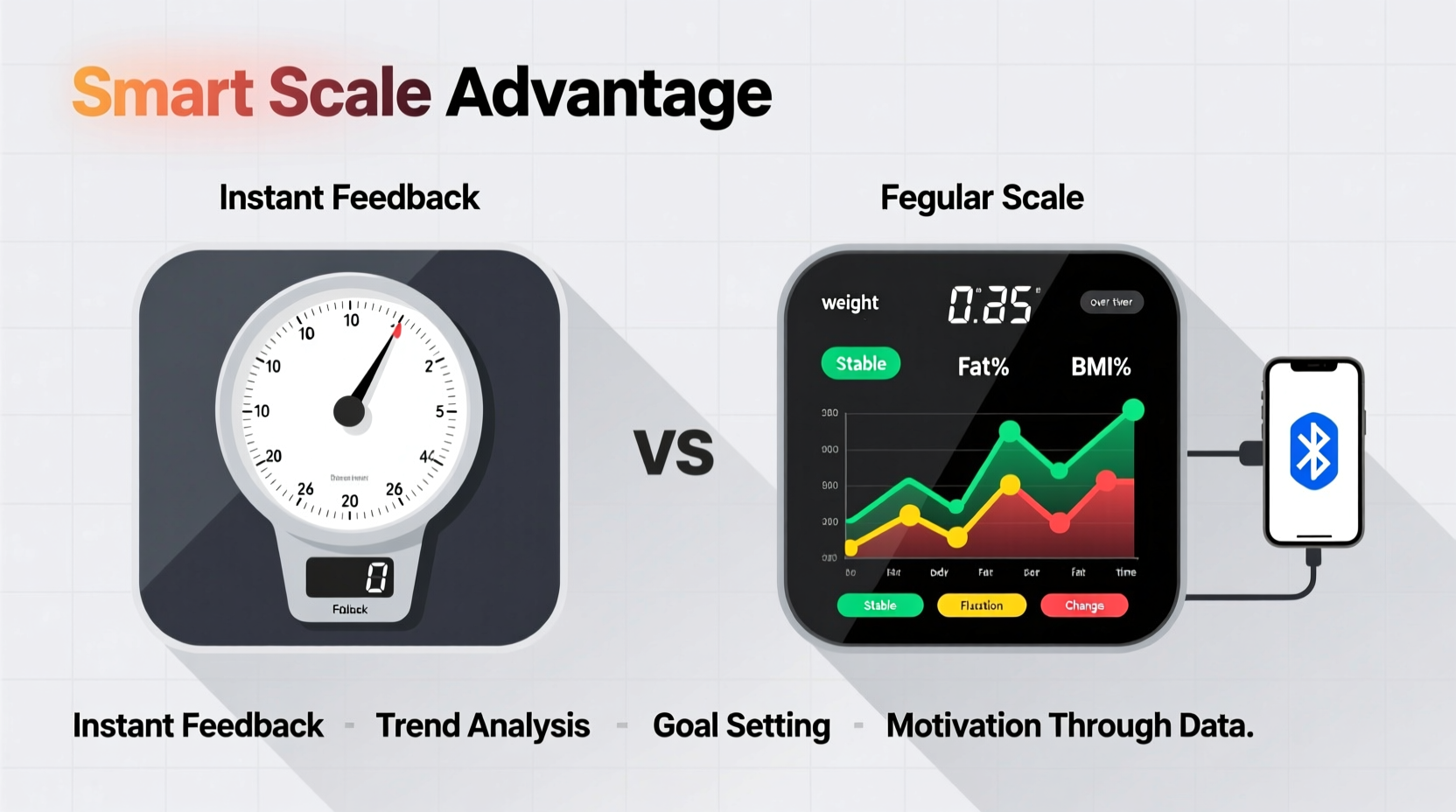
Motivation to track weight consistently doesn't stem from willpower alone. Research in behavioral science shows that feedback loops are essential for habit formation. A 2019 study published in Obesity found that individuals who monitored their weight daily were more likely to maintain or lose weight than those who did so infrequently. However, simply seeing a number isn’t enough—context matters.
A regular scale provides only one metric: total body weight. While this can be useful, it often leads to frustration when fluctuations occur due to water retention, muscle gain, or hormonal shifts. These short-term variations may discourage users, leading them to abandon tracking altogether.
In contrast, smart scales deliver multiple metrics—such as body fat percentage, muscle mass, bone density, hydration levels, and visceral fat—and present them in trend-based dashboards via smartphone apps. This richer context helps users interpret changes more accurately, reducing emotional reactions to minor day-to-day swings. Over time, this promotes resilience and sustained engagement.
“People don’t give up on habits because they lack discipline—they give up when they don’t see meaningful progress. Smart scales turn ambiguous numbers into understandable stories.” — Dr. Lena Patel, Behavioral Health Researcher at Stanford Medicine
Smart Scale vs Regular Scale: A Feature-by-Feature Comparison
| Feature | Regular Scale | Smart Scale |
|---|---|---|
| Primary Metric | Body weight (lbs/kg) | Body weight + body composition (fat, muscle, water, etc.) |
| Data Storage | None – manual logging required | Cloud-based; automatic syncing across devices |
| User Profiles | One user at a time | Multiple profiles with auto-recognition |
| Trend Visualization | No graphs or historical views | Weekly/monthly trends, charts, and milestone alerts |
| Integration | Standalone device | Synchronizes with fitness apps (Apple Health, Google Fit, MyFitnessPal) |
| Motivational Tools | None | Progress badges, reminders, goal-setting features |
| Price Range | $15–$40 | $50–$200 |
This comparison reveals a fundamental difference: regular scales serve as passive measurement tools, while smart scales function as active coaching systems. The ability to visualize progress over time, receive gentle nudges, and understand the 'why' behind weight changes significantly enhances user commitment.
Tip: If you're using a smart scale, set app notifications to remind you to weigh in every morning—consistency builds momentum.How Data Builds Motivation: Real-World Impact
The true power of smart scales lies in transforming abstract goals into measurable outcomes. Consider Sarah, a 38-year-old teacher trying to lose 25 pounds after childbirth. She started with a $20 regular scale, weighing herself every morning. After two weeks, her weight plateaued despite healthy eating and walking daily. Discouraged, she stopped checking altogether.
Three months later, she bought a smart scale. On day one, it showed she had gained muscle and reduced body fat—even though her weight was unchanged. Her app displayed a downward trend in visceral fat and improved hydration levels. Instead of feeling stuck, she felt validated. “I wasn’t failing,” she said. “My body was changing in ways I couldn’t see.” That insight reignited her commitment. Within six months, she reached her goal—not by obsessing over weight, but by trusting the data.
This scenario illustrates a key principle: motivation thrives on perceived progress. When users receive multidimensional feedback, temporary plateaus become less discouraging. They learn to celebrate non-scale victories like increased muscle mass or better metabolic health.
Step-by-Step Guide to Building a Sustainable Tracking Habit
Whether you choose a regular or smart scale, consistency depends on routine and mindset. Here’s a proven sequence to make weight tracking stick:
- Choose your tool wisely. If you value simplicity and low cost, a regular scale may suffice. But if you want deeper insights and long-term engagement, invest in a smart scale with app integration.
- Weigh at the same time daily. Morning, post-bathroom, pre-breakfast is ideal. This minimizes variables like food intake and fluid retention.
- Track beyond the number. With a smart scale, review trends weekly. Note improvements in body fat, muscle, or water balance—even if weight stays flat.
- Set process-oriented goals. Instead of “lose 10 pounds,” aim for “weigh in 6 out of 7 days this week” or “maintain muscle while losing fat.”
- Review monthly summaries. Use app-generated reports or journal entries to reflect on progress, challenges, and adjustments.
- Adjust based on data. If body fat decreases but weight increases slightly, recognize that muscle gain is occurring—a positive outcome.
This structured approach turns tracking from a source of anxiety into a strategic tool for self-awareness.
Common Pitfalls and How Smart Scales Help Avoid Them
- Pitfall: Reacting emotionally to daily fluctuations. Smart scales contextualize changes by showing averages over time, reducing fixation on single readings.
- Pitfall: Inconsistent measurement conditions. Some smart scales detect unusual hydration levels and flag readings as “less reliable,” prompting users to recheck under better conditions.
- Pitfall: Losing interest after initial enthusiasm. Gamification elements—like streaks, badges, and milestone celebrations—keep users engaged over months.
- Pitfall: Misinterpreting weight gain as failure. Body composition breakdowns help users distinguish between fat gain, water retention, and muscle growth.
“Patients who use smart scales report higher satisfaction and adherence rates. They feel more informed and in control.” — Dr. Marcus Lin, Primary Care Physician, Cleveland Clinic
Checklist: Choosing the Right Scale for Long-Term Success
Ask yourself these questions before purchasing:
- Do I want to track more than just weight? → Yes = Smart Scale
- Am I likely to forget to log results manually? → Yes = Smart Scale (auto-syncs)
- Will multiple household members use it? → Yes = Smart Scale (multi-user support)
- Do I use fitness apps like Apple Health or Fitbit? → Yes = Smart Scale (integration needed)
- Is my budget under $30? → Yes = Regular Scale may be best fit
- Have I quit tracking before due to frustration? → Yes = Smart Scale (provides context)
FAQ: Addressing Common Concerns
Can smart scales be inaccurate?
All scales have margins of error, especially bioelectrical impedance analysis (BIA) models used in most smart scales. For best accuracy, use consistently—same time, same conditions. While BIA isn’t medical-grade, its value lies in tracking relative changes over time, not absolute precision.
Are smart scales worth the extra cost?
If your goal is long-term behavior change, yes. The upfront investment pays off in sustained engagement. One study found users of connected health devices were 34% more likely to maintain tracking for over six months compared to traditional methods.
What if I don’t own a smartphone?
Most smart scales require a mobile device for setup and full functionality. In that case, a high-quality regular scale with a large display might be more practical.
Conclusion: Data Isn’t Just Numbers—It’s Direction
The debate between smart scales and regular scales ultimately centers on sustainability. A regular scale tells you where you stand today. A smart scale helps you understand where you’re headed—and why. It transforms isolated data points into a narrative of progress, turning setbacks into learning opportunities and small wins into lasting confidence.
Motivation fades when we feel lost. But when we see patterns, recognize effort, and trust the process, we’re far more likely to keep going. That’s the real advantage of smart scales: they don’t just measure weight—they nurture persistence.
💬 Ready to build a healthier relationship with your scale? Choose a tool that supports your journey—not just today, but months from now. Share your experience or ask questions below to connect with others on the same path.








