For decades, the rum world operated on a simple geography-based hierarchy: Jamaican rums were funky, Martiniquan rums were grassy and precise, Barbadian rums were elegant and balanced. But today’s most compelling bottlings challenge that framework—not with marketing hype, but with radical transparency. Single-estate rums now trace spirit back to one field, one harvest, one mill. Blended agricoles increasingly combine cane varieties from multiple micro-parcels across a single island, sometimes even across elevation bands. The question is no longer *where* the rum was made—but *what grew there*, *when it was harvested*, and *how deliberately it was selected*. Cane variety isn’t just botanical trivia. It’s the genetic foundation of aroma, sugar profile, fiber density, and phenolic expression. Distillery location still matters—but as a conductor, not the composer.
The Terroir Triad: Soil, Climate, and Cane Variety Are Interdependent
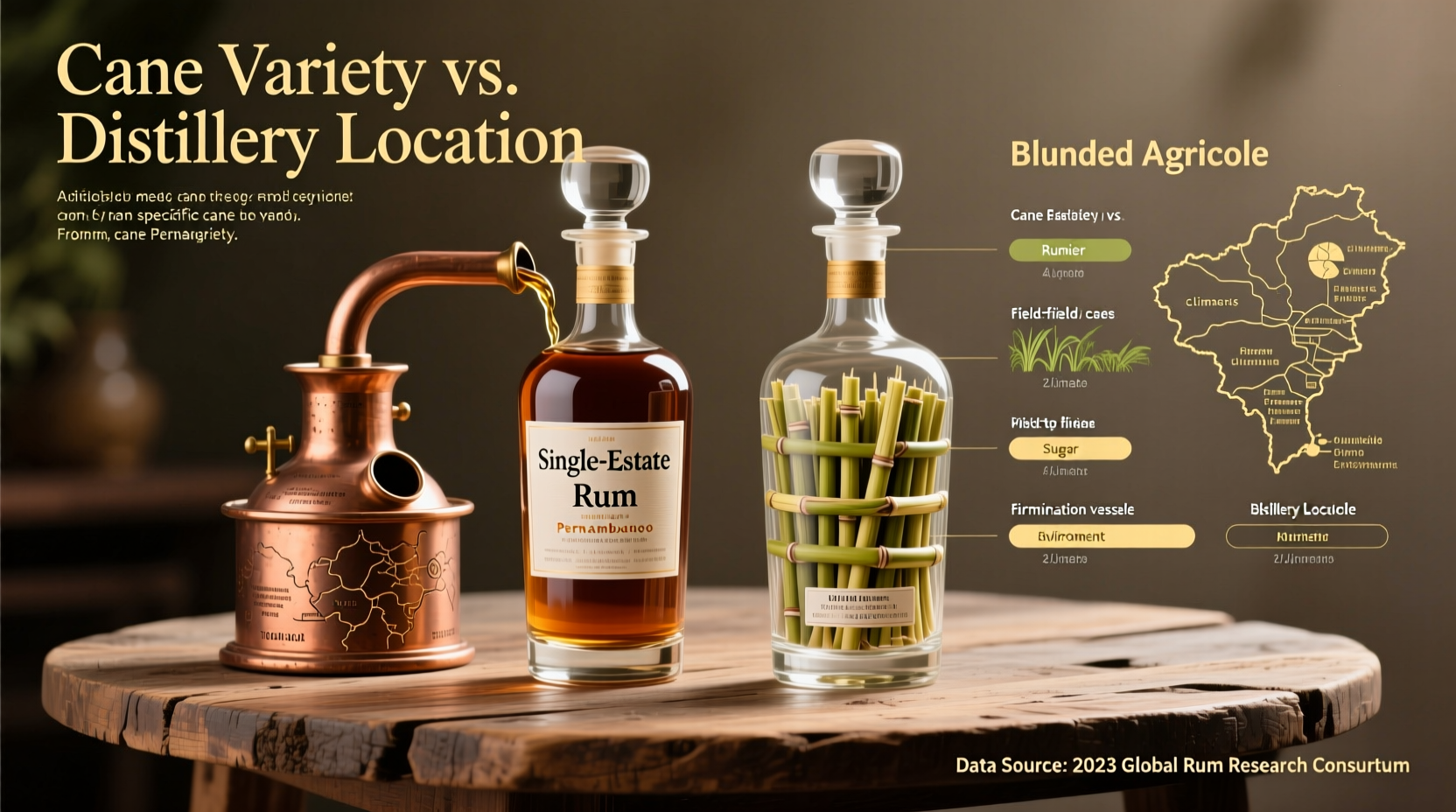
Terroir in agricole rum has long been framed around volcanic soil in Martinique or limestone-rich fields in Guadeloupe. Yet soil alone doesn’t explain why a Saccharum officinarum clone like B52-237 yields markedly different esters in the same field when planted at 80m versus 320m elevation—or why that same clone expresses citrus peel and white pepper in a dry-season harvest but develops roasted almond and dried herb notes after three weeks of steady rain. Cane variety determines *how* a plant interacts with its environment: root architecture affects mineral uptake; leaf surface area modulates transpiration under heat stress; stalk sugar concentration shifts with photoperiod and diurnal swing. A 2022 study by INRAE Martinique found that cane variety accounted for 41% of volatile compound variance in distilled rhum agricole—more than soil type (29%) or harvest date (22%). Location sets boundaries; variety defines behavior within them.
Tip: When evaluating agricole, ask producers for the specific cane variety(ies) used—not just “green cane” or “freshly pressed.” Varieties like R570, B4122, and CC11 carry distinct aromatic signatures that survive fermentation and distillation.Single-Estate Rum: Precision Over Provenance
“Single-estate” in rum means every drop originates from cane grown, harvested, milled, fermented, and distilled on one contiguous property. This model emerged from estates like Habitation Clément (Martinique), Trois Rivières (Martinique), and Reimonenq (Guadeloupe), where land ownership, milling infrastructure, and distillation are vertically integrated. Unlike Scotch single malts—which emphasize still shape and cask influence—single-estate rum prioritizes *agricultural continuity*. At Domaine du Simon in Marie-Galante, for example, all cane is grown on 120 hectares of clay-limestone soil, milled within 24 hours of harvest, and fermented in open vats using ambient yeasts native to the estate’s orchards and hedgerows. The resulting rum carries unmistakable notes of green mango skin, crushed sugarcane pith, and saline minerality—not because of where Marie-Galante is located, but because of how CC11 cane responds to that specific soil-moisture balance and microbial ecosystem.
Crucially, single-estate does not guarantee uniformity. In fact, it exposes variation: a 2023 vertical tasting of Clément’s “Cuvée Spéciale” across five vintages revealed that cane variety selection (shifting from R570 to B4122 due to disease pressure) altered the rum’s phenolic depth more than any change in barrel regime or aging duration. The estate didn’t relocate—it adapted its botanical foundation.
Blended Agricole: Complexity Through Intentional Contrast
Blended agricole rum rejects the “one field, one vintage” ideal in favor of layered intention. Rather than diluting character, top-tier blends use varietal contrast as a compositional tool. Consider Neisson’s “Le Rhum Blanc de Neisson”—a non-age-stated blanc that consistently blends juice from B52-237 (grown on volcanic slopes, high in sucrose and low in fiber) with R570 (planted on coastal alluvial flats, higher in polyphenols and organic acids). The result is a blanc with both piercing brightness and textural weight—something neither variety achieves alone. Fermentation times differ: B52-237 ferments 18–20 hours for clean ester development; R570 ferments 28–32 hours to coax out earthier, spicier compounds. Distillation cuts are adjusted per variety before blending. This isn’t compromise—it’s orchestration.
| Characteristic | Single-Estate Rum | Blended Agricole |
|---|---|---|
| Core Value | Transparency of origin & agricultural continuity | Harmonized complexity through varietal dialogue |
| Cane Diversity | Typically 1–2 dominant varieties per estate; seasonal rotation possible | 3–5+ varieties routinely blended; often includes heritage clones |
| Fermentation Approach | Uniform process applied across all cane; ambient or selected yeast | Varietal-specific fermentation: time, temperature, yeast strain, vessel |
| Distillation Flexibility | Limited—same still run for all batches | High—different cuts, reflux settings, or even still types per variety |
| Tasting Signature | Strong sense of place + season; linear progression of flavors | Multidimensional texture; interplay of fruit, herb, spice, and umami |
The Cane Variety Factor: Why Genetics Trump Geography
Cane variety dictates chemical precursors far more decisively than soil composition. Take two adjacent fields on the same slope in northern Martinique: one planted with R570, the other with CC11. Both receive identical rainfall, sun exposure, and fertilizer regimes. Yet GC-MS analysis shows the R570 juice contains 37% more ferulic acid—a precursor to smoky, clove-like phenols—while CC11 juice delivers 2.3× more linalool oxide, responsible for lilac and bergamot top notes. During fermentation, these precursors interact with indigenous microbes to produce entirely different volatile profiles. Even identical distillation parameters yield rums with divergent congener ratios: R570 distillate peaks in ethyl decanoate (apple skin, waxy); CC11 distillate peaks in isoamyl acetate (banana, pear). Geography provides the stage; cane variety writes the script.
“The idea that ‘Martinique equals grassy’ ignores that 72% of the island’s cane acreage is now planted to B4122, a variety bred for yield and disease resistance—not aromatic intensity. If you want true terroir expression, you must know the clone, not just the island.” — Dr. Sophie Lefebvre, Senior Agronomist, CTCPA Martinique
Mini Case Study: The 2021 Dilemma at Habitation La Mauny
In 2021, Habitation La Mauny in Martinique faced an unprecedented decision. A late-season cyclone damaged 60% of their primary R570 crop. Rather than source replacement cane from outside the estate (which would break their single-estate designation), they grafted surviving rootstock with CC11 and B52-237 cuttings—and extended harvest into October to capture optimal ripeness in the new varieties. The resulting “Cuvée Cyclone” was labeled single-estate, yet contained three distinct cane genetics. Tasters noted a departure from La Mauny’s classic profile: less green bell pepper, more candied ginger and toasted coconut. Crucially, the rum retained its structural integrity and regional coherence—not because of shared geography, but because the estate’s fermentation protocols and column still settings were calibrated to highlight each variety’s strengths. The lesson? Single-estate authenticity resides in process control and agricultural stewardship—not botanical purity.
Practical Guide: How to Taste the Difference (Step-by-Step)
Discerning cane variety impact requires focused attention—not just to flavor, but to structure and evolution. Follow this sequence:
- Observe clarity and viscosity: Agricole blancs from high-fiber varieties (e.g., R570) often show slightly more body and slower legs than those from high-sucrose clones (B52-237).
- Smell undiluted first: Note immediate top notes—citrus, floral, or vegetal. Then add 2 drops of water and wait 90 seconds. Varietal differences emerge here: CC11 often reveals herbal lift; B4122 may deepen into baked apple or caramelized sugar.
- Taste at natural strength: Focus on mid-palate texture. Is it crisp and linear (single-variety) or layered and evolving (blended)? Single-estate rums often show consistent flavor trajectory; blended agricoles may shift from fruit → herb → spice across the palate.
- Assess the finish length and quality: Long, drying finishes with white pepper or mineral notes often signal high-phenolic varieties (R570, CC11). Shorter, rounder finishes suggest high-sucrose clones (B52-237).
- Compare side-by-side: Taste a single-estate blanc (e.g., Damoiseau VSOP Estate) alongside a blended blanc (e.g., Neisson Le Rhum Blanc). Note how the former feels like a portrait, the latter like a landscape painting.
FAQ
Does “aged agricole” lose its varietal character?
No—aging transforms but doesn’t erase varietal signatures. High-phenolic varieties like R570 develop deeper spice and leather notes in oak, while high-sucrose varieties like B52-237 contribute richer vanilla and toffee tones. The best aged agricoles retain a clear “genetic fingerprint” beneath the wood influence.
Can cane variety be identified by label alone?
Rarely. Most labels list only “fresh cane juice” or “AOC Martinique.” Exceptions include Clément’s “Cuvée Homère,” which specifies B4122, and Reimonenq’s “Rhum Vieux,” which names CC11 and R570. When in doubt, contact the producer directly—their agronomists often share detailed cultivation reports.
Is blended agricole inherently less “authentic” than single-estate?
Authenticity lies in intent, not method. A thoughtfully blended agricole reflects deep knowledge of how varieties complement each other—just as a master chef combines heirloom tomatoes for layered acidity and sweetness. Single-estate expresses fidelity to a place; blended agricole expresses fidelity to flavor architecture. Neither is superior—they’re different languages describing the same reality: cane is alive, variable, and profoundly expressive.
Conclusion
Location tells you where a rum was born. Cane variety tells you what it inherited, how it grew, and what it chose to express. The most exciting developments in agricole rum aren’t about bigger barrels or longer aging—they’re about deeper agricultural literacy. Distillers who track clones like winemakers track Pinot Noir selections, who ferment varieties separately like brewers handle malt bills, who blend with the precision of a perfumer constructing a fragrance—these are the ones redefining what “terroir” truly means. You don’t need a PhD in botany to appreciate the difference. You need curiosity, a clean glass, and the willingness to taste slowly—not just what’s in the bottle, but what grew in the field, how it responded to the rain and sun, and why that particular cane was chosen for this moment. Start with one single-estate blanc and one blended agricole. Compare them not as competitors, but as collaborators in a conversation centuries in the making.
💬 Have you tasted a rum where the cane variety shifted your perception of terroir? Share your experience—including producer, variety (if known), and what surprised you—in the comments. Let’s build a living archive of agricole intelligence, one field at a time.








