Waking up with frizzy hair, flattened curls, or deep sleep lines etched into your skin is a common frustration—especially for those who value both beauty rest and nighttime skincare. As awareness grows about how sleep surfaces affect appearance, silk and satin pillowcases have surged in popularity. But are they truly effective? And if so, which one delivers better results for preventing frizzy hair and sleep wrinkles?
The answer isn’t as simple as choosing the shiniest option. While both materials feel smooth and luxurious, their composition, performance, and impact on hair and skin differ significantly. Understanding these differences can help you make an informed decision—one that supports healthier hair, smoother skin, and fewer morning grooming battles.
The Science Behind Frizz and Sleep Wrinkles
Frizzy hair occurs when moisture from the air penetrates the hair shaft, causing it to swell and lift the cuticle layer. This effect is amplified by friction. Cotton pillowcases, commonly used in households, are highly absorbent and create significant drag against hair strands overnight. This constant rubbing disrupts curl patterns, strips natural oils, and leads to tangles and static—all contributing to frizz.
Sleep wrinkles are another consequence of nightly friction and compression. Unlike expression lines caused by facial movements, sleep wrinkles form when skin is repeatedly pressed or folded against a surface during rest. Over time, especially on less resilient fabrics like cotton, these temporary creases can become permanent folds in aging skin.
A study published in *Aesthetic Surgery Journal* found that participants using smooth-surface pillowcases experienced fewer and shallower sleep wrinkles after just four weeks. The research emphasized surface texture over material origin, but not all smooth fabrics perform equally.
“Reducing nocturnal friction is one of the most overlooked yet effective anti-aging strategies. A gentle sleeping surface can preserve both hair integrity and skin elasticity.” — Dr. Lena Patel, Board-Certified Dermatologist
Silk: Nature’s Smooth Operator
True silk is a natural protein fiber produced by silkworms, primarily composed of fibroin. High-quality silk pillowcases are made from mulberry silk (typically 19–22 momme weight), known for its uniform weave, softness, and durability. Its molecular structure creates a naturally low-friction surface that glides smoothly against hair and skin.
One of silk’s key advantages is its ability to retain moisture. Unlike cotton, which absorbs up to 24 times its weight in water, silk repels moisture. This means your hair retains more of its natural oils and applied products overnight, reducing dryness and breakage. For curly or textured hair types, this preservation of hydration helps maintain definition and reduces puffiness.
Silk also has temperature-regulating properties. It remains cool in warm conditions and insulates slightly in cooler ones, making it ideal for sensitive scalps prone to irritation or excessive oil production.
Tip: Look for “100% mulberry silk” and a momme weight of at least 19 when purchasing silk pillowcases. Lower weights may feel thin and wear out faster.Satin: The Affordable Alternative
Satin isn’t a material—it’s a weave. Satin fabric can be made from polyester, nylon, acetate, or even silk. When people refer to “satin pillowcases,” they’re usually talking about polyester-based versions due to their lower cost and widespread availability.
Polyester satin mimics the glossy finish and slippery texture of silk at a fraction of the price. It provides a smooth sleeping surface that reduces hair friction and minimizes skin creasing. However, being synthetic, it lacks many of silk’s functional benefits.
Polyester tends to trap heat and sweat, increasing the risk of scalp buildup and acne flare-ups. It’s also hydrophobic in a different way—while it doesn’t absorb moisture like cotton, it doesn’t breathe well either. This can lead to discomfort for hot sleepers and degrade certain hair treatments or skincare products through chemical interaction.
Additionally, lower-quality satin pillowcases may develop pilling after repeated washing, diminishing their smoothness and effectiveness over time.
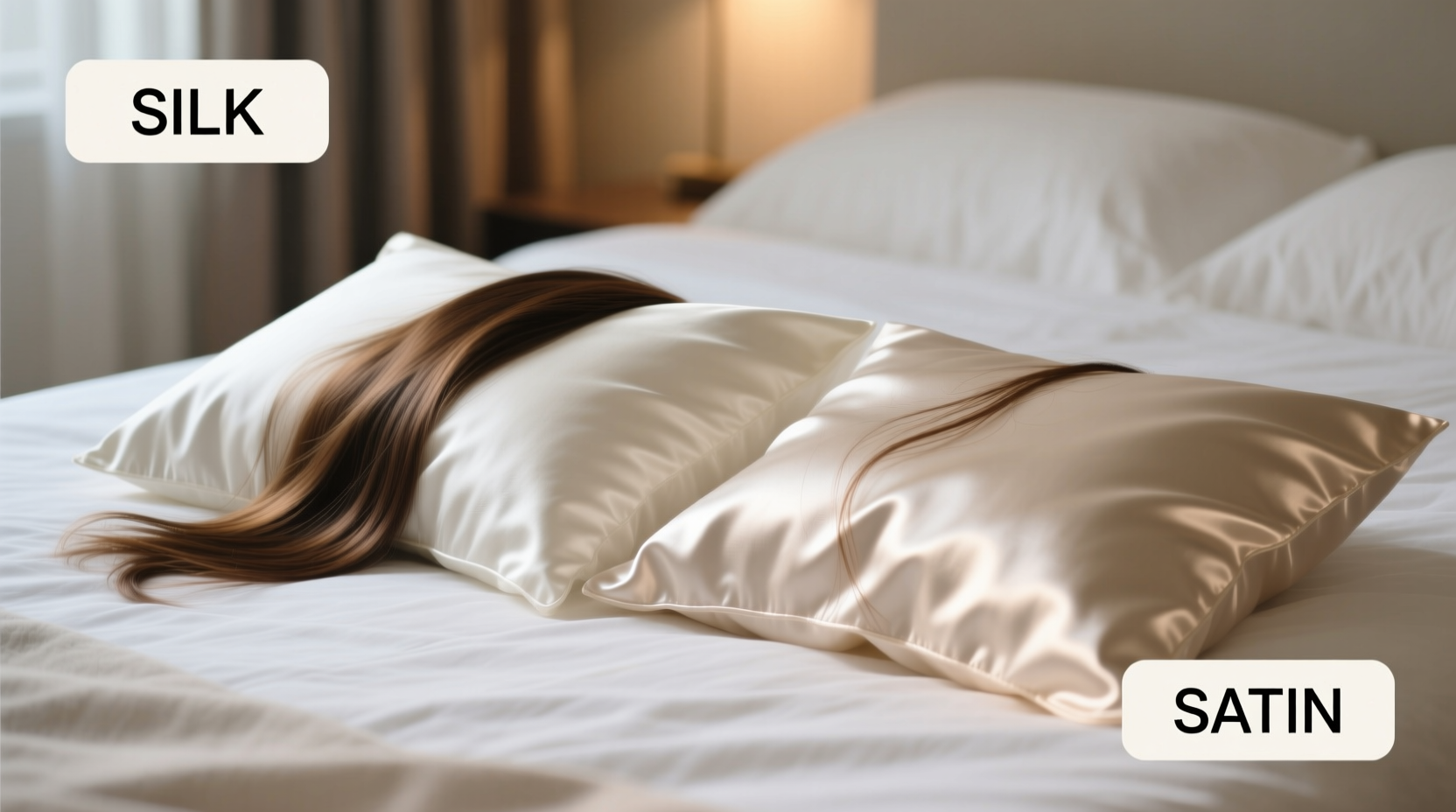
Direct Comparison: Silk vs Satin
| Feature | Silk Pillowcase | Satin Pillowcase (Polyester) |
|---|---|---|
| Material Origin | Natural (protein fiber) | Synthetic (polyester) |
| Surface Friction | Very low – gentle on hair/skin | Low – initially smooth, degrades over time |
| Maintains Hair Moisture | Yes – non-absorbent | Limited – doesn’t absorb but can cause static |
| Impact on Skin Hydration | Preserves serums and natural oils | May interfere with product absorption |
| Breathability | High – regulates temperature | Low – traps heat and sweat |
| Durability | High with proper care (3+ years) | Moderate (pills after 6–12 months) |
| Hypoallergenic | Yes – resistant to dust mites and mold | No – can harbor bacteria if not cleaned frequently |
| Care Requirements | Hand wash or delicate cycle; air dry | Machine washable but prone to static |
| Price Range | $50–$100+ | $10–$25 |
While both options offer a smoother alternative to cotton, silk consistently outperforms satin in long-term hair and skin health. The investment pays off in reduced frizz, stronger strands, and visibly softer facial contours upon waking.
Real Results: A Mini Case Study
Consider Sarah, a 34-year-old with wavy, color-treated hair and early signs of fine lines around her cheeks. She slept on cotton pillowcases for years, waking daily with tangled hair and noticeable cheek creases. After switching to a 22-momme mulberry silk pillowcase, she noticed changes within two weeks.
Her hair was easier to detangle, retained volume, and required less heat styling. Her weekly deep conditioner stayed effective longer, rather than being absorbed overnight. Within six weeks, her dermatologist noted a reduction in lateral cheek grooves—a sign that sleep pressure had decreased.
When she temporarily switched back to a polyester satin case during travel, the frizz returned almost immediately. “It felt slippery,” she said, “but my scalp was oilier by morning, and my waves were flat.” This real-world experience underscores that while satin offers surface-level benefits, silk provides deeper physiological advantages.
How to Maximize Benefits: A Step-by-Step Guide
Simply owning a silk or satin pillowcase isn’t enough—you need to use it correctly to see results. Follow this timeline for optimal outcomes:
- Week 1: Transition Gradually
Introduce the new pillowcase slowly. Use it every other night to allow your hair and skin to adjust. Observe any immediate changes in texture or comfort. - Week 2–3: Establish Consistency
Use the pillowcase nightly. Keep hair slightly damp (not wet) before bed to test moisture retention. Apply your regular nighttime skincare routine to assess product transfer or absorption issues. - Week 4: Evaluate Hair & Skin Response
Check for reduced tangling, improved shine, and less morning frizz. Examine your face in natural light for diminished sleep lines. Take photos for comparison. - Month 2+: Maintain & Monitor
Wash the pillowcase weekly using a mild detergent formulated for delicates. Avoid bleach and high heat. Rotate between two cases to extend lifespan. - Month 3: Reassess Value
Determine whether the benefits justify the cost. If using satin, check for pilling or odor retention. If using silk, confirm continued softness and performance.
Common Misconceptions Debunked
Myth: All satin is created equal.
In reality, satin made from silk (called “silk satin”) performs far better than polyester satin. Always check the label—many cheap versions are 100% plastic.
Myth: Any smooth fabric will prevent wrinkles.
While reduced friction helps, only breathable, non-absorbent materials like silk support overall skin health. Synthetic satins may reduce creasing temporarily but contribute to congestion and dehydration.
Myth: Silk is too high-maintenance.
Modern detergents and gentle machine cycles make silk care manageable. With proper handling, a single case can last several years—making it cost-effective over time.
Frequently Asked Questions
Does satin really help with frizzy hair?
Yes, but only to a point. Satin reduces surface friction compared to cotton, which helps minimize tangles and static. However, because it’s often made from polyester, it can generate more static electricity than silk, potentially worsening frizz in dry climates. It also doesn’t retain hair moisture, so hydration-dependent styles may still suffer.
Can silk pillowcases reverse existing sleep wrinkles?
They won’t erase deep-set wrinkles, but consistent use can soften and reduce the depth of sleep lines over time. One clinical trial showed a 20% improvement in wrinkle severity after eight weeks of using smooth-textile pillowcases. For best results, combine with a retinoid-based skincare regimen.
Are there vegan or cruelty-free silk alternatives?
Yes. Peace silk (ahimsa silk) allows silkworms to exit cocoons naturally before harvesting. Alternatively, high-grade bamboo-derived viscose can mimic silk’s properties with eco-friendly sourcing. These options bridge ethical concerns without sacrificing performance.
Your Action Plan: Choosing What’s Right for You
- If you prioritize long-term hair and skin health: Invest in a 19–22 momme mulberry silk pillowcase. Look for OEKO-TEX certification to ensure no harmful dyes or chemicals.
- If budget is a concern: Start with a high-quality polyester satin case, but expect to replace it annually. Wash it frequently to prevent bacterial buildup.
- If you have curly, coily, or chemically treated hair: Silk is strongly recommended. Its moisture-retaining properties help maintain curl integrity and reduce breakage.
- If you're acne-prone or sensitive-skinned: Choose silk for its hypoallergenic, breathable nature. Satin may trap sweat and irritate follicles.
“The pillowcase is part of your skincare and haircare routine—treat it like any other product you apply at night.” — Rachel Kim, Trichologist and Hair Wellness Consultant
Final Thoughts
When it comes to preventing frizzy hair and sleep wrinkles, both silk and satin represent a major upgrade from traditional cotton. However, silk emerges as the superior choice for those seeking lasting results, enhanced comfort, and holistic benefits for both hair and skin. Its natural composition, breathability, and durability justify the higher upfront cost, especially when used consistently over time.
Satin serves as a practical entry point, particularly for those testing the concept or working within tighter budgets. But its synthetic limitations—poor breathability, heat retention, and shorter lifespan—make it a compromise rather than a solution.
Ultimately, the best pillowcase is one you’ll use every night without hesitation. Whether you choose silk for its proven efficacy or satin for its accessibility, the shift away from abrasive cotton is a meaningful step toward waking up looking—and feeling—your best.
🚀 Ready to transform your beauty sleep? Switch to a silk pillowcase tonight and track your results over the next month. Share your journey in the comments—your experience could inspire someone else to make the change.








