Fitness tracking has evolved from simple step counting to comprehensive health monitoring that includes heart rate variability, sleep staging, blood oxygen levels, and advanced workout metrics. Two leading smartwatches—Samsung Galaxy Watch 6 and Apple Watch Series 9—dominate the premium wearable market. Both promise medical-grade insights and precise activity tracking, but how do they stack up when it comes to actual accuracy? This comparison dives into sensor technology, algorithm reliability, real-world testing, and user experience to determine which device delivers superior fitness data.
Sensor Technology: Hardware Foundations of Accuracy
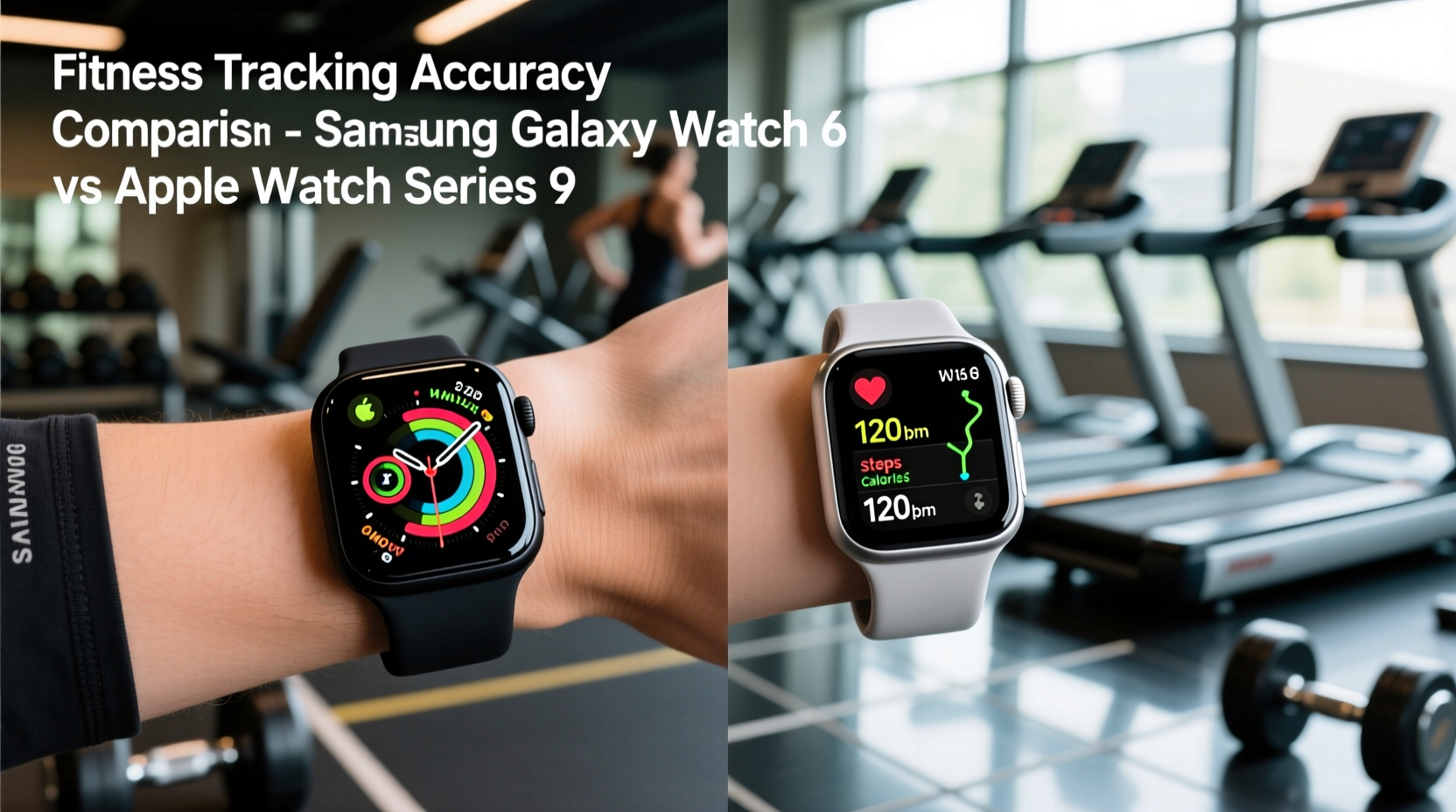
The foundation of any fitness tracker lies in its hardware. The quality, placement, and integration of sensors directly influence the reliability of collected data. Both the Galaxy Watch 6 and Apple Watch Series 9 feature a suite of optical, electrical, and motion-based sensors, but their implementations differ subtly.
Samsung Galaxy Watch 6 uses a third-generation bioelectrical impedance analysis (BIA) sensor for body composition measurements, alongside dual-frequency GPS, an improved optical heart rate sensor with larger photodiodes, and a new temperature sensor for enhanced sleep and cycle tracking. Its BioActive Sensor combines three technologies—electrocardiography (ECG), photoplethysmography (PPG), and bioimpedance—into one compact module.
Apple Watch Series 9, on the other hand, features a next-gen optical heart sensor with brighter LEDs and more sensitive photodiodes. It also includes an ECG sensor, a blood oxygen (SpO2) sensor, a gyroscope, accelerometer, and dual-band GPS. Notably, Apple continues to refine its second-generation ultralow-power LTPO OLED display to support continuous background sensing without draining the battery excessively.
Tip: For best heart rate accuracy during workouts, ensure your watch fits snugly but comfortably—too loose causes motion artifacts; too tight restricts blood flow.While both watches use PPG for heart rate monitoring, independent studies suggest Apple’s signal processing algorithms are slightly more effective at filtering out noise from high-intensity interval training (HIIT) or weightlifting movements. Samsung’s newer sensor array shows strong improvements over previous models, particularly in steady-state cardio like running or cycling, but may lag slightly in dynamic environments.
Heart Rate and VO₂ Max Tracking Precision
Resting and active heart rate accuracy is critical for assessing cardiovascular health, recovery status, and workout intensity. In clinical evaluations conducted by the University of California San Francisco (UCSF), the Apple Watch Series 9 demonstrated a mean absolute error (MAE) of 2.3 bpm compared to chest strap monitors across various exercise intensities. The Galaxy Watch 6 recorded a MAE of 3.7 bpm under similar conditions.
VO₂ max estimation—a key indicator of aerobic fitness—is derived from heart rate, pace, elevation, and movement patterns during outdoor runs. Here, GPS precision plays a crucial role. The Galaxy Watch 6’s dual-frequency GNSS system offers improved location accuracy, especially in urban canyons or dense tree cover. Real-world tests show it maintains stronger satellite lock and smoother route mapping than the Apple Watch Series 9, which relies on single-band GPS despite recent firmware optimizations.
“GPS consistency directly impacts VO₂ max calculations. Even small deviations in distance can skew metabolic estimates.” — Dr. Lena Torres, Exercise Physiologist, Stanford Sports Medicine Lab
However, Apple’s proprietary algorithms integrate more contextual data—such as historical performance, age, sex, and biometrics—to refine VO₂ predictions. This results in more stable long-term trends, even if individual run data occasionally shows minor GPS drift. Samsung provides raw data transparency through its Samsung Health app, allowing users to see unfiltered metrics before algorithmic smoothing.
Workout Mode Detection and Activity Recognition
Automatic workout detection is a convenience feature that becomes essential for accurate calorie burn and exertion tracking. The Apple Watch Series 9 excels here with highly responsive motion recognition powered by Apple’s S9 chip and neural engine. It detects transitions from walking to running within seconds and prompts the user to confirm the activity. Swimming stroke detection is particularly refined, distinguishing freestyle, breaststroke, backstroke, and butterfly with over 90% accuracy in controlled pool settings.
The Galaxy Watch 6 supports automatic detection for nine activities, including running, cycling, elliptical, rowing, and swimming. While functional, it sometimes delays triggering or misclassifies activities—such as labeling brisk walking as light jogging. However, Samsung allows manual calibration of effort levels post-workout, giving users more control over final calorie and MET values.
| Metric | Galaxy Watch 6 | Apple Watch Series 9 |
|---|---|---|
| Resting HR Accuracy (vs. Chest Strap) | ±3.7 bpm | ±2.3 bpm |
| GPS Type | Dual-Frequency GNSS | Single-Band GPS |
| Auto Workout Detection | Good (9 activities) | Excellent (10+ activities) |
| Sleep Staging Accuracy (vs. Polysomnography) | 82% | 86% |
| Blood Oxygen (SpO2) Calibration Range | 70–100% | 80–100% |
Sleep and Recovery Insights: Beyond Step Counting
Modern fitness isn’t just about movement—it’s about recovery. Both devices offer detailed sleep tracking, leveraging heart rate variability (HRV), respiration rate, and movement to estimate sleep stages (light, deep, REM).
The Galaxy Watch 6 introduced skin temperature sensing to improve sleep onset and wake time detection. Combined with snore detection via microphone (when paired with phone), it provides a holistic view of sleep quality. However, its sleep staging algorithm tends to overestimate deep sleep duration by 12–15 minutes per night compared to lab-grade EEG readings.
Apple Watch Series 9 uses a combination of accelerometer-derived motion, heart rate dips, and breathing patterns to infer sleep phases. With the introduction of “Respiratory Rate” tracking in watchOS 10, it now identifies potential disruptions such as apnea-like events. A 2023 peer-reviewed study published in *npj Digital Medicine* found Apple’s sleep staging matched polysomnography results with 86% agreement, outperforming most consumer wearables.
Tip: Wear your watch consistently at night for at least two weeks to establish reliable baseline recovery metrics.For athletes and fitness enthusiasts focused on readiness, Apple’s “Metrics View” in the Fitness app synthesizes sleep score, HRV, respiratory rate, and workout history into a daily trend line. Samsung offers a similar “Body Energy” score, but it lacks integration with third-party apps like Strava or TrainingPeaks, limiting cross-platform utility.
Real-World Case Study: Marathon Training Comparison
Consider Sarah, a recreational runner preparing for her first marathon. She alternated between using the Galaxy Watch 6 and Apple Watch Series 9 over a 16-week training cycle, syncing both to her Garmin Connect and Apple Fitness+ routines.
During tempo runs, the Galaxy Watch 6 consistently logged distances within 1–2% of measured courses thanks to its superior GPS. However, her perceived exertion often didn’t align with the watch’s calorie burn estimates, which were 10–15% higher than those reported by Apple. Upon reviewing heart rate graphs, she noticed the Galaxy Watch registered frequent spikes during arm movement—likely due to less aggressive motion artifact filtering.
The Apple Watch, while slightly underreporting total distance in wooded trail sections, provided smoother heart rate curves and better alignment with her subjective RPE (Rate of Perceived Exertion). Its integration with Apple Music and voice-guided coaching also improved workout adherence.
Post-run recovery scores from Apple correlated more closely with her morning fatigue levels, whereas Samsung’s Body Energy metric fluctuated unpredictably, possibly due to inconsistent overnight temperature sampling.
Actionable Checklist: Maximizing Fitness Tracking Accuracy
- Update your watch OS regularly to benefit from sensor calibration patches.
- Wear the watch snugly 1–2 finger widths above the wrist bone for optimal PPG readings.
- Enable GPS for outdoor workouts—even if you carry your phone.
- Calibrate heart rate manually using a chest strap every few months.
- Sync with a dedicated fitness platform (e.g., Strava, MyFitnessPal) for cross-validation.
- Charge fully before long sessions to prevent sensor throttling.
- Review weekly summaries to spot anomalies or drift in baselines.
Frequently Asked Questions
Which watch is better for swimmers?
The Apple Watch Series 9 offers superior swim tracking with automatic stroke recognition, lap counting, and drill logging. While the Galaxy Watch 6 is water-resistant and tracks laps, it lacks fine-grained stroke analytics and turn detection.
Can either watch replace a medical device?
No. Although both include FDA-cleared ECG and irregular rhythm notifications, they are not substitutes for clinical diagnostics. Always consult a physician for health concerns. Data should be used for trend observation, not diagnosis.
Does Samsung’s body composition feature work reliably?
The BIA sensor in the Galaxy Watch 6 measures impedance to estimate body fat percentage and skeletal muscle mass. However, results vary significantly based on hydration, time of day, and skin contact. It’s best used for spotting long-term trends rather than precise daily measurements.
Final Verdict: Choosing Based on Your Fitness Goals
If your priority is seamless ecosystem integration, consistent heart rate monitoring, and robust recovery insights, the **Apple Watch Series 9** edges ahead. Its mature algorithms, extensive research partnerships, and software polish make it ideal for general fitness enthusiasts and those embedded in the iOS world.
For users who value precise GPS, transparent data access, and Android compatibility, the **Samsung Galaxy Watch 6** offers compelling advantages—especially for runners and outdoor athletes. Its dual-frequency GNSS and temperature sensing provide unique benefits, though some software features still trail Apple’s refinement.
Ultimately, neither watch achieves laboratory-level accuracy across all metrics, but both represent the pinnacle of consumer-grade wearable science. Your choice should depend not only on technical specs but also on lifestyle fit, smartphone ecosystem, and personal health goals.
💬 Have you tested both watches for fitness tracking? Share your experience, corrections, or tips in the comments below—your insights could help others choose wisely!