
Waking up with swollen or puffy eyes is a common issue that affects people of all ages. While it's usually harmless, persistent puffiness can be frustrating and affect self-confidence. The delicate skin around the eyes is thinner than elsewhere on the face, making it more prone to fluid retention, inflammation, and visible swelling. Understanding the root causes—ranging from lifestyle habits to underlying health conditions—is essential for effectively addressing and preventing morning puffiness.
Why Do Eyes Become Puffy in the Morning?
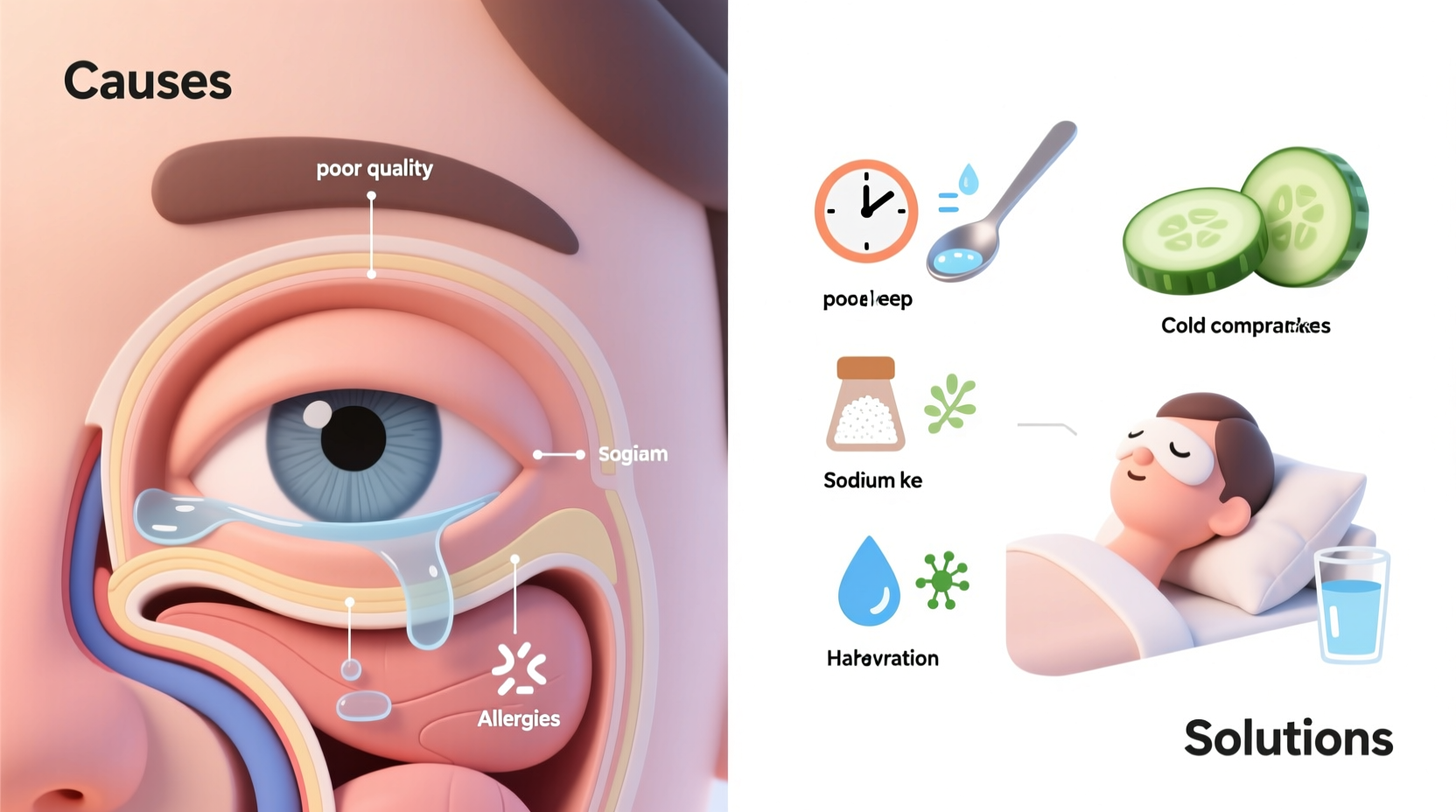
Puffiness occurs when fluid accumulates in the tissues surrounding the eyes. During sleep, your body’s circulation slows, and fluids can pool in the lower eyelids due to gravity, especially if you lie flat. This natural process is often worsened by certain behaviors and environmental factors.
- Fluid Retention: High sodium intake before bedtime increases water retention, leading to swelling.
- Allergies: Seasonal or dust allergies trigger histamine release, causing inflammation and puffiness.
- Lack of Sleep: Poor sleep quality disrupts lymphatic drainage and blood flow, contributing to under-eye bags.
- Aging: As collagen production declines, skin loses elasticity, allowing fat pads beneath the eyes to shift forward.
- Diet & Hydration: Alcohol and dehydration both impair kidney function, increasing fluid buildup.
Effective Ways to Reduce Morning Eye Puffiness
While some causes require long-term adjustments, many solutions offer immediate relief. Combining preventive strategies with targeted treatments delivers the best results.
1. Apply Cold Compresses
Cold temperatures constrict blood vessels and reduce swelling. Use a chilled spoon, cold washcloth, or refrigerated eye mask for 5–10 minutes upon waking.
2. Elevate Your Head While Sleeping
Propping your head with an extra pillow prevents fluid from pooling under your eyes. Even a slight incline makes a noticeable difference over time.
3. Stay Hydrated
Drinking adequate water helps flush out excess sodium and toxins. Aim for at least 2 liters daily, adjusting based on activity level and climate.
4. Use Caffeine-Based Eye Creams
Caffeine has vasoconstrictive properties that tighten skin and improve microcirculation. Look for serums containing caffeine, hyaluronic acid, and peptides for optimal effect.
“Topical caffeine reduces periorbital edema within 15 minutes by stimulating lymphatic drainage.” — Dr. Lena Torres, Dermatologist & Cosmetic Researcher
Step-by-Step Morning Routine to Combat Puffiness
Follow this simple 7-minute routine to visibly reduce puffiness and refresh tired eyes:
- Rinse face with cool water (1 min): Stimulates circulation without irritating sensitive skin.
- Apply chilled compress (5 min): Use two spoons stored in the fridge or a cold gel mask.
- Gently massage under eyes (2 min): Use your ring finger to press lightly along the orbital bone, moving outward toward the temples to encourage lymphatic drainage.
- Apply eye serum (1 min): Dab on a product with caffeine or niacinamide; avoid tugging the skin.
- Protect with SPF (optional): If going outside, apply sunscreen to prevent further damage.
Common Mistakes That Worsen Puffy Eyes
Even with good intentions, certain habits can make puffiness worse. Avoid these common errors:
| Mistake | Why It’s Harmful | Better Alternative |
|---|---|---|
| Sleeping with makeup on | Irritates skin, clogs pores, and promotes inflammation | Always cleanse face before bed |
| Rubbing eyes aggressively | Breaks capillaries and stretches fragile skin | Pat dry gently; use hypoallergenic wipes |
| Consuming alcohol before bed | Dehydrates body and dilates blood vessels | Limits drinks to early evening; hydrate after |
| Using heavy creams at night | Can migrate into eyes and cause milia or irritation | Use lightweight, non-comedogenic formulas |
Real-Life Example: Sarah’s Journey to Less Puffy Mornings
Sarah, a 34-year-old marketing executive, struggled with chronic morning puffiness for years. She often worked late, consumed salty snacks before bed, and slept only 5–6 hours a night. After consulting a dermatologist, she made several changes: cutting back on processed foods, elevating her bed slightly, and using a cold jade roller each morning. Within three weeks, her eye swelling decreased significantly. “I didn’t realize how much my diet and posture were affecting my face,” she said. “Now I wake up looking refreshed—even on busy days.”
When to See a Doctor
Occasional puffiness is normal, but persistent or severe swelling may indicate an underlying condition such as:
- Thyroid disorders (e.g., hypothyroidism)
- Kidney dysfunction (fluid imbalance)
- Chronic sinusitis or allergic rhinitis
- Periorbital cellulitis (a bacterial infection)
If puffiness is accompanied by pain, redness, vision changes, or lasts throughout the day despite lifestyle changes, consult a healthcare provider.
Prevention Checklist: Stop Puffy Eyes Before They Start
Stay ahead of morning puffiness with this nightly checklist:
- ✅ Remove all makeup before sleeping
- ✅ Drink a glass of water after dinner (but not too close to bedtime)
- ✅ Limit salty and processed foods after 7 PM
- ✅ Use a humidifier if air is dry
- ✅ Wash pillowcases twice a week to reduce allergens
- ✅ Stick to 7–8 hours of quality sleep
- ✅ Avoid alcohol and caffeine in the evening
Frequently Asked Questions
Can lack of sleep cause puffy eyes?
Yes. Inadequate or disrupted sleep impairs the lymphatic system’s ability to drain excess fluid from facial tissues. This leads to visible puffiness, dark circles, and dull skin tone.
Are puffy eyes the same as dark circles?
No. Puffiness refers to swelling caused by fluid retention or fat displacement, while dark circles are discoloration due to thin skin, pigmentation, or shadowing from volume loss. However, they often occur together.
Do eye rollers really work?
Yes, when used correctly. Jade or stainless steel rollers provide gentle pressure that stimulates lymphatic flow. Used cold, they enhance vasoconstriction and reduce swelling temporarily.
Conclusion: Take Control of Morning Eye Puffiness
Puffy eyes don’t have to be a daily struggle. With consistent habits—like reducing salt intake, improving sleep posture, and using targeted skincare—you can wake up with brighter, tighter, and more alert-looking eyes. Small changes compound over time, and many solutions require just a few minutes each day. Start tonight: clean off your makeup, drink a glass of water, and adjust your pillow height. Tomorrow morning, notice the difference.
🚀 Ready to wake up with refreshed eyes? Begin with one change today—your future self will thank you.








