
Sweet potatoes are often praised as a nutrient-dense alternative to traditional white potatoes, but understanding their true value starts with examining them in their raw state. Before cooking alters texture, moisture, and some nutrient levels, raw sweet potatoes offer a unique nutritional foundation that supports sustained energy, digestive health, and metabolic function. For health-conscious eaters, athletes, and culinary professionals alike, knowing the precise composition—calories, carbohydrates, fiber, vitamins, and minerals—of raw sweet potatoes enables smarter meal planning, better glycemic control, and more effective use in both everyday dishes and specialized diets. This detailed analysis goes beyond surface-level facts to deliver actionable insights into how this vibrant root vegetable contributes to long-term wellness.
Definition & Overview
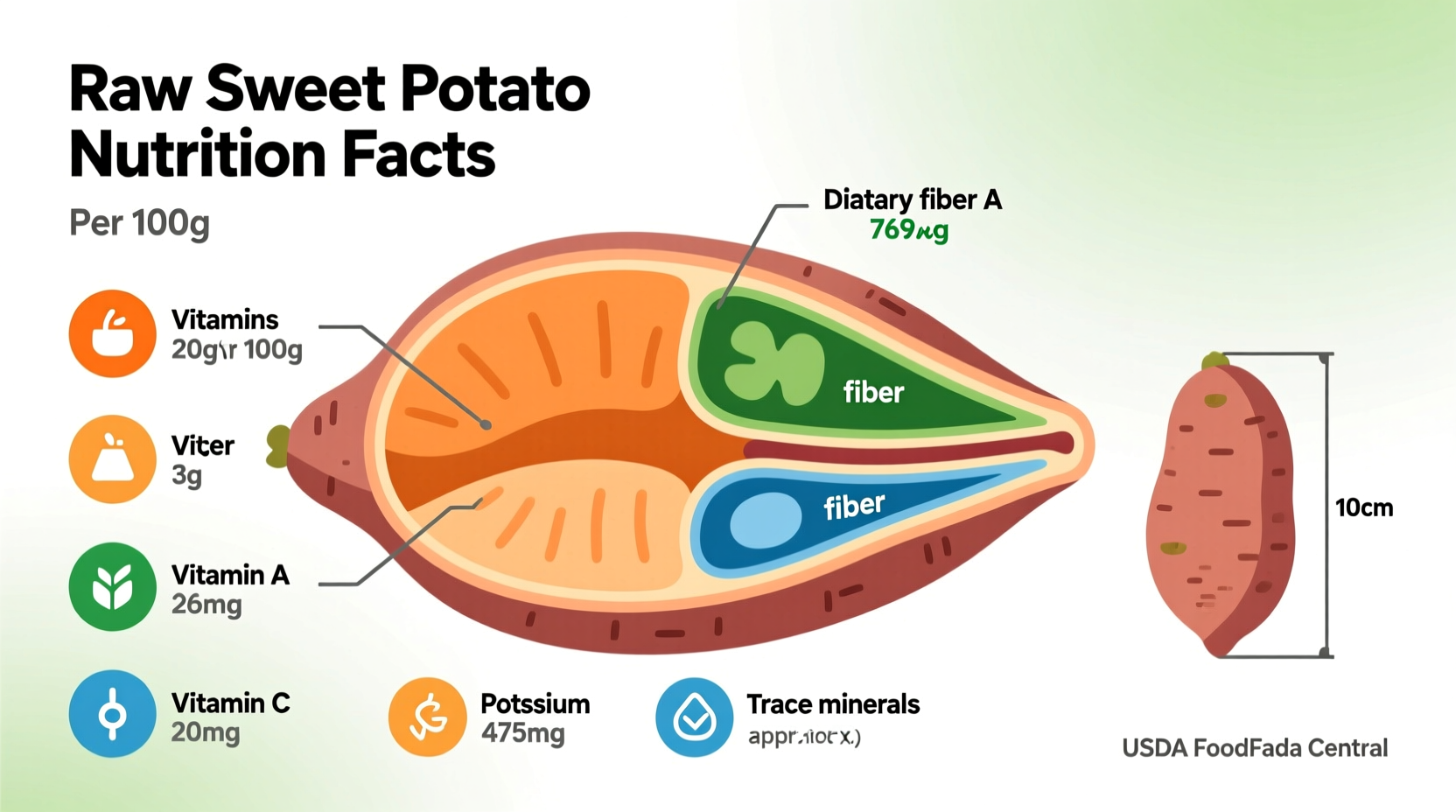
Raw sweet potatoes (*Ipomoea batatas*) are tuberous root vegetables belonging to the Convolvulaceae family. Unlike regular potatoes, which are part of the nightshade family, sweet potatoes are not botanically related to *Solanum tuberosum*. They originate from Central and South America and have been cultivated for over 5,000 years. Today, they are grown globally, with significant production in Africa, Asia, and the southern United States.
The flesh of raw sweet potatoes varies widely by cultivar—common types include orange, purple, and white flesh, each offering distinct phytonutrient profiles. The skin can range from pale beige to deep copper or purple, depending on the variety. In their raw form, sweet potatoes have a firm, starchy texture and a mildly sweet, earthy flavor, though less pronounced than after cooking, which enhances natural sugars through caramelization and enzymatic conversion.
Culinarily, raw sweet potatoes are less commonly consumed directly due to their dense texture and complex starch structure, which benefits from heat-induced gelatinization. However, they appear in grated salads, fermented preparations, and cold-pressed juices where their enzymatic activity and intact nutrients are preserved. From a nutritional standpoint, analyzing the raw state provides a baseline for understanding how preparation methods affect bioavailability and caloric density.
Key Characteristics
| Characteristic | Description |
|---|---|
| Flavor (raw) | Mildly sweet, earthy, with subtle nutty notes; less intense than cooked form. |
| Aroma | Faint, vegetal scent; slightly damp when cut open. |
| Color & Form | Oval to elongated shape; flesh ranges from creamy white to bright orange or deep purple. |
| Texture (raw) | Dense, fibrous, and crisp when thinly sliced; difficult to chew without cooking. |
| Water Content | Approximately 77% water, contributing to moderate calorie density. |
| Culinary Function | Starchy base ingredient; source of complex carbs, fiber, and antioxidants. |
| Shelf Life (raw) | 3–5 weeks at cool room temperature (55–60°F); avoid refrigeration to prevent hard core formation. |
Macronutrient Breakdown per 100g Raw Sweet Potato
All values below are based on USDA FoodData Central data for raw, unpeeled orange-fleshed sweet potato (most common commercial type). These figures serve as a reliable benchmark for dietary tracking and recipe formulation.
- Calories: 86 kcal
- Protein: 1.6 g
- Total Fat: 0.1 g
- Carbohydrates: 20.1 g
- Dietary Fiber: 3.0 g (12% DV)
- Sugars: 4.2 g (naturally occurring glucose, fructose, sucrose)
- Net Carbs: 17.1 g
The carbohydrate content is dominated by starches, particularly amylose and amylopectin, which break down slowly during digestion, resulting in a moderate glycemic index (GI) of around 44–50 when boiled. Raw, the GI is effectively lower due to incomplete gelatinization of starch, meaning slower glucose release if consumed uncooked (e.g., finely grated).
Tip: For low-glycemic meal planning, pair raw sweet potato with healthy fats (like avocado or olive oil) and acidic components (lemon juice or vinegar), which further slow carbohydrate absorption.
Vitamins & Minerals: A Micronutrient Powerhouse
Raw sweet potatoes excel in micronutrient density, particularly in vitamins critical for immune support, vision, and cellular protection.
Vitamin A (as Beta-Carotene)
Orange-fleshed varieties are exceptionally rich in beta-carotene, a provitamin A carotenoid. One hundred grams of raw sweet potato provides approximately 14,187 IU of vitamin A (284% of the Daily Value). This compound acts as a powerful antioxidant and converts to retinol in the body, supporting eye health, skin integrity, and immune regulation. Notably, cooking increases bioavailability of beta-carotene by breaking down cell walls, but raw consumption still offers substantial intake, especially when combined with fat for absorption.
Vitamin C
With 2.4 mg per 100g, raw sweet potatoes contribute modest amounts of vitamin C—an essential nutrient for collagen synthesis, iron absorption, and antioxidant defense. While not as high as citrus fruits, this level remains meaningful in staple food contexts, particularly in regions where fresh produce access is limited.
B Vitamins
- Vitamin B6 (Pyridoxine): 0.21 mg (11% DV) – supports neurotransmitter synthesis and homocysteine metabolism.
- Pantothenic Acid (B5): 0.8 mg (16% DV) – involved in fatty acid metabolism and hormone production.
- Thiamine (B1): 0.08 mg (7% DV) – aids in converting carbs into energy.
Minerals
| Mineral | Amount per 100g | % Daily Value (DV) | Function |
|---|---|---|---|
| Potassium | 337 mg | 7% | Regulates blood pressure, nerve signaling, muscle contractions |
| Manganese | 0.26 mg | 11% | Antioxidant enzyme cofactor, bone development |
| Copper | 0.13 mg | 14% | Iron metabolism, connective tissue formation |
| Iron | 0.6 mg | 3% | Oxygen transport, energy production (non-heme form) |
| Magnesium | 25 mg | 6% | Enzyme activation, muscle relaxation, glucose control |
The mineral profile supports cardiovascular and neurological health, making raw sweet potatoes a functional component in plant-forward diets.
Variants & Types: How Nutritional Profiles Differ
Not all sweet potatoes are nutritionally identical. Flesh color significantly influences phytochemical composition:
Orange-Fleshed Sweet Potatoes
The most widely available type in North America and Europe. Highest in beta-carotene, making it ideal for addressing vitamin A deficiency. Slightly higher in natural sugars compared to other types.
Purple-Fleshed Sweet Potatoes
Rich in anthocyanins—water-soluble pigments with strong antioxidant properties. Studies show these compounds may reduce oxidative stress and inflammation. Lower in beta-carotene but higher in total phenolics. Retain much of their antioxidant capacity even when cooked.
White/Cream-Fleshed Sweet Potatoes
Milder in sweetness, with lower sugar content and minimal beta-carotene. Higher in resistant starch when cooled after cooking, beneficial for gut microbiota. Often preferred in savory applications where color neutrality matters.
| Type | Key Nutrient Strength | Best Used For |
|---|---|---|
| Orange | Vitamin A (beta-carotene) | Immune support, child nutrition, colorful sides |
| Purple | Anthocyanins, antioxidants | Inflammation reduction, vibrant baked goods, smoothies |
| White | Resistant starch potential, low glycemic impact | Low-sugar diets, mashed dishes, gluten-free baking |
Comparison with Similar Ingredients
Sweet potatoes are frequently compared to other root vegetables, but key differences exist in nutrient quality and metabolic effects.
| Feature | Raw Sweet Potato | Raw White Potato | Raw Carrot | Raw Parsnip |
|---|---|---|---|---|
| Calories (per 100g) | 86 | 77 | 41 | 75 |
| Total Carbs | 20.1 g | 17.5 g | 9.6 g | 18.0 g |
| Dietary Fiber | 3.0 g | 2.2 g | 2.8 g | 4.9 g |
| Vitamin A (IU) | 14,187 | 0 | 16,706 | 0 |
| Vitamin C | 2.4 mg | 19.7 mg | 5.9 mg | 17.0 mg |
| Potassium | 337 mg | 421 mg | 320 mg | 375 mg |
| Glycemic Index (boiled) | 44–50 | 78–85 | 39 | 97 |
\"The standout advantage of sweet potatoes lies in their dual provision of complex carbohydrates and disease-fighting phytonutrients. No other common tuber delivers such high levels of vitamin A precursors,\" says Dr. Lena Torres, registered dietitian and researcher in plant-based nutrition.
While carrots rival sweet potatoes in beta-carotene, they lack the same energy density and satiety factor. White potatoes offer more potassium and vitamin C but lack carotenoids and have a far higher glycemic response. Parsnips, though fiber-rich, contain almost no vitamin A and spike blood sugar dramatically when cooked.
Practical Usage: Incorporating Raw Sweet Potatoes in Cooking
Though typically cooked, raw sweet potatoes can be used creatively in specific preparations:
Grated in Salads
Finely grate raw sweet potato using a box grater or food processor. Toss immediately with lemon juice or vinegar to prevent oxidation. Combine with shredded cabbage, apple, toasted nuts, and a tahini-lemon dressing for a crunchy, nutrient-packed slaw. The raw starch adds a clean bite and prolonged fullness.
Juicing & Blending
Add small chunks (½ inch) of peeled raw sweet potato to vegetable juices or green smoothies. It imparts mild sweetness and thickens texture without dairy. Pair with kale, ginger, apple, and chia seeds for balanced macronutrients. Limit to ¼ cup per serving to avoid excessive carbohydrate load.
Fermented Preparations
In lacto-fermented recipes, raw sweet potato slices can be brined with salt, garlic, and spices. Over 3–7 days, beneficial bacteria convert some sugars into lactic acid, enhancing digestibility and increasing probiotic content. This method preserves fiber while introducing gut-supportive microbes.
Dehydrated Chips
Use a mandoline to slice raw sweet potato paper-thin. Soak briefly in lime water or diluted vinegar to enhance crispness. Dehydrate at 115°F for 6–8 hours until brittle. Season lightly with sea salt and smoked paprika. These retain more enzymes than fried versions and offer a shelf-stable snack option.
Pro Tip: To maximize nutrient uptake from raw sweet potatoes, always consume with a source of fat (e.g., olive oil, avocado, nuts). Fat-soluble vitamins like A require lipids for optimal absorption.
Storage & Shelf Life Best Practices
Proper storage maintains nutritional quality and prevents spoilage:
- Store in a cool, dry, dark place between 55–60°F (13–15°C). Avoid refrigeration, which causes irreversible hardening of the core and off-flavors upon cooking.
- Keep unwashed until use; soil helps protect against moisture loss and mold.
- Do not store near onions, which emit gases that accelerate sprouting.
- Inspect weekly; remove any soft or moldy specimens to prevent spread.
- Expected shelf life: 3–5 weeks under ideal conditions.
If you must refrigerate (e.g., in hot climates), allow sweet potatoes to return to room temperature before cooking to restore texture.
Substitutions & Dietary Considerations
In raw applications, acceptable substitutes depend on desired outcome:
- For crunch and mild sweetness: Jicama, carrot, or daikon radish.
- For thickening smoothies: Raw plantain or cooked-and-chilled cauliflower.
- For fermenting: Raw beetroot or turnip offer similar textures but different flavors.
For individuals managing diabetes or insulin resistance, portion control is crucial—even raw sweet potatoes contain significant carbohydrates. A standard serving size is ½ cup grated (about 60g), providing ~50 calories and 12g carbs. Monitor individual glucose responses using continuous monitoring if necessary.
FAQs: Common Questions Answered
Can you eat raw sweet potatoes safely?
Yes, in moderation and properly prepared. Unlike white potatoes, sweet potatoes do not contain solanine, making them non-toxic when raw. However, their high starch content makes them harder to digest uncooked. Grating, juicing, or fermenting improves tolerability.
Does cooking destroy nutrients in sweet potatoes?
Some losses occur—especially water-soluble vitamin C—but cooking increases the availability of others, notably beta-carotene. Boiling leaches more nutrients into water than steaming or roasting. Minimal processing preserves the widest spectrum of compounds.
Are raw sweet potatoes low-carb?
No. At 20g of carbohydrates per 100g, they are not suitable for strict ketogenic diets. However, their fiber content and low glycemic impact make them appropriate for moderate-low carb or balanced omnivorous/plant-based plans.
Is the skin edible and nutritious?
Yes. The skin contains additional fiber, antioxidants, and polyphenols. Wash thoroughly under running water and scrub with a brush before use. Organic sources minimize pesticide exposure risk.
How does growing region affect nutrition?
Soil composition, sunlight exposure, and harvest time influence nutrient density. Sweet potatoes grown in selenium-rich soils may have enhanced antioxidant profiles. Those harvested at peak maturity show higher carotenoid concentrations.
Summary & Key Takeaways
Raw sweet potatoes are a nutritionally robust staple with exceptional vitamin A content, moderate complex carbohydrates, and valuable fiber. Their dense starch structure makes them more commonly consumed cooked, but strategic raw uses—such as in slaws, ferments, and blended dishes—can preserve enzymes and provide textural contrast.
Key highlights include:
- One of the best plant-based sources of beta-carotene, vital for vision and immunity.
- Higher in fiber and lower on the glycemic scale than white potatoes.
- Varietal differences matter: orange for vitamin A, purple for antioxidants, white for neutral flavor.
- Must be paired with fat for optimal nutrient absorption.
- Improper storage leads to quality degradation; never refrigerate unless unavoidable.
Action Step: Try incorporating ½ cup of finely grated raw sweet potato into your next salad or grain bowl. Notice the texture, sweetness, and satiety effect. Track how it fits within your daily carbohydrate goals and energy levels.
Understanding the full nutritional profile of raw sweet potatoes empowers informed choices in meal design, whether aiming for athletic performance, metabolic balance, or simply expanding culinary repertoire with wholesome ingredients.









