
French Onion Soup, a classic French bistro staple, is celebrated for its rich umami depth, caramelized sweetness, and comforting warmth. While often perceived as indulgent due to its cheese-topped crouton and buttery broth, the dish offers nuanced nutritional value that varies significantly based on preparation methods, ingredients, and portion size. Understanding the nutritional profile of French Onion Soup empowers home cooks and diners to enjoy it mindfully—balancing flavor with dietary goals. This detailed analysis breaks down the soup’s macronutrient composition, micronutrient contributions, sodium content, and potential modifications for low-sodium, vegetarian, or lower-calorie diets.
Definition & Overview
French Onion Soup (Soupe à l’oignon) originates in 18th-century France, traditionally crafted from slowly caramelized onions simmered in beef broth, seasoned with thyme and bay leaf, and finished under the broiler with a toasted baguette slice topped with melted Gruyère or Emmental cheese. The slow-cooking process transforms raw onions into a deeply savory, almost sweet base, forming a broth that is both aromatic and satisfying. Despite its rustic appearance, the soup relies on precise technique: time, temperature, and ingredient quality define its success.
Culinarily, French Onion Soup functions as a starter or light main course, frequently served in oven-safe crocks to maintain heat and facilitate the final broiling step. Its appeal lies not only in flavor but in texture—the contrast between silky onions, robust broth, crisp bread, and gooey cheese creates a multi-sensory experience. Nutritionally, it straddles the line between nourishing and decadent, depending on how it's prepared.
Key Characteristics
| Characteristic | Detail |
|---|---|
| Flavor Profile | Savory, umami-rich, subtly sweet from caramelization, with herbal notes and salty-cheesy finish |
| Aroma | Deeply aromatic, with toasted onion, browned butter, and warm broth notes |
| Color | Amber to deep golden-brown from caramelized onions |
| Texture | Smooth broth with soft onions, topped with crisp bread and molten cheese |
| Culinary Function | Appetizer, comfort food, showcase for slow-cooked aromatics and broth refinement |
| Shelf Life (Refrigerated) | 3–4 days (without toppings); cheese topping should be added fresh |
| Freezable | Yes (broth and onions), though texture may soften slightly upon thawing |
Nutritional Breakdown (Standard Serving)
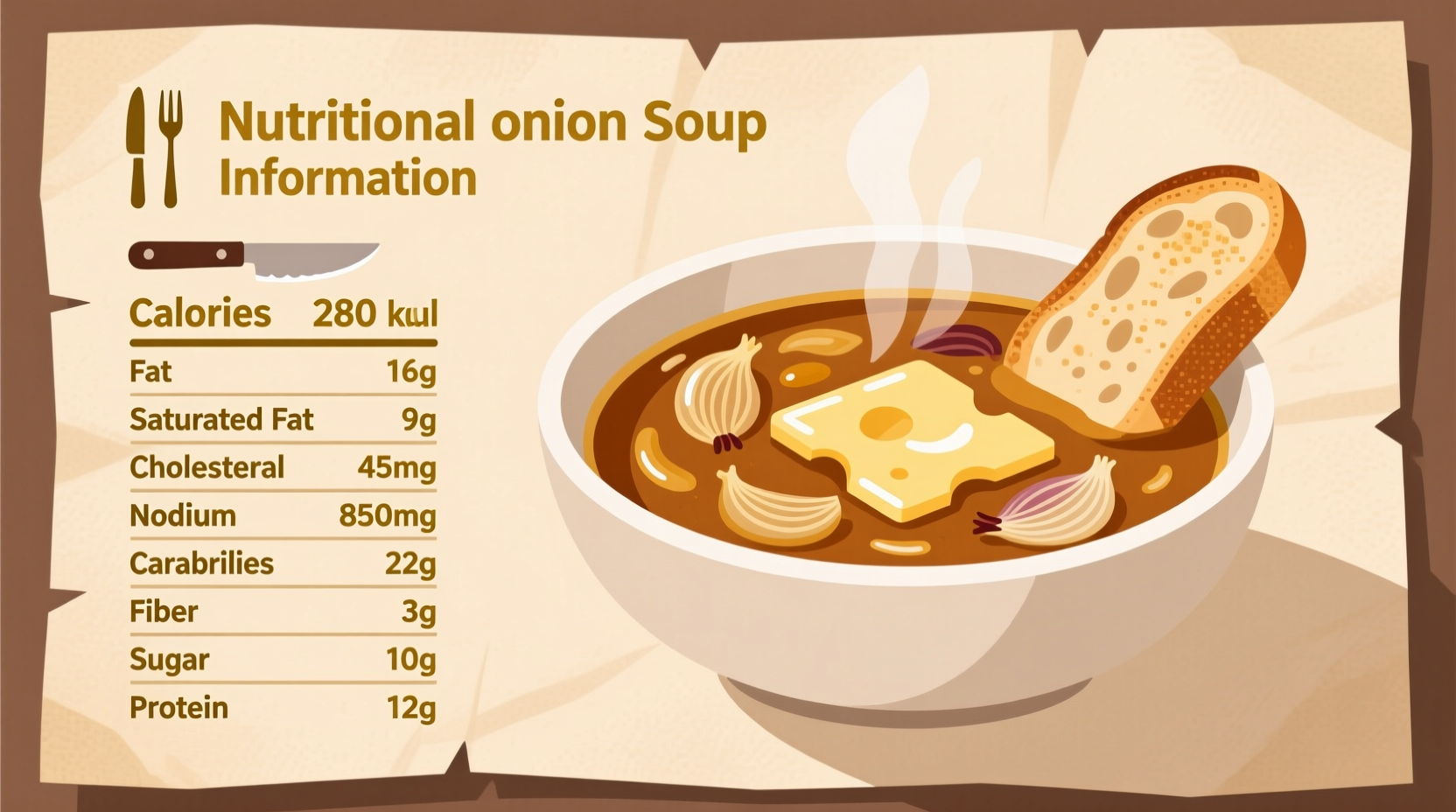
A typical 1-cup (240ml) serving of restaurant-style French Onion Soup, including broth, onions, 1 oz melted cheese, and 1 oz toasted baguette, contains approximately:
- Calories: 190–250 kcal
- Total Fat: 12–16 g (of which 7–9 g saturated fat)
- Cholesterol: 30–40 mg
- Sodium: 800–1,500 mg (highly variable)
- Carbohydrates: 14–18 g (including 6–8 g natural sugars from onions)
- Dietary Fiber: 2–3 g
- Protein: 6–9 g
The majority of calories derive from fat (cheese and butter used in sautéing) and carbohydrates (bread and natural sugars in onions). Protein comes primarily from the cheese and any meat-based stock. Sodium levels are notably high, largely due to concentrated broth and salted cheese.
Macronutrient Sources and Impact
Fats
The fat content in French Onion Soup is dominated by saturated fats from cheese and butter. However, when prepared with care, some of the fat can come from healthier sources if olive oil is used instead of butter for caramelizing onions. Gruyère cheese contributes conjugated linoleic acid (CLA), a fatty acid studied for potential metabolic benefits, though in modest amounts per serving.
Carbohydrates
Onions are the primary carbohydrate source. A medium yellow onion contains about 9 grams of carbohydrates, mostly in the form of fructose, glucose, and sucrose. Slow caramelization breaks down these sugars, enhancing sweetness while reducing overall volume through evaporation. The baguette adds refined carbohydrates, contributing to the glycemic load—approximately 12–15g per 1-ounce slice.
Protein
Protein content remains moderate. Beef broth provides small amounts of collagen-derived peptides, while cheese contributes casein and whey proteins. Vegetarian versions using mushroom or vegetable broth may reduce protein unless fortified with legumes or nutritional yeast.
Micronutrient Contributions
Despite its reputation as a rich comfort food, French Onion Soup delivers several beneficial micronutrients:
- Vitamin C: Onions retain some vitamin C after cooking (about 8–10 mg per cup), supporting immune function and collagen synthesis.
- B Vitamins: Thiamine (B1), folate (B9), and pyridoxine (B6) are present in onions; beef broth adds B12 and niacin (B3).
- Potassium: Approximately 200–300 mg per serving, aiding fluid balance and blood pressure regulation.
- Calcium: From cheese (about 200 mg per ounce of Gruyère), contributing to bone health.
- Antioxidants: Onions are rich in quercetin, a flavonoid with anti-inflammatory and antihistamine properties. Cooking enhances quercetin bioavailability.
“Quercetin in onions has been linked to reduced oxidative stress and improved cardiovascular markers. The slow caramelization process doesn’t destroy this compound—it actually makes it more accessible.” — Dr. Elena Moreau, Nutritional Biochemist, Institut de la Nutrition, Lyon
Variants & Types
Different versions of French Onion Soup alter the nutritional profile significantly. Choosing the right variant allows adaptation to dietary needs without sacrificing authenticity.
Traditional (Beef Broth + Gruyère)
The classic version uses beef stock, butter, yellow onions, white wine, thyme, and Gruyère. Highest in protein and umami, but also highest in saturated fat and sodium. Ideal for those seeking full flavor and no dietary restrictions.
Vegetarian / Vegan
Substitutes beef broth with mushroom, kombu, or miso-based broth. Vegan versions replace cheese with cashew cheese or nutritional yeast blends. Reduces saturated fat and eliminates cholesterol. May lack depth unless umami enhancers (like soy sauce or tomato paste) are used.
TIP: For a vegan French Onion Soup with authentic savoriness, add 1 tsp soy sauce or tamari and 1 tbsp dried porcini powder to the broth. These boost glutamates without overpowering the onion base.
Low-Sodium
Uses homemade low-salt broth or diluted store-bought no-salt-added stock. Cheese is reduced or replaced with a lower-sodium variety like part-skim mozzarella. Salt is added only at the end, allowing control over intake. Sodium can be reduced to 400–600 mg per serving.
Light / Lower-Calorie
Minimizes butter, uses lean broth skimmed of fat, reduces cheese to ½ oz, and omits the bread or replaces it with a whole-grain crouton. Calories drop to 130–160 per serving. Flavor depth is preserved through extended caramelization and aromatic herbs.
Comparison with Similar Dishes
French Onion Soup is often compared to other onion-based soups, but key differences exist in nutrition and technique.
| Soup Type | Broth Base | Fat Source | Sodium (approx.) | Calories (per cup) |
|---|---|---|---|---|
| French Onion Soup (Traditional) | Beef or veal stock | Butter, Gruyère cheese | 1,200 mg | 230 |
| Onion and Leek Soup (Cream-Based) | Vegetable stock + cream | Cream, butter | 900 mg | 280 |
| German Zwiebelsuppe | Beef broth + beer | Butter, Emmental | 1,000 mg | 210 |
| Chinese Congee with Fried Onions | Rice porridge + soy sauce | Fried shallots (oil) | 1,400 mg | 200 |
While all are onion-forward, French Onion Soup stands out for its emphasis on slow caramelization and cheese crust rather than cream or starch. It is generally lower in calories than cream-based versions but comparable in sodium to processed alternatives.
Practical Usage & Dietary Adaptations
Home cooks can modify French Onion Soup to align with various health goals without compromising taste. The following guidelines offer actionable strategies:
- Caramelize Low and Slow: Use medium-low heat and 45–60 minutes to develop sweetness naturally, reducing need for added sugar or salt.
- Choose Broth Wisely: Opt for low-sodium, grass-fed beef broth or make your own. For vegetarians, use roasted mushroom broth.
- Control Fat: Replace half the butter with olive oil. Reduce cheese to ½ oz per serving and use strong-flavored aged Gruyère for maximum impact.
- Enhance Fiber: Add diced leeks or celery during sautéing. Serve with a side salad to increase satiety and nutrient density.
- Manage Portions: Serve in 1-cup portions as an appetizer rather than a main. Pair with a protein-rich second course to balance the meal.
Pairing Suggestions
- With Salad: Mixed greens with vinaigrette offset richness and add fiber.
- With Whole Grains: A slice of sourdough or rye bread complements without overloading on refined carbs.
- Wine Pairing: Dry white (Chardonnay) or light red (Pinot Noir) aids digestion and balances saltiness.
Storage, Shelf Life, and Reheating Tips
French Onion Soup stores well, but proper handling preserves flavor and safety:
- Refrigeration: Store broth and onions separately from toppings. Keeps 3–4 days in airtight containers.
- Freezing: Freeze the base (broth and onions) for up to 3 months. Thaw overnight in refrigerator before reheating.
- Reheating: Warm gently over medium heat. Avoid boiling to preserve texture. Top with fresh bread and cheese just before serving.
- Reviving Flavor: Add a splash of dry white wine or lemon juice to brighten stored soup.
Practical Tips & FAQs
Q: Is French Onion Soup healthy?
A: It can be, depending on preparation. Homemade versions with controlled sodium, reduced fat, and quality ingredients offer antioxidants and moderate protein. Restaurant versions are often high in salt and fat, so consume mindfully.
Q: How can I reduce sodium without losing flavor?
A: Use homemade broth, enhance umami with mushrooms or tomato paste, finish with a splash of vinegar, and season at the table. Fresh herbs like thyme and parsley add brightness without salt.
Q: Can I make French Onion Soup keto-friendly?
A: Yes. Omit the bread or use a keto-approved almond flour crouton. Focus on high-fat, low-carb elements—use plenty of butter and full-fat cheese. Net carbs will be under 10g per serving.
Q: Is it suitable for heart-healthy diets?
A: Modified versions can fit. Use olive oil, limit cheese, choose lean broth, and keep sodium under 600mg. The quercetin in onions supports vascular health, making it a functional food when balanced.
Q: How do I make it gluten-free?
A: Use a gluten-free baguette or omit the bread entirely. Some chefs use a Parmesan crisp as a crunchy, gluten-free alternative to toast.
Q: Does cooking destroy nutrients in onions?
A: Some vitamin C is lost, but quercetin and sulfur compounds become more bioavailable. Long cooking increases antioxidant activity, even as certain vitamins degrade.
PRO TIP: Save time without sacrificing quality: caramelize onions in advance and freeze in 2-cup portions. They defrost quickly and maintain texture, making weeknight French Onion Soup feasible.
Summary & Key Takeaways
French Onion Soup is more than a nostalgic comfort dish—it is a study in culinary transformation and nutritional nuance. When prepared thoughtfully, it delivers antioxidants, moderate protein, and gut-supportive compounds from slow-cooked alliums. Key takeaways include:
- The soup’s high sodium and saturated fat content are modifiable through ingredient choices and technique.
- Caramelized onions provide quercetin and fiber, offering anti-inflammatory benefits.
- Variants exist for vegetarian, vegan, low-sodium, gluten-free, and keto diets.
- Homemade versions allow complete control over nutrition, unlike many restaurant renditions.
- Proper storage and reheating preserve quality and minimize waste.
By understanding the nutritional information behind French Onion Soup, cooks and consumers gain the power to enjoy this timeless dish as both a sensory delight and a mindful component of a balanced diet. Whether served as a starter in a three-course meal or warmed on a winter evening, its legacy endures—not just for its flavor, but for its adaptability to modern wellness priorities.
Experiment with one modification—lower sodium, plant-based broth, or reduced cheese—and rediscover French Onion Soup as a nourishing, contemporary classic.








