Potatoes are often misunderstood—wrongly labeled as empty carbohydrates or diet pitfalls—but when examined through a nutritional lens, they emerge as one of the most nutrient-dense, versatile, and accessible vegetables in the global food supply. Far from being mere starch vehicles, whole, unprocessed potatoes deliver a remarkable profile of essential vitamins, minerals, fiber, and plant compounds that support long-term health. Understanding their true nutritional value allows home cooks, health-conscious eaters, and culinary professionals to make informed choices about incorporating them into balanced diets.
With rising interest in plant-forward eating and affordable nutrition, the potato stands out not only for its economic accessibility but also for its contribution to satiety, digestive health, and metabolic function. This article explores the science-backed benefits of potatoes, breaks down their macronutrient and micronutrient composition, compares varieties, and provides practical guidance on preparing them to maximize nutritional yield without sacrificing flavor or texture.
Definition & Overview
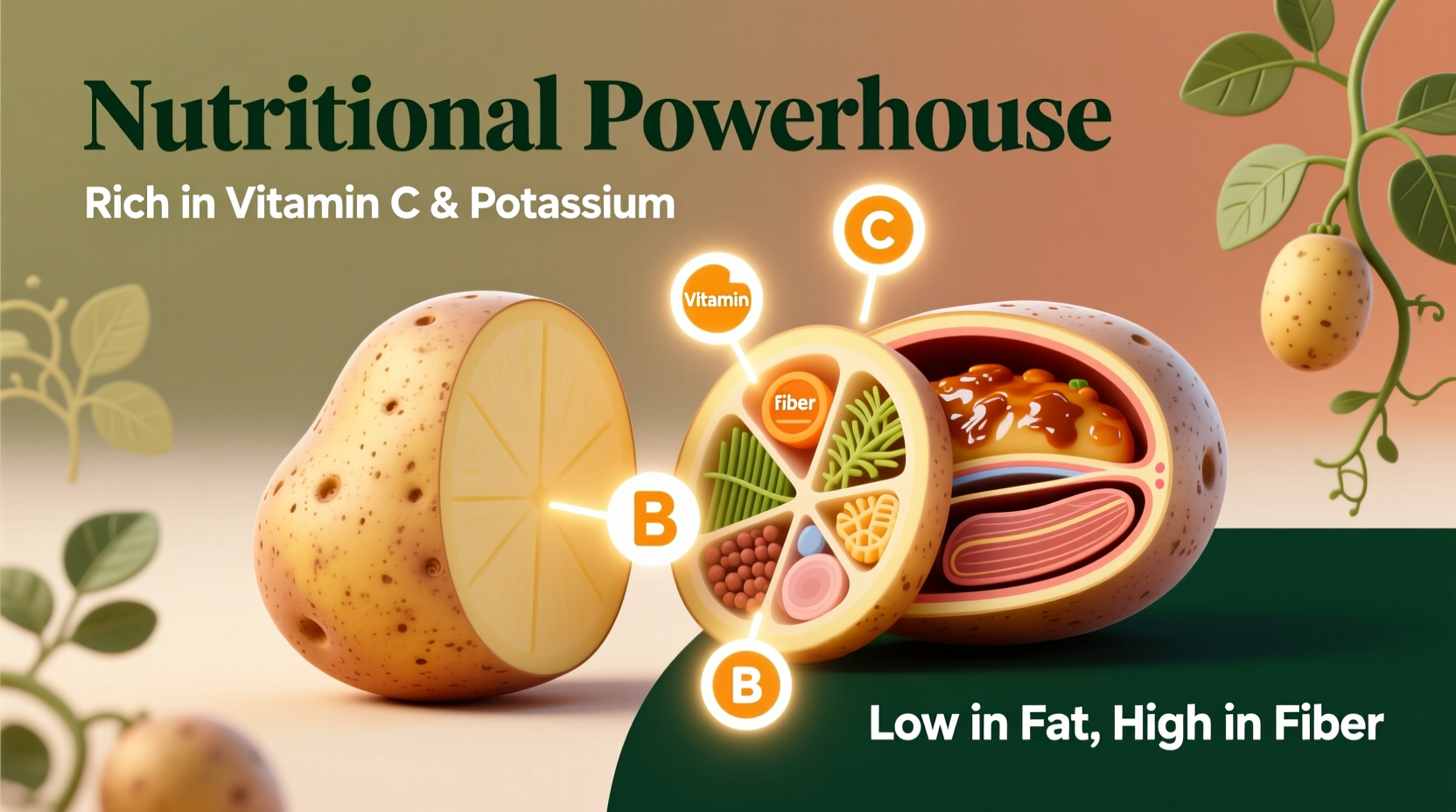
The potato (Solanum tuberosum) is a starchy tuber vegetable native to the Andes Mountains of South America, where it was first domesticated over 7,000 years ago. Today, it ranks among the top five staple crops worldwide, following rice, wheat, maize, and cassava. Botanically classified as a nightshade, the edible portion grows underground as a modified stem known as a tuber, storing energy for the plant in the form of carbohydrates—primarily amylose and amylopectin starches.
Culinarily, potatoes are prized for their neutral flavor, creamy texture when cooked, and ability to absorb seasonings. They serve both functional and structural roles in cooking: thickening soups, adding bulk to stews, forming the base of pancakes and dumplings, or standing alone as a side dish. Their adaptability spans boiling, roasting, mashing, frying, baking, and grilling.
Despite misconceptions linking them to weight gain or blood sugar spikes, potatoes—in their whole, minimally processed form—are naturally fat-free, cholesterol-free, and low in sodium. When prepared wisely, they offer sustained energy, high satiety, and an impressive array of nutrients per calorie.
Key Characteristics
- Flavor: Mild, earthy, slightly sweet; varies subtly by variety (e.g., Yukon Golds are buttery, red bliss are waxy and clean)
- Aroma: Subtle when raw; develops nutty, roasted notes when baked or seared
- Color/Form: Skin ranges from white, yellow, red, purple, to blue; flesh matches or contrasts skin color
- Texture: Ranges from mealy (high-starch, fluffy when cooked) to waxy (low-starch, firm/creamy)
- Heat Level: Not applicable—non-pungent, non-spicy
- Culinary Function: Thickener, binder, filler, side dish, main component in vegetarian/vegan plates
- Shelf Life: 1–3 months at cool room temperature (45–55°F / 7–13°C); shorter if exposed to light or warmth
| Nutrient | Amount | % Daily Value (DV) |
|---|---|---|
| Calories | 130 kcal | — |
| Carbohydrates | 29 g | 10% |
| Dietary Fiber | 2.6 g | 9% |
| Protein | 3.6 g | 7% |
| Fat | 0.2 g | 0% |
| Vitamin C | 27 mg | 30% |
| Vitamin B6 | 0.4 mg | 20% |
| Potassium | 620 mg | 18% |
| Magnesium | 48 mg | 12% |
| Folate (B9) | 46 mcg | 12% |
| Iron | 1.9 mg | 10% |
Practical Usage: How to Use Potatoes for Maximum Nutritional Benefit
The way potatoes are prepared dramatically affects their nutritional impact. While deep-frying diminishes health benefits, certain cooking methods actually enhance nutrient availability and improve glycemic response.
Retain the Skin
Up to 50% of a potato’s fiber and many phytonutrients reside just beneath the skin. Always wash and cook with the skin on whenever possible. A scrubbed, boiled russet with skin delivers nearly twice the fiber of a peeled version.
Cool Before Eating (Resistant Starch Boost)
Cooking and then cooling potatoes increases their resistant starch content—a type of fiber that resists digestion in the small intestine and feeds beneficial gut bacteria. Cold potato salad made with olive oil has a significantly lower glycemic index than hot mashed potatoes.
“Allowing cooked potatoes to cool for several hours can transform up to 13% of their digestible starch into resistant starch. Reheating doesn’t eliminate this benefit—it remains largely intact.” — Dr. Joanne Slavin, Registered Dietitian and Researcher in Dietary Fiber
Pair with Healthy Fats and Acids
Combine potatoes with ingredients that slow glucose absorption:
- Add vinegar or lemon juice to potato salads
- Toss roasted potatoes with extra virgin olive oil
- Top baked potatoes with Greek yogurt or avocado
Use in Balanced Meals
Instead of serving potatoes as a standalone starch, integrate them into mixed dishes:
- Add diced sweet and white potatoes to lentil stews
- Incorporate mashed potatoes into whole-grain shepherd’s pie topping
- Roast fingerlings alongside salmon and leafy greens
Pro Tip: For optimal digestion and blood sugar control, combine ½ cup of cooked potatoes with 3 oz of lean protein and 1 cup of non-starchy vegetables. This plate model supports sustained energy and fullness.
Variants & Types: Choosing the Right Potato for Nutrition and Texture
Over 4,000 varieties of potatoes exist globally, but most fall into three main categories based on starch content and moisture. Selecting the right type influences both culinary outcome and nutritional delivery.
| Type | Starch Level | Texture When Cooked | Nutritional Highlights | Best Cooking Methods |
|---|---|---|---|---|
| Russet (Idaho) | High | Fluffy, dry | High in potassium and vitamin C; excellent for satiety | Baking, mashing, frying |
| Yukon Gold | Medium | Buttery, creamy | Naturally rich in carotenoids (yellow pigments with antioxidant properties) | Boiling, roasting, gratins |
| Red Bliss | Low | Firm, waxy | High skin-to-flesh ratio = more fiber and polyphenols | Salads, steaming, sautéing |
| Fingerling | Low-Medium | Dense, nutty | Concentrated antioxidants, especially in purple/blue varieties | Rosting, grilling, pan-searing |
| Sweet Potato | Medium | Moist, sweet | Exceptionally high in beta-carotene (vitamin A precursor), fiber | Baking, mashing, roasting |
Purple and blue potatoes deserve special mention: their vibrant hues come from anthocyanins—potent antioxidants linked to reduced inflammation and improved cognitive function. Studies show these pigments may help protect against oxidative stress and cardiovascular disease.
Comparison with Similar Ingredients
Potatoes are frequently compared—and often unfavorably contrasted—with other starchy staples. However, objective analysis reveals distinct advantages.
| Food | Calories | Protein (g) | Fiber (g) | Potassium (mg) | Vitamin C (mg) |
|---|---|---|---|---|---|
| White Potato | 87 | 2.0 | 2.2 | 421 | 19.7 |
| White Rice (long grain) | 130 | 2.7 | 0.4 | 35 | 0 |
| Pasta (whole wheat) | 124 | 4.2 | 3.6 | 83 | 0 |
| Quinoa | 120 | 4.1 | 2.8 | 172 | 0 |
| Sweet Potato | 86 | 1.6 | 3.0 | 337 | 12.8 |
- Potato vs. White Rice: Potatoes contain 10x more potassium and all the vitamin C, which rice lacks entirely. They also provide more fiber despite similar calorie counts.
- Potato vs. Whole Grains: While quinoa and whole wheat pasta offer more protein and fiber, potatoes uniquely deliver vitamin C and higher bioavailable potassium.
- Potato vs. Sweet Potato: Both are nutritious, but white potatoes have slightly more protein and potassium; sweet potatoes lead in vitamin A. Neither is inherently superior—the key is diversity.
Practical Tips & FAQs
Are potatoes bad for blood sugar?
Not necessarily. The glycemic index (GI) of potatoes varies widely by type and preparation. Cooling, pairing with fat/acid, and eating with fiber-rich foods lowers the overall glycemic load. For example, cooled new potatoes in vinaigrette have a GI around 50–60, comparable to brown rice.
Can you eat potatoes on a weight-loss diet?
Yes, when consumed in moderation and prepared healthily. Potatoes rank extremely high on the satiety index—more filling per calorie than almost any other common food. A study published in the European Journal of Clinical Nutrition found boiled potatoes were 300% more satiating than white bread.
How should I store potatoes?
Keep in a cool, dark, well-ventilated place (ideal: 45–50°F / 7–10°C). Never refrigerate unless cooked—cold temps increase reducing sugars, leading to acrylamide formation during high-heat cooking. Avoid storing near onions, which emit gases that accelerate sprouting.
Are green spots on potatoes dangerous?
Yes. Green discoloration indicates chlorophyll development and often coincides with elevated levels of solanine, a natural toxin. Peel deeply or discard green areas entirely. Do not consume sprouted or shriveled potatoes with extensive greening.
What’s the healthiest way to cook potatoes?
- Steam or boil with skin on – preserves water-soluble vitamins and maximizes fiber retention
- Cool before consumption – boosts resistant starch
- Roast at moderate heat (≤400°F) – minimizes acrylamide vs. frying
- Avoid deep-frying – adds unhealthy fats and calories; creates harmful compounds
Are instant or processed potato products nutritious?
No. Instant mashed potatoes, tater tots, and chips often contain added sodium, preservatives, and trans fats. They lack fiber and key nutrients due to processing. Opt for whole, fresh potatoes whenever possible.
Storage Checklist:
- Store in burlap or paper bag (not plastic)
- Check weekly for soft spots or sprouting
- Do not wash until ready to use
- Keep away from sunlight to prevent greening
- Discard if musty odor or excessive wrinkling occurs
Summary & Key Takeaways
Potatoes are far more than simple starch—they are nutrient-rich vegetables offering significant amounts of vitamin C, potassium, fiber, and plant-based protein. When prepared mindfully, they contribute positively to heart health, digestive wellness, and appetite regulation.
- Nutrient Powerhouse: A single medium potato provides 30% of daily vitamin C, 20% of vitamin B6, and more potassium than a banana.
- Gut-Friendly: Cooling cooked potatoes increases resistant starch, promoting a healthy microbiome.
- Variety Matters: Choose types based on desired texture and nutritional goals—red and purple varieties offer unique antioxidants.
- Preparation Is Key: Steaming, boiling, and roasting preserve nutrients; frying and heavy processing diminish value.
- Balanced Integration: Pair potatoes with protein, healthy fats, and vegetables to stabilize blood sugar and enhance meal satisfaction.
Far from a dietary liability, the humble potato—when respected as a whole food—can be a cornerstone of economical, sustainable, and nourishing eating patterns. By shifting perception from “empty carb” to “nutrient vector,” consumers and chefs alike can harness its full potential in modern, health-focused cuisine.
Next time you plan a meal, consider starting with a potato—not as a side, but as a foundation. Roast a tray of mixed-color fingerlings with herbs and olive oil, or blend cooled Yukon Golds into a hearty grain bowl. Reimagine this ancient crop not as indulgence, but as intelligent nutrition.









