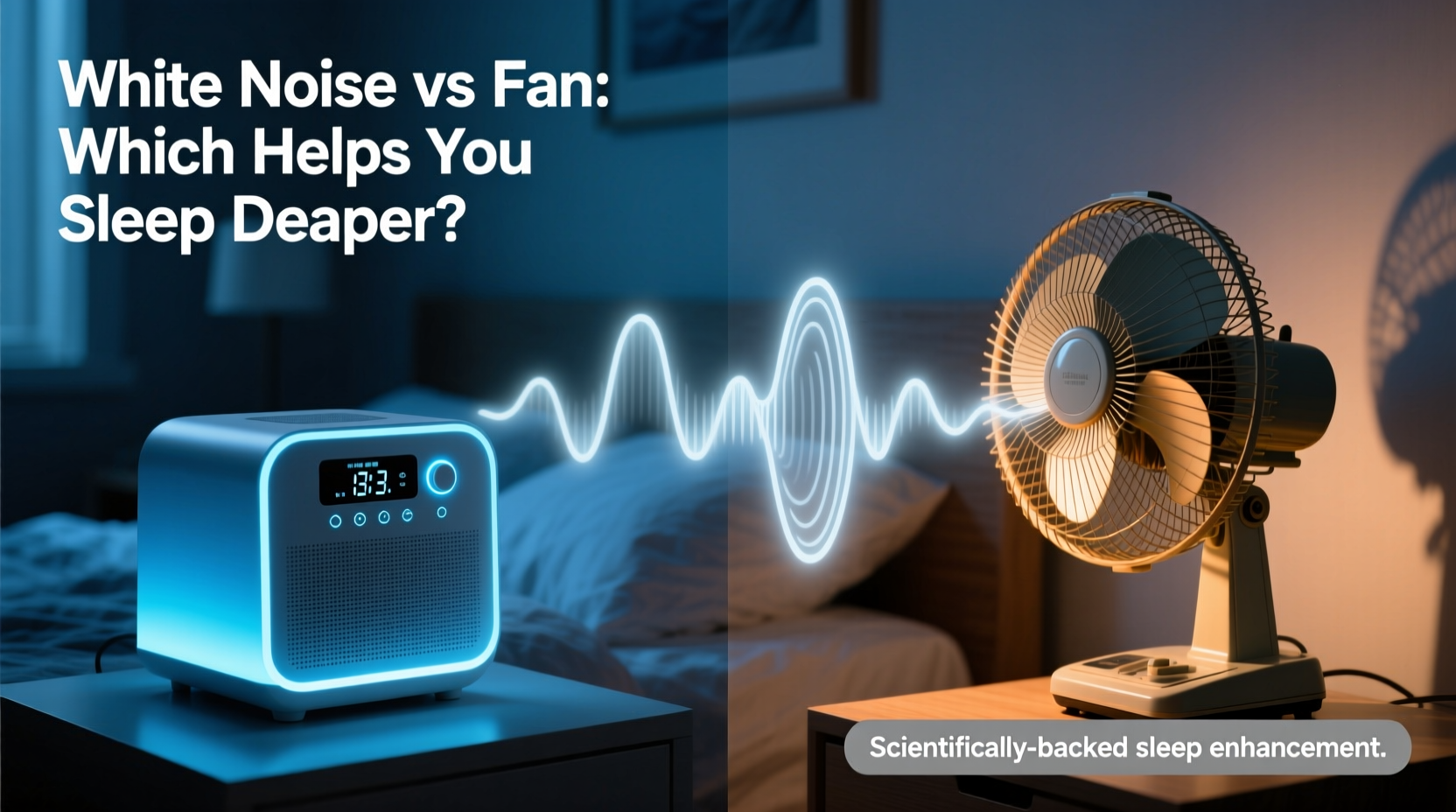
Sleep is not just about duration—it's about depth. One of the most overlooked factors in achieving deep, restorative sleep is sound environment. For decades, people have turned to background noise to drown out disturbances, with two common tools leading the charge: the humble household fan and the modern white noise machine. But which one truly supports deeper sleep? Is the mechanical whir of a fan as effective as the engineered sounds of a dedicated noise machine? The answer isn’t as simple as “one is better.” It depends on sound quality, consistency, frequency range, and personal sensitivity.
This article breaks down the science behind white noise, examines how fans and noise machines generate sound, compares their real-world performance, and offers practical guidance for choosing the right option based on your sleep needs.
Understanding White Noise and Its Role in Sleep
White noise is a type of sound that contains all audible frequencies at equal intensity. Think of it like auditory static—consistent, unchanging, and capable of masking sudden or disruptive noises such as traffic, snoring, or creaking floors. When these unpredictable sounds break through silence, they can trigger micro-arousals in the brain, disrupting the progression into deep (slow-wave) and REM sleep stages.
According to research published in the Journal of Caring Sciences, exposure to consistent white noise reduces the time it takes to fall asleep and decreases nighttime awakenings. This effect is particularly strong in environments with frequent low-level disturbances—like urban apartments or shared households.
“Consistent auditory masking helps stabilize the sleep architecture by reducing sensory interruptions during vulnerable transitions between sleep cycles.” — Dr. Lena Torres, Sleep Neurologist, Stanford Sleep Medicine Center
But not all white noise is created equal. The effectiveness of a sound source depends on its spectral profile—how evenly it distributes frequencies—and its ability to maintain steady output without fluctuations.
Fan-Based White Noise: Pros, Limitations, and Real-World Use
A ceiling or box fan has long been a go-to solution for light sleepers. Its continuous hum provides a form of natural white noise that many find soothing. However, fans are not designed primarily as sound devices—they’re airflow tools, and this shapes their acoustic limitations.
How Fans Generate Sound
Fans produce noise through blade turbulence and motor vibration. The resulting sound tends to be mid- to high-frequency dominant, often peaking around 1,000–3,000 Hz. This creates a narrow band of coverage compared to true broadband white noise. Additionally, fan speed settings offer only coarse control over volume and tone, making fine-tuning difficult.
Pros of Using a Fan
- Cooling benefit: Provides airflow that lowers room temperature, which itself promotes deeper sleep.
- No extra cost: Already present in many homes; no need to purchase additional equipment.
- Natural sound: Some prefer the organic, variable texture of fan noise over artificial tones.
Limitations of Fan Noise
- Inconsistent output: Blade wobble or dust buildup can cause irregular pulsing or rattling.
- Limited frequency range: Lacks low-frequency energy needed to mask bass-heavy disturbances (e.g., thunder, distant traffic).
- Volume constraints: Must run at higher speeds for sufficient noise, which may overcool the room.
- Directional sound: Noise diminishes significantly with distance or if obstructed.
White Noise Machines: Precision, Control, and Customization
Dedicated white noise machines are engineered specifically to optimize sound for sleep. Unlike fans, they use digital signal processing to generate consistent, full-spectrum audio across multiple frequency bands. Many models also offer variations beyond white noise—including pink, brown, and nature sounds—giving users greater flexibility in tailoring their auditory environment.
Types of Noise Profiles Available
| Noise Type | Frequency Emphasis | Best For |
|---|---|---|
| White Noise | Equal across all frequencies | Masks sharp, sudden sounds (door slams, alarms) |
| Pink Noise | More power in lower frequencies | Enhances deep sleep; smoother than white |
| Brown (Red) Noise | Strong low-end, minimal highs | Calming for tinnitus or anxiety; mimics thunder |
| Nature Sounds | Variable, rhythmic patterns | Relaxation, but less consistent for masking |
Studies from the Journal of Clinical Sleep Medicine suggest that pink noise, in particular, can enhance slow-wave sleep activity when played at low volumes during non-REM phases. This makes advanced noise machines—not just white noise generators—potentially more effective for deep sleep support.
Key Advantages of Noise Machines
- Uniform sound distribution: Omnidirectional speakers provide even coverage.
- Adjustable volume and tone: Fine-tune output to match room size and sensitivity.
- Timer functions: Automatically shut off after falling asleep to avoid oversaturation.
- Portability: Compact designs ideal for travel or nursery use.
Direct Comparison: Fan vs. Noise Machine
To determine which option supports deeper sleep, consider the following criteria:
| Feature | Fan | Noise Machine |
|---|---|---|
| Sound Consistency | Low – varies with wear, dust, voltage | High – digitally stabilized output |
| Frequency Range | Narrow – skewed toward mid/highs | Full spectrum – customizable profiles |
| Volume Control | Limited – usually 3 fixed speeds | Precise – adjustable in small increments |
| Energy Efficiency | Moderate – motors consume more power | High – low-wattage electronics |
| Sleep Stage Support | Marginal – mainly helps initial sleep onset | Strong – supports maintenance of deep sleep |
| Cost Over Time | Low upfront, higher long-term energy use | Higher initial cost, minimal operating expense |
The data shows that while fans are accessible and functional for basic noise masking, noise machines outperform them in nearly every category relevant to sustained, high-quality sleep.
Mini Case Study: Sarah’s Shift to Deeper Sleep
Sarah, a 34-year-old nurse working night shifts, struggled with daytime sleep due to neighborhood noise—barking dogs, passing vehicles, and early-morning deliveries. She initially used a box fan near her bed, which helped somewhat but required running at high speed, creating excessive airflow and dryness.
After two weeks of disrupted naps, she invested in a compact noise machine offering pink noise and a timer function. She placed it on a shelf opposite her bed and set it to emit low-volume pink noise for 45 minutes after lying down.
Within five days, Sarah reported fewer awakenings and felt more rested upon waking. A sleep diary revealed an average increase of 47 minutes in deep sleep per session, likely due to reduced auditory interruptions and better alignment with her brain’s natural rhythms.
Choosing the Right Option: A Step-by-Step Guide
Selecting between a fan and a noise machine shouldn’t be arbitrary. Follow this decision framework to match your choice with your sleep goals:
- Assess your sleep environment: Identify primary noise disruptors (e.g., street noise, partner snoring, HVAC systems).
- Determine your sensitivity: Are you awakened by subtle sounds, or do you need loud masking?
- Evaluate room conditions: Do you need cooling, or would airflow disturb your comfort?
- Test available options: Try your fan first; note inconsistencies or gaps in coverage.
- Consider upgrading: If the fan falls short, choose a noise machine with adjustable frequencies and a timer.
- Experiment with sound types: Start with white or pink noise; switch to brown if high frequencies feel harsh.
- Optimize placement: Position the device 4–6 feet from the bed, slightly elevated, avoiding direct airflow or wall reflections.
Common Mistakes to Avoid
- Using maximum volume: Loud noise—even if consistent—can elevate heart rate and prevent deep relaxation.
- Ignoring frequency preferences: Some people find white noise grating; switching to pink or brown can make a dramatic difference.
- Placing devices incorrectly: Corners amplify sound unevenly; center placement ensures balanced coverage.
- Relying solely on nature sounds: Birdsong or ocean waves may be pleasant but lack the steady pressure needed for effective masking.
FAQ
Can white noise become addictive or harmful over time?
No evidence suggests dependency, but prolonged exposure at high volumes (>60 dB) may contribute to auditory fatigue. Use at moderate levels and consider turning it off once asleep using a timer.
Is pink noise better than white noise for deep sleep?
Emerging research indicates yes. Pink noise emphasizes lower frequencies and aligns more closely with the brain’s natural rhythms during slow-wave sleep. Multiple studies show improved memory consolidation and longer deep sleep phases with pink noise exposure.
Do I need a noise machine if I already have a fan?
Only if your current setup doesn’t fully mask disturbances or causes discomfort (e.g., too cold, too loud). Many people combine both—a fan for cooling and a noise machine for optimized sound—but ensure the combined noise isn’t overwhelming.
Final Recommendations and Action Plan
If your goal is deeper, uninterrupted sleep, prioritize consistency and frequency balance in your sound environment. While a fan can serve as a temporary or budget-friendly solution, a dedicated noise machine offers superior control, adaptability, and scientific backing for enhancing sleep depth.
For those sensitive to sound disruptions, investing in a quality device with pink or brown noise capabilities can yield measurable improvements in sleep efficiency and next-day alertness. Pair it with good sleep hygiene—dark room, cool temperature, regular schedule—and you create the ideal foundation for restorative rest.
“The right sound environment doesn’t just help you fall asleep faster—it helps your brain stay in the most regenerative stages longer.” — Dr. Alan Meek, Director of the Pacific Sleep Research Institute
Checklist: Optimizing Your Sleep Sound Environment
- ☑ Identify main sources of nighttime noise
- ☑ Test your current fan’s effectiveness at different speeds
- ☑ Decide whether cooling or sound quality is the priority
- ☑ Choose a noise machine if fan proves insufficient
- ☑ Select a model with pink or brown noise options
- ☑ Set volume to just above ambient noise (not louder)
- ☑ Use a timer to limit playback duration
- ☑ Reassess weekly for two weeks to gauge improvement
Conclusion
When it comes to supporting deeper sleep, the precision and versatility of a white noise machine typically surpass the incidental benefits of a fan. While fans offer cooling and a degree of noise masking, they lack the acoustic sophistication needed to consistently shield the brain from disruptive stimuli throughout the night. Modern noise machines, especially those offering scientifically backed sound profiles like pink and brown noise, are purpose-built tools for optimizing sleep architecture.
Start small: try adjusting your fan’s placement or cleaning its blades. If sleep disruptions persist, consider upgrading to a dedicated device. Your brain spends a third of your life sleeping—give it the quiet, stable environment it needs to recover, restore, and thrive.
💬 Have you switched from a fan to a noise machine—or vice versa? Share your experience and what worked best for your sleep. Your insights could help others find their perfect sound solution.








