
Moonshine carries the weight of myth, memory, and mischief. For generations, it conjured images of hidden cornfields, copper coils draped over mule-drawn wagons, and midnight runs down Appalachian backroads. But today, if you order a “moonshine old-fashioned” at a Brooklyn speakeasy or spot a hand-labeled 100-proof jar on the shelf of a Nashville bottle shop, something fundamental has shifted. Moonshine is no longer defined solely by what it evades—it’s increasingly defined by what it achieves: transparency, terroir, intention, and craftsmanship. The spirit hasn’t just gone legit; it’s undergone a quiet renaissance, one that bridges heritage distilling knowledge with contemporary cocktail culture, regulatory rigor, and consumer demand for authenticity.
The Legal Reckoning: From Prohibition-Era Evasion to Modern Licensing
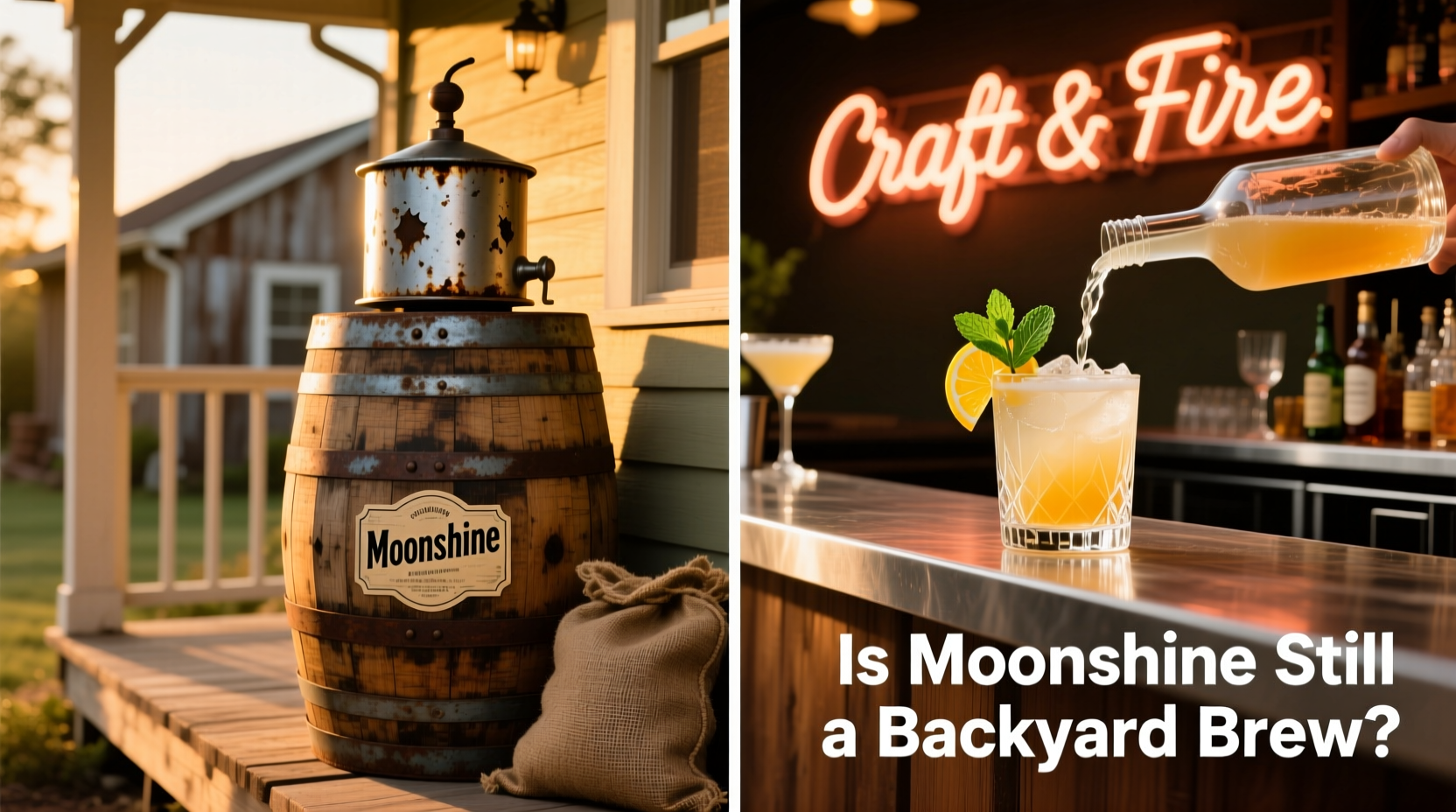
The turning point wasn’t gradual—it was legislative. In 2004, the U.S. Alcohol and Tobacco Tax and Trade Bureau (TTB) issued a formal definition for “moonshine whiskey,” codifying it as a *legal* category: “a clear, unaged whiskey distilled from a fermented mash of not less than 80% corn, bottled at not less than 40% alcohol by volume (80 proof).” This wasn’t an endorsement of lawlessness; it was a regulatory embrace of tradition—provided it complied with federal safety, labeling, and tax requirements.
That definition unlocked doors. Distilleries could now produce and sell moonshine without aging it, preserving its raw, fiery character while operating openly. By 2010, fewer than 20 licensed distilleries in the U.S. produced moonshine. Today, more than 320 do—many clustered in Tennessee, Kentucky, North Carolina, and Georgia, where grain sourcing, water quality, and generational still-handling knowledge converge. These aren’t hobbyists scaling up; they’re certified distillers trained in food science, microbiology, and sensory evaluation, often holding degrees from institutions like the Siebel Institute or the University of Louisville’s Distillation Program.
Tip: When evaluating a modern moonshine, check the label for TTB approval number (e.g., DSP-TN-XXXX), mash bill percentage, and proof—these signal regulatory compliance and production transparency.From Backyard Still to Barrel House: How Production Standards Transformed
Legacy moonshine was judged by two metrics: heat and haste. Modern craft moonshine is assessed across eight: mash consistency, fermentation control, copper contact time, reflux precision, cut accuracy, proofing methodology, filtration integrity, and sensory balance. A single batch may undergo six separate lab analyses before bottling—testing for congeners, esters, fusel oils, and heavy metals.
This rigor reshaped outcomes. Where traditional backyard batches varied wildly in ABV (often 120–190 proof) and carried volatile alcohols that caused headaches, today’s regulated versions maintain consistent proofs (typically 80–125) and employ double or triple distillation with precise “heads, hearts, tails” separation. Many also use charcoal mellowing—a technique historically associated with Tennessee whiskey—to soften harshness without adding color or oak influence.
| Characteristic | Traditional Backyard Moonshine (Pre-2004) | Modern Craft Moonshine (Licensed, Post-2010) |
|---|---|---|
| Regulatory Oversight | None—illegal, untaxed, untested | Federal TTB + state licensing; mandatory lab testing |
| Average Proof Range | 120–190 (often inconsistent) | 80–125 (tightly controlled) |
| Distillation Method | Simplified pot stills; minimal cut control | Hybrid pot/column stills; computer-monitored cuts |
| Grain Sourcing | Local surplus corn, often unmilled | Certified non-GMO heirloom corn; traceable origin |
| Flavor Profile | Aggressively hot, solvent-like, sometimes metallic | Clean, sweet-corn-forward, with notes of vanilla, almond, or toasted grain |
The Cocktail Revolution: Why Bartenders Reached for Moonshine First
Cocktail programs didn’t adopt moonshine because it was novel—they adopted it because it solved real problems. In an era of hyper-seasonal menus and ingredient scarcity, moonshine offered unmatched versatility: zero barrel aging meant immediate availability; its neutral-yet-characterful base allowed bold infusions without competing oak tannins; and its high proof provided structural backbone in low-sugar or dairy-free drinks where traditional spirits might fade.
Consider the Moonshine Mule: substituting craft moonshine for vodka adds a subtle corn sweetness and textural viscosity that balances ginger beer’s spice without cloying. Or the Appalachian Sour, where lemon juice and local blackberry shrub meet 100-proof unaged whiskey—its clean heat lifts acidity rather than suppressing it. At The Fox Den in Asheville, NC, bar manager Lena Ruiz reports moonshine-based cocktails outsell bourbon variants by 3:1 during summer months—“It’s not a gimmick here,” she says. “It’s our house spirit. Guests taste the difference between ‘burn’ and ‘bright.’”
“The best modern moonshines don’t try to be bourbon or rye. They honor their own identity: unaged, corn-driven, and alive with fermentative nuance. That’s what makes them indispensable behind the bar.” — David D’Amico, Beverage Director, The Spirit Vault (Nashville, TN) & TTB-certified Master Distiller
A Real-World Evolution: The Case of Ole Smoky Distillery
Ole Smoky Distillery in Gatlinburg, Tennessee, illustrates this transformation with uncommon clarity. Founded in 2010 as the first legal distillery in the Great Smoky Mountains since Prohibition, it began with three copper pot stills named “Popcorn Sutton,” “Uncle Charlie,” and “Luna.” Early batches were intentionally rustic—unfiltered, uncut, bottled straight off the still at 125 proof. Sales were strong, but feedback from bartenders revealed limitations: inconsistency in mouthfeel, occasional sulfur notes, and difficulty integrating into delicate drinks.
Over five years, Ole Smoky invested in stainless-steel fermenters with temperature control, installed a 1,200-gallon column still for precision rectification, and partnered with agronomists to develop a proprietary white dent corn variety grown exclusively in East Tennessee. Their current flagship “Tennessee Lightning” is double-distilled, charcoal-filtered, and cut to 100 proof—not for smoothness alone, but to preserve enzymatic complexity from the corn’s natural amylase activity. It’s now served in over 1,400 bars nationwide and appears on the menu at James Beard Award–winning restaurants like Husk in Charleston—not as a novelty, but as a considered ingredient.
What Consumers Should Know: A Practical Guide to Choosing & Using Modern Moonshine
Not all labeled “moonshine” delivers equal quality—or intent. Understanding the distinctions helps avoid disappointment and unlocks better drinking experiences. Here’s how to navigate the category with confidence:
- Read the label beyond the name. Look for the TTB DSP number, stated mash bill (e.g., “100% heirloom Tennessee white corn”), and proof. Avoid products listing “grain neutral spirits” or artificial flavorings—they’re not true moonshine.
- Trust your nose—not just your throat. Quality craft moonshine should smell sweet, earthy, or nutty—not sharp, chemical, or yeasty. A faint hint of ethanol is normal; burning fumes are not.
- Start lower proof for mixing. 80–90 proof versions integrate seamlessly into citrus-forward or herbal cocktails. Reserve 100+ proof for stirred, spirit-forward drinks or when dilution is controlled (e.g., in an ice-cold julep).
- Infuse thoughtfully. Its clean canvas accepts botanicals well—but avoid overpowering ingredients like clove or star anise. Fresh peach, roasted coffee beans, or dried hibiscus yield nuanced results in under 72 hours.
- Store upright, away from light. Unlike aged spirits, unaged moonshine doesn’t evolve in bottle. Heat and UV exposure accelerate ester breakdown, dulling brightness.
FAQ: Clarifying Common Misconceptions
Is all moonshine gluten-free?
Yes—if made exclusively from corn, rice, or other gluten-free grains. Traditional moonshine uses >80% corn, making it naturally gluten-free. However, verify labels if the product includes barley malt or wheat adjuncts, which some experimental batches use for enzymatic conversion.
Does “unaged” mean it’s unsafe or inferior to bourbon?
No. Aging isn’t a safety requirement—it’s a flavor development tool. Federal law mandates bourbon be aged in new charred oak, but that doesn’t make unaged spirits “unfinished.” Moonshine’s value lies in its immediacy: capturing the vibrant, unmediated essence of grain and fermentation, much like a freshly pressed apple cider versus an aged vinegar.
Can I legally make moonshine at home?
No. Federal law prohibits distillation of spirits without a TTB permit—even for personal use. While brewing beer or wine at home is legal (up to 200 gallons/year per household), distillation remains strictly regulated due to fire risk, methanol concerns, and tax enforcement. Many craft distilleries offer “distiller-for-a-day” experiences as ethical, legal alternatives.
Conclusion: Beyond Myth, Into Maturity
Moonshine today occupies a rare cultural pivot point: it honors lineage without being bound by it. It answers to history but refuses to be confined by nostalgia. The backyard still hasn’t vanished—it’s been refined, regulated, and reimagined. What was once measured in pints smuggled in fruit jars is now calibrated in liters of traceable, terroir-driven spirit poured into hand-blown glassware beside hand-foraged garnishes. This evolution isn’t about erasing the past; it’s about deepening the dialogue between land, labor, and liquid.
If you’ve dismissed moonshine as a relic—or worse, a party punchline—now is the moment to reconsider. Visit a local distillery tasting room. Ask about their corn source and cut points. Order a moonshine-based cocktail not for its shock value, but for its clarity and purpose. And when you taste that clean, resonant corn note—neither masked nor muted—you’ll recognize something unmistakable: not rebellion, but resolution.
💬 Your palate is part of this story. Try a craft moonshine this week, note what you taste, and share your experience—what surprised you? What did it remind you of? Join the conversation and help shape the next chapter of American spirits.








