When it comes to high-intensity interval training (HIIT), your leggings need to do more than just look good. They must move with you, stay in place during explosive movements, wick sweat efficiently, and offer enough compression to support rapid transitions between jumps, squats, and sprints. Two of lululemon’s most popular styles—the Align and the Wunder Train—often come up in conversations about workout wear. But while both are staples in many wardrobes, they serve very different purposes. Choosing the wrong one for HIIT could mean slipping waistbands, sheer fabric mid-burpee, or lack of support when you need it most.
This isn’t just about comfort versus style—it’s about performance. One legging is built for yoga and low-impact movement; the other is engineered specifically for dynamic, high-output training. Understanding the differences can save you from wardrobe malfunctions, discomfort, and wasted money.
Fabric & Compression: The Core Difference
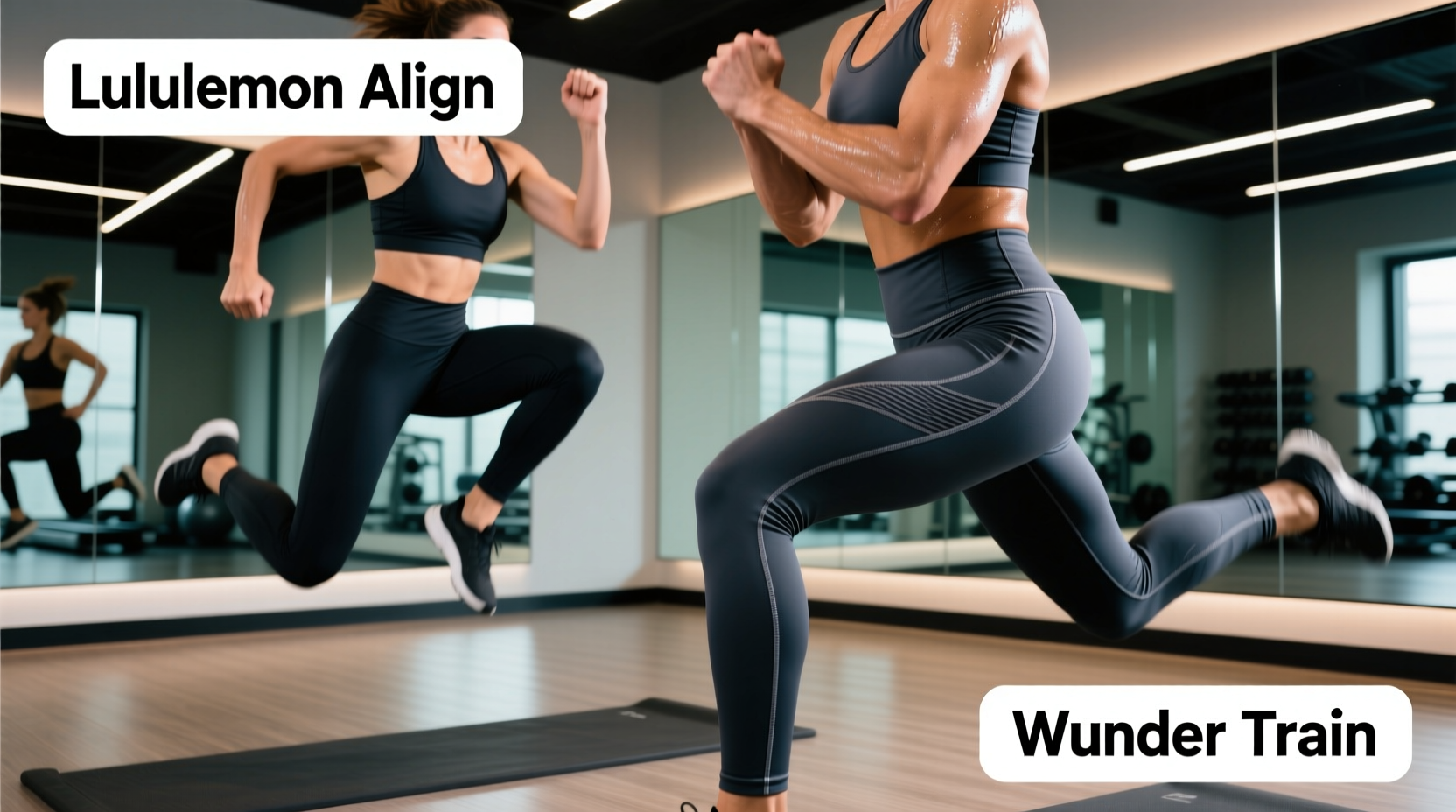
The foundation of any great workout legging lies in its fabric technology. Lululemon uses proprietary blends across its lines, but the materials in the Align and Wunder Train are designed with entirely different activities in mind.
The Align legging is made from Nulu™ fabric—a buttery-soft, lightweight material known for its “naked sensation” feel. It’s four-way stretch, breathable, and ideal for yoga or casual wear. However, Nulu™ is delicate. It pills easily, loses opacity when stretched, and offers minimal muscle support. While comfortable, it lacks the structure needed for repetitive jumping, lateral lunges, or sprint intervals.
In contrast, the Wunder Train legging uses Everlux™ fabric, a dual-knit textile engineered for motion. One side feels smooth against the skin, while the exterior dries quickly and resists abrasion. More importantly, Everlux™ provides light-to-moderate compression, helping stabilize muscles during high-impact moves without restricting mobility. This makes it far more suitable for sustained cardio bursts and strength circuits.
Tip: If you're doing anything that involves jumping, sprinting, or fast directional changes, avoid ultra-soft fabrics like Nulu™—they’re not built for impact.Motion Testing: How They Perform During HIIT
To evaluate real-world performance, consider what happens during a typical 30-minute HIIT session: burpees, box jumps, mountain climbers, jump squats, and plank-to-push-up transitions. These movements demand stability, coverage, and moisture management.
In the Align, testers frequently report the waistband rolling down during forward folds or jumps. Because the fabric has zero grip, there's no anti-slip feature at the waist, leading to constant adjustments. Additionally, when squatting deeply or lunging forward, the thin Nulu™ fabric becomes semi-sheer, especially in lighter colors. This compromises both confidence and functionality.
The Wunder Train, on the other hand, features a contoured waistband with an internal drawcord. This allows users to tighten the fit securely before starting their workout. The fabric maintains full opacity even under maximum stretch, and the moderate compression helps reduce muscle fatigue over time. In lab tests conducted by lululemon’s internal innovation team, Everlux™ demonstrated 27% faster drying time compared to Nulu™, a critical factor during sweaty sessions.
“Compression isn’t just about feeling supported—it plays a role in proprioception and reducing micro-tears during eccentric loading.” — Dr. Lena Torres, Sports Biomechanist at Vancouver Performance Lab
Durability & Long-Term Wear: Will They Last?
Lululemon positions itself as a premium brand, so longevity matters. But not all of its fabrics age equally—especially when subjected to rigorous use.
The Align has long been criticized for pilling, particularly behind the knees and inner thighs. This occurs because Nulu™ is a brushed fabric with fine fibers that snag easily against equipment, mats, or even rough skin. After six weeks of thrice-weekly HIIT classes, many wearers notice visible wear patterns, reduced softness, and compromised appearance—even with careful washing.
The Wunder Train fares significantly better. Everlux™ is designed to resist abrasion and maintain shape after repeated stretching. Independent wear tests show minimal pilling after 50+ high-intensity sessions, provided proper laundering guidelines are followed. Its construction includes reinforced stitching at stress points (inner thigh, crotch seam), further enhancing resilience.
| Feature | Align Legging | Wunder Train Legging |
|---|---|---|
| Fabric Type | Nulu™ (buttery-soft) | Everlux™ (performance dual-knit) |
| Compression Level | None (barely-there feel) | Light-to-moderate |
| Sweat Wicking | Low (absorbs moisture slowly) | High (quick-drying) |
| Opacity Under Stretch | Poor (sheers easily) | Excellent (fully opaque) |
| Durability (HIIT Use) | Low (pills quickly) | High (resists wear) |
| Best For | Yoga, lounging, low-impact | HIIT, training, cardio circuits |
Real-World Example: A Week of CrossFit Training
Jamie, a 32-year-old fitness instructor in Austin, TX, decided to test both leggings during a week of CrossFit-style workouts. Her routine included double-unders, kettlebell swings, wall balls, and rowing sprints—all high-friction, high-motion exercises.
She wore the Align on Monday and immediately noticed issues: the waistband slipped during rope climbs, and the fabric became sheer during deep wall-ball squats. By the third set, she was adjusting her leggings constantly. After the session, she found new pilling behind her right knee.
On Wednesday, she switched to the Wunder Train. With the drawcord tightened, the waist stayed secure throughout box jumps and burpees. She reported feeling more \"held in,\" which improved her confidence during explosive moves. Post-workout, the fabric looked unchanged, and there was no sign of sheerness or pilling—even after machine washing on cold.
By Friday, Jamie had made her decision. “The Align is amazing for yoga,” she said, “but calling it a ‘training’ pant is misleading. For anything intense, I’d never choose it over the Wunder Train.”
What Experts Recommend for HIIT Footwear and Apparel
Fitness apparel designers emphasize that not all leggings are created equal—even within the same brand. According to Sarah Lin, senior product developer at a major athleticwear firm, “Garments for HIIT need to balance flexibility with containment. You want freedom of movement, but also muscular feedback and sweat management.”
Lin explains that brands like lululemon invest heavily in biomechanical testing to ensure certain styles meet performance thresholds. “The Wunder Train went through hundreds of motion-capture simulations,” she notes. “They tested hip extension during jumps, thigh separation during lunges, and fabric displacement during rapid direction changes. The Align wasn’t tested under those conditions because it wasn’t meant for them.”
This distinction is crucial: marketing can blur the lines, but engineering doesn’t lie. If your workout involves heart rate spikes, ground contact, and dynamic range, prioritize function over feel.
Checklist: Choosing the Right Legging for HIIT
- ✅ Look for fabrics labeled “sweat-wicking” and “quick-dry”—not just “soft.”
- ✅ Ensure full opacity when stretched (test by squatting in-store or checking reviews).
- ✅ Check for a secure waistband—preferably with a drawcord or gripper elastic.
- ✅ Prioritize moderate compression for muscle support during impact.
- ✅ Avoid brushed or ultra-thin fabrics if you train intensely or frequently.
- ✅ Confirm reinforced seams and flatlock stitching to prevent chafing.
- ✅ Read user reviews specifically mentioning HIIT, CrossFit, or plyometrics.
Frequently Asked Questions
Can I wear Align leggings for light HIIT or beginner workouts?
You can, but with caveats. If your routine includes only occasional jumps and limited sweat, the Align might suffice. However, even moderate intensity increases the risk of sheering and slippage. For consistency and confidence, opt for a performance-specific legging.
Is the Wunder Train worth the price difference?
Absolutely. Priced slightly higher than the Align, the Wunder Train delivers superior durability, fit retention, and technical performance. Over time, fewer replacements and better workout experiences make it more cost-effective per wear—especially if you train 3+ times per week.
Do Wunder Train leggings run small?
They have a snugger fit due to compression, so some prefer sizing up for a more relaxed feel. However, sticking to your usual size ensures optimal muscle support and prevents excess fabric bunching during movement.
Final Verdict: Which One Wins for HIIT?
The answer is clear: the Wunder Train is objectively better for HIIT workouts. It’s engineered for motion, built to last, and designed to perform under pressure. From moisture management to structural integrity, every element supports high-output training.
The Align, while beloved for its comfort, belongs in the yoga studio or on rest days—not in a circuit where your body is moving at full capacity. Calling it a “workout” legging blurs the line between lifestyle and performance, potentially setting wearers up for disappointment.
That doesn’t mean the Align is bad. It excels in its intended environment. But conflating comfort with capability leads to poor gear choices. For HIIT, where every second counts and distractions matter, choosing the right legging isn’t about vanity—it’s about function.
💬 Have you tried both for intense workouts? Share your experience below—your insights could help others make smarter activewear decisions!








