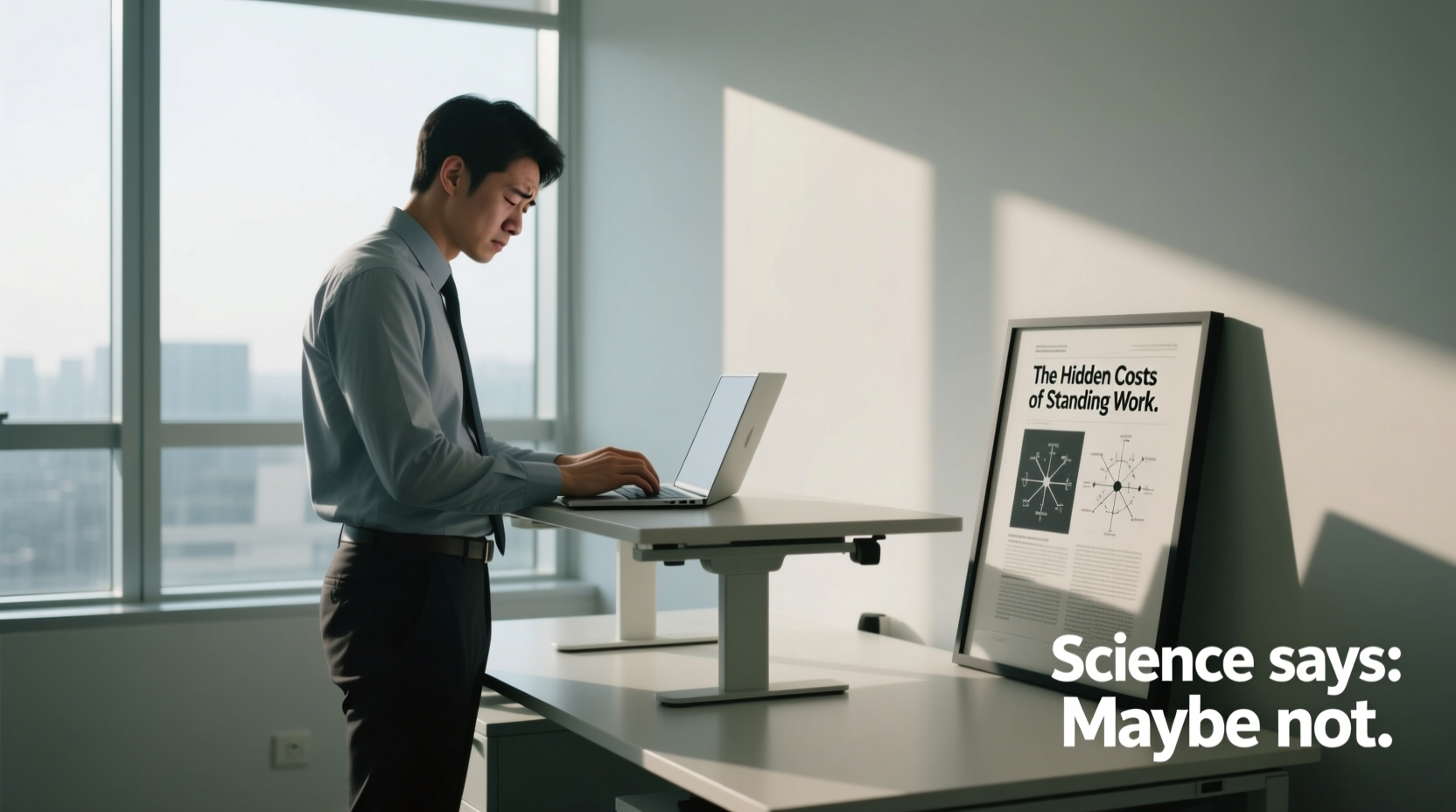
In recent years, standing desks have surged in popularity, hailed as a revolutionary fix to the sedentary dangers of office work. With headlines warning that “sitting is the new smoking,” many professionals have traded their chairs for upright workstations. But what does the actual science say? While prolonged sitting has well-documented health risks, emerging research indicates that standing all day isn’t necessarily the solution. In fact, excessive standing may carry its own set of problems—some just as concerning as those linked to sitting.
The truth lies somewhere in between: movement and variation, not static postures, are key. Understanding the nuanced evidence behind standing versus sitting can help you make informed decisions about your workspace habits—without falling for wellness fads.
The Myth of “Sitting Is the New Smoking”
The phrase “sitting is the new smoking” gained traction in media and marketing campaigns around 2012, implying that prolonged sitting dramatically increases mortality risk. While sedentary behavior *is* linked to higher rates of cardiovascular disease, type 2 diabetes, and certain cancers, equating it to smoking oversimplifies complex epidemiology.
A 2015 meta-analysis published in the Annals of Internal Medicine found that high levels of sedentary time were associated with increased all-cause mortality—but only when physical activity was low. Crucially, individuals who sat for long periods but engaged in regular moderate-to-vigorous exercise did not face the same elevated risks. This suggests that inactivity, rather than sitting itself, is the true culprit.
“Prolonged sitting is a marker of low energy expenditure, not inherently toxic. The real issue is lack of movement.” — Dr. I-Min Lee, Epidemiologist, Harvard T.H. Chan School of Public Health
Standing at a desk doesn’t automatically increase energy expenditure enough to offset sedentary risks. On average, standing burns only about 0.15 more calories per minute than sitting—equivalent to roughly 9 extra calories an hour. That’s less than one carrot stick.
The Hidden Risks of Prolonged Standing
If sitting isn’t ideal, does standing offer a clear alternative? Not quite. Research shows that extended standing introduces its own physiological strain.
A 2018 study from the British Journal of Sports Medicine analyzed data from over 7,000 workers and found that those who stood for more than two hours per hour had significantly higher reports of lower back pain, leg discomfort, and fatigue. Workers who stood for six or more hours daily were twice as likely to develop varicose veins compared to seated counterparts.
From a biomechanical perspective, standing still places continuous load on the musculoskeletal system. Unlike walking or dynamic movement, passive standing doesn't engage circulation effectively. Blood can pool in the legs due to reduced muscle pump activity, increasing pressure in the venous system and contributing to swelling and circulatory issues over time.
Tip: If you feel heaviness or swelling in your legs by mid-afternoon, it may be a sign you’ve been standing too long without adequate support or movement.Common Physical Effects of Excessive Standing
- Increased lower limb fatigue and discomfort
- Development or worsening of varicose veins
- Chronic lower back pain due to pelvic misalignment
- Foot pain and plantar fasciitis from hard flooring
- Elevated risk of pregnancy-related complications in standing workers
Movement Over Posture: What the Evidence Actually Supports
The most consistent finding across occupational health studies is that variability—not any single posture—is what matters most. A 2020 review in Ergonomics concluded that alternating between sitting, standing, and light activity throughout the day led to better comfort, productivity, and physiological outcomes than either sitting or standing exclusively.
The human body evolved for motion, not static positions. Muscles, joints, and circulatory systems thrive on change. When you shift positions regularly, you stimulate blood flow, reduce localized fatigue, and prevent stiffness.
Consider this analogy: sitting all day is like holding your elbow bent for eight hours; standing all day is like locking it straight. Both create strain. The healthy option? Bending and extending it naturally throughout the day.
Real-World Example: Office Worker Adjustment
Take Sarah, a 34-year-old software developer who switched to a standing desk after reading about its benefits. Within three weeks, she noticed persistent foot pain and difficulty concentrating in the afternoons. She assumed she needed sturdier shoes—until her physical therapist asked how long she typically stood without sitting.
Sarah realized she was standing for 6–7 hours straight, believing it was “better” for her health. Her therapist recommended a schedule: 30 minutes sitting, 30 minutes standing, with short walks every two hours. Within a week, her symptoms improved dramatically. Her focus returned, and her leg discomfort faded.
Sarah’s experience reflects a common misunderstanding: replacing one static posture with another doesn’t solve the core problem of immobility.
Practical Strategies for a Balanced Workday
Instead of aiming to stand more, aim to move more. Here’s how to build a truly ergonomic routine based on current scientific understanding.
Step-by-Step Guide to Dynamic Work Habits
- Start with posture awareness: Whether sitting or standing, maintain neutral alignment—ears over shoulders, shoulders over hips.
- Use a sit-stand desk strategically: Alternate every 30–60 minutes. Use phone alarms or apps to prompt transitions.
- Incorporate micro-movements: Shift weight, perform calf raises, or do seated knee extensions while working.
- Take walking breaks: Aim for a 5-minute walk every hour. Even pacing during calls helps.
- Add seated stretching: Every two hours, stretch hamstrings, shoulders, and neck to counteract stiffness.
Checklist: Healthy Desk Routine (Daily)
- ✅ Alternate sitting and standing every 30–60 minutes
- ✅ Take at least four 5-minute walking breaks
- ✅ Perform 2–3 stretches targeting neck, back, and legs
- ✅ Avoid screen use during lunch break to encourage movement
- ✅ Wear supportive footwear if standing frequently
- ✅ Use an anti-fatigue mat if standing on hard floors
Comparing Sitting vs. Standing: A Data Snapshot
| Factor | Sitting (8 hrs) | Standing (8 hrs) | Alternating (Sit-Stand) |
|---|---|---|---|
| Calories burned (avg) | ~1,400 | ~1,500 | ~1,450 + activity bonus |
| Risk of lower back pain | Moderate (from poor posture) | High (from static loading) | Low (with proper rotation) |
| Circulation impact | Poor (venous pooling) | Moderate (improved vs. sitting, but limited) | Good (especially with walking) |
| Productivity & focus | High (initially), declines over time | Moderate (fatigue sets in) | High (with optimal rhythm) |
| Long-term joint stress | Hips, spine | Knees, feet, lower back | Minimal (if varied) |
Note: Individual results vary based on fitness, desk setup, and overall activity levels.
Frequently Asked Questions
Can standing desks prevent heart disease?
There’s no direct evidence that standing desks alone prevent heart disease. However, reducing prolonged sitting and increasing light activity throughout the day contributes to better cardiovascular health. The benefit comes from movement, not posture. Pairing desk changes with brisk walking, stair climbing, or other aerobic activities yields measurable improvements in blood pressure and cholesterol profiles.
How long should I stand at my desk each day?
There’s no universal recommendation, but research suggests limiting continuous standing to 30–60 minutes at a time. Total standing time should ideally not exceed two to four hours per workday, distributed in intervals. Listen to your body—discomfort is a signal to change position.
Are anti-fatigue mats worth it?
Yes, for those who stand frequently. These mats are designed with slight give or texture to encourage subtle muscle engagement in the legs and feet, improving circulation and reducing fatigue. Studies show they can decrease reported discomfort by up to 50% compared to standing on concrete or hardwood.
Conclusion: Rethinking the Standing Desk Revolution
The idea that standing while working is inherently healthier than sitting is not strongly supported by science. While reducing prolonged sitting is important, simply replacing it with prolonged standing introduces new risks. The real solution isn’t choosing one posture over the other—it’s rejecting static postures altogether.
Health isn’t found in a fixed stance but in fluidity: the ability to shift, stretch, walk, and reposition throughout the day. A standing desk can be a useful tool, but only when used as part of a broader strategy centered on movement diversity.
Instead of asking “Should I sit or stand?” ask “How can I move more today?” That shift in mindset—from posture optimization to activity integration—is where lasting wellness begins.
💬 What’s your ideal work rhythm? Share your sit-stand routine or tips in the comments below—your experience could help others find balance.








