
In an era where scrolling through feeds has become as routine as brushing teeth, the line between connection and compulsion is increasingly blurred. Social media platforms were designed to foster interaction, but their constant presence can quietly erode mental well-being. For many, the idea of stepping away—even temporarily—feels daunting, if not impossible. Yet growing evidence suggests that periodic disconnection isn't just beneficial; it may be essential. A social media detox, when timed correctly, can restore focus, reduce anxiety, and improve emotional resilience. The key lies in recognizing the early warning signs that your digital habits are affecting your mental health.
When Connection Becomes Compulsion: Recognizing the Red Flags
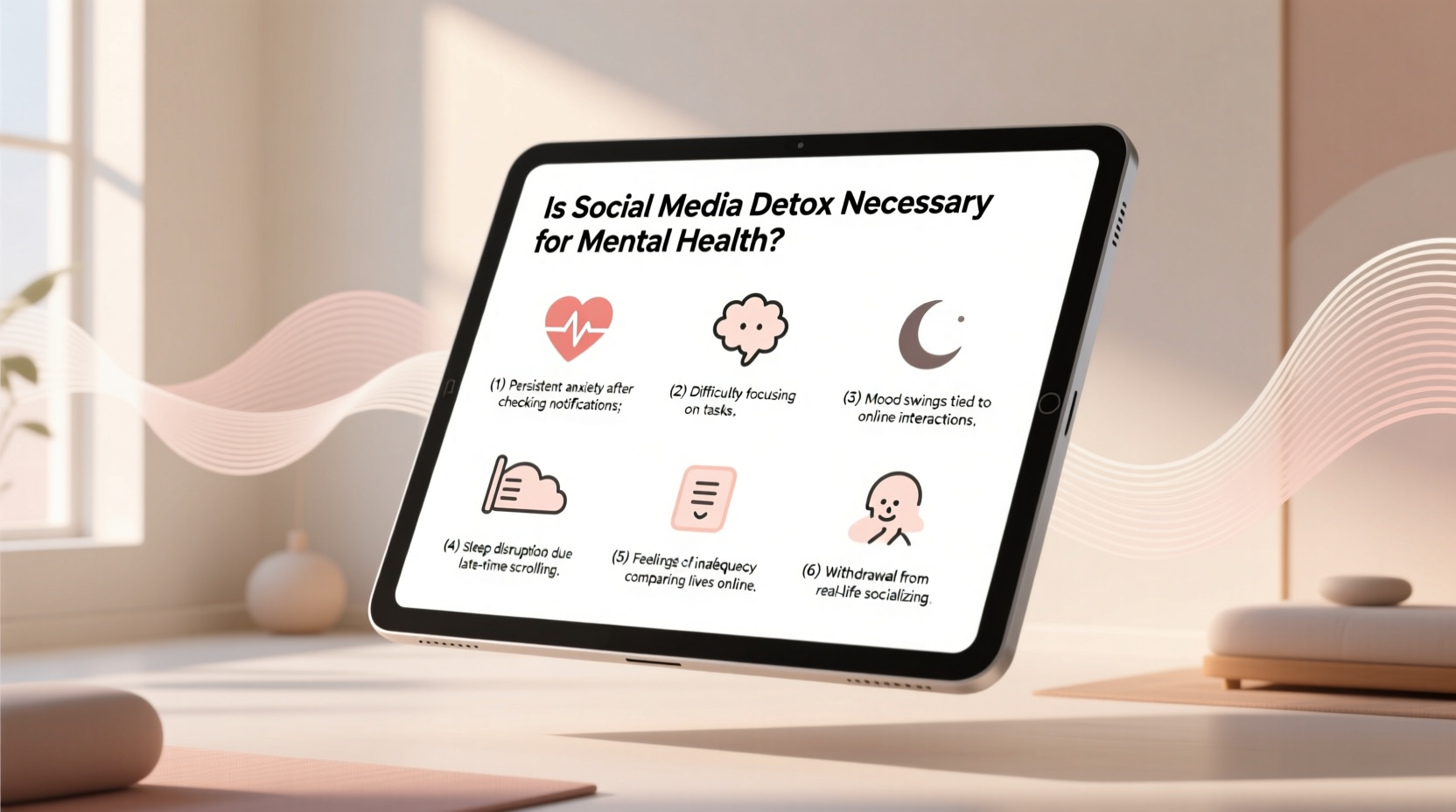
Social media use often starts as a way to stay informed or entertained, but over time, it can shift into an automatic behavior driven by dopamine loops rather than genuine engagement. Unlike substance addictions, digital dependency doesn’t always come with obvious physical symptoms. Instead, it manifests through subtle shifts in mood, behavior, and thought patterns.
One of the earliest indicators is compulsive checking. If you find yourself reaching for your phone within minutes of waking up—or during meals, conversations, or work tasks—it’s a sign your usage may have crossed into compulsive territory. This reflexive behavior reduces present-moment awareness and fragments attention, making deep focus nearly impossible.
Another red flag is emotional reactivity to online interactions. Feeling anxious after posting content, obsessively monitoring likes, or experiencing jealousy when viewing others’ curated lives points to an unhealthy emotional investment in virtual validation. These responses aren’t trivial—they reflect real psychological strain rooted in comparison and self-worth tied to external metrics.
Tip: Set a 5-minute rule: wait five minutes before opening any social app upon unlocking your phone. This small delay disrupts autopilot behavior and creates space for intentional use.Physical and Emotional Signs You Might Need a Detox
Mental health doesn’t exist in isolation from the body. Chronic social media overuse often presents physical symptoms that mirror stress disorders. Persistent eye strain, headaches, disrupted sleep cycles, and poor posture—especially “text neck”—are common among heavy users. More concerning is the impact on circadian rhythms. Blue light exposure combined with late-night scrolling suppresses melatonin production, leading to insomnia or restless sleep.
Emotionally, prolonged exposure to highlight reels can fuel feelings of inadequacy, loneliness, or FOMO (fear of missing out). Over time, this contributes to low-grade depression and reduced life satisfaction. Research from the University of Pennsylvania found that limiting social media use to 30 minutes per day significantly decreased levels of loneliness and depression over three weeks compared to unrestricted users.
Consider this checklist to assess whether a detox could benefit you:
- You feel irritable or anxious when unable to check your phone
- Your productivity has declined due to frequent distractions
- You compare your life unfavorably to others online
- You’ve stopped engaging in offline hobbies or social events
- You wake up specifically to check notifications
- You experience guilt or shame about how much time you spend online
- You’ve received feedback from loved ones about your screen time
“Digital saturation doesn’t just distract us—it rewires our brain’s reward system. Taking breaks allows cognitive restoration and emotional recalibration.” — Dr. Lena Torres, Clinical Psychologist and Digital Wellness Researcher
What a Social Media Detox Actually Involves
A social media detox isn’t necessarily about deleting all accounts forever. For most people, it’s a structured pause—a temporary withdrawal aimed at resetting habits and reassessing relationship with technology. The duration varies: some benefit from 24-hour resets, while others choose 7-, 14-, or even 30-day breaks.
The process begins with intention. Ask yourself: Why am I doing this? Is it to improve sleep? Reconnect with family? Boost creativity? Clarifying your motivation strengthens commitment. Next, decide which platforms to step away from. Complete abstinence works for some, while others prefer selective removal—such as deactivating Instagram but keeping LinkedIn active for professional reasons.
During the detox, replace habitual scrolling with meaningful alternatives. Read physical books, take walks without headphones, journal, or engage in face-to-face conversations. These activities don’t just fill time—they rebuild neural pathways associated with patience, introspection, and sustained attention.
Step-by-Step Guide to a Successful Detox
- Assess Your Current Use: Use built-in screen time tools (iOS Screen Time or Android Digital Wellbeing) to review daily averages across platforms.
- Set Clear Goals: Define what success looks like—e.g., “I want to reduce anxiety and reclaim two hours per day.”
- Choose Duration: Start with 48 hours if new to detoxing; extend based on results.
- Notify Key Contacts: Let close friends or colleagues know you’ll be less responsive, so they understand the context.
- Remove Triggers: Log out of apps, delete them from your phone, or move icons off the home screen.
- Plan Alternatives: Schedule activities that occupy the time you’d normally spend scrolling.
- Reflect Daily: Journal briefly each evening about mood, energy, and thoughts.
- Reintroduce Mindfully: After the break, bring back one platform at a time and observe its effect on your mental state.
Real Impact: A Case Study in Digital Reset
Sophia, a 29-year-old graphic designer from Portland, spent years using Instagram both personally and professionally. What began as creative inspiration evolved into a cycle of comparison and burnout. She noticed her mornings started with endless scrolling, her lunch breaks vanished into TikTok rabbit holes, and she often stayed up past 1 a.m. responding to DMs.
After a panic attack triggered by perceived online criticism, Sophia decided to try a 10-day detox. She deleted Instagram and Twitter from her phone, turned off non-essential notifications, and committed to no screens during meals. Within three days, she reported improved concentration and reduced background anxiety. By day seven, she picked up painting again—a hobby abandoned for over two years. At the end of the detox, she reinstated Instagram but limited access to 20 minutes per day using app timers. Her feed was also cleaned: she unfollowed accounts that made her feel inadequate and followed more educational and nature-based content.
“It wasn’t about quitting,” Sophia said. “It was about reclaiming control. I didn’t realize how much mental space was being taken up until I gave it back to myself.”
Do’s and Don’ts of a Healthy Digital Lifestyle
| Do’s | Don’ts |
|---|---|
| Use scheduled times for checking social media (e.g., 15 min morning/night) | Scroll first thing upon waking or last thing before sleeping |
| Curate your feed to include uplifting, educational, or inspiring content | Follow accounts that trigger envy, anger, or insecurity |
| Enable grayscale mode to reduce visual appeal of apps | Keep all notifications enabled across platforms |
| Practice tech-free zones (dining table, bedroom) | Bring your phone into bed or meetings |
| Regularly audit your usage and emotional response to platforms | Ignore signs of fatigue, irritability, or withdrawal related to usage |
Frequently Asked Questions
How long should a social media detox last?
There’s no universal timeline. Beginners often start with 48 hours to assess impact. A 7-day detox provides enough time to disrupt habitual patterns and notice changes in mood and focus. Some individuals benefit from quarterly 14-day resets. The ideal length depends on your goals and lifestyle—listen to your mind and body.
Will I miss important updates if I go offline?
Most critical personal or professional news reaches you through direct channels—calls, texts, emails—not public posts. During a detox, inform trusted contacts of your break so they know how to reach you. You’re unlikely to miss anything urgent, and you may gain clarity on what truly matters.
Can I still use social media for work during a detox?
Yes—many professionals adopt a split approach: personal accounts are paused, while business-related activity continues under strict time limits. Use tools like Buffer or Hootsuite to schedule posts in advance, minimizing real-time engagement. The goal is to reduce reactive consumption, not eliminate utility.
Reclaiming Your Attention Is an Act of Self-Care
The decision to unplug isn’t a rejection of technology—it’s a reclamation of autonomy. In a world engineered to capture and monetize attention, choosing deliberate disconnection becomes a radical act of mental preservation. A social media detox isn’t a one-time fix, but part of an ongoing practice of digital mindfulness. It teaches you to distinguish between enrichment and emptiness, connection and consumption.
If you’re noticing persistent fatigue, emotional volatility, or a sense of disconnection from real-life experiences, these aren’t just inconveniences—they’re signals. Your mind is asking for space, silence, and presence. Respond with kindness. Start small: one hour, one day, one app. Observe what emerges in the quiet. Often, the most profound insights arise not from feeds, but from stillness.
💬 Ready to take back control? Share your detox plan or experience in the comments below—your journey might inspire someone else to begin theirs.








