In recent years, few ingredients have sparked as much fascination—and skepticism—as snail mucin. Found in serums, essences, and moisturizers across K-beauty and global skincare lines, this slimy secretion has gone from bizarre curiosity to cult favorite. But with hype comes scrutiny: Is snail mucin truly effective at healing irritated skin, or is it merely a marketing triumph wrapped in pseudoscience? To answer that, we need to look beyond the trend and into dermatology, clinical research, and user experiences.
Snail mucin, more accurately known as snail secretion filtrate (SSF), is the substance produced by garden snails—particularly *Cryptomphalus aspersa*—when they move or feel threatened. It’s not just slime; it’s a complex biological fluid rich in glycoproteins, hyaluronic acid, glycolic acid, copper peptides, and antimicrobial compounds. These components play roles in wound healing, hydration, and tissue regeneration—functions critical for both snails repairing their own shells and humans managing compromised skin barriers.
The Science Behind Snail Mucin’s Healing Properties
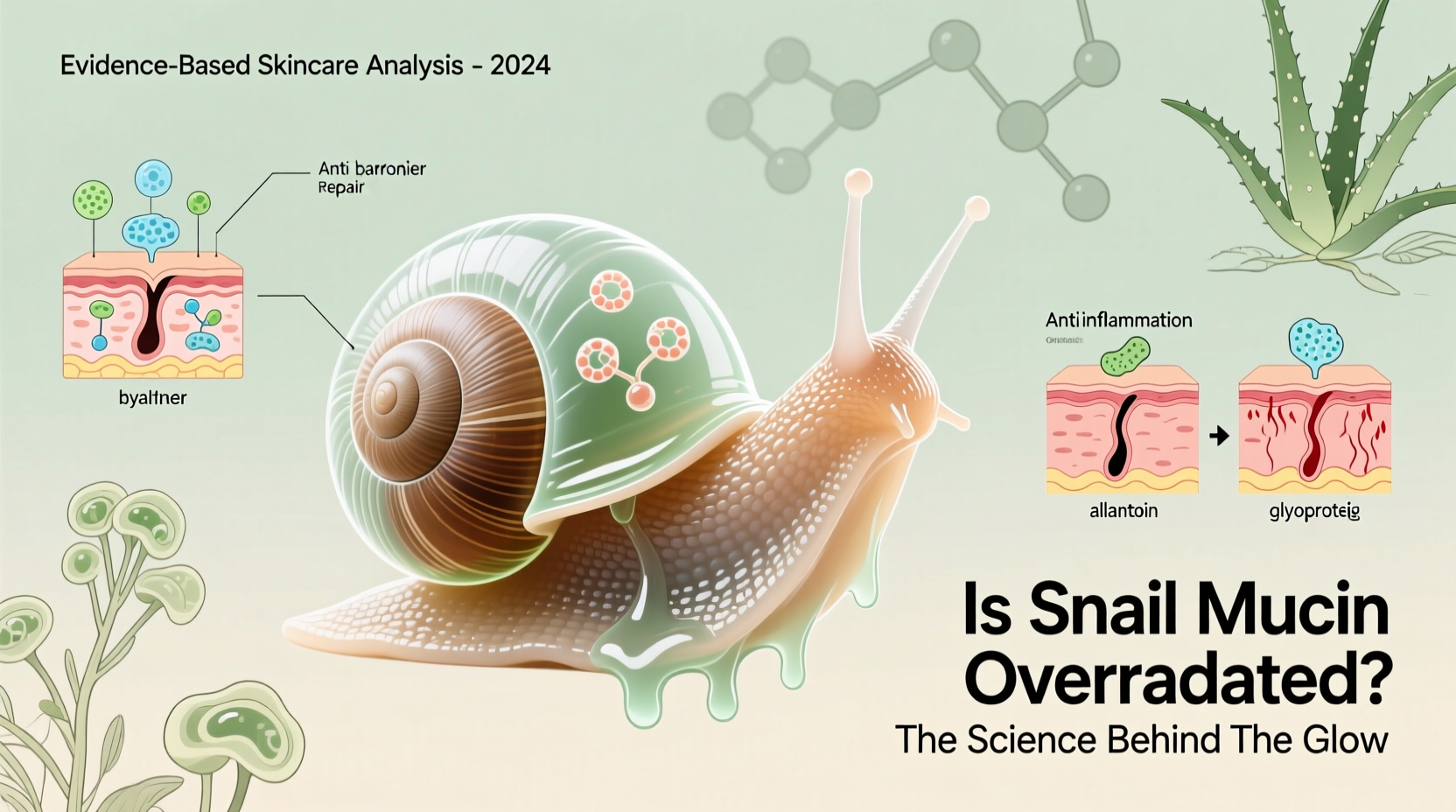
At its core, snail mucin functions as a natural repair mechanism. In nature, snails use their mucus to glide over sharp surfaces without injury and to seal wounds rapidly. This self-healing ability intrigued researchers, leading to studies on its potential applications in human dermatology.
A 2013 study published in the Journal of Dermatological Science demonstrated that snail secretion filtrate significantly increased fibroblast proliferation and collagen synthesis—two key processes in skin regeneration. Fibroblasts are responsible for producing the extracellular matrix, including collagen and elastin, which maintain skin structure and resilience. When the skin barrier is compromised due to conditions like eczema, rosacea, or post-procedure sensitivity, stimulating fibroblast activity can accelerate recovery.
Moreover, snail mucin contains allantoin, a well-known soothing agent used in diaper rash creams and after-sun lotions. Allantoin helps exfoliate dead skin cells gently while promoting cell turnover and calming inflammation. Unlike harsh chemical exfoliants, this action is non-irritating, making it suitable even for reactive skin types.
Tip: Look for products listing “snail secretion filtrate” high in the ingredient list (ideally within the first five) for maximum efficacy.Does It Really Help With Irritation? Clinical Evidence vs. Anecdotes
Irritated skin manifests in various forms—redness, tightness, flaking, stinging—and often stems from a damaged moisture barrier. Common culprits include over-exfoliation, environmental aggressors, or inflammatory conditions like perioral dermatitis. Here’s where snail mucin may offer tangible relief.
One double-blind, placebo-controlled trial involving 25 participants with mild-to-moderate acne found that a topical formulation containing 75% snail mucin improved skin hydration by 57% and reduced transepidermal water loss (TEWL) by 43% after four weeks. TEWL is a gold-standard metric for assessing barrier integrity: lower values mean less moisture escapes, indicating a stronger, healthier barrier.
Another study focused on patients recovering from laser resurfacing treatments. Those using snail mucin-based gels reported faster re-epithelialization (skin regrowth) and less discomfort compared to controls. While not a substitute for medical-grade ointments, these findings suggest snail mucin supports recovery in compromised skin scenarios.
“Snail mucin isn’t magic, but it’s one of the most multifunctional natural ingredients we’ve studied. Its combination of hydrators, antioxidants, and growth factors makes it uniquely suited for sensitive and healing skin.” — Dr. Lena Park, Board-Certified Dermatologist and Cosmetic Researcher
Comparing Snail Mucin to Other Soothing Ingredients
To evaluate whether snail mucin lives up to its reputation, it helps to compare it against established anti-irritant agents. The table below outlines how snail mucin stacks up against popular alternatives in terms of function, compatibility, and evidence base.
| Ingredient | Primary Benefits | Suitable for Sensitive Skin? | Clinical Support Level |
|---|---|---|---|
| Snail Mucin | Hydration, barrier repair, mild exfoliation, antioxidant protection | Yes, generally well-tolerated | Moderate to strong (growing body) |
| Centella Asiatica (Cica) | Anti-inflammatory, wound healing, redness reduction | Yes, highly compatible | Strong (extensively researched) |
| Niacinamide | Barrier strengthening, sebum regulation, brightening | Mostly yes, but can irritate at high concentrations | Very strong |
| Hyaluronic Acid | Intense hydration, plumping | Yes | Extremely strong |
| Oat Extract | Calming, anti-itch, lipid restoration | Yes, FDA-approved for eczema | Strong |
What sets snail mucin apart is its multi-targeted approach. While hyaluronic acid excels at hydration and cica at calming inflammation, snail mucin contributes across several categories simultaneously. However, it rarely outperforms specialized ingredients—it complements them instead.
A Real-World Case: Managing Post-Retinol Irritation
Sophia, a 34-year-old graphic designer in Seattle, began incorporating a prescription retinoid into her routine to address early signs of aging. Within two weeks, she developed persistent dryness, redness around her nose, and a burning sensation when applying products. After consulting a dermatologist, she was advised to simplify her regimen and introduce barrier-supportive ingredients.
She switched to a gentle cleanser and added a snail mucin essence after toning. Within five days, the stinging subsided. By week two, her skin felt more resilient and no longer flaked under makeup. She continued using the product intermittently during seasonal changes and noted fewer flare-ups from wind and cold exposure.
This case illustrates a common scenario: active ingredients disrupt the skin barrier before delivering benefits. Snail mucin didn’t replace her treatment but served as a protective intermediary, allowing her to continue anti-aging care without constant irritation.
Common Misconceptions and Overhype
No ingredient is universally effective, and snail mucin is no exception. Some brands market it as a “miracle cure,” implying it can erase scars, reverse sun damage, or eliminate acne overnight. Such claims are misleading.
While snail mucin supports healing, it does not act as a standalone solution for severe dermatological issues. For example, someone with moderate cystic acne will not see clearance solely from using a snail mucin serum. Similarly, deep scarring requires professional interventions like lasers or microneedling.
Additionally, not all snail mucin products are created equal. The concentration, extraction method, and formulation stability greatly affect performance. Some low-cost versions contain minimal active SSF diluted with water and preservatives, offering little benefit beyond basic hydration.
Tip: Avoid products that combine snail mucin with high percentages of alcohol, fragrance, or essential oils—they can negate its soothing effects.How to Use Snail Mucin Effectively for Irritated Skin
Maximizing the benefits of snail mucin requires strategic integration into your routine. Follow this step-by-step guide for optimal results:
- Assess your skin condition: Determine if your irritation stems from dryness, over-exfoliation, or an underlying condition like rosacea. If symptoms persist, consult a dermatologist.
- Choose the right product: Opt for a lightweight essence or serum with snail secretion filtrate listed near the top. Fermented versions may enhance absorption.
- Apply to damp skin: After cleansing and misting or using a hydrating toner, apply the mucin product while skin is still slightly wet to lock in moisture.
- Layer wisely: Follow with a ceramide-rich moisturizer to reinforce the lipid barrier. Avoid combining with strong acids or retinoids initially.
- Monitor response: Use consistently for at least two weeks. Improvement should include reduced tightness, less visible redness, and smoother texture.
- Adjust as needed: Once tolerance builds, you can reintroduce actives—but always buffer with moisturizer or alternate nights.
Checklist: Getting the Most Out of Snail Mucin
- ✅ Confirm the product contains real snail secretion filtrate (not just \"mucin extract\")
- ✅ Patch test behind the ear or on the jawline before full-face application
- ✅ Use daily, preferably twice a day, for consistent support
- ✅ Pair with other barrier-repair ingredients like ceramides, panthenol, or squalane
- ❌ Don’t expect immediate transformation—it’s a supporting player, not a quick fix
- ❌ Avoid mixing with physical scrubs or high-strength AHAs/BHAs during acute irritation phases
Frequently Asked Questions
Is snail mucin safe for people with allergies?
Generally, yes. Snail mucin is not a common allergen. However, individuals allergic to mollusks or shellfish should exercise caution and perform a patch test. Reactions are rare but possible, especially if the product contains additional fragrances or botanicals.
Can I use snail mucin if I’m vegan?
This depends on personal ethics. While snails aren’t killed in the harvesting process (they’re stimulated to produce mucus and then returned unharmed), some vegans object to animal-derived ingredients regardless of sourcing. Look for certified cruelty-free and vegan labels if this matters to you.
Does snail mucin help with acne-prone skin?
Indirectly. It doesn’t kill acne-causing bacteria like salicylic acid or benzoyl peroxide, but it can reduce post-inflammatory redness and speed up healing of active breakouts. Many users report fewer marks and faster resolution of blemishes when using snail mucin regularly.
Conclusion: A Valuable Ally, Not a Miracle Cure
Snail mucin is neither overrated nor miraculous—it occupies a nuanced middle ground. For those struggling with irritation, dehydration, or a weakened skin barrier, it offers measurable, science-backed benefits. It hydrates deeply, calms inflammation, and supports cellular renewal without overwhelming sensitive systems. However, it should be viewed as part of a broader skincare strategy rather than a standalone remedy.
The real value lies in consistency and formulation quality. When sourced responsibly and used appropriately, snail mucin proves itself not as a fleeting trend, but as a functional, gentle ingredient with legitimate restorative properties. Whether you're recovering from aggressive treatments, battling seasonal dryness, or simply seeking resilient, balanced skin, snail mucin deserves a thoughtful place in your routine—if not center stage, then certainly in the supporting cast.
💬 Have you tried snail mucin for irritated skin? Share your experience or questions in the comments—your insights could help others navigate this unique ingredient with confidence.








