Rosewater toner has been a staple in skincare traditions for centuries, praised across cultures from ancient Persia to modern-day beauty regimens. Revered for its delicate scent and soothing properties, it's often marketed as a gentle, natural alternative to chemical-laden toners. But with growing interest in minimalist routines and ingredient transparency, many are questioning: should rosewater toner be part of your everyday regimen, or is it more effective when used sparingly—perhaps on sensitive days or as a finishing mist for special moments?
The answer isn’t one-size-fits-all. While rosewater can be a beneficial addition to daily skincare for some, others may find it underwhelming or even counterproductive if overused. Understanding your skin type, the formulation of your product, and how rosewater interacts with other ingredients in your routine determines whether daily use enhances your glow—or leads to diminishing returns.
What Is Rosewater Toner—and What Does It Do?
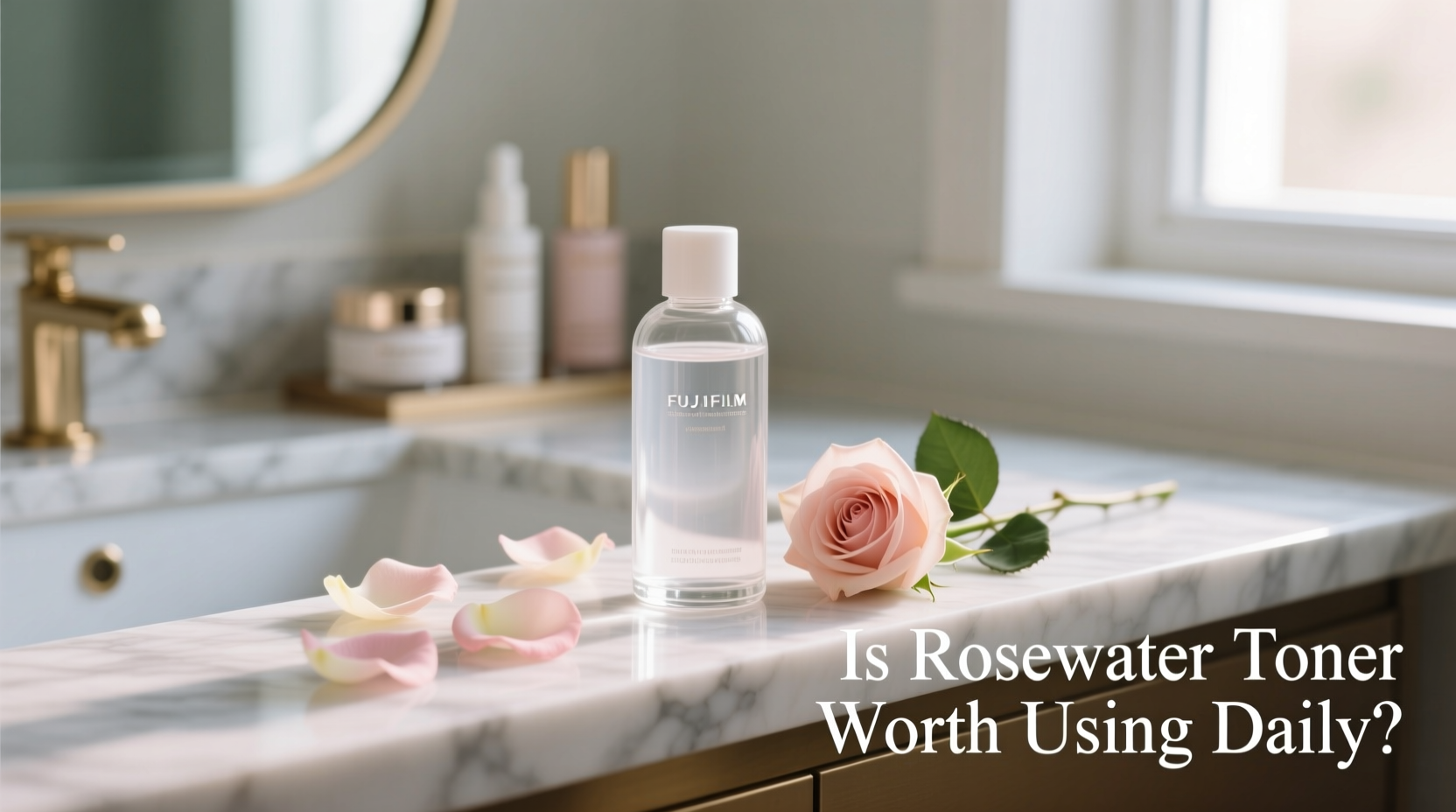
Rosewater is a floral hydrosol produced through steam distillation of rose petals, typically from Rosa damascena or Rosa centifolia. Unlike essential oils, which are highly concentrated and require dilution, rosewater retains water-soluble compounds and offers mild therapeutic effects without irritation for most people.
In skincare, rosewater functions primarily as a toning agent. Its key actions include:
- pH balancing: Helps restore the skin’s natural acidity after cleansing, especially useful if you use alkaline soaps.
- Hydration: Acts as a light humectant, attracting moisture to the skin’s surface.
- Soothing inflammation: Contains antioxidants like quercetin and kaempferol that may reduce redness and irritation.
- Antimicrobial support: Mild antiseptic properties help maintain a balanced microbiome.
However, not all rosewater toners are created equal. Some commercial products contain added alcohol, fragrances, or preservatives that can negate the benefits. Pure, distilled rosewater with no additives is generally safe for regular use, but formulations matter significantly.
Tip: Always check the ingredient list. If “alcohol denat.” appears near the top, avoid daily use—it can compromise your skin barrier over time.Daily Use: Benefits and Risks by Skin Type
Whether rosewater toner should be used every day depends largely on your skin’s needs and reactivity. Below is a breakdown by common skin types.
| Skin Type | Daily Use Recommended? | Why / Why Not |
|---|---|---|
| Normal | Yes | Gentle enough to support hydration and pH balance without disruption. Enhances radiance subtly over time. |
| Combination | Conditionally | Can soothe oily zones while hydrating dry areas, but monitor for buildup or shine if pores are prone to congestion. |
| Oily/Acne-Prone | Cautiously | Pure rosewater won’t clog pores, but avoid versions with added oils or glycerin. May calm post-acne redness when used post-cleanse. |
| Dry | Limited | Provides light moisture but lacks occlusives. Best layered with serums or moisturizers. Overuse may lead to trans-epidermal water loss if not sealed properly. |
| Sensitive/Rosacea-Prone | With Caution | Natural anti-inflammatory effects may help, but fragrance—even natural—can trigger reactions in reactive skin. |
“Rosewater is one of the few botanicals with clinical backing for reducing erythema and improving skin comfort. However, frequency must align with individual tolerance.” — Dr. Lena Torres, Dermatologist & Cosmetic Formulation Specialist
When Less Is More: Scenarios Where Occasional Use Shines
There are compelling reasons to reserve rosewater toner for targeted applications rather than incorporating it into your morning and evening rituals.
For instance, if you live in a humid climate, your skin may already retain sufficient moisture, making daily misting redundant. Similarly, those following actives-heavy routines (e.g., retinoids, AHAs, benzoyl peroxide) might benefit more from using rosewater as a calming rescue step only after irritation occurs—not preemptively every day.
Additionally, rosewater excels in situational roles:
- Post-sun exposure: Soothes heat-induced inflammation.
- After waxing or threading: Reduces stinging and prevents follicular swelling.
- Makeup prep: A fine mist refreshes dehydrated skin before foundation application.
- Mood-enhancing ritual: The aroma of real rosewater has mild aromatherapeutic value, ideal for unwinding during self-care evenings.
In these cases, keeping a bottle in the fridge for periodic use maximizes both efficacy and sensory pleasure without risking over-dependence on a low-potency product.
Mini Case Study: Sarah’s Transition from Daily to Strategic Use
Sarah, a 34-year-old graphic designer with combination skin, began using rosewater toner twice daily after reading about its “natural glow” benefits. Initially, her skin felt refreshed and looked brighter. But within six weeks, she noticed increased midday oiliness and occasional tightness by nightfall.
Upon consulting a skincare coach, she realized her rosewater contained witch hazel—an astringent that, while natural, was stripping her T-zone and triggering compensatory sebum production. She switched to an alcohol-free version but limited use to evenings only, applying it after exfoliation to soothe residual tingle.
She also started refrigerating the bottle and using it as a pick-me-up during work breaks. This shift reduced irritation and preserved the toner’s calming effect without disrupting her skin’s equilibrium. Her experience underscores that context and frequency shape outcomes as much as the ingredient itself.
How to Use Rosewater Toner Effectively: A Step-by-Step Guide
If you're deciding whether to integrate rosewater into your routine, follow this timeline-based approach to assess tolerance and optimize results.
- Week 1 – Patch Test & Observation: Apply a small amount behind the ear or on the jawline nightly. Monitor for redness, itching, or breakouts. Skip if any reaction occurs.
- Week 2 – Introduce Post-Cleansing: After washing your face, spritz or dab rosewater onto cotton and swipe gently. Follow immediately with moisturizer to lock in hydration.
- Week 3 – Evaluate Frequency: Try once daily (preferably at night). Note changes in texture, oil control, and sensitivity. Consider taking weekly photos under consistent lighting.
- Week 4 – Adjust Based on Feedback: If skin feels balanced, continue. If you notice dullness or dehydration, reduce to 2–3 times per week. If no visible change, consider replacing it with a more active toner (e.g., niacinamide or lactic acid).
- Ongoing – Rotate Strategically: Use daily during seasonal transitions (e.g., winter dryness, summer sun stress), then scale back when skin stabilizes.
Checklist: Is Your Rosewater Toner Routine Sustainable?
Before committing to daily use, ask yourself the following questions:
- ✅ Is my rosewater free from alcohol, synthetic fragrances, and parabens?
- ✅ Does my skin feel calmer, not tighter or greasier, after use?
- ✅ Am I pairing it with compatible products (e.g., avoiding mixing with strong acids unless buffered)?
- ✅ Have I noticed any improvement in redness, tone, or comfort over 3–4 weeks?
- ✅ Am I storing it properly (cool, dark place; ideally refrigerated after opening)?
- ✅ Is it adding value—or just occupying space in my routine?
If three or more answers are “no,” reconsider frequency or formulation.
Frequently Asked Questions
Can I use rosewater toner with retinol or vitamin C?
Yes, but with timing considerations. Rosewater can buffer slight irritation from retinol when applied beforehand, but avoid layering directly with L-ascorbic acid (vitamin C), which requires a dry, low-pH environment. Wait 5–10 minutes after rosewater application before applying potent actives.
Does rosewater expire?
Yes. Pure rosewater typically lasts 6–12 months after opening, especially if unrefrigerated. Look for cloudiness, separation, or sour smell—signs of bacterial growth. Opt for smaller bottles if you don’t plan to use it frequently.
Is DIY rosewater as effective as store-bought?
Homemade rosewater (boiled petals steeped in water) lacks the controlled distillation process and is more prone to contamination. Commercially distilled versions are safer and more stable. If making your own, use organic, pesticide-free roses and preserve with refrigeration and minimal shelf life (2 weeks max).
Conclusion: Finding Your Personal Sweet Spot
Rosewater toner isn’t inherently meant for daily use—or for rare indulgence. Its value lies in alignment with your skin’s current needs and your broader skincare philosophy. For those seeking simplicity and sensory pleasure, daily use can reinforce a mindful routine. For others focused on high-performance ingredients, it may serve better as a supportive player, brought in during flare-ups, environmental stress, or moments of intentional pause.
The real question isn’t whether rosewater toner is “worth it,” but whether it’s working *for you*. Skincare evolves with seasons, hormones, lifestyle, and age. What suits you today might not tomorrow. Reassess regularly. Listen closely. Let results—not trends—guide your choices.
🚀 Ready to refine your toner routine? Start a 4-week trial with pure rosewater, track your skin’s response, and share your insights below. Your journey to smarter skincare begins with observation.








