Green tea has long been celebrated for its health-promoting properties, from boosting metabolism to supporting heart health. But as interest in functional foods grows, matcha—a vibrant green powdered form of tea—has surged in popularity. Many now wonder: is matcha powder truly superior to traditional green tea bags? The answer lies not just in taste or convenience, but in a deeper understanding of their nutritional profiles, processing methods, and how they deliver key compounds like catechins, caffeine, and L-theanine.
This article provides a thorough, evidence-based comparison between matcha and green tea bags, focusing on nutrient density, antioxidant levels, bioavailability, and real-world health impact. Whether you're sipping tea for wellness, energy, or longevity, this breakdown will help you make an informed choice.
Nutritional Composition: What’s Inside?
Both matcha and green tea come from the same plant—Camellia sinensis—but their cultivation and preparation methods lead to significant differences in nutrition.
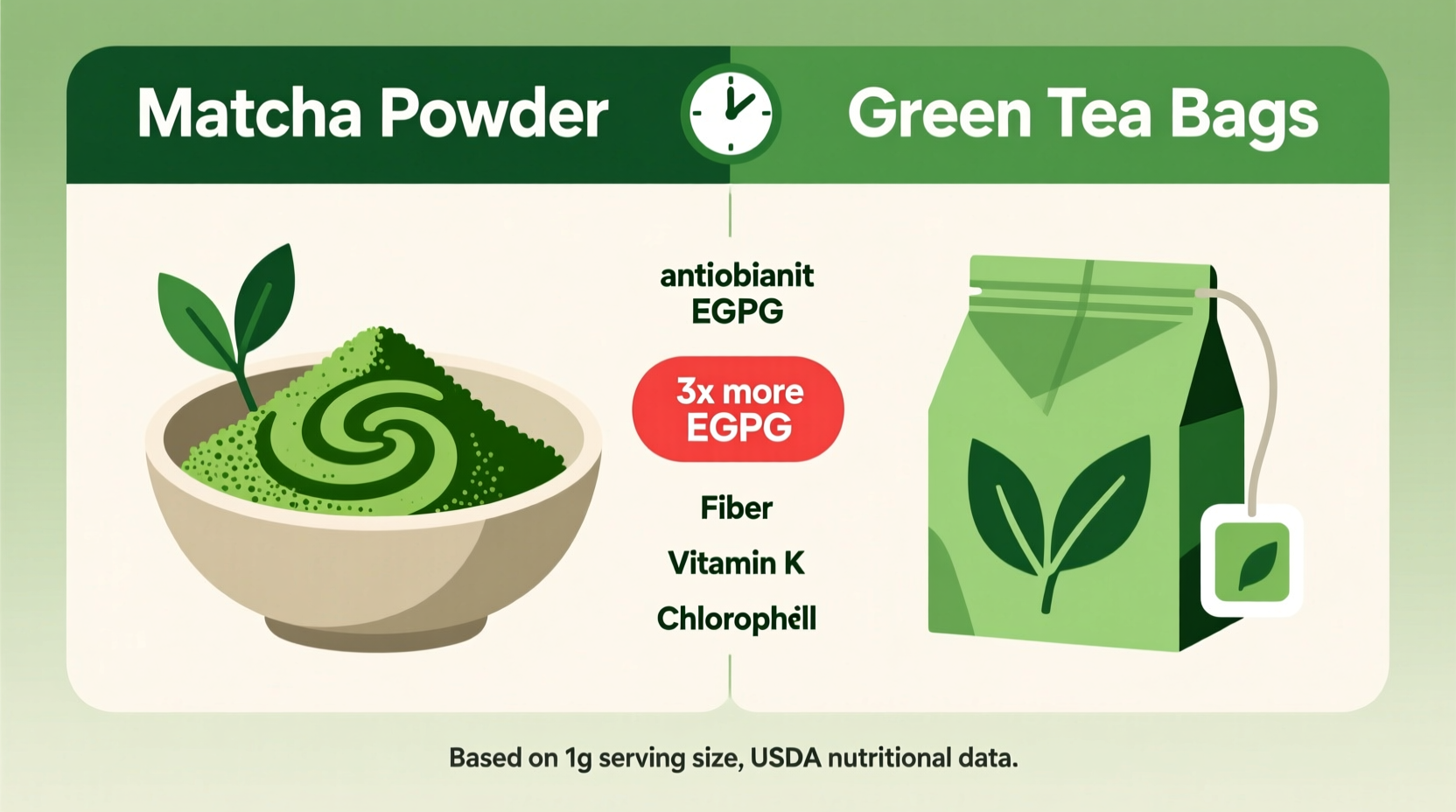
Matcha is made from shade-grown tea leaves that are steamed, dried, and ground into a fine powder. When consumed, you ingest the entire leaf, which means you absorb 100% of its nutrients. In contrast, green tea bags typically contain lower-grade, broken leaves or dust (known as “fannings”) that are steeped and discarded. You only extract a fraction of the available compounds through infusion.
To illustrate the difference, consider this simplified nutrient comparison per standard serving:
| Nutrient | Matcha (1 tsp / ~1g) | Green Tea Bag (1 cup / 8oz brewed) |
|---|---|---|
| Calories | 3–5 kcal | 0–2 kcal |
| Caffeine | 30–70 mg | 20–45 mg |
| Epigallocatechin gallate (EGCG) | 100–130 mg | 10–40 mg |
| Total Catechins | 150–200 mg | 50–100 mg |
| L-Theanine | 20–30 mg | 5–15 mg |
| Dietary Fiber | 0.5–1 g | Trace (not absorbed) |
| Chlorophyll | High (due to shading) | Low to moderate |
The data shows that matcha delivers significantly higher concentrations of beneficial compounds. Because you consume the whole leaf, you gain access to fiber, chlorophyll, and insoluble antioxidants that don’t fully dissolve in water and remain trapped in used tea bags.
Tip: For maximum nutrient extraction from green tea bags, use water just below boiling (around 80°C) and steep for 2–3 minutes. Longer isn’t always better—over-steeping can increase bitterness without boosting benefits.Antioxidant Power: Matcha Leads by Design
One of the most compelling arguments for matcha’s superiority is its unmatched antioxidant capacity. Antioxidants neutralize free radicals, reducing oxidative stress linked to aging, inflammation, and chronic disease.
The Oxygen Radical Absorbance Capacity (ORAC) scale measures antioxidant activity in foods. Matcha scores exceptionally high—approximately 1,348 ORAC units per gram. That’s over 10 times more than regular green tea (about 125 ORAC units per gram) and nearly 20 times more than blueberries.
The primary antioxidant in both beverages is epigallocatechin gallate (EGCG), known for its anti-inflammatory, anticancer, and fat-oxidizing effects. Studies show that matcha contains up to three times more EGCG than standard green tea due to two key factors:
- Shade-growing process: Farmers cover tea plants with shade cloths 20–30 days before harvest. This boosts chlorophyll and triggers increased production of L-theanine and catechins as a natural defense mechanism.
- Whole-leaf consumption: Unlike steeped tea, where only water-soluble compounds are extracted, matcha users ingest all phytonutrients present in the leaf matrix.
“Matcha offers a concentrated dose of polyphenols because you’re consuming the entire leaf. It’s one of the most efficient ways to get plant-based antioxidants in a single serving.” — Dr. Hiroshi Tanaka, Nutritional Biochemist, Kyoto University
Caffeine and Cognitive Effects: Quality Over Quantity
While both drinks contain caffeine, their effects on mental clarity and energy differ significantly due to synergy with other compounds—especially L-theanine.
Matcha typically contains more caffeine per serving than a standard green tea bag, but users often report a calm, sustained alertness rather than jitteriness. This is due to the unique interaction between caffeine and L-theanine, an amino acid abundant in shade-grown tea leaves.
L-theanine promotes alpha brain wave activity, associated with relaxed focus. Research published in *Biological Psychology* found that the combination of L-theanine and caffeine enhances attention, reaction time, and memory more effectively than either compound alone.
Because matcha contains roughly twice as much L-theanine as steeped green tea, it offers a smoother, longer-lasting cognitive boost. This makes it particularly popular among professionals, students, and meditators seeking mental clarity without anxiety.
Real-World Example: Morning Routine Upgrade
Sarah, a 34-year-old project manager, switched from coffee to matcha after experiencing afternoon crashes and midday anxiety. She started using half a teaspoon of ceremonial-grade matcha whisked in hot water each morning. Within two weeks, she noticed improved concentration during meetings and no post-lunch fatigue. Her reliance on sugary snacks dropped, and she felt more emotionally balanced throughout the day.
“It’s not just about energy,” she said. “It’s about being present and focused without feeling wired. I still drink green tea occasionally, but when I need performance, matcha is my go-to.”
Processing and Quality Variability
Not all matcha or green tea bags are created equal. Quality dramatically affects nutritional value.
Matcha is categorized into two main grades:
- Ceremonial grade: Made from the youngest, most tender leaves. Bright green color, smooth taste, highest nutrient density. Best for drinking plain.
- Culinary grade: Slightly older leaves, darker color, more bitter. Suitable for lattes, baking, or smoothies.
In contrast, green tea bags vary widely in quality. Many commercial brands use low-grade fannings or even synthetic flavorings. Some tea bags are also made from plastic-based materials that may leach microplastics when steeped in hot water.
For optimal health benefits, choose:
- Organic, stone-ground matcha from Japan (particularly Uji or Nishio regions).
- Loose-leaf green tea or tea bags made from biodegradable materials (e.g., silk or paper) filled with whole or large-leaf tea.
Step-by-Step Guide: Maximizing Benefits from Either Option
Whether you choose matcha or green tea bags, how you prepare them impacts their effectiveness. Follow this guide to get the most out of your daily cup:
- Choose high-quality sources: Opt for organic, reputable brands. For matcha, look for vibrant green color and origin traceability.
- Store properly: Keep both matcha and green tea in airtight containers away from light, heat, and moisture. Matcha degrades quickly when exposed to air—use within 4–8 weeks of opening.
- Use correct water temperature: Boiling water scorches delicate tea compounds. Use 70–80°C (160–175°F) water for both matcha and green tea bags.
- Prepare matcha correctly: Sift 1/2 to 1 tsp matcha into a bowl. Add 60–90 ml hot water. Whisk vigorously with a bamboo chasen until frothy.
- Steep tea bags optimally: Steep for 2–3 minutes. Avoid squeezing the bag, which releases tannins and increases bitterness.
- Enhance absorption: Add a slice of lemon or a source of vitamin C. Citric acid stabilizes EGCG and improves its bioavailability.
- Consume mindfully: Drink on an empty stomach or between meals for best absorption. Avoid pairing with iron-rich meals, as tannins can inhibit iron uptake.
Checklist: Choosing Between Matcha and Green Tea Bags
Use this checklist to decide which option aligns best with your lifestyle and goals:
- ✅ Need a strong antioxidant boost? → Choose matcha
- ✅ Prefer convenience and lower cost? → Green tea bags may suffice
- ✅ Seeking mental clarity without jitters? → Matcha’s L-theanine advantage wins
- ✅ On a tight budget? → High-quality loose-leaf green tea offers good value
- ✅ Want full leaf nutrition? → Matcha provides fiber and chlorophyll
- ✅ Sensitive to caffeine? → Start with half a serving of matcha or switch to decaf green tea
- ✅ Cooking or blending? → Culinary-grade matcha adds color and nutrients to recipes
Frequently Asked Questions
Is matcha safe to drink every day?
Yes, for most people, 1–2 servings of matcha per day are safe and beneficial. However, due to its higher caffeine and aluminum content (naturally occurring in tea plants), excessive intake (more than 3–4 grams daily) may lead to side effects like insomnia or liver strain in sensitive individuals. Moderation is key.
Can green tea bags provide the same health benefits as matcha?
To some extent, yes—especially if you use high-quality loose-leaf tea or premium tea bags. However, even the best steeped green tea delivers fewer antioxidants and less L-theanine than matcha. If your goal is maximum health impact, matcha is more efficient per serving.
Does matcha really help with weight loss?
Matcha may support metabolism and fat oxidation due to its high EGCG and caffeine content. A study in the *American Journal of Clinical Nutrition* found that green tea extract (rich in EGCG) increased fat burning by up to 17% during exercise. While matcha alone won’t cause weight loss, it can be a helpful addition to a balanced diet and active lifestyle.
Final Verdict: Is Matcha Better?
Nutritionally, matcha holds a clear advantage over traditional green tea bags. Its method of consumption—ingesting the whole leaf—delivers higher levels of antioxidants, L-theanine, fiber, and chlorophyll. The synergistic effect of caffeine and L-theanine offers a unique cognitive benefit that many find superior to coffee or standard tea.
That said, green tea bags still have merit. They are more affordable, portable, and accessible. For someone new to green tea or looking for a gentle daily habit, a high-quality tea bag is a perfectly valid choice.
The real issue isn't necessarily the form—it's quality. A low-grade, filler-laden matcha product may offer fewer benefits than a premium loose-leaf green tea infusion. Always prioritize purity, sourcing, and freshness.
💬 Ready to upgrade your tea routine? Try a serving of ceremonial-grade matcha tomorrow morning and notice the difference in focus and energy. Share your experience in the comments—we’d love to hear how it works for you!








