
Neck pain affects millions of people worldwide, and one often-overlooked contributor is sleep posture. While many assume that rest should naturally relieve tension, poor neck alignment during sleep can do more harm than good. A central question arises: Should you sleep with a pillow—or ditch it entirely? The answer isn't universal; it depends on your sleeping position, body structure, and existing spinal conditions. Understanding the biomechanics of your spine and how pillows influence cervical support is essential for making an informed decision.
The cervical spine—the seven vertebrae in your neck—has a natural inward curve known as lordosis. Maintaining this curvature during sleep helps distribute pressure evenly, reduces strain on muscles and ligaments, and prevents nerve compression. A poorly chosen pillow (or lack thereof) can flatten or exaggerate this curve, leading to stiffness, headaches, and chronic discomfort. However, some individuals report improved comfort when eliminating pillows altogether, especially those transitioning to floor sleeping or minimalist setups. So, what does science say, and how should you decide?
How Neck Alignment Works During Sleep
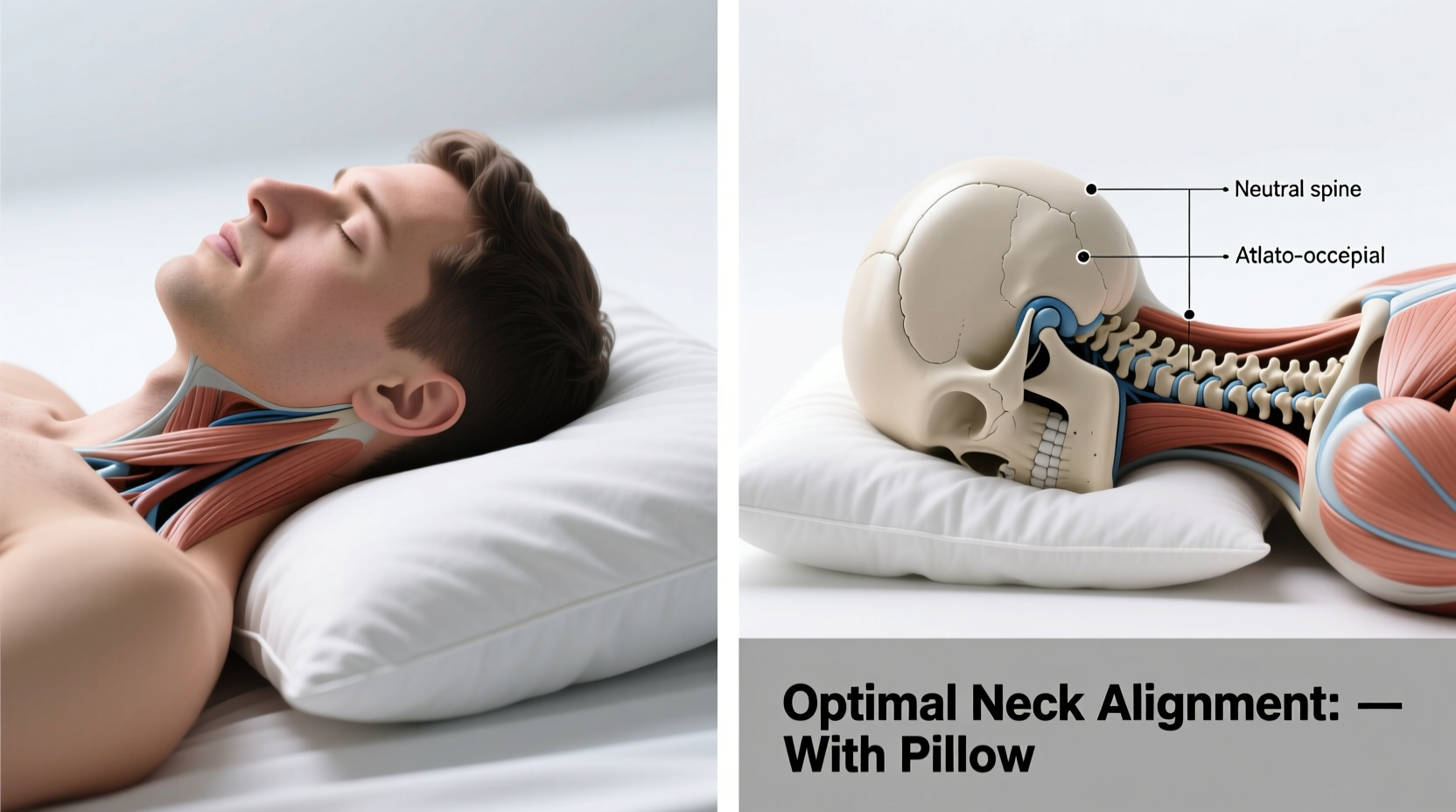
Your neck alignment is determined by the relationship between your head, cervical spine, and shoulders. When lying down, the goal is to keep the head in line with the spine, avoiding excessive tilting upward, downward, or sideways. Misalignment forces muscles to work overtime to stabilize the head, which over time leads to fatigue, inflammation, and even joint degeneration.
Different sleeping positions place unique demands on spinal alignment:
- Back sleepers benefit from moderate elevation that supports the natural neck curve without lifting the head too high.
- Side sleepers require higher pillow loft to fill the gap between the shoulder and head, preventing lateral bending.
- Stomach sleepers are most vulnerable—using a thick pillow often hyperextends the neck, while no pillow may still cause strain due to shoulder height.
Without proper support, the cervical spine deviates from its neutral position. For example, sleeping with a pillow that’s too thick forces the chin toward the chest when on your back, compressing the front of the neck. Conversely, a pillow that’s too thin—or none at all—can leave the neck hanging in extension, straining posterior muscles.
“Proper pillow use isn’t about comfort alone—it’s about preserving the spine’s natural curves throughout the night.” — Dr. Lena Torres, Physical Therapist & Spine Health Specialist
Sleeping With a Pillow: Benefits and Risks
For most people, using a pillow improves neck alignment—but only if it's the right type and height. A well-chosen pillow acts as a structural aid, bridging gaps created by body contours and maintaining spinal neutrality.
Tip: Test your pillow alignment by lying down and checking if your jawline is parallel to the ceiling when on your back.Benefits of using a pillow include:
- Supports the cervical lordotic curve
- Reduces pressure points on the neck and shoulders
- Minimizes snoring and airway restriction (especially with contoured designs)
- Improves overall sleep quality by reducing nocturnal micro-awakenings due to discomfort
However, risks arise when pillows are mismatched to body type or sleep style:
- Overly thick pillows push the head forward, increasing disc pressure
- Soft, flat pillows collapse under weight, offering no real support
- Memory foam that doesn’t contour properly can create rigid pressure zones
- Fragile materials lose shape quickly, compromising consistency
A 2020 study published in the *Journal of Orthopaedic & Sports Physical Therapy* found that participants who used adjustable-height pillows tailored to their shoulder width reported significantly less morning stiffness and improved range of motion compared to those using standard pillows.
Sleeping Without a Pillow: When It Might Help
Going pillow-free isn’t inherently wrong—it can be beneficial under specific circumstances. Some cultures traditionally practice floor sleeping with minimal or no head elevation, promoting a flatter spinal profile. Advocates argue that removing artificial elevation allows the spine to \"reset\" into a more natural state.
This approach may work best for:
- Back sleepers with narrow shoulders and low neck-to-shoulder distance
- Individuals using firm mattresses that don’t sink excessively
- Those recovering from certain types of whiplash or muscle spasms where reduced stimulation is advised temporarily
However, most adults have anatomical proportions that make pillow-less sleep problematic. The average shoulder width creates a gap of 4–6 inches between the head and mattress when lying on the side, which cannot be safely bridged without support. Going without a pillow in this case forces the neck into a sharp lateral bend, increasing strain on the levator scapulae and upper trapezius muscles.
Additionally, stomach sleepers rarely benefit from no pillow. Even a thin one can exacerbate neck rotation, but sleeping completely flat often results in prolonged hyperextension, contributing to facet joint irritation over time.
Real Example: Transitioning to No Pillow
Mark, a 38-year-old software developer, decided to stop using a pillow after reading online claims about “natural spine alignment.” He switched to a firm tatami mat and slept flat on his back. Initially, he felt lighter and more refreshed. But within two weeks, he developed persistent morning headaches and tightness behind his right ear. A visit to a physical therapist revealed that his head was extending slightly off the edge of the mat, causing suboccipital muscle overload. After switching to a 3-inch buckwheat pillow, his symptoms resolved within ten days. His case illustrates that perceived comfort doesn’t always equal biomechanical correctness.
Choosing the Right Support: A Practical Guide
The real issue isn’t whether to use a pillow—but whether your pillow matches your needs. Here’s a step-by-step method to assess and optimize your setup:
- Determine your primary sleep position: Use a sleep diary or wearable tracker for three nights to confirm if you’re mainly on your back, side, or stomach.
- Measure shoulder width: For side sleepers, wider shoulders require taller pillows (5–7 inches). Narrow frames may only need 3–4 inches.
- Evaluate mattress firmness: Soft mattresses sink more, requiring lower pillows. Firm surfaces allow for slightly higher support.
- Test alignment: Lie on your side—your ear, shoulder, and hip should form a straight line. On your back, your chin should be slightly higher than your forehead.
- Adjust gradually: If changing pillow height, do so incrementally (e.g., add or remove filler layers weekly) to allow adaptation.
| Sleep Position | Recommended Pillow Height | Best Pillow Types | Avoid |
|---|---|---|---|
| Back Sleeper | 3–4 inches | Memory foam, latex, contoured | Very thick or feather pillows |
| Side Sleeper | 5–7 inches | Buckwheat, memory foam, shredded foam | Thin cotton or polyester fills |
| Stomach Sleeper | 0–2 inches (or none) | Ultra-thin gel pads or no pillow | High-loft down or memory foam |
Frequently Asked Questions
Can sleeping without a pillow cause neck pain?
Yes, especially for side and back sleepers with average or broad shoulders. Without adequate support, the neck falls out of alignment, leading to muscle strain and joint stress. Stomach sleepers may tolerate little or no pillow better, but even they risk hyperextension if the head drops too far backward.
What’s the best pillow material for neck alignment?
It depends on preference and position. Memory foam offers consistent support and contouring. Buckwheat provides firm, adjustable loft ideal for side sleepers. Latex is durable and responsive. Feather pillows tend to flatten too much for reliable alignment. Hybrid models combining foam base with removable inserts offer customization.
Should I change pillows if I have arthritis or a herniated disc?
Yes. Individuals with cervical spine conditions often benefit from specialized orthopedic pillows designed to maintain neutral alignment and reduce nerve impingement. Consult a physical therapist or spine specialist to determine optimal height and firmness. In some cases, a cervical traction pillow used intermittently may help, but should not replace proper nightly support.
Action Plan: Optimizing Your Sleep Setup
Follow this checklist to ensure your pillow promotes healthy neck alignment:
- ✅ Identify your dominant sleep position accurately
- ✅ Measure the distance from your shoulder to the base of your neck when lying on your side
- ✅ Choose a pillow with adjustable loft or trial options
- ✅ Perform the straight-line test: ear, shoulder, hip aligned when on your side
- ✅ Replace pillows every 18–24 months or when they lose resilience
- ✅ Pair with a supportive mattress—medium-firm is generally best for spinal health
Remember, consistency matters. Even the perfect pillow won’t help if you frequently switch positions or use multiple cushions. Stick with one configuration for at least two weeks before evaluating its effectiveness.
Final Thoughts: Personalization Over Dogma
The debate over sleeping with or without a pillow shouldn’t end in absolutes. Human anatomy varies widely—what works for one person may harm another. Rather than following trends or anecdotal advice, focus on objective indicators: Do you wake up with stiffness? Is your neck sore within minutes of rising? Can you move freely without cracking or grinding?
These signals matter more than ideology. Whether you choose a pillow or go bare, prioritize spinal neutrality above all. Use mirrors, partner feedback, or video recordings to assess your nighttime posture. And don’t hesitate to consult a healthcare provider if pain persists—chronic misalignment can accelerate disc wear and contribute to long-term dysfunction.
💬 Ready to optimize your sleep posture? Start tonight by assessing your current pillow and making one small adjustment. Share your experience or questions below—your journey could help others find lasting relief.








